Category: 1890 Census

  • Reclaiming Land, Reclaiming Legacy: Helping Descendants of Enslaved Families Build Historical Property Claims

    Reclaiming Land, Reclaiming Legacy: Helping Descendants of Enslaved Families Build Historical Property Claims

    Several years ago, I began my formal ancestral and genealogy journey with the intention that I would locate land and property that may have been lost by our family or worse, stolen during historical periods of social and economic upheaval. In other words, I wondered whether my family lost land and property before, during and post slavery. My question landed on whether anything lost could benefit my family today?

    The short answer is “yes.” I am not alone.
    Questions Answers Signage
    Lots of questions and few answers are                   connected to the property searches for                   descendants of formerly enslaved family               members.

    Reclaiming rights

    For generations, Black families have carried memories of land once farmed, homes once built, and dreams once held — even when the law, violence, and exclusion stripped them of the soil beneath their feet. Today, nationwide and in select global locations, descendants of enslaved people are reconnecting their threads of history with genealogical evidence of families’ rights. The big deal is the reclamation of land and the seeking of compensation for property lost through legal and social injustices.

    The renewed interest in this area is about dignity, legacy, and the restoration of generational wealth. This blog will begin a series around the topic of helping African Diasporan, Indigenous nations, and Free Blacks build historic property claims. For years, we’ve helped families locate their ancestors that includes matching geographical addresses, Census records, storytelling, and hundreds of other research avenues. Why? It not only is necessary to know one’s ancestors for mental, social, and informational purposes, the conformation of ancestral and genealogy records also is foundational for going to the next steps. That is, to seek historical property claims, pensions, and other potential financial linkages.

    Steps to Begin a Historical Property Claim Journey

    Good Genes Genealogy will lead families through the process to reclaim financial benefits. Here’s a sample of what we are seeking from families:

    ✅ 1. Interview Elders & Document Oral History

    • Names, locations, burial grounds

    • Nicknames, neighboring families, plantation links, freemen’s links

    • Stories of land loss or forced migration

    ✅ 2. Identify the Key Ancestors in Census & Vital Records

    • Start with the 1870 Census — the “gateway” document for formerly enslaved individuals

    ✅ 3. Research Land Ownership or Labor Placement

    • Search county courthouses, tax records, land deeds, and maps

    ✅ 4. Review Probate & Enslaver Records

    • Use varied government and personal records that linking enslaved ancestors to plantations and locations

    ✅ 5. Document Evidence of Loss or Displacement

    • Illegal takings or forced sale

    • Eminent domain cases

    • Racial violence or intimidation

    • Fraudulent legal proceedings

    • Loss of heirs’ property

    ✅ 6. Connect with Legal Advocates

    • Private attorney referrals, community legal services, land conservation groups, and reparations task forces can provide guidance

    ✅ 7. Build a Claim Packet*

    Organize:

    • Genealogy charts

    • Timeline of ownership & loss

    • Supporting documents

    • Maps and land descriptions

    • Witness testimonies/oral histories

    *Putting together this packet is the narrative foundation that allows for legal review or community restitution.
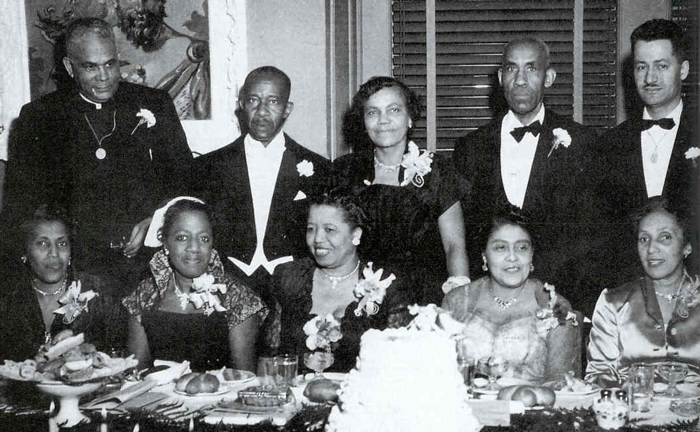
  • Welcome to my Sorors of Zeta Phi Beta Sorority, Inc.

    Welcome to my Sorors of Zeta Phi Beta Sorority, Inc.

    Since Fall 1977, I’ve been a member of Zeta Phi Beta Sorority, Inc., with my initiation at Clark College (now Clark Atlanta University), Psi Chapter.  I am committed to the high ideals of Zeta Phi Beta, the only constitutionally bound sister organization of a fraternity, Phi Beta Sigma Fraternity, Inc.  In 1989, alongside my Soror Mother Angie Wead, and other wonderful ladies, I became a founder of a graduate extension of Zeta Phi Beta, Xi Xi Zeta Chapter, Lithonia, GA.

    I am also a proud member of the “Divine Nine” — the unique, excellent collection of Black-letter Greek organizations. What a bonus.

    Welcome to my specialized page, which is a labor of love. Enjoy the search and remember to always preserve the precious and proud stories of our families. Our ancestors appreciate our journeys.


    Zeta Phi Beta Sorority, Incorporated was founded on January 16, 1920, at Howard University, Washington, D.C. The Klan was active during this period, and the Harlem Renaissance was acknowledged as the first important movement of Black artists and writers in the U.S. This same year the Volstead Act became effective, heralding the start of Prohibition and Tennessee delivered the crucial 36th ratification for the final adoption of the 19th amendment giving women the right to vote. The worst and longest economic recession to hit the U.S. would define the end of the decade-The Great Depression.

  • Family genealogy check up and checklist

    Family genealogy check up and checklist

    The beginning of 2023 is a great time to utilize the free genealogy resources from the National Archives. It is the family group sheet and ancestral chart.

    Photo by August de Richelieu on Pexels.com
  • Check out this wonderful Black genealogy program

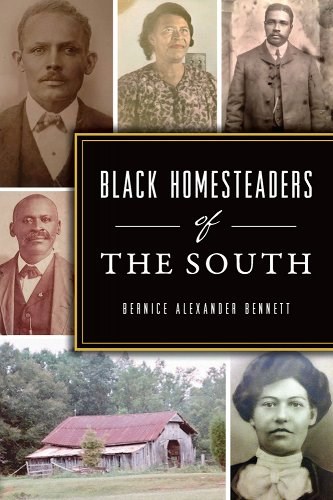
    Black Homesteaders of the South with Bernice A. Bennett

    On Saturday, February 4, 2023, 12 – 1:30 PM, the African American History and Culture Museum will host its African American History and Culture Event.

    It will be held on the Concourse, Oprah Winfrey Theater + streaming

    It’s free. It’s also recommended that you get tickets or register at www.etix.com.

    Join genealogist Bernice A. Bennett who will uncover the stories of African American families who became landowners through the Homestead Act of 1862 from her latest book Black Homesteaders of the South. Bennett’s work is a modern story of black genealogists who networked through a Facebook page to trace the footsteps of their ancestors in Alabama, Arkansas, Florida, Louisiana & Mississippi. Find out how these families navigated the application process through the federal government, and what this legacy means for their descendants today.
    Bernice Alexander Bennett is an award-winning author, genealogist and host of Research at the National Archives & Beyond BlogTalkRadio program. Her genealogical interests focus on Southeast Louisiana and Edgefield and Greenwood Counties, South Carolina. Bennett is an author and contributor to 2 award winning genealogy books including Our Ancestors, Our Stories and Tracing Their Steps: A Memoir. A New Orleans native, Bennett is a volunteer with the Homestead National Historical Park Service identifying descendants of Black homesteaders to share their stories.
    Black Homesteaders of the South with Bernice A. Bennett
  • Genealogy Book Black Friday Sale!

    Genealogy Book Black Friday Sale!

    We are thankful that you are a member of our genealogy family. To show our gratitude, the Good Genes Genealogy Services team is offering our November 2021 ebook, Family Ties That Bind, to you at a Black Friday 2022 rate.

    We are providing you with preview of the book. Please follow the link to our publisher’s store, or pick up your copy on Amazon or Barnes & Noble. Enjoy reading a portion of our Chapter 3.

    Family Ties That Bind

    Are you one-fourth or one-eighth African? The U.S. Census wanted to know

    Chapter 3


    There’s a knock on the door.
    It’s Monday, June 2, 1890, the first day the U.S. Census takers began their monthlong gathering of data that would provide unique, one-time information forever etched in our historical documents. The questioner posed several questions to the household representative. Among those worth noting was the following:

    Question #4 ask whether the races of the household inhabitants are “white, black, mulatto, quadroon, octoroon, Chinese, Japanese or Indian.” The Census questioner could no longer look at the household and answer the question. It was up to the household member to self-disclose the information. It was the first and last time that the “quadroon and octoroon” race descriptions were asked on Census documentations.

    According to a National Public Radio report, “the government concluded: “These figures are of little value.” “Quadroon” and “octoroon” have never been used again for the census.”