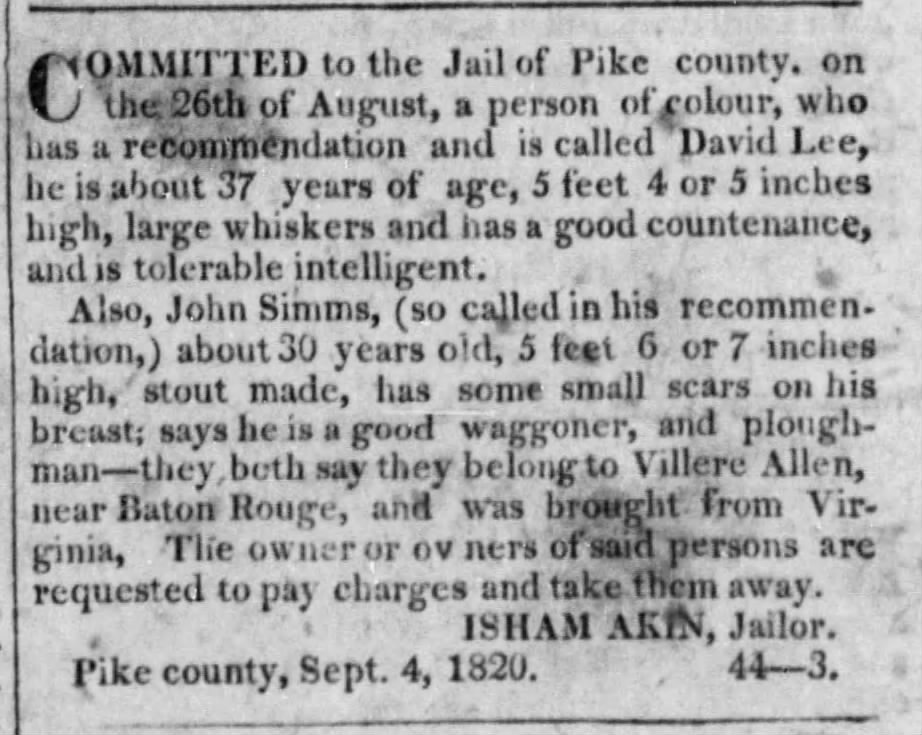
That’s what happened to my paternal ancestor, David Lee, in 1820. He could have lost his life. He could have been severely hurt. Instead, he was jailed despite having all of his “papers” in order.
David Lee had sufficient documentation to prove he was allowed to walk along the Mississippi pathway. The wording in the newspaper ad gave me the clue that the authorities questioned his paperwork: “…has a recommendation and is called David Lee…” In the early 1800s, the written pass, travel permit, or some type of certificate had to be shown to identify the enslaved.
I speculate that the information presented on the documentation included:
his name
owner
destination
permission to travel
work assignment
Arrested anyway
Despite the proof Lee was carrying, the jailer did not fully trust the document! How do I know? It’s the wording: “…is called David Lee…” It means that “this paper says his name is David Lee.” Interesting that some papers that were being carried by Black persons were still questioned, ignored, and were sometimes considered forged. The sad outcome is that the innocent Black person would be jailed until someone claimed them.
“Tolerable intelligent”
The white jailer who interviewed my ancestor was actually giving him a compliment. In 1820, the jailer’s words meant he was a highly capable and articulate.
I discovered this newspaper article while researching my paternal family’s history. Such notices were often placed in Southern newspapers. The hard-to-read print summarizes the plight of my paternal third great-grandfather, David Lee. Here’s the summary of the translation:
David Lee was born about 1783, which made him 37 years old at the time of his detainment.
He was 5’4″ to 5’5″ with large facial whiskers and his overall appearance was described as “good countenance.” Translated: He looked respectable in their terms, and not criminal-looking.
He was in Pike County, Mississippi during August–September 1820.
He was traveling with John Simms.
He/they were associated with an enslaver identified as Villere Allen near Baton Rouge.
Lee was brought from Virginia, suggesting an interstate sale or forced migration.
He was described physically in unusual detail, which helps to distinguish him from other men named David Lee in records.
How Family Researchers and Genealogists Connect the Dots
It is very challenging to locate and link African Diaspora ancestors to our family trees. For our research, this single advertisement provides confirmation on my ancestor’s connection in our family as I compared his information and timeline to his marriage of another relative.
There were other valuable leads:
“They say they belong to Villere Allen…” who lived near Baton Rouge.
The jailer believed the two men were traveling together.
“… was brought from Virginia.”
This last clue is huge because it places my ancestor, David Lee, within the massive forced migration known as the Second Middle Passage. That is when hundreds of enslaved people were sold from the Upper South (especially Maryland and Virginia) to the Deep South after the invention of the cotton gin.
If accurate, David’s life likely followed a path similar to this:
Virginia
↓
sold south
↓
Louisiana (near Baton Rouge)
↓
traveling through Mississippi
↓
jailed in Pike County. Pike County was on a major overland route. They moved enslaved folk through Mississippi to Louisiana plantations. Ancestor David Lee and his companion, John, may have been:
hired out
being transferred
escaping
delivering goods
accompanying livestock
traveling under orders
How about this final sentence from the newspaper ad:
“The owner or owners are requested to pay charges and take them away.” This tells us the legal purpose of the advertisement. The jail was charging for room and board and security. The owner had to reimburse the county before recovering the enslaved people. These notices were common in southern newspapers.
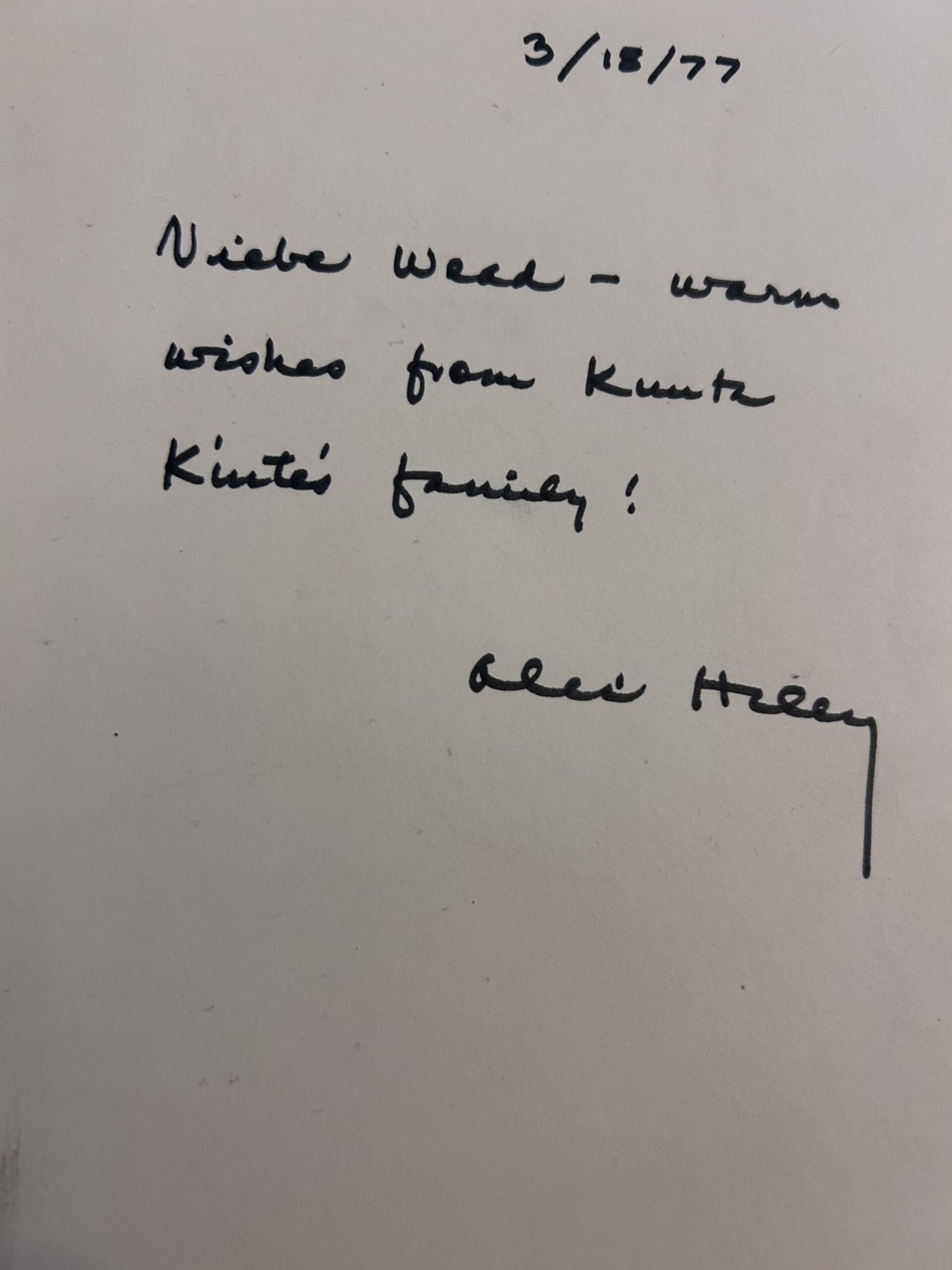
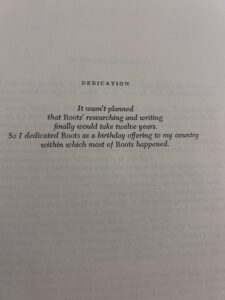
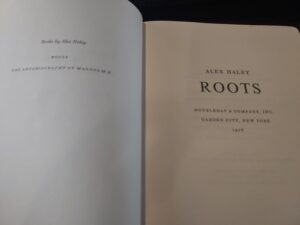
It was pure serendipity. In 1977, while I was a sophomore at Clark College (now Clark Atlanta University) in Atlanta, I obtained a cherished autograph from a U.S. Coast Guard veteran turned legendary journalist and author: Alex Haley, the man who penned Roots: The Saga of an American Family.
Handwritten note from Alex Haley to Nieve Wead
My middle name, Lineve, was shortened into the nickname “Nieve,” which is how Haley addressed me in his note. Just a month after our encounter, he received a Pulitzer Prize, earning a special citation for Roots as “the story of a Black family from its origins in Africa through seven generations to the present day in America.”
The Phenomenon of Roots
Today, there are few people who haven’t heard of, read, or watched Haley’s deeply moving masterpiece. Released in 1976, Rootsspent a staggering 46 weeks on the New York Times Bestseller list.
The novel chronicled the life of Kunta Kinte, an 18th-century Mandinka man captured in his West African homeland and trafficked to North America. From there, it took readers through the painful, violent, yet remarkably resilient lives of Kunta Kinte’s descendants in the United States. What made the book so revolutionary at the time was the revelation that these descendants included Haley himself.
Haley was a prolific researcher and writer. His massive literary success didn’t stop with the original book and its groundbreaking initial television adaptation with the Roots Miniseries that aired in January 1977. For eight consecutive nights in my dormitory, Merner Hall, on Clark College’s campus, we were tuned into the impactful video story of our new champion family. I recall how I vowed to follow Alex Haley’s path in locating my long-lost family in Africa and other places around the world. The final chapters of his story were later adapted into the 1979 TV miniseries, Roots: The Next Generations.
Inspiration Amid Controversy
Like thousands of people around the world, I was instantly inspired to research my own African American genealogy. However, the book’s massive success also brought intense scrutiny. A highly regarded historian challenged Haley’s findings, claiming he could not have located the exact village where Kunta Kinte was born. In response to the widespread criticism, Haley gracefully defended his work by reminding the public that he had written a “factional” or “historical novel”—a blend of deep historical research and narrative storytelling.
Looking back, the lessons I learned from that moment as a college student were numerous:
Respect the Grind: Always respect and give credence to the grueling, lengthy work of genealogical researchers, writers, and producers.
Trust, but Verify: This is always the order of the day for genealogists, especially those of us engaged in African Diaspora research.
Context Matters: The timing of Roots was incredibly noteworthy, arriving just as Jimmy Carter was inaugurated as U.S. President in January 1977, a time of profound national reflection.
Endless Stories: There are millions of stories waiting to be uncovered that allow us to accurately piece together our African Diaspora ancestry.
My 30-Year Nudge
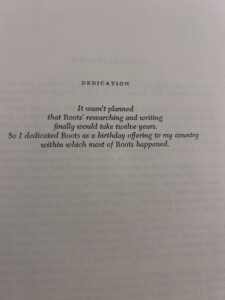
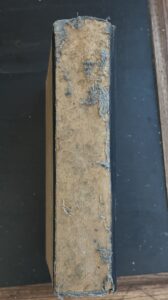
Pictured below is my original copy of Roots. As you can see, I simply wore it out from reading and re-reading it so many times.
While Alex Haley gave me the inspiration to vigorously research my family’s roots back in 1976, it ultimately took me 30 years to act on that great nudge. Today, I can proudly boast several hundred newly discovered family members on our family tree. My family tree now stretches back 13 generations across both my maternal and paternal sides, tracing our lines through Switzerland, Africa, Ireland, Germany, Missouri, Mississippi, Georgia, Virginia, North Carolina, and beyond.
The journey takes time—but the reward is looking history right in the face.
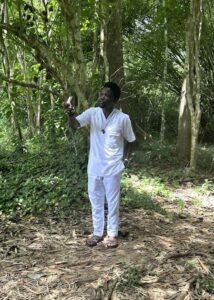
Our prolific tour guide, Devine at the Last Bath, Assin Manso, Ghana
It was an unexpected discovery along the winding, sometimes muddy path leading to what is solemnly known as the Last Bath in Ghana.
Just moments earlier, our guide, Devine, was sharing rhythmic and powerful stories of survival of the men and women whose lives were violently uprooted centuries ago and forced toward an uncertain future across the Atlantic Ocean. His voice carried through the trees as he recounted the journeys of those who passed through this place in chains.
Then, as Devine’s leather sandals were striding down the lightly muddy path, he stopped.
The World’s “First” Security System
Kneeling beside a place in the path, he pointed to a small patch of greenery and invited several of us to gather around.
“This,” Devine said with a comforting smile, “was the first security system.”
With the gentle touch of his finger, the tiny plant immediately recoiled. Its delicate leaves folded inward as though retreating from the world. Devine explained that the plant, commonly known as the Sensitive Plant (Mimosa pudica), would slowly reopen several minutes later. According to the stories that he shared, the plant’s sudden movements was an alert system for those who may have “disturbed the area.”
“It was a secret system the ancestors used to protect their lands. We still have it here.” He said that if it were not for the grass that has grown up around the special plants, the visitors would be walking on the Sensitive Plant on the way to the actual river of the Last Bath.
“They know that they have seven minutes to catch up with them. After seven minutes it opens back fully and they lose the trail,” explained Devine.
He said the ancestors “were using it as their secret motion sensors. Whenever the ancestors came out to see the plant closed, they knew that something” been there. There is nothing on this earth that is invented by anyone else. Today, you are seeing the proof of our intelligence”.
He referred to the plants as being the equivalent to the modern Ring Door security device: “The most amazing thing is that the security system itself was invented by an African American woman.” He was referring to Marie Van Brittan Brown, an African American nurse, co-invented the first home security system in 1966 with her husband, Albert L. Brown, an electronics technician.
The demonstration lasted only a few seconds, but its symbolism lingered much longer.
Standing at Assin Manso’s Last Bath, a place where countless Africans endured unimaginable loss before beginning the final stage of their forced journey to the coast, I could not ignore the metaphor. Generations of African Diaspora families have carried memories that folded inward for protection. Through genealogy, oral history, and return journeys to places such as Ghana, those memories slowly begin to open again.
The Last Bath
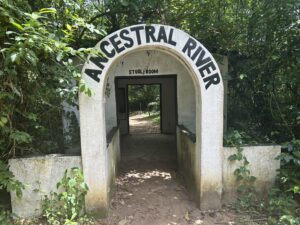
More than 100 miles from Accra, Ghana’s capital city, lies the community of Assin Manso, home to one of the most emotionally significant sites in Ghana’s remembrance landscape. Located within the Assin Manso Ancestral Slave River Park, the Last Bath marks one of the final inland transfer points for many enslaved Africans before their forced march to the slave dungeons at Cape Coast and Elmina.
Here, according to historical accounts, captives were brought to the river to bathe before continuing toward the coast. For many, it would be their last physical contact with the interior lands of Africa before boarding ships bound for the Americas and the Caribbean.
We reached the river entry point. We slowly and assuredly walked down the path to the waiting arms of our guide, who had gotten in the waist high water. The water, he observed was higher than in previous years. While the waters were rolling, there was a striking peace. Birds sing from a distance. The trees seemed to welcome its visitors as the branches were swaying gently in the warm breeze. Most of the visitors entered the river, including this writer. It is a cleansing and connecting feeling to African ancestors like no other experience while in this region of Ghana.
Beneath the somberness rests the weight of countless untold stories that would never be known for their lives were lost either through death along the hundreds of miles of marching to an unknown fate, or through the separation and ultimate travel across the Atlantic Ocean to reach lands they never knew.
Lessons from a Small Plant
As the leaves of the Sensitive Plant gradually reopened, our guide reflected on the lessons it offers visitors:
Memory can be hidden but not lost.
Trauma may cause individuals, families, and communities to close themselves in self-protection.
Healing often happens slowly, one layer at a time.
What appears dormant may still be very much alive.
Whether those meanings are found in nature itself or assigned through human reflection hardly matters. At Assin Manso, the symbolism feels undeniable.
For descendants of the African Diaspora, family history often unfolds in much the same way. Names disappear. Stories fade. Connections seem lost. Yet many symbols such as a documents, oral histories, conversations, DNA matches, or a long journey across the ocean, touches the past and awakens memories that may been long folded away.
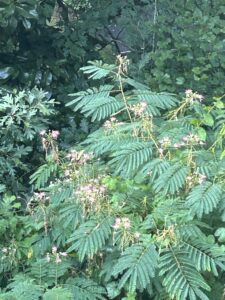
Interesting finding was right in my backyard. When comparing the look of the Mimosa pudica, I noticed that the leaves of one tree always blooms into a pattern that is identical to Assin Manso’s Secretive Plant. Without any scientific or other professional explanation, it appears the plant was transplanted to my backyard tree.
My backyard tree is in full bloom as a Mimosa plant descendant
Like the Sensitive Plant, those stories begin to open again.
What Do You Pack for Research Across Two Continents?
One day, I was standing under the warm West African sun in temperatures reaching 32°C (90°F). Just six hours later, I stepped off a plane into Amsterdam’s chilly spring air of 9°C (48°F), arriving at the start of the country’s largest national celebration—King’s Day.
As I prepared for this international journey from the United States, packing became more than deciding what clothes to wear. I thought of the two continents, multiple climates, different cultural norms, and my optimistic research agenda centered on the African Diaspora and the history of the Trans-Atlantic Slave Trade.
My international travel goals were straightforward:
Actively participate in mission work with my church colleagues that focused on delivery of our donated goods and service at an orphanage, school, and village in Ghana.
Conduct historical and genealogical research related to the African Diaspora and the Trans-Atlantic Slave Trade.
Experience the people, culture, and history of each destination with a focus on safety and being respectful of local customs.
My so-called challenge was to fit everything needed for ministry, research, tourism, and everyday life into a manageable number of two checked and two carry on bags.
What follows are the lessons I learned—and the items I am glad I packed.
Pack Like a Researcher
Since 2010 when I first visited Rwanda, Africa as part of my doctoral studies, I learned that research travel requires a different mindset than vacation travel. Whether visiting archives, museums, cemeteries, historical sites, or cultural sites like the botanical gardens in Ghana, researchers need tools that allow us to capture information quickly and accurately.
My research essentials:
Smartphone with extra storage and internet access
Energy converters for plugs and other gadgets
Portable chargers
Large and small/thin notebooks and pens
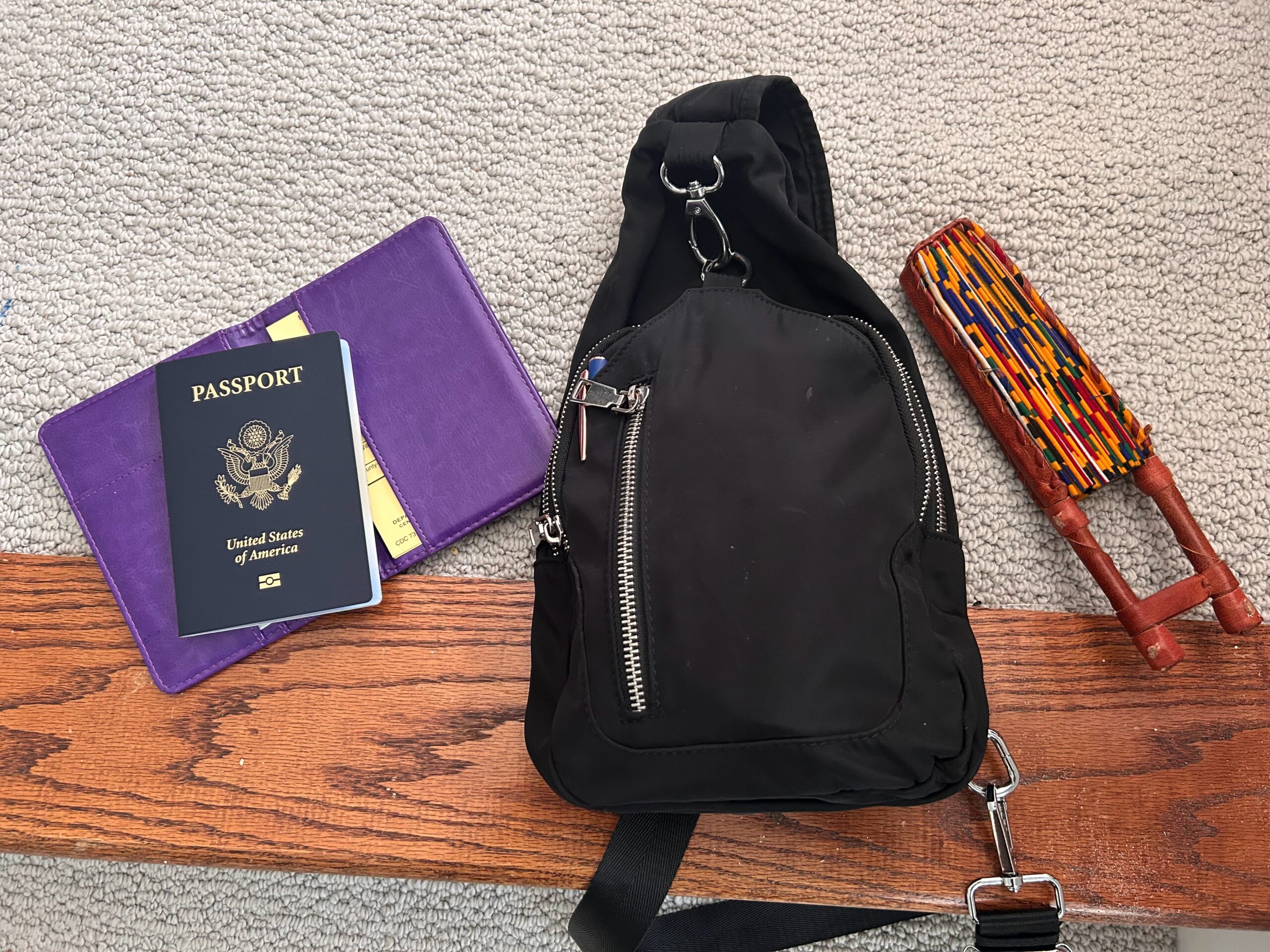
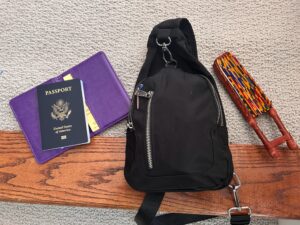
Small cross-body bag
Digital copies of my passport and travel documents
Archive contact information and copies of permission documents to conduct research (know the protocols)
Cloud storage access for photos and notes
Activate the Whatsapp feature for telephonic and texting communication
Monies budgeted for copying, scanning, and other document preservation
My two days of research in Ghana at Public Records and Archives Administration Department (PRAAD) generated hundreds of photographs, documents, and observations. I reserved some and had many scanned by the PRAAD team and delivered to me via my Whatsapp because the documents were not deliverable through my email. In Amsterdam, the celebration of King’s Day precluded me from conducting research at its libraries that stored the historical records I was seeking. However, I was able to gather sufficient visual content related to the Trans-Atlantic Slave Trade. A future writing will delve into this with more detail.
Besides your passport, researchers should be well-armed with the essential travel items including the cross-body and a Ghanian made hand fan.
In all, being organized matters.
Essentials:
Medical vaccinations and travel medicine (if needed), forms
Lightweight shirts and blouses
Compression socks
Convertible travel pants — preferably blue, black, white, tan
Light sweater or fleece — preferably fleece
Rain-resistant jacket
Comfortable walking shoes — my preference are Crocs
One outfit suitable for dressy formal occasions
Pack for the unexpected
I learned this lesson many years ago while on a mission trip in Costa Rica: Never pack your suitcase completely full. As a research traveler, I inevitably return with books, documents, maps, gifts and souvenirs that help me remember the story. The extra space I left in my luggage proved invaluable. Once I brought a foldable suitcase. Another time, while in Japan, I purchased a suitcase. It was much cheaper to buy it there than in the United States.
Great lessons
I packed far more than clothing, my United States passport, and other travel gear. I packed my high curiosity about the once heavily traveled ship route between the Gold Coast on West Africa and the Netherlands. Those dealings resulted in the most lucrative aspect of the Trans-Atlantic Slave Trade. I packed patience and profound faith to follow history wherever it led. My luggage helped me move between continents. Those internal qualities helped me move between centuries.
I discovered the “Scent Leaf” or African Basil in the Aburi Gardens, Ghana, Africa
In our African Diaspora genealogy and ancestral research, the root of our searches is often right in front of us.
On a recent hot Spring day while visiting Aburi Botanical Gardens — located about an hour up the cool mountain hills from Accra, Ghana — I unknowingly stepped on a leaf connected to history itself. As I walked through the gardens with my tour guide, Maxwell, and my country escort, Prince, Maxwell paused and encouraged me to pick up a dry yellowish leaf from the ground and crush it gently in my hands.
Immediately, a powerful fragrance rose from the leaf.
Mint.
Fresh.
Alive.
The scent startled me.
Maxwell smiled and explained that I had just encountered the African basil known locally as “Scent Leaf,” scientifically called Ocimum gratissimum. It was among the hundreds of plant species found among the 160 acres of exquisitely beautiful lands high above Ghana’s capital city of Accra. The aromatic plant is one of hundreds of species found throughout the gardens’ approximately 160 acres of breathtaking tropical landscape overlooking Ghana’s capital city.
At that moment, what began as tourism quietly transformed into ancestral reflection.
The Gardens were established in 1890 during the British Colonial rule over Ghana. It became a site for agricultural exchange with British rulers and a tropical plant experimentation center. Notable were the plants and trees tied to the former ruling empires and the displacement of people. Some of the plants and trees originated from Brazil, the Caribbean, Sri Lanka, India, and Southeast Asia.
Fresh Scents for the descendants of the African Diaspora
Initially, I believed that visiting the Gardens would be a nice way to end my research, mission travels involving service to young children, and touring, would be a nice way to be a tourist among the African landscapes. Yet, Abrui Gardens demonstrated its ability to allow for remembrances, recovery, and a living memory of what took place on these hallowed ground more than 100 years ago.
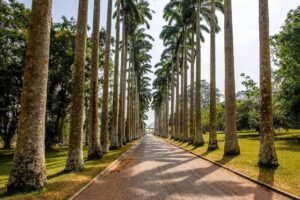
Aburi Botanical Gardens, established 1890Aburi Botanical Gardens beauty
Literally: Finding my Roots
At the wise recommendations from my extremely horticulturally knowledgeable guide, Maxwell, I experienced Aburi Gardens with freedom to learn by smelling, tasting, and touching nature’s bounty. It was a form of ancestral reconnection. One of the most powerful realizations from Aburi Gardens is that genealogy does not exist only in documents.
Sometimes genealogy grows from the ground itself.
Maxwell is a trained horticulturist in Aburi Botanical Gardens, Accra, Ghana, Africa
What I did was walk through most of the 160 acres of colonial plant routes and learned about the indigenous knowledge systems that turned plants and trees into medicinal usages. I encountered plants and tree that allowed me to feel and see the shaping of daily African life and diaspora survival. The smelling of the mint, for example, gave me echoes of the trade routes that financially benefited worldwide capitalists who found synthetic solutions from African origins.
It was an experience for the ages.
Bringing the everyday African Diaspora researcher into the Gardens
For researchers exploring African Diaspora ancestry, Aburi Gardens offers important African Diaspora historical clues:
Established during colonial rule, the gardens became part of imperial agricultural systems that transported crops throughout the African Diaspora world.
Plants originating in the Caribbean, South America, and Asia reveal trade routes tied to colonial expansion and human displacement.
Indigenous medicinal traditions preserved in Ghana may echo healing practices later carried throughout the Diaspora.
Nearby Aburi communities, cemeteries, mission schools, and oral histories may contain valuable connections to colonial-era families and migration patterns.
For descendants of the African Diaspora, the gardens offer more than beauty.
Reflection in the Gardens
My visit to Aburi Botanical Gardens became more than I expected. It was a reminder that Africa still speaks through its landscapes, plants, and people. Sometimes the stories of our ancestors are not hidden in distant archives. Sometimes they are waiting quietly beneath our feet. And sometimes, all it takes is crushing a single leaf in your hand to awaken memory.
In all, there is a lot more to explore involving Aburi Gardens and the African Diaspora connections. I will follow up in future blogs.
While seeking to confirm the identity of a pro bono client’s father, I unexpectedly discovered another way to verify whether a family lineage was accurate. The confirmation came through the grave records of the client’s 15-year-old aunt, who tragically perished in an early morning dormitory fire in south Georgia in 1940.
What followed was another reminder of the twists, turns, and emotional complexity that often accompany African Diaspora genealogy research.
The client and his brother shared the same name as their biological father, who was not married to their mother. The client knew his father’s name, the year of his death, and the alleged location of his burial site. As with most African Diaspora genealogy projects, I began with the traditional route — reviewing the race/ethnic references, names, approximate birth records, death records, and family connections tied to the client’s parents.
Initially, the research moved forward steadily. However, after adding several generations to the family tree, the records suddenly stopped. I had reached a familiar genealogical roadblock.
To work my way out of the blockage, I stepped back and carefully reviewed the foundational details again: The race/ethnic references, names of the client’s parents, their birth dates, death dates, locations, and associated relatives. Yet the challenge remained. The father’s name was common enough that thousands of similarly named men appeared throughout records across the United States. I needed another method to determine whether the individual I was tracing truly belonged to this family line.
The Curiosity Detour That Changed the Entire Family Search
I began reviewing every Ancestry.com hint connected to the father’s extended family — parents, siblings, grandparents, collateral relatives, locations, etc. During what I now call a “curiosity detour,” I opened the death certificate of the client’s young aunt.
At first glance, the document confirmed the expected information: Race, parents’ names, approximate ages, and location. But experienced genealogists know that some of the most important clues often hide in the less-obvious details. I mentally noted the funeral home operator and, more importantly, the cemetery listed as her place of burial.
That detail stayed with me.
Follow your intuition
Next, I searched Newspapers.com for reports of fires involving young women in Georgia during 1940. Initially, I believed she may have been connected to a substantial dormitory fire involving a male residence hall in what is now considered the metro Atlanta area. Yet nothing in those reports clearly linked the young girl to the tragedy described on her death certificate.
So I kept searching.
After hours of research, I paused — one of those quiet moments genealogists understand well — and simply reflected on the question: What really happened here to link this ancestor to my family research?
Then I found it.
An article describing the tragic circumstances surrounding her death confirmed the details listed on the death certificate. My curiosity detour had suddenly become a breakthrough.
But the real discovery came afterward.
The Cemetery Clue That Confirmed a Family Lineage
Because I remembered the cemetery listed on the death certificate, I began searching for that same burial location among other possible family members. There it was again — the identical cemetery name appearing across generations of relatives. Thankfully, many members of the family had lived and died in a small Georgia town, making the burial connections easier to trace.
The cemetery itself was attached to a small rural church.
That single repeated detail gave me a new level of confidence. The cemetery became the anchor point connecting multiple generations of the family together. Suddenly, the puzzle pieces aligned with greater clarity, allowing me to move more confidently through the family structure and verify that the individuals I was tracing were indeed connected to my client’s lineage.
Almost there
Only one major question remained: Locating the final burial place of the client’s father in order to construct a fuller timeline of his life. Family accounts suggested he may have been buried nearly a thousand miles away, while other evidence pointed back to the small church cemetery tied to generations of relatives.
But such unresolved questions are familiar territory in African Diaspora genealogy research.
There is almost always another mystery waiting behind the next document, another contradiction buried within oral history, another unexpected clue hiding in plain sight. That is both the challenge and the beauty of this work.
Sometimes the answers we seek are not found in the records we intended to search — but in the records we almost overlooked. Keep searching African Diaspora researchers.
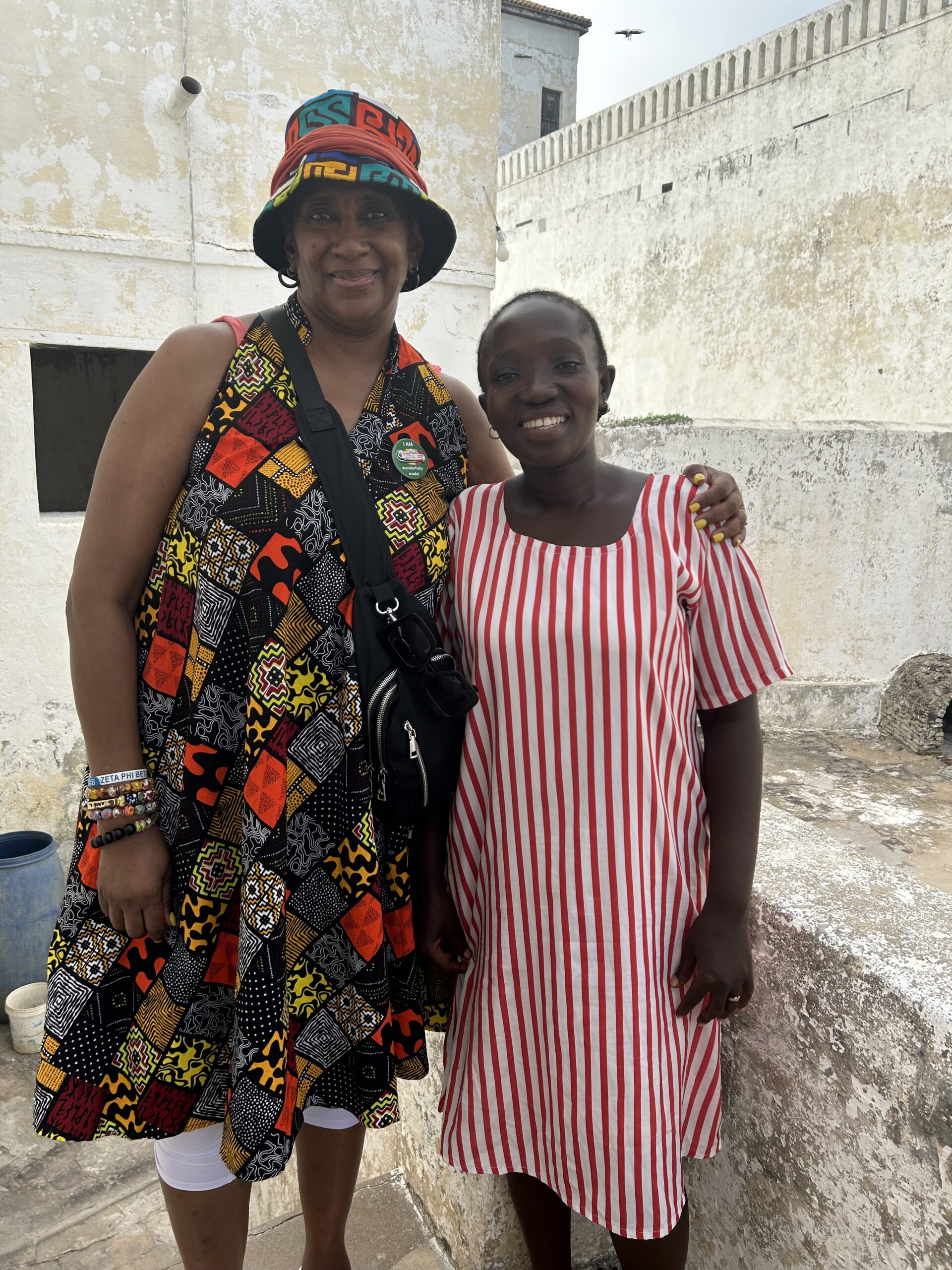
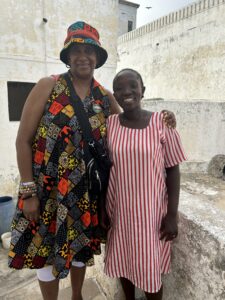
Mothers of fraternal twin children: From left, Blog Author Ann aka Ama (born on Saturday) and “Abena” (born on Tuesday) at Elmina (Ghana) Slave Dungeon
Who knew that giving births to fraternal twins would be a strong linkage to connecting African Diasporan families? Do twins “run in your family?”
In African diasporan genealogy, I’ve found several clues that live within me as a fraternal twin mother, and within so many other African, African American, Brazilian, Caribbean women. In short, twin births are the highest among Black women in these regions of the world. By contrast, fraternal twin births are low in Europe and the lowest in East Asia.
I’ve been curious about the birth of twins since my boy and girl set were born some forty years ago at Georgia Baptist Hospital in Atlanta, Georgia USA. Each time I’ve visited Africa since 2010, I’ve met mothers of twins, family members of twins, and of course, twins. The intersting feature is that often fraternal Black twins — that is, not identical ones — do not necessarily have similar outward features. I have a sense that some combinations of people are twins and that is how I often make such connections on USA, Caribbean and African soils. On an April 2026 visit to Ghana’s Elmina community, I easily located a mother of fraternal twin children (pictured, on right). She, too, had a boy and girl twin who were soon to celebrate a milestone birthday.
Diaspora Connection
The same regions in West Africa known for higher twinning rates are also regions where many our enslaved Africans ancestors were trafficked from. It is interesting that elevated rates of fraternal twins among African-descended populations in the U.S., Caribbean, and Brazil. I met groups of people from northeast Ghana who are connected to Brazil.
This is more than a statistic—it is continuity. Even after the forced enslaved passages across the Atlantic Ocean where we are still piecing together generations of separations, something remained.
Fraternal twinning that is mostly linked to West African ancestry is a huge genealogy search clue. This inherited trait traveled across generations during the Trans-Atlantic Slave Trade and still appears in families today. For genealogists that include me, and for all family researchers, twin births are helping to trace maternal lines.
This means that we can reconnect with our ancestors through another familial linkage and remind us that even when records are long gone, our fraternal twin ancestry leaves a wonderful mark.
Twins as Genealogical Clues
As we comb through government and other historical records, be on the look out for the following clues about your family that will likely help to further identify African geographical and genealogical linkages:
Two children listed with the same age and date of birth in early Census records;
Probate, plantation, church and other social documents referring to “twins”;
Oral family stories about the “two born together”; and
Repeated twin births on maternal sides of our families.
I’ve located twins on my paternal and maternal family lines based on the connection of birth dates. It is shoring up my family’s linkage to West Africa.
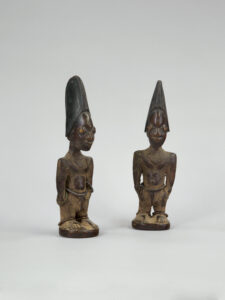
In most of West Africa, the birth of twins is considered a significant sign from the gods. Amongst the Yoruba they are thought to bring good luck — St. Louis Art Museum
More Than a Coincidence
For those who are interested in the science of twinning, fraternal twins happen when a woman releases more than one egg during ovulation. Research shows this occurs more often in some West African populations than anywhere else in the world. That means it may not be random when repeated twin births occur in a family line—especially across generations. Our ancestors and today’s Black families often remark that “twins skip a generation” or something similar when explaining the phenomenon of twin births within families.
For instance, my maternal grandmother gave birth to fraternal twin daughters. Skipping a generation, I birthed fraternal twin children — John and Jocelyn.
Several recent studies track twin births in West Africa. According to a study of data from 135 countries by the University of Oxford’s Christiaan Monden and his colleagues published in 2020, the Ivory Coast had a rate of 24.9 twins for every 1,000 births during 2010 – 2015. The report found that Ghana and South Sudan had the second-highest twinning rate, each with 24.8 twins per 1,000 deliveries, followed by Liechtenstein on 24.7 per 1,000. About 1.6 million twins are now born worldwide each year.
“The twinning rate in Africa is so high because of the high number of dizygotic twins – twins born from two separate eggs – born there.” He continued, “This is most likely to be due to genetic differences between the African population and other populations,” explained researcher Monden.
Next steps
We spend our time in genealogy and ancestry research searching for what was lost. Things and people are not really lost, all are simply unrecognized.
Twin births remind us that our ancestors left patterns, traits, and living evidence of who they were and where they came from. Even in the absence of records, the body remembers.
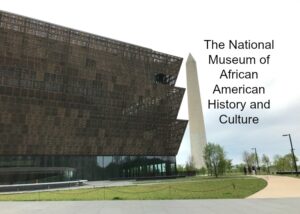
Washington, D.C.-based Museum is threatened with funding cuts by the government
Deliberate Attempts to Block African Diasporan Research
The history of the African diaspora is a rich and complex tapestry, woven together with the blood, sweat, and tears of countless innocent Africans were who forcibly stolen from their once beautiful homes, palaces, and other grand estates. After enduring horrible conditions, they were shipped across the Atlantic Ocean and scattered across the globe. This diaspora has had a profound impact on the cultural, economic, and political landscapes of the countries where Africans were brought and has sparked a growing interest among family members on United States shores and researchers from around the globe.
We must also consider the benefits of supporting and promoting African diasporan research. By allowing diverse perspectives to be heard and studied, we open up the possibility for important and groundbreaking discoveries that can shape and enrich all fields of study. Additionally, this research can have a positive impact on communities and individuals who have been historically marginalized, by giving them a voice and validating their experiences.
Purposeful moves to block African diasporan research have far-reaching and damaging consequences. By understanding the unique features of this subject, and acknowledging its value and benefits, we can work towards breaking down these barriers and fostering a more inclusive and accurate portrayal of our shared history.
Several years ago, I began my formal ancestral and genealogy journey with the intention that I would locate land and property that may have been lost by our family or worse, stolen during historical periods of social and economic upheaval. In other words, I wondered whether my family lost land and property before, during and post slavery. My question landed on whether anything lost could benefit my family today?
The short answer is “yes.” I am not alone.
Lots of questions and few answers are connected to the property searches for descendants of formerly enslaved family members.
Reclaiming rights
For generations, Black families have carried memories of land once farmed, homes once built, and dreams once held — even when the law, violence, and exclusion stripped them of the soil beneath their feet. Today, nationwide and in select global locations, descendants of enslaved people are reconnecting their threads of history with genealogical evidence of families’ rights. The big deal is the reclamation of land and the seeking of compensation for property lost through legal and social injustices.
The renewed interest in this area is about dignity, legacy, and the restoration of generational wealth. This blog will begin a series around the topic of helping African Diasporan, Indigenous nations, and Free Blacks build historic property claims. For years, we’ve helped families locate their ancestors that includes matching geographical addresses, Census records, storytelling, and hundreds of other research avenues. Why? It not only is necessary to know one’s ancestors for mental, social, and informational purposes, the conformation of ancestral and genealogy records also is foundational for going to the next steps. That is, to seek historical property claims, pensions, and other potential financial linkages.
Steps to Begin a Historical Property Claim Journey
Good Genes Genealogy will lead families through the process to reclaim financial benefits. Here’s a sample of what we are seeking from families:
Ardent defender of African American rights, Bishop Henry McNeil Turner
I often find myself imagining what life was like for the ancestors I research. Whether I’m tracing the African Diasporan roots of a client’s lineage or tending to my own family tree, I have a persistent yearning to understand and feel more than names and dates. I want to get a sense of their resilience, to know the determination that carried them through trials, and even to picture their everyday and ordinary activities.
To get me into the time and place, I recommend that novice to expert ancestral and genealogy researchers spend the quality time to go beyond the online family tree services. It is absolutely necessary to utilize government data, community news, and any oral history. For instance, pair census and street directories with employment and civic engagement. In the case of my fifth great-grandfather, Issac H. Anderson (1835 – 1906), his amazing life is highlighted by overcoming slavery to become a prominent businessman, religious and educational leader. It was his significant election to the Georgia Senate in 1867 that opened the door for me to learn about the unprecedented and perilous times for him and 32 other Black male pioneers. They were named the “Original 33, ” Black men who were among the first elected legislators in the United States.
“Original 33” marker to honor the Black men elected to the Georgia General Assembly in 1867
Rev. Henry McNeal Turner’s famous speech to the Georgia General Assembly 1868
Excerpts of Bishop Turner’s remarks
“Mr. Speaker: Before proceeding to argue this question upon its intrinsic merits, I wish the members of this House to understand the position that I take. I hold that I am a member of this body. Therefore, sir, I shall neither fawn nor cringe before any party, nor stoop to beg them for my rights. Some of my colored fellow members, in the course of their remarks, took occasion to appeal to the sympathies of members on the opposite side, and to eulogize their character for magnanimity. It reminds me very much, sir, of slaves begging under the lash. I am here to demand my rights and to hurl thunderbolts at the men who would dare to cross the threshold of my manhood. There is an old aphorism which says, “”fight the devil with fire,” and if I should observe the rule in this instance, I wish gentlemen to understand that it is but fighting them with their own weapon.”
And
“Whose legislature is this? Is it a white man’s legislature, or is it a black man’s legislature? Who voted for a constitutional convention, in obedience to the mandate of the Congress of the United States? Who first rallied around the standard of Reconstruction? Who set the ball of loyalty rolling in the state of Georgia? And whose voice was heard on the hills and in the valleys of this state? It was the voice of the brawny armed Negro, with the few humanitarian hearted white men who came to our assistance. I claim the honor, sir, of having been the instrument of convincing hundreds yea, thousands of white men, that to reconstruct under the measures of the United States Congress was the safest and the best course for the interest of the state.”
‘Am I not a man?’
Bishop Turner continued with, “The great question, sir, is this: Am I a man? If I am such, I claim the rights of a man. Am I not a man because I happen to be of a darker hue than honorable gentlemen around me? ”
He ended his lengthy manuscript and spoken word in a summary commitment to receive justice from another source for what the expulsion from the Georgia House and Senate. “You may expel us, gentlemen, by your votes, today; but, while you do it, remember that there is a just God in Heaven, whose All-Seeing Eye beholds alike the acts of the oppressor and the oppressed, and who, despite the machinations of the wicked, never fails to vindicate the cause of Justice, and the sanctity of His own handiwork.”
Justice restored
The men took their cases to the federal and state high courts. In June 1869, the Georgia Supreme Court rules that the Black men were allowed to hold a public office. Although my ancestor Anderson was not restored to his seat due to a technicality involving a perceived conflict, 27 of the 33 men were placed in their seats by U.S. General Alfred Terry. The newly installed Black men made a huge difference in enacting Georgia laws, including establishing the public school system.
Original 33 Decision of the Georgia Supreme Court in 1869
Needed info for ancestry researchers
The actions of Bishop Turner deeply shaped the human rights path of my ancestor, Anderson. Though Anderson achieved prominence as a businessman, co-founder of Lane College in Jackson, Tennessee, and a founding leader of the Christian Methodist Episcopal Church, he never wavered in his activism. He supported college students in their peaceful protests and helped countless Black Georgians find safe passage to new lives in Tennessee, Arkansas, and Mississippi.
Discovering Turner as Anderson’s close colleague highlighted not only my ancestor’s choices after the turbulent Reconstruction years of 1868–1870 but also the broader struggle they remained committed to wage together. For today’s ancestry researchers, the lesson is clear: Just as neighbors listed in census records can reveal hidden family ties, the colleagues and allies of our ancestors—whether in business, politics, civic life, or education—can unlock powerful insights into their purpose and movements. By tracing these networks, we move closer to understanding the full story of those who came before us.
Remember what our ancestor left us
In the end, our African Diasporan ancestors’ stories are rarely one-sided. The stories born from the lives of our ancestor are woven with the lives of neighbors, friends, and business, church, civic colleagues. By following those tracks, we honor our ancestors’ journeys and importantly, uncover the deeper legacy they left us.