Category: Family

  • Uncover the Fascinating World of Ancestral Living: Insider Tips for Deeper Exploration!

    Uncover the Fascinating World of Ancestral Living: Insider Tips for Deeper Exploration!

    What if one tiny detail on a faded World War II draft card could unravel an entire story about your ancestor’s daily life, workplace, community, and economic reality?
    That’s exactly what happened when I discovered one unexpected line on my cousin Herley Bedell Jr.’s registration card.

    How many times have family researchers of African Diasporan and Indigenous descent wondered what our ancestors truly experienced? I often find myself imagining their daily lives and asking questions such as:

    • How did they survive the brutal Midwestern winters without central heating or the comforts we take for granted today?

    • What was it like to participate in a church service in 1918, in the midst of a world war and a pandemic?

    • Where did they work beyond farms, domestic labor, or the physical jobs typically assigned to African Americans and Indigenous people of the era?

    The good news is that many of these questions can be answered—or at least illuminated—by learning to “read between the lines” of the documents, photographs, and artifacts our ancestors left behind. One such example comes from that small but powerful clue found on Herley Bedell Jr.’s draft card.

    A Draft Card Opens a Doorway Into 1940s Life

    Herley Bedell, Jr. ‘s draft card____

    Cousin Herley’s card revealed that he worked at The Cat & Fiddle Restaurant in Springfield, Missouri. His mother, Lorene Wilks, was the sister of my great-grandmother, Edna Wilks Robinson, making Herley my great-aunt’s son.

    With that one detail—his workplace—an entire exploration began.

    I first used Google to look up the Cat & Fiddle in Springfield around 1942, an approximate year when Herley may have worked as a busboy or possibly a waiter. I then searched social media for a possible Cat & Fiddle affinity group. Although none existed, I stumbled upon something unexpected: a modern entrepreneur selling t-shirts with logos of former Springfield landmarks—including The Cat & Fiddle.

    Full disclosure: I proudly purchased a Cat & Fiddle t-shirt in honor of Herley.

    Following Digital Footprints to Local History

    My search led me to the Facebook group “Springfield, Missouri History, Landmarks & Vintage Photography,” moderated by historian Richard Crabtree. In one detailed post, the group featured the Cat & Fiddle, including:

    • A photograph of the restaurant

    Springfield, Missouri’s Cat & Fiddle Restaurant and Bar
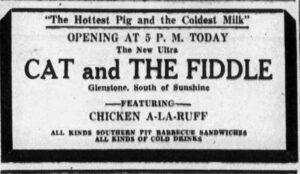
    • An advertisement

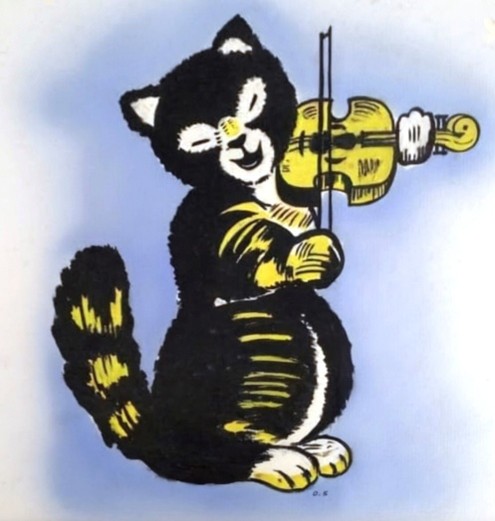
    • The whimsical logo of a cat playing the fiddle

    Springfield, Missouri Cat & Fiddle Restaurant Logo
    Advertisement for Cat and the Fiddle
    Newspaper ad for Cat and the Fiddle in Springfield, Missouri

    Beyond the images, the comments from Springfield residents—current and former—offered lived memories that help reconstruct what the community felt like during Herley’s time.

    Reconstructing Wages and Daily Reality

    Although not mentioned directly in the post, my additional research revealed that Black workers in Missouri during the 1940s often earned about 50 cents per hour—sometimes less, depending on discriminatory practices. According to the University of Missouri Library’s labor research archives, fifty cents in 1940 is equivalent to roughly $5.51 in early-2000s dollars.

    This small detail helps us understand not only Herley’s work environment but also the economic conditions shaping his daily life.

    Expanding the Search: Historical Societies & Artifact Sites

    One fact—the name of an employer—can open many doors. In Springfield alone, several resources help piece together family histories:

    For artifacts, postcards, and memorabilia, I consulted:

    These items, once tucked away in someone’s attic, now help fill in historical gaps.

    Building Your Ancestor’s Story With Curiosity

    This journey is a testament to what one small detail can reveal. A single draft card led me to a restaurant logo, wage estimates, community recollections, historical societies, and vintage artifacts—all of which help paint a fuller picture of Herley Bedell Jr.’s world.

    As family researchers, our task is to use curiosity and creativity to pull these threads together. Documents may give facts, but it is our interpretation, imagination, and follow-up research that transform those facts into ancestral stories worth telling.


  • Hillside Sankofa Virtual Genealogy Workshop December 2024 v

    Namaskar!

    We are mindful of the many activities that are taking place this glorious month. As such, please check out my in-person replacement: A short video to wrap up our year in ancestral research.

    Note that there is an approximate 2-minute pause in the video (8:55 – 11:15″) and that is your opportunity to plan your next genealogy goals for 2025.

    Expect a regular stream of Zoom and other virtual educational workshops.

    Thank you for support Good Genes Genealogy Services!

  • The forgotten stories of “Black Magnolias” from Oakland Cemetery

    First in a series

    Jihan Hurse, guide, Atlanta, GA.’s Oakland Cemetery’s “Black Magnolias” tour


    Atlanta, GA — On a chilly Saturday winter morning, Oakland Cemetery’s “Black Magnolias” Tour Guide and Author Jihan Hurse, excitedly gives highlights of the Black women who lie among its 70,000 “residents” in the city’s historic cemetery.

    The hour allotted for the tour was not enough time for all of the stories about accomplished Black women who are buried in Oakland Cemetery. Yet, the Black Magnolias tour was a refreshing collection of insight into the lives of Black women who were quiet and major influencers in the Atlanta region, Georgia and nationwide. Along the multiple paths laden mostly with bricks from days gone by, there were periodic stops at the chosen grave sites of many women who were doctors, lawyers, entrepreneurs, mothers, wives, educators and skilled technicians.

    The Black Magnolias story at Oakland Center is grounded in the fortitude of laundry or washerwomen whose citywide protest resulted in violence, arrests, intimidation and ultimately, a major victory for the Black women who refused to return to work unless their financial and work life demands were met. Their well-organized strike involved some 3,000 Black laundresses and it nearly imperiled the 1881 World’s Fair in Atlanta.

    Former slaves strike for better pay and work conditions in 1881.


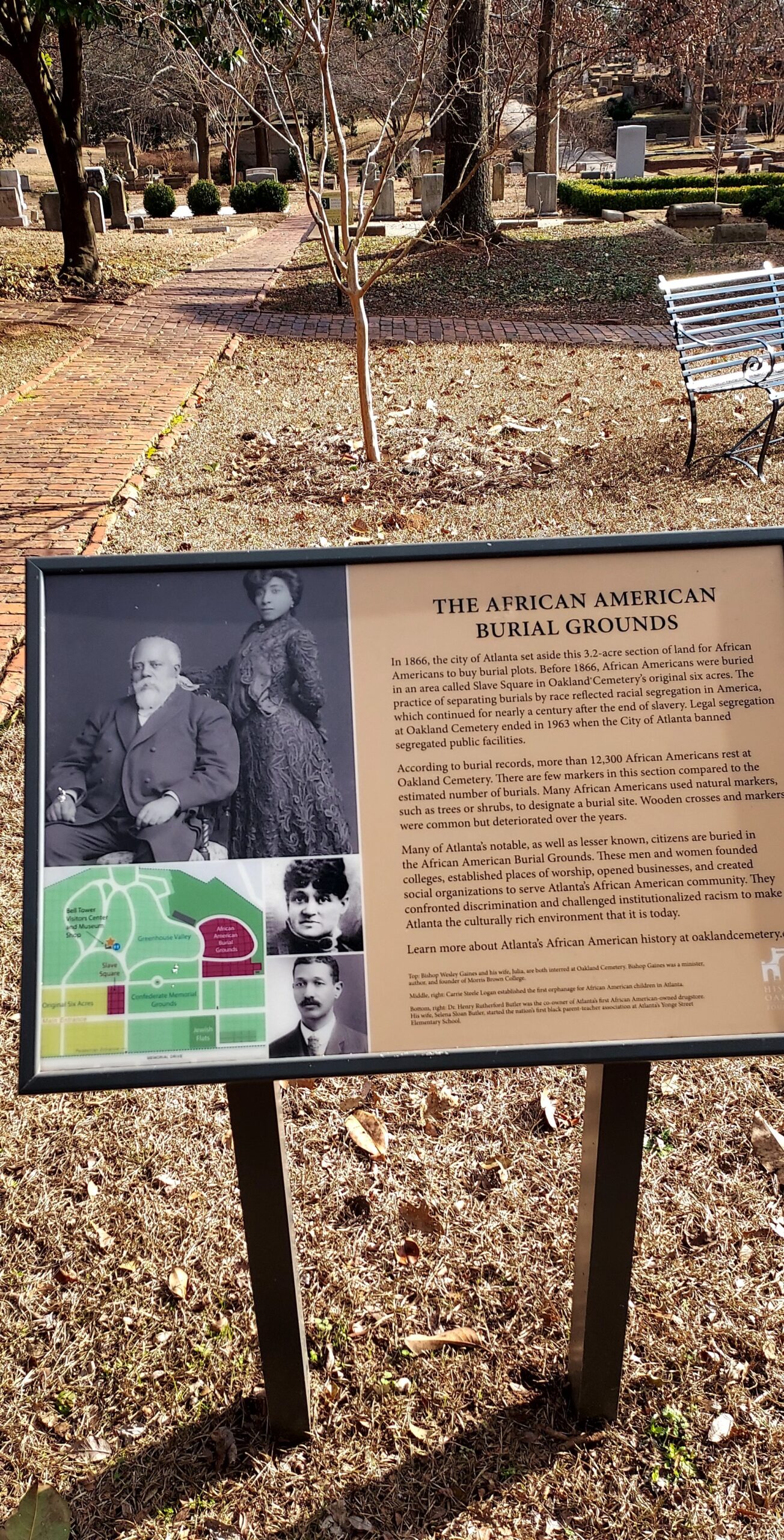
    While praising the domestic workers’ brave and labor market altering stance, Hurse strategically showcased other Black women whose legacies are integral to the success of the Atlanta area, Georgia and the nation. Despite the achievements that stretch beyond racial and geographical boundaries, most of the 12,000 African Americans — including approximately 1,800 slaves — are buried at Oakland in segregated sections known as the African American, Slave and Potters sections.

    There are also exceptions to the burial rules of segregating whites, Blacks and Jewish deceased persons from one another. When whites sought permissions to move the burial area initially designated for Black slaves, the graves were moved to the back of the cemetery. Some natural markers such as stones and sticks were not preserved. When that relocation was completed, some families such as the Boylstons asked for an additional set of permissions and that was to bury their “domestic worker,” Catherine Holmes, alongside their family members, according to Hurse. Elise Boylston had a special fondness for “Caty” and the young Boylston lady authored work that included her slave. By the 1960s, Blacks were not segregated to one area or two areas of the cemetery

    The grave marker for “Caty” Holmes, a “domestic worker” in the Boylston household, is left. This is a partial view of the extensive Boylston plot in the former Slave section of Oakland Cemetery.


    A dozen other Black Magnolias were pointed out by Hurse as significant based on a range of qualities such as the first Black lady buried in Oakland Cemetery, to the sisters who established the first hospital with 15 beds that was available to Black patients.

    Below is the grave site of Estella Henderson was an attorney, an author of books on race relations and was recognized by U.S. President William Howard Taft. Her sister, Dr. Blanche Beatrice Bowman Thompson, was a doctor whose practice pioneered specialty work for Black medical professionals in Georgia.


    Future blogs will highlight the historical women of Oakland Cemetery. For those interested in the many stories of the Black men and women buried in Oakland Cemetery, the virtual tour is found through this service:

    Good Genes Genealogy Services encourages readers of this blog to investigate similar historical stories in cemeteries that bear great stories such as those found at the Oakland Cemetery in Atlanta.


    The 48-acre cemetery that is also considered a city park. The Oakland Cemetery Foundation conducts several tours each year, including a handful devoted to honoring Black history and women’s history.


  • Closing the Month of Sankofa with Ancestral Prayer and Healing

    The gathering for ancestral prayer and healing at Hillside International Truth Center, Atlanta, GA

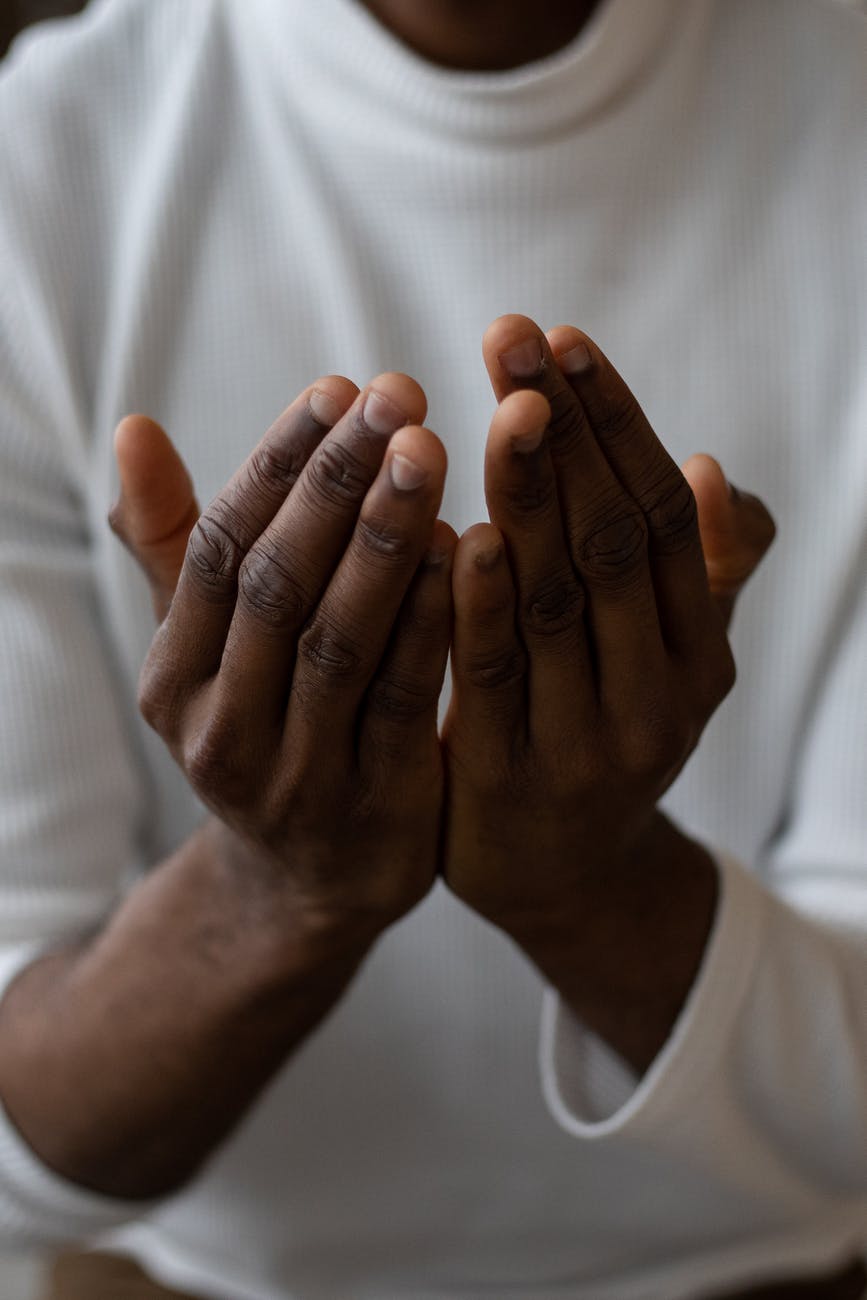
    On a warm Saturday, Feb. 26, 2022, Hillside’s Presiding Bishop Dr. Jack L. Bomar, led the sacred, community “Ancestral Prayer” ceremony. It included drumming that girded the rhymical and ancestral honoring blessings with the pouring of libations by Hillside member Sharon A. Smith. Today, she said, “I am the High Priestess” while acknowledging the oldest person attending the ceremony to give her the permission to continue.

    The ceremony was the culmination of a monthlong series of genealogy workshops led by the Good Genes Genealogy Services team. GGGS donated its services to its host, Hillside International Truth Center, which is undergoing a massive renovation on the church’s nearly 50-year-old facility.

    The outdoor ceremony was highlighted by Bishop Bomar leading the attendees in a process that began with everyone listing their ancestors on a blue sheet of paper. Everyone was asked to call the names of the ancestors and affirm the following prayer:

    Some 60 persons recited the prayer and continued their family ceremony to remove any negative Karma they felt towards ancestors, and they symbolically cancelled all ancestral debt with the purpose of their families moving forward in all levels of prosperity.

  • @pinterest is the site for the genealogy hobbyists

    Join my group board, Wead Write Away Black Genealogy on Pinterest! https://pin.it/4RaHXQJ

  • Honorable lives today for tomorrow

    Angels in ancestry

    The link contains wonderful words of advice. It reminds us that we are future ancestors.

  • #36 Go Back: Find a piece of history by taking a piece of advice

    The most valuable piece of advice that I received when I was new to the family genealogy research, was to return the search process and review the same documents that I had earlier discovered.

    Just days ago, I reviewed the information on my ancestors – again – I found new information about my ancestors. My breaks can be attributed to the ancestry.com’s ThruLines™ . This service is available to everyone with completed DNA results. Some 10 years ago or so when the DNA tests were first available to females, I jumped at the chance to get my results based on my desire to locate my ancestors. It continues to pay dividends today as records are constantly updated

    She is listed as my 4th great grandmother born Oct. 11, 1806, in South Carolina and who died on Feb. 20, 1892 in Saline County, Arkansas.

    What’s striking is how grandma is spelled on Great-Great-Great-Great Grandmother Elizabeth Jane Hardman Hayes tombstone. Also, I love the designation of the days and moths that she lived her life. It honors the great Elizabeth J. Wade Hardman Hayes.

    For a couple of years, I celebrated that I located my 4th Great Grandmother. Now there is more: I just located her father, mother, siblings and her spouses, thanks to ThruLines™.

    I found my 5th Great Grandfather! – Maybe

    Notice the inscription that details Robert Henly Courts Wade being among the first white settlers in DeKalb County, Georgia where he claimed his family’s homestead in 1829.

    Update: Friday, Oct. 8, 2021: With ancestry.com, we are examining whether this linkage is indeed my 5th GreatGrandfather. Stay tuned as these twists and turns are natural in the genealogy search for our relatives.

    Thanks to the ancestry.com additional genealogy research tool, ThruLines™, I was able to work through the hints complete with a grave marker and public trees from others researching the same man. It provided this public path to find my common ancestors who seemingly were hiding in the piles of research materials.  and private paths to my common ancestors. It is a huge help in narrowing down who is and isn’t potentially related to me. The ancestors whose profiles are not public via others who are searching for their loved ones, are only listed, yet additional information about those deemed “private” is not provided. That is still a big help as I am seeking to match names, dates, relationships, locations and other hints to gain full access to the great people who walked this earth before me.

    Guess what? These ancestors are buried in a private family cemetery, Wade Cemetery, just a few miles from my current home (Ann) in DeKalb County, Georgia. I will share more in future writings.

    Five generations from Robert Henly Courts Wade to Ann Lineve Wead Kimbrough

    To learn more about the exciting, step-by-step findings about our maternal ancestors who are listed as “white, Mulatto, yellow and Colored,” check out the Good Genes Genealogy Services’ e-book for November 2021. In the meantime, check out, like and follow our tweets, @GoodGensGen, @goodgenesgenealogy on WordPress and fb @goodgenesgenealogy.

    :

  • #18 Make sure you write your own obituary before joining the ancestors😮😮

    #18 Make sure you write your own obituary before joining the ancestors😮😮

    Ouch!

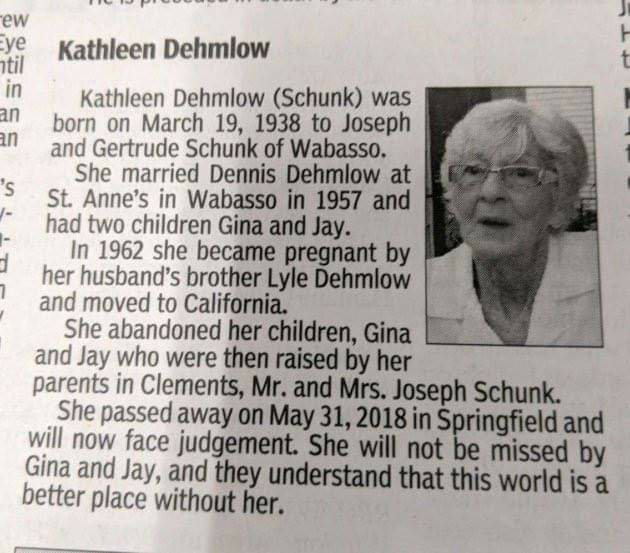
    Example #1 on why you should protect your legacy.

    Be sure to double click on image to read the entire obit!