Category: Genealogy

  • Our ancestors weren’t sad all the time

    Our ancestors weren’t sad all the time

    As I finished the last sentence of a recent workshop detailing the challenges of locating our African Diaspora ancestors—many of whom survived the horrific voyages across the Atlantic and Indian Oceans—I paused. It occurred to me that while much of my research involves serious and often painful history, there is another side to their lives.

    I paused.

    Our ancestors experienced hardship, but hardship was not their only experience.

    I know from my own character and life that my ancestors had to have a sense of humor. Perhaps that’s why I have always loved laughter myself. Years ago, I even performed in two student productions at Chicago’s renowned Second City Theatre, famous for launching generations of comedians.

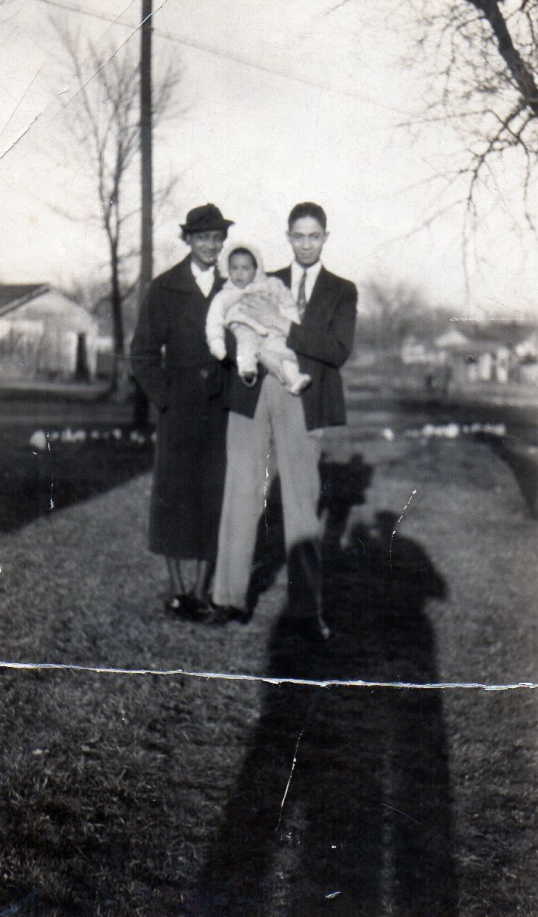
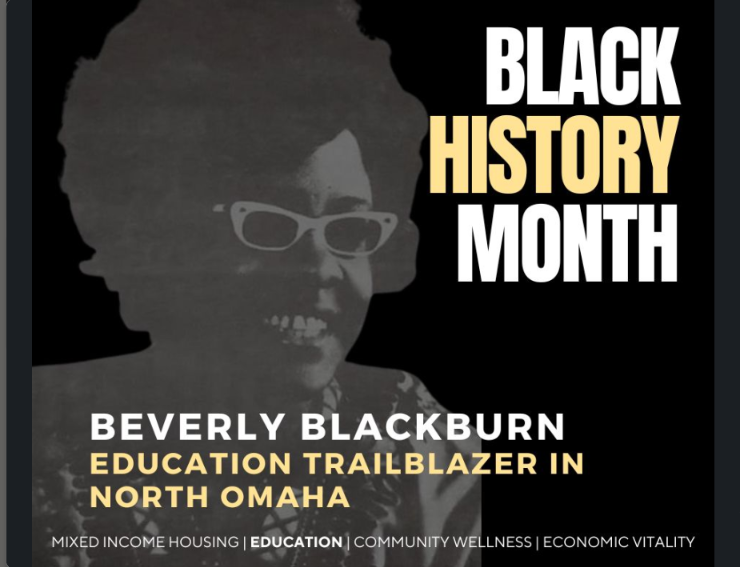
    Surely my ancestors — and yours — laughed. I’ve heard the stories and as a young child, I experienced the natural humor and fun-loving nature of my paternal aunt, Dr. Beverly Ann Wead Blackburn Jones.

    https://www.linkedin.com/company/seventy-five-north-revitalization-corporation/posts/?feedView=all

    I didn’t have to imagine what ancestral joy looked like. I saw it in my beloved Aunt Beverly. I recall how my ancestor aunt used her effervescing smile and quick wit to easily lift the mood of any room she entered. This highly regarded educator and community transformer dealt with serious matters and was also a terrific storyteller. As my father, Dr. Rodney S. Wead, described his sister, “she was always the life of the party.”

    It was often said that my aunt’s light-hearted attributes were derived from my namesake and great-grandmother, Ann Crum Green. My great-grandmother would keep us laughing by changing her voice to mimic others and blurting funny one-liners that could not be challenged by anyone because she was my paternal family;’s matriarch. Great-grandmother Ann was my Aunt Beverly’s maternal grandmother and likely sparked the humor touch in her. Ann Green was born at the dawn of the 20th century, in the late 1800s, and spent her adult life as a house servant and laundress.

    They teased each other. Danced. Dressed up. Fell in love. Gossiped. Told outrageous stories. Sang too loudly. Cooked something everybody wanted. Had nicknames nobody could explain. Took photographs in their best clothes. Went to picnics. Played cards. Courted. Celebrated weddings. Sat on porches. Traveled. Joined clubs. Showed off.

    And, undoubtedly, they occasionally got on one another’s last nerve!

    More than oppression

    African Diaspora genealogy contains difficult truths. Our ancestors experienced hardship, but hardship was not their only experience. They also experienced love, humor, friendship, faith, ambition, creativity, family, food, music, travel, community, accomplishment—and ordinary days that mattered.


  • Extra Extra! One of My Favorite Places to Search African Diaspora Ancestry

    Extra Extra! One of My Favorite Places to Search African Diaspora Ancestry

    One of my favorite places to search for African Diaspora ancestry is the U.S., African American Newspapers, 1829 – 1947 collection. It is one of the few research sources where I willingly become distracted.

    I often begin with a specific objective—a person, a family, or another subject that needs solving. Yet often I find myself reading entire newspaper pages. The articles, advertisements, editorials, and community announcements provide a rich understanding of the times in which our ancestors lived.

    Sometimes the most valuable discoveries have nothing to do with the individual I originally set out to find.

    A Unique “Census” for Black Folk

    The African American newspaper collection serves as a critical research center for locating information about African Diaspora relatives who can otherwise be difficult to trace through traditional records. More importantly, these newspapers reveal how Black individuals and communities lived, worked, worshipped, celebrated, and persevered during some of the most challenging periods in American history.

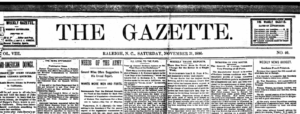
    While researching the life of Rev. LeGrand Lee “L.L.” Thomas (born September 1865 in Bishopville, South Carolina, and died April 13, 1917, in Manning, South Carolina), I encountered several fascinating articles in  The Gazette on Nov. 21, 1896.
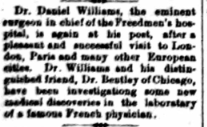
    One brief article reported that pioneering physician Dr. Daniel Hale Williams was traveling to Europe with another Black physician to study medical advancements.

    In just a few lines, I learned two important facts. First, Dr. Williams was serving as chief of Freedmen’s Hospital (now Howard University Hospital) . Second, he was traveling internationally in pursuit of medical knowledge and professional development. Those details transformed him from a historical name into a living; ambitious professional engaged with the wider world.
    Other articles in the same issue contained a complete listing of Black attendees at a “Colored State Fair” near Raleigh, North Carolina. To a genealogist, such a list can function almost like a community census, documenting individuals who may not appear elsewhere in records of the era.

    Then another article captured my attention.

    “Col. A.B. Andrews Thinks Well of the Colored Race”

    The headline alone was enough to stop me.

    The article was not an advertisement. Instead, it appeared among reports about the Colored State Fair and other community news. Naturally, I wondered why a former Confederate colonel would feel compelled to publicly express such sentiments in a Black newspaper.

    Researching Col. A.B. Andrews did not fully answer my question, but I did learn that he:

    • Served as a Confederate cavalry officer;
    • Worked as a railroad executive;
    • Was trained as an engineer before the Civil War;
    • Saw active battlefield service; and
    • Contributed significantly to North Carolina’s transportation network after the war.

    Although his motivations remain unclear, the article offered a fascinating glimpse into the complex racial and social dynamics of the late nineteenth century.

    Why the Black Press Matters

    Beginning with the founding of Freedom’s Journal in 1827, hundreds of Black newspapers chronicled the lives, aspirations, achievements, migrations, and struggles of African Americans.

    Period Approximate Number
    Before the Civil War (1827–1861) About 30 Black newspapers were established. (OUPblog)
    By 1880 About 30 Black newspapers were operating nationally. (The New Yorker)
    By the start of World War I (1914–1917) Around 300 Black newspapers were being published. (The New Yorker)
    Entire history of the Black press More than 3,000 African American newspapers, magazines, and presses have existed since 1827. (Encyclopedia)

    For family historians and professional genealogists, these newspapers preserve stories and personal details that often cannot be found elsewhere. I grew up in Omaha, Nebraska and Chicago, Illinois. I was fortunate that the weekly Omaha Star newspaper was my anchor as a young person who longed to read news about Black people in my community and around the world. The same was true of the Chicago Defender newspaper, an iconic brand in the African American newspaper sector. I am fortunate to brag that I have published articles in both of these historic, dynamic papers that well-serve and served our communities.

    By the beginning of World War I, approximately 300 Black newspapers were being published throughout the United States. Over the course of U.S.  history, more than 3,000 Black newspapers, magazines, and presses have existed.

    These sacred publications documented:

    • Births and deaths;
    • Athletic feats;
    • Marriages and anniversaries;
    • Church activities;
    • School achievements;
    • Business ventures;
    • Military service;
    • Social events;
    • Community leadership; and
    • Migration patterns.

    For many African American families, Black newspapers preserve the only surviving evidence that an ancestor lived, worked, worshipped, or contributed to a community.

    A Funny Thing Happened on the Way to the Search

    I eventually located the information I sought regarding Rev. Thomas’s wife. However, the search produced much more than I expected.

    Because Rev. Thomas was a well-known minister in the Raleigh community, the newspaper references extended far beyond him. The searches revealed family members, church activities, community events, and social networks connected to his life.

    Once again, the lesson was clear. Sometimes we search for one person and discover an entire community.

    That is the beauty of African Diaspora genealogy research. The records do not simply tell us where our ancestors lived. They tell us how they lived. Occasionally, we are introduced to people and stories we never expected to find.


    zza
     

  • 10 Steps to Writing the Perfect Prospectus

    Nullam imperdiet, sem at fringilla lobortis, sem nibh fringilla nibh, idae gravida mi purus sit amet erat. Ut dictum nisi massa.Maecenas id justo rhoncus, volutpat nunc sit amet, facilisiulum scelerisque dictum Maecenas id justo rhoncus, volutpat nunc sit amet, facilisis sem. Vestibulum scelerisque dictsap.

    I think it’s important people see themselves in film, but it’s even more important they see people they maybe don’t know as well.

    Fusce eget malesuada eros. Vivamus eros dolor, auctor aliquet dolor sit amet, euismod imperdiet ex. Nam sed nulla sed massa suscipit feugiat. Mauris et nunc ornare, placerat ex ac, interdum magna. Vestibulum urna massa, hendrerit sed fringilla in, mollis vitae tellus. Vestibulum mattis nulla elementum tristique fringilla. Morbi in sollicitudin erat. Ut quis tristique mauris. Proin risus purus, iaculis a orci ut, cursus bibendum panisl. Duis aliquam gravida eros eget molestie. Class aptent taciti sociosqu ad litora torquent per conubia nostra, per inceptos himenaeos. Suspendisse pharetra, arcu eu porta aliquet, eros dui tincidunt purus, eu vehicula magna nisl in purus.

    Vivamus eros dolor, auctor aliquet dolor sit amet, euismod imperdiet ex. Nam sed nulla sed massa suscipit feugiat. Mauris et nunc ornare, placerat ex ac, interdum magna. Vestibulum urna massa, hemolli

  • What make you beautiful with us

    Nullam imperdiet, sem at fringilla lobortis, sem nibh fringilla nibh, idae gravida mi purus sit amet erat. Ut dictum nisi massa.Maecenas id justo rhoncus, volutpat nunc sit amet, facilisiulum scelerisque dictum Maecenas id justo rhoncus, volutpat nunc sit amet, facilisis sem. Vestibulum scelerisque dictsap.

    I think it’s important people see themselves in film, but it’s even more important they see people they maybe don’t know as well.

    Fusce eget malesuada eros. Vivamus eros dolor, auctor aliquet dolor sit amet, euismod imperdiet ex. Nam sed nulla sed massa suscipit feugiat. Mauris et nunc ornare, placerat ex ac, interdum magna. Vestibulum urna massa, hendrerit sed fringilla in, mollis vitae tellus. Vestibulum mattis nulla elementum tristique fringilla. Morbi in sollicitudin erat. Ut quis tristique mauris. Proin risus purus, iaculis a orci ut, cursus bibendum panisl. Duis aliquam gravida eros eget molestie. Class aptent taciti sociosqu ad litora torquent per conubia nostra, per inceptos himenaeos. Suspendisse pharetra, arcu eu porta aliquet, eros dui tincidunt purus, eu vehicula magna nisl in purus.

    Vivamus eros dolor, auctor aliquet dolor sit amet, euismod imperdiet ex. Nam sed nulla sed massa suscipit feugiat. Mauris et nunc ornare, placerat ex ac, interdum magna. Vestibulum urna massa, hemolli

  • Ut wisi enim ad minim veniam

    Nullam imperdiet, sem at fringilla lobortis, sem nibh fringilla nibh, idae gravida mi purus sit amet erat. Ut dictum nisi massa.Maecenas id justo rhoncus, volutpat nunc sit amet, facilisiulum scelerisque dictum Maecenas id justo rhoncus, volutpat nunc sit amet, facilisis sem. Vestibulum scelerisque dictsap.

    I think it’s important people see themselves in film, but it’s even more important they see people they maybe don’t know as well.

    Fusce eget malesuada eros. Vivamus eros dolor, auctor aliquet dolor sit amet, euismod imperdiet ex. Nam sed nulla sed massa suscipit feugiat. Mauris et nunc ornare, placerat ex ac, interdum magna. Vestibulum urna massa, hendrerit sed fringilla in, mollis vitae tellus. Vestibulum mattis nulla elementum tristique fringilla. Morbi in sollicitudin erat. Ut quis tristique mauris. Proin risus purus, iaculis a orci ut, cursus bibendum panisl. Duis aliquam gravida eros eget molestie. Class aptent taciti sociosqu ad litora torquent per conubia nostra, per inceptos himenaeos. Suspendisse pharetra, arcu eu porta aliquet, eros dui tincidunt purus, eu vehicula magna nisl in purus.

    Vivamus eros dolor, auctor aliquet dolor sit amet, euismod imperdiet ex. Nam sed nulla sed massa suscipit feugiat. Mauris et nunc ornare, placerat ex ac, interdum magna. Vestibulum urna massa, hemolli

  • Watch the Sony a9 Livestream Event Online

    Nullam imperdiet, sem at fringilla lobortis, sem nibh fringilla nibh, idae gravida mi purus sit amet erat. Ut dictum nisi massa.Maecenas id justo rhoncus, volutpat nunc sit amet, facilisiulum scelerisque dictum Maecenas id justo rhoncus, volutpat nunc sit amet, facilisis sem. Vestibulum scelerisque dictsap.

    I think it’s important people see themselves in film, but it’s even more important they see people they maybe don’t know as well.

    Fusce eget malesuada eros. Vivamus eros dolor, auctor aliquet dolor sit amet, euismod imperdiet ex. Nam sed nulla sed massa suscipit feugiat. Mauris et nunc ornare, placerat ex ac, interdum magna. Vestibulum urna massa, hendrerit sed fringilla in, mollis vitae tellus. Vestibulum mattis nulla elementum tristique fringilla. Morbi in sollicitudin erat. Ut quis tristique mauris. Proin risus purus, iaculis a orci ut, cursus bibendum panisl. Duis aliquam gravida eros eget molestie. Class aptent taciti sociosqu ad litora torquent per conubia nostra, per inceptos himenaeos. Suspendisse pharetra, arcu eu porta aliquet, eros dui tincidunt purus, eu vehicula magna nisl in purus.

    Vivamus eros dolor, auctor aliquet dolor sit amet, euismod imperdiet ex. Nam sed nulla sed massa suscipit feugiat. Mauris et nunc ornare, placerat ex ac, interdum magna. Vestibulum urna massa, hemolli

  • Reactions to discovering our roots

    Celebrity Activist shocked with her “Mayflower” ancestors while Canadian celebrates his Black ancestors

    We are all connected. Ongoing findings among the skilled genealogy and DNA researchers and amateurs, confirm such.

    The following two examples offer great hope to those who are steadfast in searching for the accurate stories of our ancestors.

    Finding her Mayflower roots

    Our favorite PBS show, “Finding Your Roots with Henry Louis Gates, Jr.” regularly features many genealogical surprises among its celebrity guests. A recent episode features well-known human rights activist, professor and author, Angela Davis. Among the startling findings for Davis is that her ancestral roots are traced to the original families who sailed to the early United States on the Mayflower vessel in the 1600s. The Mayflower travelers are attributed to slavery.

    Davis’ reaction to Gates’ revelation that was based on sound genealogy and DNA research by his team, went viral with more than four million views in the first 24 hours of the social media posts.


    African Roots found in Scottish Canadian

    From the Orillamatters.com service

    Paul Barber, also a photography hobbyist, from Ontario, Canada, was featured in a local newspaper article to discuss his maternal family, the Hendersons. He traced his family’s travel from Virginia to Canada. He referred to his brick walls as being “stuck in the mud” with his “three times great grandparents. That is, until he dug a little deeper. And deeper.

    Barber took the DNA analysis, and it yielded more results. That’s where he learned of his roots in Benin and Togo. It is the time and place where the African Slave Trade was recorded. He said that is how he began to take apart the brick wall, albeit he knew of his Scottish ancestors. It was at that point that Barber said he landed upon a scenario that “he was not fond of.”

    What he learned and how he used slower methods of research — regular mail — and current technology to locate his full story, is worth the time one will spend in his recent, hour-long talk. He speaks of the highs and lows of locating ancestors and learning how his family came to include Black people. “I have to know,” he said.

    Help for the amateur genealogy researcher

    The two examples provided in this blog are examples of the possibilities for amateur-to-professional ancestry researchers. Our pro tips:

    1. Develop a straight-forward, uncomplicated plan to conduct research.
    2. Follow Barber’s tenacity to stick with a plan to fully research your family.
    3. Wade through the valleys and hills.
    4. Celebrate all progress.
    5. Share, publish your results.

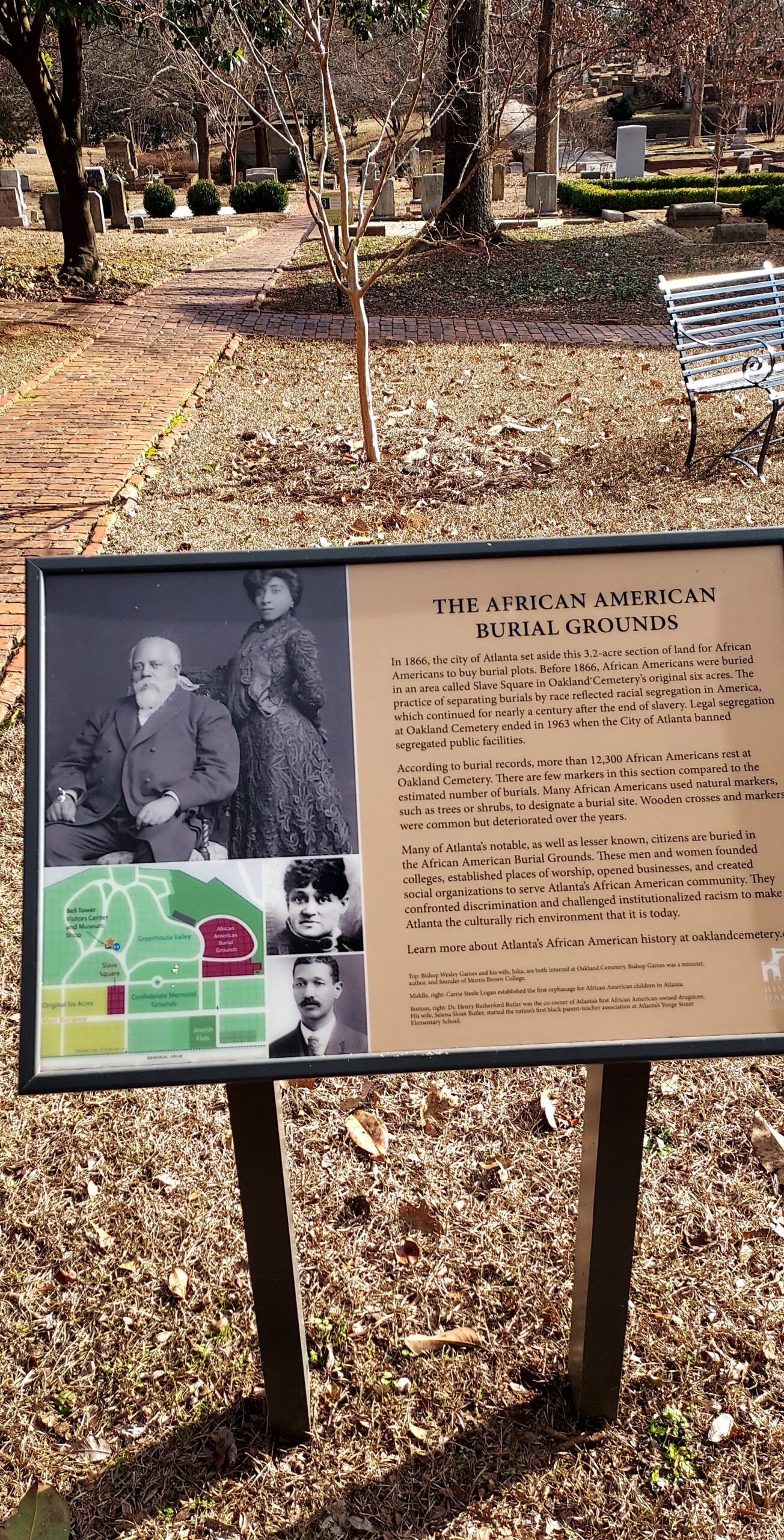
  • The forgotten stories of “Black Magnolias” from Oakland Cemetery

    First in a series

    Jihan Hurse, guide, Atlanta, GA.’s Oakland Cemetery’s “Black Magnolias” tour


    Atlanta, GA — On a chilly Saturday winter morning, Oakland Cemetery’s “Black Magnolias” Tour Guide and Author Jihan Hurse, excitedly gives highlights of the Black women who lie among its 70,000 “residents” in the city’s historic cemetery.

    The hour allotted for the tour was not enough time for all of the stories about accomplished Black women who are buried in Oakland Cemetery. Yet, the Black Magnolias tour was a refreshing collection of insight into the lives of Black women who were quiet and major influencers in the Atlanta region, Georgia and nationwide. Along the multiple paths laden mostly with bricks from days gone by, there were periodic stops at the chosen grave sites of many women who were doctors, lawyers, entrepreneurs, mothers, wives, educators and skilled technicians.

    The Black Magnolias story at Oakland Center is grounded in the fortitude of laundry or washerwomen whose citywide protest resulted in violence, arrests, intimidation and ultimately, a major victory for the Black women who refused to return to work unless their financial and work life demands were met. Their well-organized strike involved some 3,000 Black laundresses and it nearly imperiled the 1881 World’s Fair in Atlanta.

    Former slaves strike for better pay and work conditions in 1881.


    While praising the domestic workers’ brave and labor market altering stance, Hurse strategically showcased other Black women whose legacies are integral to the success of the Atlanta area, Georgia and the nation. Despite the achievements that stretch beyond racial and geographical boundaries, most of the 12,000 African Americans — including approximately 1,800 slaves — are buried at Oakland in segregated sections known as the African American, Slave and Potters sections.

    There are also exceptions to the burial rules of segregating whites, Blacks and Jewish deceased persons from one another. When whites sought permissions to move the burial area initially designated for Black slaves, the graves were moved to the back of the cemetery. Some natural markers such as stones and sticks were not preserved. When that relocation was completed, some families such as the Boylstons asked for an additional set of permissions and that was to bury their “domestic worker,” Catherine Holmes, alongside their family members, according to Hurse. Elise Boylston had a special fondness for “Caty” and the young Boylston lady authored work that included her slave. By the 1960s, Blacks were not segregated to one area or two areas of the cemetery

    The grave marker for “Caty” Holmes, a “domestic worker” in the Boylston household, is left. This is a partial view of the extensive Boylston plot in the former Slave section of Oakland Cemetery.


    A dozen other Black Magnolias were pointed out by Hurse as significant based on a range of qualities such as the first Black lady buried in Oakland Cemetery, to the sisters who established the first hospital with 15 beds that was available to Black patients.

    Below is the grave site of Estella Henderson was an attorney, an author of books on race relations and was recognized by U.S. President William Howard Taft. Her sister, Dr. Blanche Beatrice Bowman Thompson, was a doctor whose practice pioneered specialty work for Black medical professionals in Georgia.


    Future blogs will highlight the historical women of Oakland Cemetery. For those interested in the many stories of the Black men and women buried in Oakland Cemetery, the virtual tour is found through this service:

    Good Genes Genealogy Services encourages readers of this blog to investigate similar historical stories in cemeteries that bear great stories such as those found at the Oakland Cemetery in Atlanta.


    The 48-acre cemetery that is also considered a city park. The Oakland Cemetery Foundation conducts several tours each year, including a handful devoted to honoring Black history and women’s history.


  • Just in time for our Sankofa Genealogy class

    Third class in series: Saturday, Feb. 19, 2022

    10 – 11 a.m.

    Read Rev. Sandy Rodgers‘ tribute in honor of our ancestor! Congrats to all class members who are willingly expressing their appreciation to our ancestors by producing creative works today.