As I finished the last sentence of a recent workshop detailing the challenges of locating our African Diaspora ancestors—many of whom survived the horrific voyages across the Atlantic and Indian Oceans—I paused. It occurred to me that while much of my research involves serious and often painful history, there is another side to their lives.
I paused.
Our ancestors experienced hardship, but hardship was not their only experience.
I know from my own character and life that my ancestors had to have a sense of humor. Perhaps that’s why I have always loved laughter myself. Years ago, I even performed in two student productions at Chicago’s renowned Second City Theatre, famous for launching generations of comedians.
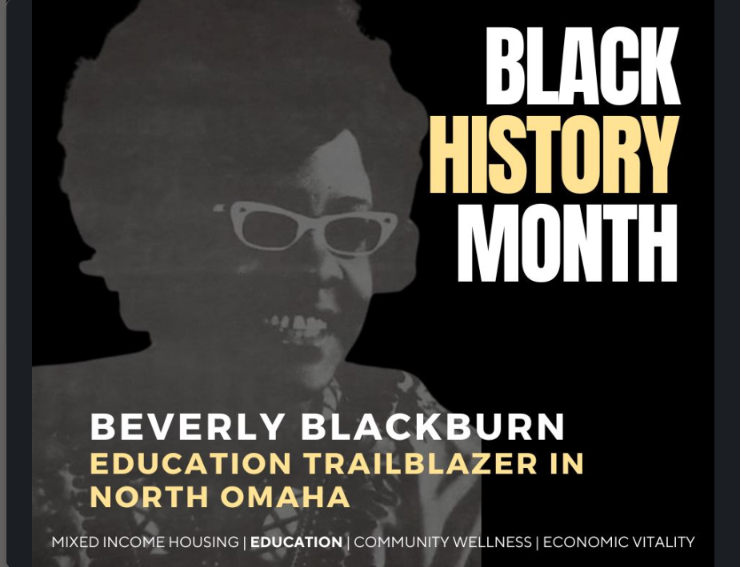
Surely my ancestors — and yours — laughed. I’ve heard the stories and as a young child, I experienced the natural humor and fun-loving nature of my paternal aunt, Dr. Beverly Ann Wead Blackburn Jones.
I didn’t have to imagine what ancestral joy looked like. I saw it in my beloved Aunt Beverly. I recall how my ancestor aunt used her effervescing smile and quick wit to easily lift the mood of any room she entered. This highly regarded educator and community transformer dealt with serious matters and was also a terrific storyteller. As my father, Dr. Rodney S. Wead, described his sister, “she was always the life of the party.”
It was often said that my aunt’s light-hearted attributes were derived from my namesake and great-grandmother, Ann Crum Green. My great-grandmother would keep us laughing by changing her voice to mimic others and blurting funny one-liners that could not be challenged by anyone because she was my paternal family;’s matriarch. Great-grandmother Ann was my Aunt Beverly’s maternal grandmother and likely sparked the humor touch in her. Ann Green was born at the dawn of the 20th century, in the late 1800s, and spent her adult life as a house servant and laundress.
They teased each other. Danced. Dressed up. Fell in love. Gossiped. Told outrageous stories. Sang too loudly. Cooked something everybody wanted. Had nicknames nobody could explain. Took photographs in their best clothes. Went to picnics. Played cards. Courted. Celebrated weddings. Sat on porches. Traveled. Joined clubs. Showed off.
And, undoubtedly, they occasionally got on one another’s last nerve!
More than oppression
African Diaspora genealogy contains difficult truths. Our ancestors experienced hardship, but hardship was not their only experience. They also experienced love, humor, friendship, faith, ambition, creativity, family, food, music, travel, community, accomplishment—and ordinary days that mattered.
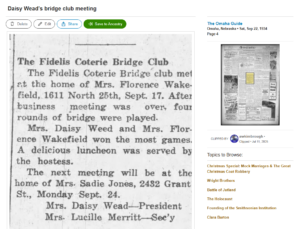
Paternal grandmother Daisy Shanks Wead was the president of the bridge club in 1934
Historical newspapers remain one of my favorite starting points when I am curious about what life was like for my ancestors. While perusing the newspapers.com, I found a series of articles about my paternal grandmother and grandfather. My grandmother was a co-organizer of a bridge club in Omaha, Nebraska, in the early 1930s. Who knew? Surely, not my Dad, Rodney Wead, who is the oldest son to Daisy and Samuel Luster Wead. My Dad is also a bridge player as was his father who also started a bridge group in Omaha.
I did not know that both grandparents were ardent bridge players. It helps to further add texture and shape their lives within our memories of them during the Jim Crow era of racial discrimination in the United States, even in the Midwestern areas.
Yet, I remain appreciative of newspapers for serving a vital role in preserving the scattered facts of our collective family’s histories. For African Diasporan and Indigenous Americans, newspapers were essential in extending facts that often were jumbled or omitted.
‘Read all about it’
Let’s take a closer look at some of the unique features of historical newspapers.
The authenticity of the content: These are not just random pictures or generic stories. These are real, untampered artifacts from my family history. This adds a personal touch and a deeper level of connection with the readers.
A slice of life: Through these photographs and even letters that I discovered, I got a slice of life from the 1930s – a time when the world was on the brink of a major change. The post captures the simplicity and the small joys of everyday life in a way that is both mesmerizing and eye-opening.
Lessons and values: Beyond the nostalgia and the historical value, the short articles featuring my grandmother, grandfather and their friends, delves into the lessons and values that my grandparents passed down to me. From generosity to resilience to gratitude to love for family, these are timeless principles that still hold relevance in our lives today.
Grandma and Grandpa’s hands
The articles featured in this post and other similar reports on the ladies’ and gentlemen’s bridge games are more than the short articles reveal. It’s about the journeys of two African Americans gaining their form of notoriety received from having their names in the newspapers. Those were the days when newspapers were the “gospel” and rarely were there good features in the mainstream media about the pleasant lives of African Americans. These articles, however, were in a time limited African American owned newspaper, the Omaha Guide.
I paused and imagined being in my grandparents’ space and watching them win their respective bridge game. I was fortunate to see my grandfather play bridge and I can still hear the laughter and slapping of cards on the table as they enjoyed snacks and drinks. I transported to a different time and place in thinking about their fun times. I could feel the emotions, the joy in their hosting duties with their respective bridge club.
I urge you to reconnect with your own family history and discover the untold stories and memories that lie dormant. It’s an opportunity to honor our roots and the people who came before us, who have contributed to making us who we are today. So join me on this journey to 1934, and let’s uncover the “Precious Finds” together. My Dad was born in 1935 and the newspaper clippings about my grandmother’s bridge games came to a screeching halt to make room for the article listing the birth of a son to his parents.
This December 1963 photo unlocked a few mysteries about our maternal grandmother
Often the Good Genes Genealogy Services team will encourage our fellow ancestry history seekers to review your family documents, spaces such as attics and garages, and other artifacts for clues to our family history.
We used our advice.
Searching through our grandmother’s boxes, we found cool materials that revealed brand new information about her job title at the United States’ only military air command headquarters.
Give yourself a present from the past. Happy searching!
Seated left, “Mama” Helen Wilks Owen Douthy — maternal grandmother of the Good Genes Genealogy Services team — was 45 years old when this photo was taken. She was a cast member and costume staff member of the Omaha, Nebr.-based The Repertory Players. She is pictured here as they celebrated the wrap of their play, “Antigone.” Antigone is a classic Greek tragedy story about “man’s relationship to man, to the state, and to the gods.” It is worth reading and viewing the drama that tells of the cruel fate inflicted upon the deceased King Oedipus.
This article opened brick wall
The above find was hidden in one of many scrapbooks of our Mama Helen. For the first time, we learned that her title at the Strategic Air Command’s Offutt Air Force Base was as a weapon systems division secretary. The article was published in the SAC newsletter. Recently, we confirmed that Mama Helen was indeed a “Hidden Figure,” much like the ladies depicted in the award-winning non-fiction work.
This paper ticket shares much about Mama Helen’s resolve to be true to her passion of serving in the theatre. She was still serving as a secretary for a major SAC official and her work location was about 32 miles from Mama Helen’s home. The show began at 8:30 p.m. on five Sundays through December 1963. Mama Helen arrived home late and had to rise early to report to work by 8 a.m. She never had a driver’s license and did not drive. She depended on shared transportation. During the winter months, the likely icy and snowy roads were a bit dangerous, yet our “Hidden Figure” always accomplished her mission to work on the government’s secret work assignments.
This is a blast from the past: telegrams! It was a chic thing to send to anyone in 1963 as it meant that they paid $$s to deliver a message to intended receivers in record time. The telegram preceded today’s email system.
Bravo! Mama Helen was a cast member and helped to design and create the costumes. As children, we would often encounter various costumes for plays that were prepped in Mama Helen’s basement sewing cave.
I grew up in a city where rage, lies, and fears led to the savage killing of a disabled African American man who was accused of accosting a “Karen.” It was 1919. I never knew the story growing up in my hometown of Omaha, Nebraska.
If we must die—let it not be like hogs Hunted and penned in an inglorious spot, While round us bark the mad and hungry dogs, Making their mock at our accursed lot. If we must die—oh, let us nobly die, So that our precious blood may not be shed In vain; then even the monsters we defy Shall be constrained to honor us though dead! Oh, Kinsmen! We must meet the common foe; Though far outnumbered, let us show us brave, And for their thousand blows deal one deathblow! What though before us lies the open grave? Like men, we’ll face the murderous, cowardly pack, Pressed to the wall, dying, but fighting back!
“During the Red Summer of 1919, white mobs repeatedly targeted Black World War I veterans and servicemen.
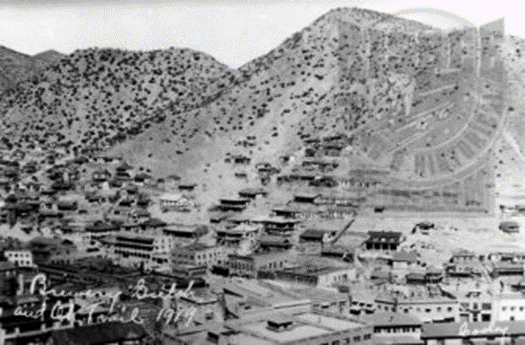
On July 3, 1919, active members of the Army’s segregated 10th Cavalry Regiment (“Buffalo Soldiers”) were in Bisbee, Arizona, to participate in the town’s Independence Day parade. In the early 20th century, Bisbee was a mining town with a history of racial stratification and unrest. The white residents actively discriminated against Arizona’s Mexican, Chinese, and African American laboring communities. It was a “sundown town” for Chinese Americans, and Black laborers had limited employment options.
With tensions high and discrimination rampant, it is not surprising that a fight broke out between a white policeman and a handful of Black soldiers in Brewery Gulch. According to a New York Times report about the violence in Bisbee, local white law enforcement “planned deliberately to aggravate the Negro troops so that they would furnish an excuse for police and deputy sheriffs to shoot them down.”
Add to the anxious times in the United States due to a slumping economy and fears of many white residents in the South who saw the emptying of their workforce during the Great Migration. Meanwhile, scarier and violent white residents met the new African American immigrants in the North with fears of taking jobs and integrating neighborhoods.”
Yet, I never knew about such heinous crimes in 1919 in my hometown of Omaha, Nebraska. Neither did my parents while they were growing up in the city nearby the Missouri River. My Dad, a college history major, learned of the horrors many years later. Perhaps my grandparents were aware since the paternal and maternal ancestors were making their way from the racially charged South to the Great Plains of Nebraska when the “Red Summer” was in full effect.
I never knew that the streets that I walked on in downtown Omaha, Nebraska – my hometown – in front of the Douglas County Courthouse were the scene of unspeakable deadly anger in 1919. I learned of the Red Summer during my college years. Somehow, the Red Summer facts unfolding to me as a college coed did not include Chicago or Omaha. It was 20 years later when I learned the horrific truth about the unlawful burning of a man’s body in front of an enraged white male mob. The crime committed by the 41-year-old rheumatism man who could not harm a fly: Allegedly assaulting a white woman.
Some of the crowd grinned while watching the burning of Will Brown’s body; Omaha, Nebraska, Sept. 28, 1919, Courtesy Nebraska State Historical Society, RG2281-69.
This series of racially disgusting tirades began in the spring in Georgia and continued through the summer and into October, ending with the most violent acts in Elaine and Helena, Arkansas. That area in the Arkansas Delta was where my ancestors lived. My grandfather, Samuel Luster Weed (later Wead), was 15 years old during the Red Summer, and he witnessed the infliction of horrors upon his family and neighbors. Somehow, his mother, Corrie Lee Weed, could get her children – especially her five sons – out of southeast Arkansas. Her husband, my great-grandfather, apparently was not as fortunate. Lost in the rubble of the riots, he remains one of the “brick wall” ancestors.
In all, more than 30 U.S. cities housed the race riots born from small, questionable activities to human rights freedoms. Cities included Charleston, South Carolina; Longview, Texas; Pittsburgh, Pennsylvania, Bisbee, Arizona; Washington, D.C.; Chicago; Knoxville, Tennessee; Omaha, Nebraska; and Elaine, Arkansas. More than 100 African Americans were lynched and killed in other ways. Two years later, Tulsa, Oklahoma, was one of the worst attempts to eradicate African Americans simply because they were considered prosperous.
Stringing together the stories and tragedies of the summer of 1919 has prompted thousands of media stories, numerous books, and articles in search of documenting and analyzing the war zones across the country.
Source: Chicago History MuseumSource: Unknown
The Good Guys
Hate is often colored by skin tone. Blacks can hate whites as much as whites hate their counterpart. Yet, there are always glimpses of a heartfelt and hearty word and works by people who fought against lynching, hate, and widespread discrimination against African Americans before 1919 and during Red Summer. Yet, some civility existed, as the photo below illustrates:
Couple moving during the 1919 Chicago Race Riots. Photograph by Jun Fujita, courtesy of Chicago History Museum, ICHi-65492
Your assignment: Sort through history books, statues, and historic sites in your hometown or nearby locations. Find out how and why racial riots occurred, and write about your findings.