Tag: Ancestry

  • How a Teenager’s 1940 Death Helped Solve a Genealogy Puzzle

    How a Teenager’s 1940 Death Helped Solve a Genealogy Puzzle

    The Fire, the Cemetery, and the Family Connection

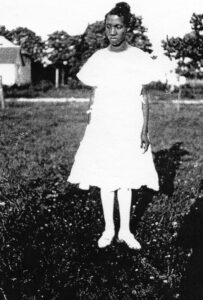
    While seeking to confirm the identity of a pro bono client’s father, I unexpectedly discovered another way to verify whether a family lineage was accurate. The confirmation came through the grave records of the client’s 15-year-old aunt, who tragically perished in an early morning dormitory fire in south Georgia in 1940.

    What followed was another reminder of the twists, turns, and emotional complexity that often accompany African Diaspora genealogy research.

    The client and his brother shared the same name as their biological father, who was not married to their mother. The client knew his father’s name, the year of his death, and the alleged location of his burial site. As with most African Diaspora genealogy projects, I began with the traditional route — reviewing the race/ethnic references, names, approximate birth records, death records, and family connections tied to the client’s parents.

    Initially, the research moved forward steadily. However, after adding several generations to the family tree, the records suddenly stopped. I had reached a familiar genealogical roadblock.

    To work my way out of the blockage, I stepped back and carefully reviewed the foundational details again: The race/ethnic references, names of the client’s parents, their birth dates, death dates, locations, and associated relatives. Yet the challenge remained. The father’s name was common enough that thousands of similarly named men appeared throughout records across the United States. I needed another method to determine whether the individual I was tracing truly belonged to this family line.

    The Curiosity Detour That Changed the Entire Family Search

    I began reviewing every Ancestry.com hint connected to the father’s extended family — parents, siblings, grandparents, collateral relatives, locations, etc.  During what I now call a “curiosity detour,” I opened the death certificate of the client’s young aunt.

    At first glance, the document confirmed the expected information: Race, parents’ names, approximate ages, and location. But experienced genealogists know that some of the most important clues often hide in the less-obvious details. I mentally noted the funeral home operator and, more importantly, the cemetery listed as her place of burial.

    That detail stayed with me.

    Follow your intuition

    Next, I searched Newspapers.com for reports of fires involving young women in Georgia during 1940. Initially, I believed she may have been connected to a substantial dormitory fire involving a male residence hall in what is now considered the metro Atlanta area. Yet nothing in those reports clearly linked the young girl to the tragedy described on her death certificate.

    So I kept searching.

    After hours of research, I paused — one of those quiet moments genealogists understand well — and simply reflected on the question: What really happened here to link this ancestor to my family research?

    Then I found it.

    An article describing the tragic circumstances surrounding her death confirmed the details listed on the death certificate. My curiosity detour had suddenly become a breakthrough.

    But the real discovery came afterward.

    The Cemetery Clue That Confirmed a Family Lineage

    Because I remembered the cemetery listed on the death certificate, I began searching for that same burial location among other possible family members. There it was again — the identical cemetery name appearing across generations of relatives. Thankfully, many members of the family had lived and died in a small Georgia town, making the burial connections easier to trace.

    The cemetery itself was attached to a small rural church.

    That single repeated detail gave me a new level of confidence. The cemetery became the anchor point connecting multiple generations of the family together. Suddenly, the puzzle pieces aligned with greater clarity, allowing me to move more confidently through the family structure and verify that the individuals I was tracing were indeed connected to my client’s lineage.

    Almost there

    Only one major question remained: Locating the final burial place of the client’s father in order to construct a fuller timeline of his life. Family accounts suggested he may have been buried nearly a thousand miles away, while other evidence pointed back to the small church cemetery tied to generations of relatives.

    But such unresolved questions are familiar territory in African Diaspora genealogy research.

    There is almost always another mystery waiting behind the next document, another contradiction buried within oral history, another unexpected clue hiding in plain sight. That is both the challenge and the beauty of this work.

    Sometimes the answers we seek are not found in the records we intended to search — but in the records we almost overlooked. Keep searching African Diaspora researchers.

     

  • Hillside Sankofa Virtual Genealogy Workshop December 2024 v

    Namaskar!

    We are mindful of the many activities that are taking place this glorious month. As such, please check out my in-person replacement: A short video to wrap up our year in ancestral research.

    Note that there is an approximate 2-minute pause in the video (8:55 – 11:15″) and that is your opportunity to plan your next genealogy goals for 2025.

    Expect a regular stream of Zoom and other virtual educational workshops.

    Thank you for support Good Genes Genealogy Services!

  • “Unlock Your Family’s Past: Top Questions to ask your African American family members

    “Unlock Your Family’s Past: Top Questions to ask your African American family members

    Questions Answers SignageLet’s begin in the beginning

    It’s difficult to gather information about our complex histories involving African Diaspora families. Besides the scattered data that we collect from government and private records, asking questions of our relatives — especially the elderly ones — has been proven to be useful in legacy recording.

    Here are my top “ice breaker” recommended questions for family genealogists:

    • What is your best childhood memory(ies?)
    • What do you recall about your parents or grandparents?
    • What family traditions did you have growing up?
    • What do you about our family veterans, particularly those in segregated units?
    • What do you remember about church, spiritual practices, and how we kept the faith in our family?
    • Do you know any stories about how our ancestors came to this country or even the region you grew up in?
    • What do you remember about family gatherings or reunions?
    • Please share actual family heirlooms, keepsakes, and any photos with stories we may not have seen before now. 


  • Discovering Your Family’s Roots: Mastering the Art of Interviewing Relatives for Family Ancestry Stories

    Discovering Your Family’s Roots: Mastering the Art of Interviewing Relatives for Family Ancestry Stories

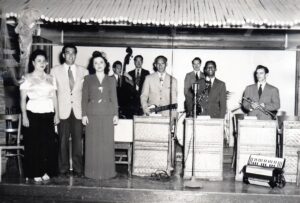
    Uncle Ernest Wilks
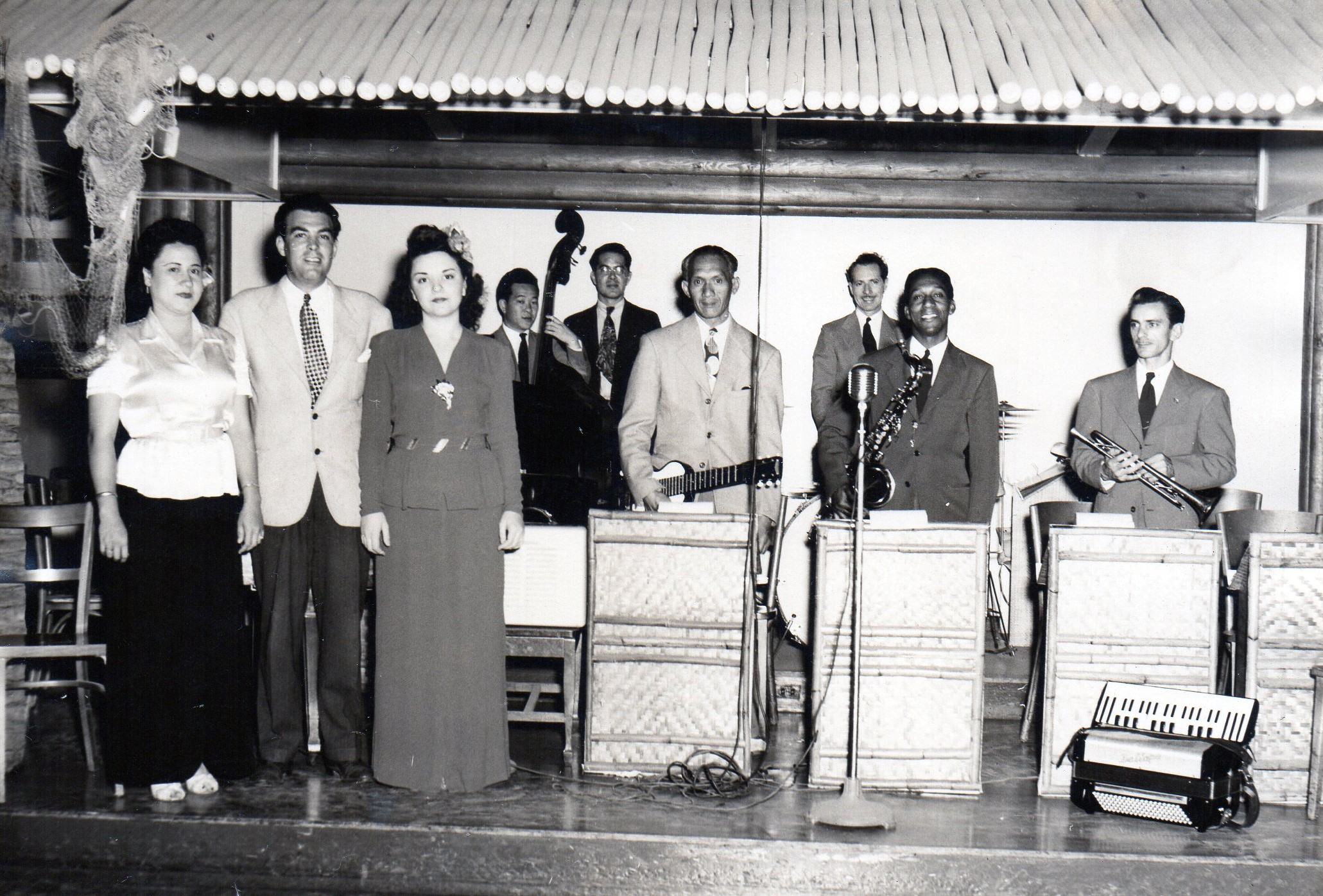
    Army Vet and Maternal Great Uncle Ernest Wilks (second right) and his band in Hawaii

    Gotta love the family stories!

    I’ve interviewed CEOs, community activists, a future U.S. Supreme Court justice, and lots of individuals who were skeptical of media members. It’s an art and a science to prepare for such sessions with individuals who are new acquaintances willing to share parts of their life stories to public audiences.

    Yet, no academic and OJT prepared me for asking personal questions of relatives to learn more about our family.

    “How did you and grandpa meet?” “What was it like to grow up in the Delta of Arkansas and witness the bloody riots in the early 1900s?” “Who are you named for?” “Did you really beat up a woman who knew your husband?” “Why didn’t you ever learn to drive?” “How did you celebrate Christmas when you were a child?”

    Maternal great-grandmother Edna Wilks Robinson
    Maternal great-grandmother Edna Robinson

    Those are just a small sample of questions that I posed to my various family members. Their answers helped to connect the dots for me as I sought to uncover my family’s history. Like other African American families, our stories are mostly spotty and tough to easily put together. That’s why getting as much information from your relatives is imperative to completing your legacy findings.

    The art of the interviews

    The holidays and other special days are great times to listen to the conversations among family members. That’s the first tip: listen to what is being said and not said among your family member.

    Next, build upon the unanswered questions and ask questions. You may not get the answers you are seeking, yet you will get information, great stories, and usually surprises. Be as prepared as you able to be to receive unexpected surprise information. It helps if you can capture an audio recording. Some relatives, especially the older ones, are not as adverse to taped recordings as I once believed. They are actually the best ones to interview about family stories. Remember that great interviews are complimented by photographs. Take a lot of pictures that feature faces.

    Remember to be patient and expect to complete interviews over a span of time. It could be two days or even two years to gather the information you are seeking from family members.

    Pro tips

    • Prepare Thoughtful Questions
      Try to avoid the obvious awkward questions for starters.  Prepare open-ended questions to encourage storytelling. Ask about childhood memories, family traditions, and historical events they witnessed.
    • Find a Comfortable Setting
      Family stories often flow best in a relaxed environment.
    • You have to be a Great, Active Listener
      While you may have specific topics you want to cover, allow the conversation to naturally flow. Try to avoid interrupting unless necessary.
    • How to Handle Sensitive Topics
      Be mindful of how difficult, even painful that family experiences could be for your loved one. Acknowledge their feelings, respect their boundaries, and take a break.

    Preserving cultural and emotional history

    No matter what happens as you gather family stories, remember that you are recording precious history that perhaps no one will gather. You are preserving and documenting these stories, and thereby help your future generations.

    Contact me before or after you interview your relatives. Between my lived experiences and pro tips, I am here to help @weadwriteawayandgenealogy@gmail.com.


  • Unlocking Your Family’s Past: A Beginner’s Guide to Ancestry Research

    Begin your online ancestry research with joy
    The ancestry research journey often begins online

    Congratulations!

    You are joining millions of individuals around the globe who are beginning their exciting discoveries of families’ histories.

    You are in good company whether you are just getting started or dabbled a bit in genealogy. Ancestry research is a popular and engaging hobby for many genealogy seekers, gaining even more momentum over the last decade as accessible online resources.  Today, one of the largest ancestry research sites reports some 3 million subscribers searching for 15 million ancestors. Another genealogical network claims another 27 million ancestors in its organization.

    Ancestry tracing of your family’s lineage will satisfy more than your curiosity. It is proven to offer comfort, relief, joy, pride, and many positive attributes in the uncovering of the histories of family members often never known. The discoveries also offer many somber and sober moments as our loved ones often had colorful lives. You will see mirrors of yourself and other family members. The rewards of researching family histories bring great rewards.

    Let’s get started. This post will show you the way.

    First: Set a goal of the essential research you wish to achieve. When I got started with my family’s research, my goal was to learn more about the maternal grandfather that I did not grow up with. I was born in Omaha, Nebraska and my grandfather, Eugene Owen, Sr., lived approximately 1,533 miles away in Los Angeles, California.   I also wanted to learn everything about my paternal grandfather who fled Helena, Arkansas after the race killings in 1919. After many years — prior to the ample offerings of online ancestry research — I achieved my initial goals. Keep in mind that your research should be essential to your intended results. You may be interested in building a family tree, learning about your ethnic heritage, or perhaps delving into a specific ancestor’s life story?

    Next: Invest in research time both online and offline. This website, goodgenesgenealogyservices.com, and many others offer you access to records. Your county library system, historical societies, archives, family, friends, city tours, and so many resources are available to help fill in the blanks for your ancestry research. Your online records search should yield information to confirm birth, marriage and death certificates. Consult the U.S. Census data for your initial search.

    Next: On this site, you can build your family tree. Start with the basics that include your name, date of birth, and other any other relatives’ basic information. Your tree will begin to build itself. Your next steps will be to check in your tree to learn of any updates.

    Finally: The exciting part begins with the family puzzle pieces coming together.  On your family tree, remember to be flexible and open to unexpected discoveries.

    It’s a long and winding journey, yet the results are how you will honor and preserve your family’s legacy.