Prizes will be awarded to those who guess how many times the word “ancestor(s)” was spoken during the recent Ubuntu conference.
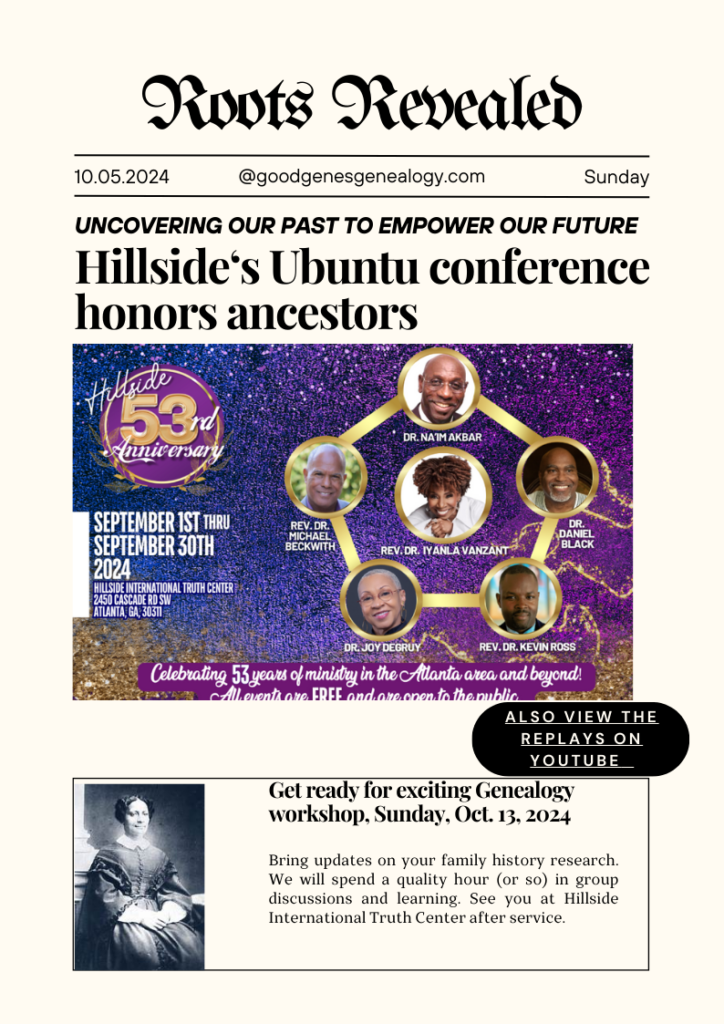
Another free offering from Good Genes Genealogy Services via Dr. Ann Wead Kimbrough
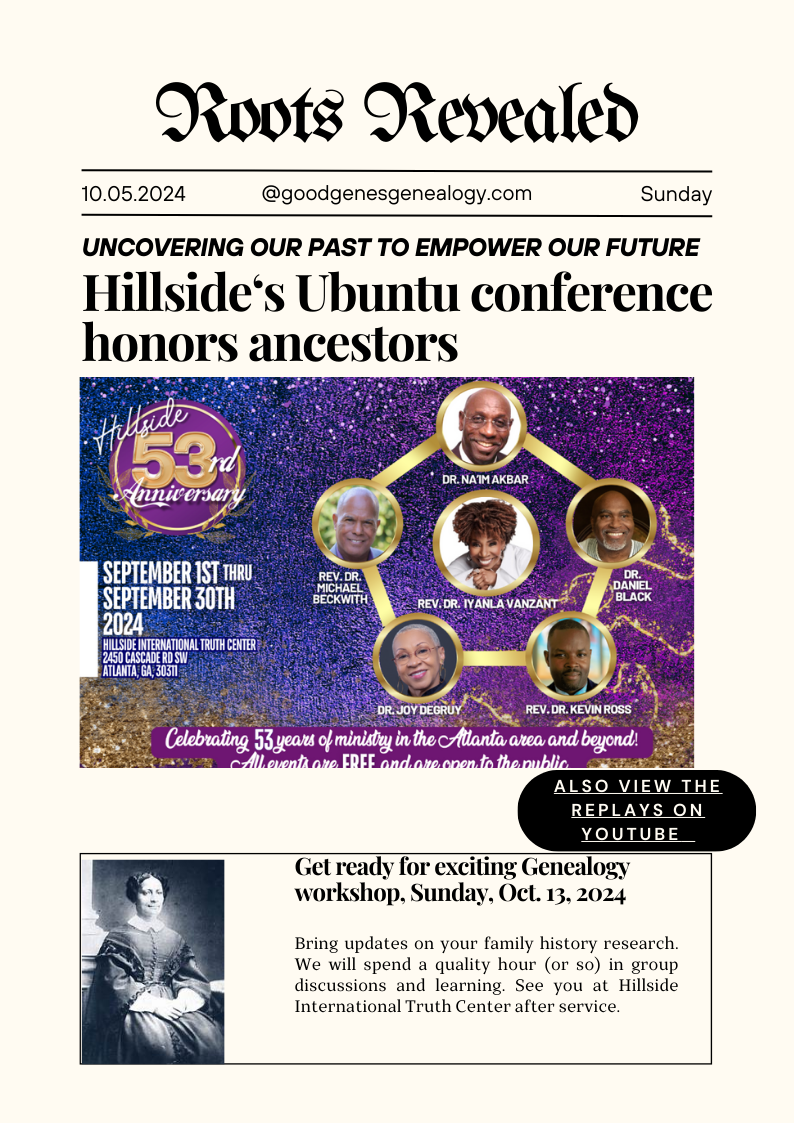
Prizes will be awarded to those who guess how many times the word “ancestor(s)” was spoken during the recent Ubuntu conference.
Another free offering from Good Genes Genealogy Services via Dr. Ann Wead Kimbrough

Today’s freebie is straightforward: Keep researching your ancestry in all regions of the world.
Around the globe, the remnants of African Diasporan appear in most cultures. In this quick installment, see the results of the African American slaves finding safety in Mexico.

Keep digging and learn of the great Gaspar Yanga. A huge statue in Vera Cruz, Mexico, is dedicated to the “Primer Libertador de America or “first liberator of the Americas,” (1545 – 1618) who led one of the first successful slave revolts in colonial Mexico. For years he negotiated with Spain on eleven points, including the ability to establish one of the Americas earliest free black settlements. The town, San Lorenzo de Los Negros was “officially recognized by Spanish authorities as a free black settlement,” according to BlackPast.org. Later, the Mexican town became known as Yanga in honor of its liberator and founder.

This wonderful event is from the Wilson Griot Legacy site:
The Wilson Griot Legacy is a modern enterprise to create new sacred storytelling to unravel information inherent in our genealogical past.
Posted byWILSON GRIOT LEGACYSeptember 9, 2023Posted inUncategorized
I will be joining with the Kinseekers Genealogical Society of Lake County, Florida in conjunction with the Leesburg Public Library in a special event on Saturday, September 23, 2023.
Both in-person and virtual event:

Saturday, 23 September 2023
9:45am – 3:30pm EST
Informal meet ‘n greet at 9:30am EST.
Event is free & open to all!!
Advertisement
Presented by Kinseekers Genealogical Society and the Leesburg Public Library.
To attend virtually, register here.
To attend in-person, contact the Leesburg Public Library at 352.728.9790
MORNING SESSION (9:45am – 12:15pm EST)
–Welcome & Announcements
– Researching Black Family History, 1900-1950: Essential Foundations: presented by Taneya Koonce
–Context Matters: Researching World War Two Black Ancestors:presented by KB Barcomb
LUNCH BREAK (12:15pm – 1:00pm EST)
AFTERNOON SESSION (1:00pm – 3:00pm)
– Colleges, Clubs, & Cotton Fields: Researching Black Women, 1900-1950:presented by Adrienne G. Whaley
– Open Round Table Discussion

Often, reviewing the hatred and violence suffered by African American ancestors, are tough matters to endure and often neglected in history books. Yet, the examples of persevering despite the sad circumstances, can spur on genealogy and ancestry researchers to compare and contrast the past with today’s societal practices.
Good Genes Genealogy Tip: Interview your family members about their sports histories. Some may share the good and also the unhappy times that they or their parents may have endured. Learn how they survived the taunts and personal risks to their families and themselves.
He broke the color barrier in United States’ Major League Baseball. Jackie Robinson did it all, including suffering physical and verbal wounds from his colleagues:
Robinson nonetheless became the target of rough physical play by opponents (particularly the Cardinals). At one time, he received a seven-inch gash in his leg from Enos Slaughter.[135] On April 22, 1947, during a game between the Dodgers and the Philadelphia Phillies, Phillies players and manager Ben Chapman called Robinson a “nigger” from their dugout and yelled that he should “go back to the cotton fields”.[136] Rickey later recalled that Chapman “did more than anybody to unite the Dodgers. When he poured out that string of unconscionable abuse, he solidified and united thirty men.”[137]
https://en.wikipedia.org/wiki/Jackie_Robinson

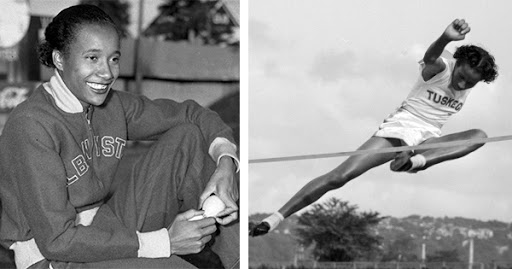
On her first attempt in the high jump during the International Olympics Games in 1948, Albany, Georgia native Alice Coachman won the gold medal. She became the first African American of any country to win a gold medal. Despite her instant fame and large celebrations back home in the United States, her hometown leaders treated her differently:
Yet these latter celebrations occurred in the segregated South. In the Albany auditorium, where she was honored, whites and African Americans had to sit separately. The white mayor of Albany sat on the stage with Coachman but refused to shake her hand. She had to leave her own celebration by a side door.
https://www.womenshistory.org/education-resources/biographies/alice-coachman
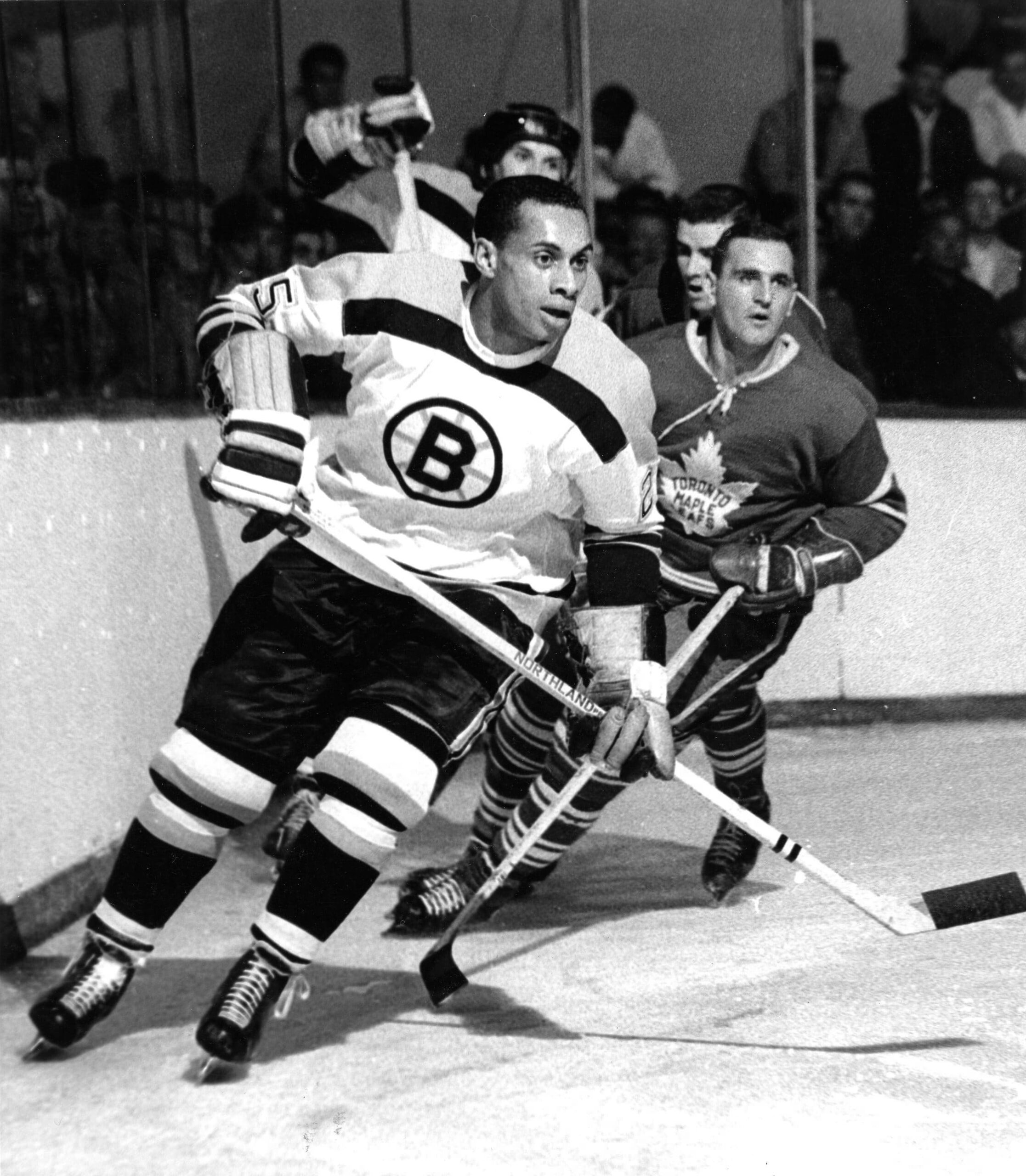
Willie Eldon O’Ree was a youth when he met Jackie Robinson. It helped to inspire O’Ree to pursue his sports passion and became the first African American to join the National Hockey League in 1958. He continues to speak positively about his experiences as a hockey player. Yet, O’Ree suffered many indignities by his fellow league members and fans before retiring in the late 1970s:
O’Ree faced racial taunts throughout his hockey career, including in the NHL, especially in the United States. [11] He noted that racist remarks were much worse in the U.S. cities than in Toronto and Montreal, the two Canadian cities hosting NHL teams at the time, and that “Fans would yell, ‘Go back to the South‘ and ‘How come you’re not picking cotton?’ Things like that. It didn’t bother me. I just wanted to be a hockey player, and if they couldn’t accept that fact, that was their problem, not mine.”[12]
https://en.wikipedia.org/wiki/Willie_O%27Ree

For many years, the Good Genes Genealogy team — Mark and Ann Lineve — did not know much about the man pictured above, our maternal Grandfather Eugene Gibson Owen, Jr. The short story is that Grandpa Owen moved away from the Midwest city and state, Omaha, Nebraska, when our mothers — Lyla and Angeline — were small children in the 1940s. The stories that were whispered around the family was that Grandpa Owen followed his desire to be discovered by Hollywood executives and become a music and movie star.
In 1982, Ann traveled to Los Angeles, California to locate her Grandpa Owen. She did. He was living in a nursing home as a double amputee. For three days, Ann and her husband learned all about the once mystery man in the Owen and Wead families. A few years after that visit, Grandpa Owen died. The deep wounds from his absence in the lives of our relatives were still there. Yet, it was made a bit easier to forgive because our ancestor’s explanations for following his passion, was remembered. Therein, lies the glimpses of healing.
There are mental health benefits in learning more about one’s family. The ancestry and genealogy researchers who are our clients and participated in our workshops, have had similar feelings of joy when learning more about their long-lost ancestors.
Here are a few examples from individuals’ recent finds in their family trees:
In an ancestry and genealogy workshop conducted in 2022 and this year by the Good Genes Genealogy team, we reminded participants to find mental health benefits from their discoveries. We advise that the deep dives into family heritage is:
Editor’s note: The first part of this blog was published on the Good Genes Genealogy sites two days ago. Here is the rest of the preview of our upcoming Juneteenth audiobook.

General Granger was assigned a difficult task that became worse for him after delivering the freedom message in Texas. According to historians, General Granger “became extremely unpopular among many whites in the state of Texas. He was blackballed and ostracized by many Whites, so much so, that after only six months in command of the Department of Texas, Granger was relieved of his command on August 6, 1865. On October 31, 1865, he was placed in command of the District of New Mexico.”
General Granger’s health also declined after his transfer in command. Source: https://seattlemedium.com/gen-gordon-granger-the-man-behind-the-juneteenth-message-of-freedom/
Texas came a long way from being the last state to recognize the Emancipation Proclamation to becoming the first state in 1980 to declare Juneteenth as an official holiday. With the determined, multi-year lobbying effort by famous Texan Opal Lee, in 2021, U.S. President Joe Biden signed into law the nation’s official holiday of Juneteenth.
Several miles north of Galveston near the Navasota River in Groesbeck, Limestone County, Texas, General Granger’s Order No. 3 reached the homestead. The Pleasant Retreat Plantation was owned by Logan Stroud, a slave owner who inherited the property upon the death of his father, Ethan. The father and son had acquired plantations that resulted in 5,000 acres used for raising cotton, corn, oats, wheat, hogs, sheep and it served as a ranch. At the time of Civil War, the younger Stroud was the largest slave holder in Limestone County, owning more than 100 slaves. It was recorded that he had 150 slaves on the day now known as Juneteenth.
According to the property records, the Emancipation Proclamation was read in Limestone County from the porch of the Pleasant Retreat Plantation, on Saturday, June 19, 1865.

Newly freed Blacks in Texas set the tone for celebrating the early days of June 19th with recognitions of their former lives and the memories of their loved ones who endured enslavement. However, there were some Blacks who thought the Juneteenth and Emancipation Day celebrations should put the awful days of slavery behind and instead, look forward with celebrations of hope and aspirations. During the years of Jim Crow, Juneteenth celebrations were confined to the Black communities from coast to coast in the United States.
The photos (see below) are from Mrs. Grace Murray Stephenson, a lady who recorded her June 19, 1900 day of celebration. She sold her diary to the San Francisco Chronicle, which printed her memories.


While awaiting the arrival of the Good Genes Genealogy’s Juneteenth audiobook, learn more about the June 19th holiday and the other “Black” holiday, August 1st. Check out our e-book that is available on all book buy sites.

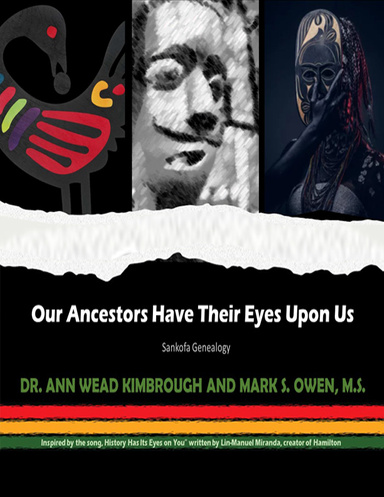
The Good Genes Genealogy Services duo and Atlanta’s Hillside International Truth Center team up for the last weekend of the free genealogy workshops. The hour-long session is designed to inspire the beginners to seasoned genealogy researchers, and provide everyone with the tools to dig deeper into their families’ colorful histories.
Join us, Saturday, Feb. 18, 2023!


Have you ever wanted to ask questions of your relatives and backed away because it was not “a good time?” We have.
It’s time to get busy. Grab a notepad, make sure your audio and video recorders are sufficiently stocked with new batteries, put on your listening ears and initiate your family research.
It may be uncomfortable for some relatives to open us. That’s natural. Learning what to ask and who to ask questions of, are key to your success. Before you get knee deep in researching family history, make a list of your prospective interview subjects by simply asking, “do you mind if I interview you (or discuss with you) about our family history?”
Once you get to “yes,” you are on your way to discovering the gems and rough spots in your family.

You should seek information from everyone in your family, friends, neighbors, clergy, co-workers of your loved one. Whoever is willing to open up and share, are great informants.


The more your relatives age, the more questions arise about what the loved ones know that can add value to your family’s history.
There are myriad of questions to ask your loved ones in anticipation of great information about your family. One half of the Good Genes Genealogy team — Ann Wead Kimbrough — is a career journalist who’s interviewed perhaps thousands of individuals.
It’s time to edit.
Happy researching!

Go to the Good Genes Genealogy Services website and utilize the forms that we made available especially for participants in our two-part Sankofa Genealogy workshop in partnership with Hillside International Truth Center.
Since the first workshop on Saturday, Feb. 11, 2023, several participants have telephoned, texted, emailed and visited their relatives to gather information needed for their individual family searches. It is healing and helpful for your family and friends to discover their histories.
Way to get the book?
Thank you!
Please join our Hillside family in this month’s Sankofa activities and fellowship.

