
I discovered the “Scent Leaf” or African Basil in the Aburi Gardens, Ghana, Africa
In our African Diaspora genealogy and ancestral research, the root of our searches is often right in front of us.
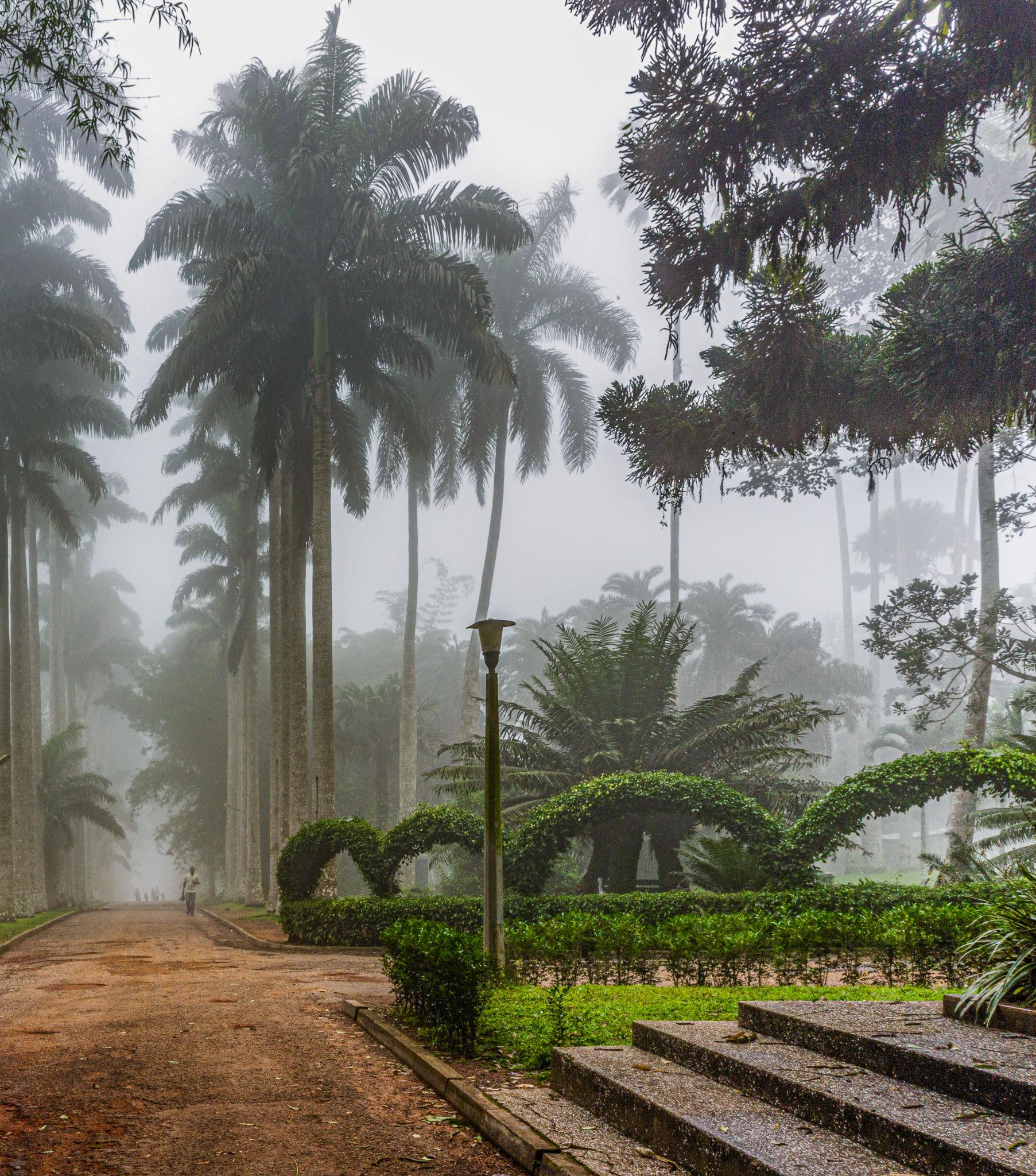
On a recent hot Spring day while visiting Aburi Botanical Gardens — located about an hour up the cool mountain hills from Accra, Ghana — I unknowingly stepped on a leaf connected to history itself. As I walked through the gardens with my tour guide, Maxwell, and my country escort, Prince, Maxwell paused and encouraged me to pick up a dry yellowish leaf from the ground and crush it gently in my hands.
Immediately, a powerful fragrance rose from the leaf.
Mint.
Fresh.
Alive.
The scent startled me.
Maxwell smiled and explained that I had just encountered the African basil known locally as “Scent Leaf,” scientifically called Ocimum gratissimum. It was among the hundreds of plant species found among the 160 acres of exquisitely beautiful lands high above Ghana’s capital city of Accra. The aromatic plant is one of hundreds of species found throughout the gardens’ approximately 160 acres of breathtaking tropical landscape overlooking Ghana’s capital city.
At that moment, what began as tourism quietly transformed into ancestral reflection.
The Gardens were established in 1890 during the British Colonial rule over Ghana. It became a site for agricultural exchange with British rulers and a tropical plant experimentation center. Notable were the plants and trees tied to the former ruling empires and the displacement of people. Some of the plants and trees originated from Brazil, the Caribbean, Sri Lanka, India, and Southeast Asia.
Fresh Scents for the descendants of the African Diaspora
Initially, I believed that visiting the Gardens would be a nice way to end my research, mission travels involving service to young children, and touring, would be a nice way to be a tourist among the African landscapes. Yet, Abrui Gardens demonstrated its ability to allow for remembrances, recovery, and a living memory of what took place on these hallowed ground more than 100 years ago.
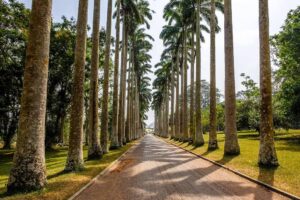
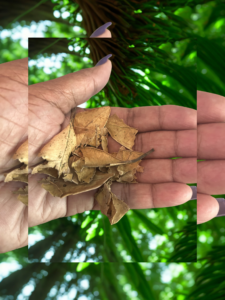
Aburi Botanical Gardens, established 1890
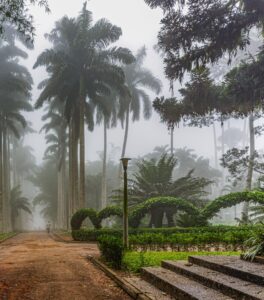
Aburi Botanical Gardens beauty
Literally: Finding my Roots
At the wise recommendations from my extremely horticulturally knowledgeable guide, Maxwell, I experienced Aburi Gardens with freedom to learn by smelling, tasting, and touching nature’s bounty. It was a form of ancestral reconnection. One of the most powerful realizations from Aburi Gardens is that genealogy does not exist only in documents.
Sometimes genealogy grows from the ground itself.
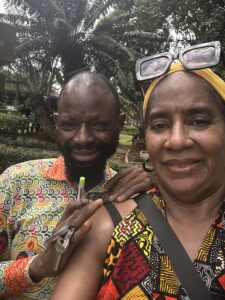
Maxwell is a trained horticulturist in Aburi Botanical Gardens, Accra, Ghana, Africa
What I did was walk through most of the 160 acres of colonial plant routes and learned about the indigenous knowledge systems that turned plants and trees into medicinal usages. I encountered plants and tree that allowed me to feel and see the shaping of daily African life and diaspora survival. The smelling of the mint, for example, gave me echoes of the trade routes that financially benefited worldwide capitalists who found synthetic solutions from African origins.
It was an experience for the ages.
Bringing the everyday African Diaspora researcher into the Gardens
For researchers exploring African Diaspora ancestry, Aburi Gardens offers important African Diaspora historical clues:
- Established during colonial rule, the gardens became part of imperial agricultural systems that transported crops throughout the African Diaspora world.
- Plants originating in the Caribbean, South America, and Asia reveal trade routes tied to colonial expansion and human displacement.
- Indigenous medicinal traditions preserved in Ghana may echo healing practices later carried throughout the Diaspora.
- Nearby Aburi communities, cemeteries, mission schools, and oral histories may contain valuable connections to colonial-era families and migration patterns.
For descendants of the African Diaspora, the gardens offer more than beauty.
Reflection in the Gardens
My visit to Aburi Botanical Gardens became more than I expected. It was a reminder that Africa still speaks through its landscapes, plants, and people. Sometimes the stories of our ancestors are not hidden in distant archives. Sometimes they are waiting quietly beneath our feet. And sometimes, all it takes is crushing a single leaf in your hand to awaken memory.
In all, there is a lot more to explore involving Aburi Gardens and the African Diaspora connections. I will follow up in future blogs.
