Author: goodgenes

  • #20 How to celebrate this special Juneteenth

    Surprise! U.S. Senate unanimously passes the move to make Juneteenth a federal holiday. The U.S. House also passed the measure

    It’s been a long time.

    Juneteenth has been an official holiday in Texas for 40 years and in 46 other states around the nation. Private and public celebrations have in full steam a lot longer, beginning with the first dancing of singing as the end of slavery was marked through voice and by paper degree beginning with the pronouncement by a U.S. general on June 19, 1865.


    Our advice from Good Genes Genealogy is:

    1. Begin your family’s traditions for Juneteenth celebrations.
    2. Engage your elders. It is a time to pause and hear their stories. Record them.
    3. Review and revise your activities this year in preparation for 2022.
    4. See the church flyer below for one of my favorite celebrations in the Atlanta metropolitan area.
    5. Following the flyer and history of the African Methodist Episcopal Church, which has a history of spiritual, economic, liberation and uplifting leadership in the circle of African African church “hood.”
    6. My sorority’s social media flyer wraps up this blog.

    The A.M.E. Church History:
    The African Methodist Episcopal Church has a unique and glorious history. It is unique in that it is the first major religious denomination in the Western world that had its origin over sociological rather than theological beliefs and differences.
    The immediate cause of the organization of the A. M. E. Church was the fact that members of the St. George’s Methodist Episcopal Church in Philadelphia Pa., in 1787 segregated its colored members from its white communicants. The Blacks were sent to the gallery of the Church, to use the venerable Richard Allen’s own words. One Sunday as the Africans, as they were called, knelt to pray outside of their segregated area they were actually pulled from their knees and told to go to a place which had been designated for them. This added insult to injury and upon completing their prayer, they went out and formed the Free African Society, and from this Society came two groups: The Episcopalians and the Methodists. The leader of the Methodist group was Richard Allen. Richard Allen desired to implement his conception of freedom of worship and desired to be rid of the humiliation of segregation, especially in church.
    Richard Allen learned that other groups were suffering under the same conditions. After study and consultation, five churches came together in a General Convention which met in Philadelphia, Pa., April 9-11, 1816, and formed the African Methodist Episcopal Church. The name African Methodist came naturally, as Negroes at that time were called Africans and they followed the teaching of the Methodist Church as founded by John Wesley. The young Church accepted the Methodist doctrine and Discipline almost in its entirety.
    Visit www.amecnet.org or www.ame-church.com for more information about the African Methodist Episcopal Church.
    Marvin L. Crawford, M. D., M. Div.
    Bishop Reginald T. Jackson, Presiding Prelate – 6th Episcopal District
    Presiding Elder Rev. Dr. Thomas L. Bess – Atlanta East District


    How to Celebrate Juneteenth as a Family

    By Wendy Wisner Published on May 19, 2021Print 

    family eating outside
     Ariel Skelley / Getty Images

    Over the past few years, many of us have become more aware of the racial injustices that have plagued Black Americans for centuries. The protests against police brutality in the summer of 2020 showed that more Americans than ever are looking for ways to support Black civil rights, to learn more about the history of racial injustice, and to find ways to participate in making the world a more equitable place.https://c19ccf989e30f1fcd0147dcd03eb6661.safeframe.googlesyndication.com/safeframe/1-0-38/html/container.html

    Juneteenth—a national day of Black American independence—is a wonderful opportunity to engage in this movement. Whether Juneteenth is something your family has celebrated for years, or if this holiday is new to you, there are many ways to get the whole family involved.

    After all, working toward a more equitable world starts by educating our children from the earliest ages, and giving them ample opportunities to integrate the fight for racial justice into their lives and traditions.

    What Juneteenth Is and Why We Celebrate It

    Even though many of us first heard of Juneteenth over the past few years, it’s a holiday that has been celebrated for over 150 years. Juneteenth marks the independence of Black Americans from the chains of slavery. It’s a holiday of remembrance, freedom, celebration, and a sober reminder of the work ahead to continue eradicating racism in our country.

    What Is Juneteenth?

    Juneteenth has its origins in American history and marks Black emancipation from slavery. On June 19, 1865, those who are believed to be the last slaves in America were freed in Galveston, Texas. Although President Lincoln signed the Emancipation Proclamation in January 1863, the law was hard to enforce while the war was still raging.1

    Southern slaveholders continued the practice of slavery in spite of Lincoln’s decree, and the Union army had no way to stop them until they had gained control over Southern territory. Two years after the Emancipation Proclamation, when General Lee surrendered and the war was winding down, the last of the enslaved people were finally freed.

    The day that the slaves were freed in Galveston, Texas was a day of profound joy and celebration. Over the years that followed, Black Americans began to celebrate this day as a day of freedom. Traditional ways of celebrating Juneteenth include barbecuing, other outdoor cookouts, prayers, fishing, and sports. Juneteenth was, and continues to be, about education and remembering the historical significance of the emancipation movement.1

    Why Is It Called Juneteenth?

    The world “Juneteenth” is a combination of “June” and the word “nineteenth,” the date that Juneteenth falls on. The holiday is also referred to as “Juneteenth Independence Day,” “Jubilee Day,” “Emancipation Day,” and “Freedom Day.”

    When Is It Celebrated?

     Juneteenth is celebrated on June 19th of each year.What Is An Anti-Racism Journey?

    Is Juneteenth a National Holiday?

    As awareness of Juneteenth has increased over the past few years, more states are recognizing the date as a holiday. Texas was the first state to do this, in 1980. As of June 2020, 47 states, plus the District of Columbia, had declared Juneteenth a local holiday. However, it is still not recognized nationwide.2

    Despite the lack of a nationwide observance, in recent years private companies have started to recognize the importance of Juneteenth by giving their employees the day off to celebrate. In 2020, major companies like Twitter, Nike, Best Buy, and Target made Juneteenth a paid holiday.2Talking About Race: Being Mindful of Our Language

    Celebrating Juneteenth As a Family

    Traditional Juneteenth celebrations are usually outside, owing to the warm summer weather, and include cookouts, sports, parades, festivals, musical performances, and more. Juneteenth is also about supporting Black Americans, buying from Black businesses, learning Black history, and staying up-to-date on the struggles toward racial justice that continue to happen in this country.2

    When it comes to celebrating Juneteenth as a family, there are so many creative and simple ways to participate. It’s never too early to have discussions about our children about race—in fact, the earlier we can broach these important subjects with our kids, the better. If we strive to raise our kids from an early age to understand racism and racial oppression, the better and more compassionate a world we will all have.

    Be Wary of Cultural Appropriation

    As you celebrate Juneteenth with your family, you should be aware of the concept of “cultural appropriation,” the practice of adopting race-specific cultural practices as your own without proper attribution or credit and in ways that further exacerbate racial oppression.

    For example, there is nothing wrong with celebrating Juneteenth as a non-Black person at home or with others. Supporting Black organizations and educating yourself about Black history and culture is also great. But it might be less appropriate for a non-Black person to partake in Juneteenth customs like wearing African-themed clothing or performing traditional African dances.

    You can use your judgment in instances like these, and you can also sensitively consult a Black friend or colleague if you are not sure whether what you are doing might be considered cultural appropriation.Acknowledging Your Own Racism


    Family-Friendly Ways to Celebrate Juneteenth

    Participate in a Local Juneteenth Celebration

    There have always been Juneteenth celebrations, often held in public parks, in backyards, and as part of local festivals. But as the holiday has gained popularity, there are more ways to celebrate locally than ever.

    Major cities like New York, Philadelphia, Atlanta, and Detroit have already posted schedules for their Juneteenth parades and festivals. Check your own town or city’s website to see what is planned, or create your own event. Visit the Worldwide Celebration page at Juneteenth.com to learn about past events and see what’s coming up this year.

    Have A Black History Readathon

    Now, more than ever, there are so many books geared toward children that explain racism, Black history, Black culture, and more. So go to your local library, order online, or visit your local bookstore (a Black-owned bookstore, if possible) and get reading. 

    Some of our favorites include:

    For ages 0-5:

    For ages 6-10:

    For older kids:

    Have an Outdoor Cookout or Barbeque

    Food is a big part of Juneteenth, so don’t skimp on this! June 19th is usually perfect weather for barbequing, grilling, and enjoying the great outdoors while you partake in delicious foods.

    Traditional Juneteenth foods include fruits like strawberries and watermelons, veggies like beets and yams, as well as black-eyed peas and cornbread. Brisket, pulled pork, and baked beans with meat have also traditionally topped the menu. Red foods and drinks, like hibiscus tea and hot sauce, are customary Juneteenth fare. The color red is thought to symbolize strength and resourcefulness.3

    Donate to an Organization that Supports Black Lives

    Organizations that promote Black causes, including organizing protests, supporting criminal justice for Black individuals, and promoting issues that uphold racial equality, are often grassroots groups that need monetary support. There is no better way to celebrate Juneteenth than to donate to Black causes.

    Your family can discuss the causes that feel dear to your hearts, and you can get your children involved by helping you raise money to donate. How about a Juneteenth lemonade stand or yard sale? These are wonderful ways to raise awareness while simultaneously raising money for a good cause.

    Here are some organizations you might consider donating to:

    Shop at Black-Owned Businesses

    Shopping small and making your shopping purchases more inclusive shouldn’t be something that only happens once a year. But Juneteenth is a great day to splurge a little more than usual on Black-owned businesses. And there are many Black-owned businesses that cater specifically to kids’ items or items for families.

    Here are some of our favorite family-friendly Black-owned businesses.

    Books:

    Children’s Apparel and Accessories:

    Food:

    Beauty and Cosmetics:

    Listen to the Emancipation Proclamation

    Juneteenth wouldn’t be possible without the emancipation of slaves, which officially happened on January 1, 1863, when President Lincoln gave his famous “Emancipation Proclamation” speech. You can listen to this historic speech as a family on Audiobooks.com or on YouTube.

    You can use this opportunity to put this moment into historical context for your children, emphasizing that this speech was just the beginning and that the struggle toward a more equitable world for Black Americans is ongoing to this day.

    Absorb Some Black Art and Culture

    These days, there are so many incredible Black screenwriters, writers, actors, musicians, and more for us to support and enjoy. Many are perfect for children, too.

    Here are some of our favorite family-friendly music, movies, and TV shows to stream:

    Children’s music:

    Movies for the whole family:

    TV for the youngest kids:

    • “Bino and Fino” (Tubi)
    • “Esme and Roy” (Hulu)
    • “Motown Magic” (Netflix)
    • “Nella the Princess Knight” (Nick Jr)
    • “Super Sema” (YouTube)

    TV for older kids and tweens:

    • “Cousins for Life” (Amazon Prime)
    • “Lab Rats” (Disney+)
    • “Mama K’s Team 4” (Netflix)
    • “Marvel’s Avengers Assemble: Black Panther’s Quest” (Amazon)
    • “Raven’s Home” (Disney)

    TV for the whole family:

    • “Black-ish” (Hulu)
    • “Black Lightning” (Netflix)
    • “Grown-ish” (Hulu)
    • “Kenan” (Hulu)
    • “Marvel’s Runaways” (Hulu)

    Help Make Juneteenth a National Holiday

    Activists have been pushing for decades to make Juneteenth a national day of celebration. Representative Sheila Jackson Lee, a Democratic congresswoman from Texas, has repeatedly introduced resolutions that would designate Juneteenth as a full-blown federal holiday. Although the Congress has passed resolutions recognizing the importance of this day, these are just ceremonial and have not resulted in a federal holiday with paid leave for workers.

    The most recent legislation was introduced by Sen. Edward Markey (D-MA) but it has not yet come up for a vote in the Senate.

    You can help by spreading the word, helping raise awareness, and by signing a petition asking for Juneteenth to receive federal recognition.5 Ways You Can Support the Black Lives Matter Movement

    A Word from Verywell

    Americans celebrate their freedom from England every July 4th, but for many Americans, this holiday is less relatable and doesn’t reflect the injustices that enslaved Black Americans suffered on American soil for years.

    Juneteenth reminds us of all of that struggle, and the important progress we have made as a nation since then. It celebrates the bravery and perseverance of Black Americans throughout history and today.

    But it’s also an important reminder that the struggle toward racial justice in America is far from over. The Center for American Progress estimates that African American households on average own only one-tenth the wealth of the average white American household, and this inequality has been widening since the Great Recession.4

    A Harvard study found that Black people are three times as likely as whites to be killed in a police encounter.5 We can only right these wrongs if we remain committed to the fight for justice and equality.

    By remembering the last slaves’ emancipation on the original Juneteenth, we can take pride in how far we’ve come, and recommit ourselves to the ongoing journey forward.The Impact of Race and Racism on Eating Disorders.

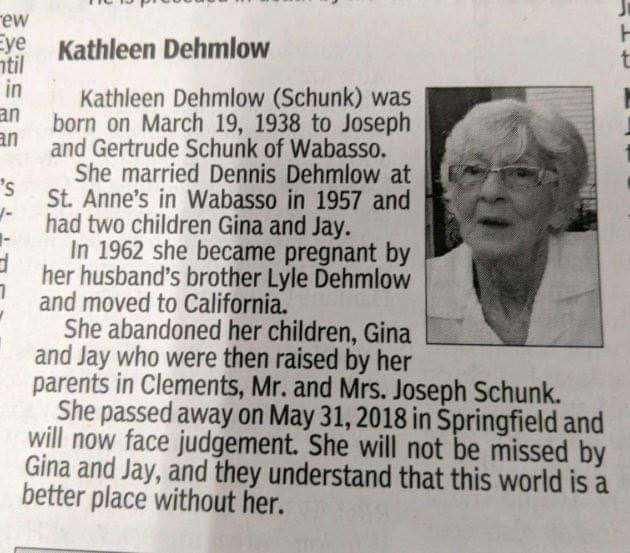
  • #18 Make sure you write your own obituary before joining the ancestors😮😮

    #18 Make sure you write your own obituary before joining the ancestors😮😮

    Ouch!

    Example #1 on why you should protect your legacy.

    Be sure to double click on image to read the entire obit!

  • #17 Did you know about the little-known African American community that formed in Weed, California?

    June 7, 2021, is the 14-year aniversary of Weed Union Elementary School teacher James Langford’s retirement. Langford is significant to Weed’s African American heritage because he insisted on that history being taught in the schools. He also wrote a thesis about the 1920s migration and related progress in the small northern California city. Langford arrived in Weed, California about a half-century after the Great Migration of African Americans from the South to the Western states, particularly California.

    Weed, California with Mt. Shasta in the background


    Langford also co-wrote and produced a documentary about Weed’s African American community. https://vimeo.com/31221465

    The documentary’s promotion: “From the Quarters to Lincoln Heights tells the story of how a large African-American population in the small northern California towns of Weed, Mc Cloud, Mt Shasta and Dunsmuir came to root themselves in such an unlikely place. Migrating from the southern US in the 1920’s they came to work in some of the world’s largest lumber mills. The film explores how these unique communities of African Americans thrived in these multi-racial rural towns. This film presents this little known history, revealing the early inter-racial relationships that existed in Northern California.”


    From BlackPast website

    In the following article, James Langford, the first black teacher in Weed, briefly describes the history of the African American community there.  Langford, who graduated from California State University at San Francisco with an elementary teaching credential in the spring of 1974, began teaching at the Weed Union Elementary School on August 28, 1974.  He retired on June 7, 2007,  after thirty-three years.

    It was June, 1923, when five young Black men set out in a Model T Ford from Broken Bow, Oklahoma, to a small town in northern California.  They were following the sounds of promise they had heard in the words of a young hobo, recently returned from a trip to the West Coast.  He told of a better life for Black people in this burgeoning lumber town.  “He said there was a mountain right there close to Weed you’d see snow the year round.”  These are the words of Danny Piggee, describing how he first heard of Weed, the town he was to live in for the next thirty-seven years.  “Weed was a miracle for Black people for work.”

    When he and his cousin, Jim Hopkins, and their three companions  reached Weed at noon on June 19, 1923, after fourteen and a half days on the road, they ate dinner, went to the hiring office of Weed Lumber Company, then to the Weed Hospital for health checks, and started work the next morning.  A common laborer in the Weed mill was paid $3.60 for eight hours.  Piggee went to work taking down lumber on the yard with D. Grant, one of his Oklahoma companions, as his partner.  Because Grant had previous experience in this contract work, Piggee made over $5.00 the first day he worked.  As he thought to himself at the time, “Boy, I oughta been here for years back.”  In describing the town of Weed as it was in 1923, he said, “You could just almost pick your jobs when I came here.  And it was a lotta, lotta Black folks here.”

    One thousand African-Americans lived in Weed by the mid-1920s, when the town’s population reached over six thousand.  In 1922, R. A. Long of Long-Bell Lumber Company had assumed complete ownership of the Weed Lumber Company.  The exodus of Black lumbermen from the South, triggered by R. A. Long, had begun with Nate Henderson’s arrival in Weed in 1918, with his nephew, William Wardlow.  Henderson, from Louisiana, was hired by Long-Bell to recruit workers in the South.  Walter Sexton, the first superintendent of the Weed plant under Long-Bell Lumber Company, was responsible for recruiting the largest number of Black workers from the South.  According to Rev. E. A. Mellon and Tommy Tyler (two long-time African-American residents), Sexton came to Weed from the Long-Bell operations in Louisiana in the early 1920’s.  He knew who the most trusted workers were, and tried to recruit the “cream of the crop.”  Mr. Sexton, on behalf of Long-Bell, paid the $89.00 train fare from Louisiana to Weed.  Most of the first Blacks to come to Weed were displaced workers from Long-Bell’s operations at De Ridder and Longville, in Louisiana.  After the men had made enough money in their new jobs, they repaid the company and sent back money to Louisiana so that relatives and friends could join them in Weed.  The general manager of the Weed operation from 1918 to 1948, Mr. J. M. “Jude” White, although he was not from Long-Bell’s Southern mills, is also given credit for opening up job opportunities in Weed for Black workers.

    What kind of town awaited these first African-American migrants from the South?  Gertrude Price Wardlow, who arrived in 1920 from Louisiana via Oakland, California, describes the northwest corner of the town where the Blacks settled as nothing but snow-covered hills, with one dirt street.  The houses along this street, Railroad Avenue, were the first group of houses built in Weed.  They had been moved from the original site just north of Abner Weed’s first sawmill.  A few other houses were located northwest of Railroad Avenue, but there were no other defined streets.  Because of the housing shortage, Gertrude and her husband, Andrew Price, stayed at the boarding house when they first arrived.  This boarding house, located near the corner of Railroad Avenue and Lincoln Avenue, housed the single Black men who had come to work in Weed.  Because of the crowded conditions at the boarding house, the Weed Lumber Company “gave my husband a good price” for a house so that he and Gertie could board some of the men.

    When Danny Piggee arrived in 1923, there were thirty-five or forty single men staying at the boarding house, paying $1.10 a day for room and board.  It was then known as the “Berryhill Hotel,” after Dan and Ella Berryhill, who had operated it since 1921.  When the boarding house was first built, Weed Lumber Company hired Nate Henderson to run it.  In 1920, when Mrs. Wardlow arrived, a couple named Jackson, from Oroville, California, was running it.  Since the Berryhills operated it until their deaths in the late 1940’s, when their niece took over until 1953, the boarding house is simply referred to as The Berryhill.  By 1923 there were company-built houses on Dixie, Texas, and Alabama Avenues.  Tent Street came into existence in 1924 when over-crowding prompted the company to bring in tents as temporary dwellings for Black families.  These tents were brought in from Tennant.  In the words of Mrs. Wardlow, “people started putting foundations around [the tents] and this ‘n’ that until they lived in them.”

    Throughout the 1920s, as African-American families continued to arrive in Weed, they built houses on land leased from the company.  Long-Bell Lumber Company managed Weed as a residentially segregated, company-owned town.  And the first African-Americans to arrive from the South, accustomed to segregation since birth, occupied their designated corner of the town, known as “The Quarters.”  Willie Wardlow (Gertrude’s second husband), in a 1966 interview, recalls: “We used to see a For Rent sign, and when we asked, you know what they’d tell us?  They’d say, ‘We only rent to Americans.’ “ [The nearby town of McCloud had a similar demographic make-up.  According to an article in the 1997 Siskiyou Pioneer by Ray Ebbe, “McCloud, shortly after World War 1, had a population of over 500 colored people.”  The McCloud River Lumber Company, known as Mother McCloud owned the town.]

    Some changes in this picture began after International Paper Company, based in New York City, bought out Long-Bell Lumber Company in 1956.  IP was not interested in running Weed as a company town.  They elected to sell the houses to the residents at a reasonable cost.  Soon after the city was incorporated in 1961, a group of concerned citizens from the African-American community met to change the name of their residential section from “The Quarters” to “Lincoln Heights,” and to rename those streets originally named after Southern states.

    The national Civil Rights movement inevitably found its way to Weed. Amidst such racial upheaval, Weed’s NAACP chapter became quite active. Between 1955 and 1958, local Black residents staged sit-ins at Weed’s segregated eating establishments. The Log Cabin Hotel had a sign on the premises reading “We cater to whites only.”  The Weed Mercantile soda fountain and the Weed Theater fountain were among targeted sit-ins.  All establishments eventually complied with desegregation.

    The Congress of Racial Equality (CORE) organized a chapter in Weed on June 5, 1966.  That summer CORE members staged boycotts at Weed’s Safeway store, Harold Chaney’s Weed Mercantile, Medo-Bel Creamery, and United California Bank.  The object of these demonstrations was an economic one—to have these local employers hire Blacks in a capacity other than clean-up.  A year after the 1966 summer campaigns, CORE leaders held a convention at the Mt. Shasta Baptist Church social hall and the Black Hawk Tavern, concluding that only token integration had been achieved.  Its tenure may have been short, its tangible accomplishments few, but the deep-seated desire that Siskiyou County residents settle down to a great deal of soul-searching was undoubtedly  accomplished by the confrontation tactics of CORE.  The protests were justified and progress definitely came from the risks that were taken.

    By the time I arrived in Weed in 1974 there were approximately 500 African Americans out of a total population of 3,600.  The 1970 census figures for Weed show a 14 percent black population, while 1980 figures show a 13 percent Black population.  This percentage compares to a nationwide Black population of 11.3 percent reported by the 1980 census.  In 1970, only 2.1 percent of Siskiyou County’s population was Black, while 1980 figures indicate a Black population of only 1.5 percent.  Census figures for the year 2000 show that Weed’s population has declined to 2,978 people with 9.3 percent Black.  In other words, Weed has maintained a vital African American community for nearly one hundred years.

    Weed’s African American community has changed with the flow of forces affecting the town.  The closing of International Paper Company in 1982 had the most profound effect on the community at large.  Strong family ties and the healthy rural surroundings have surely been factors in the desire of Weed’s residents to persevere in the face of economic hardships.  My wife, Kathleen, and I raised our four children here.  They all went through the Weed school system, and have gone on to successful adult lives.  We have lived on our forested five acres on the outskirts of Weed for 29 years. Here, I am able to indulge my lifelong passion for animal husbandry.   Having taught and coached two generations of Weed’s children, I enjoy my respected status that seems to come with the title of “Mr. Langford.” It was indeed a fortunate decision I made in 1974 when I answered the call of the African American community of Weed, California, to become their first Black teacher, to live in the shadow of  Mt. Shasta…that mountain, right there close to Weed, where you see snow the year round.SUBJECTS:African American History, PerspectivesTERMS:20th Century (1900-1999), United States – California, Government-Local-Black Community

  • #16 Keep digging: Special find for a young genealogist

    #16 Keep digging: Special find for a young genealogist

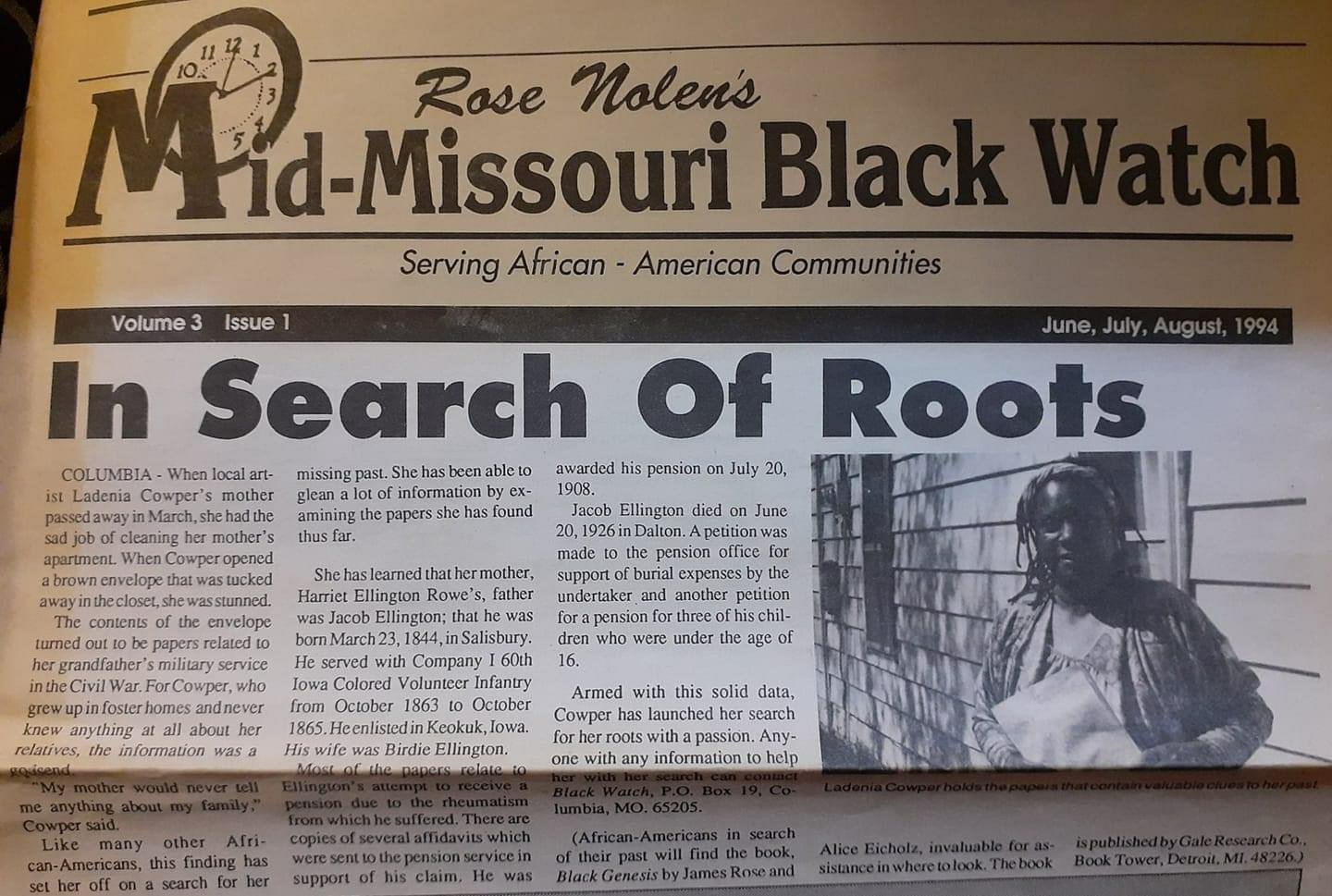
    St. Louis, Mo. TV Newsman Damon Arnold was fortunate to find fantastic info about his ancestor.

    I am proud of Damon locating a mentally and physically strong former slave who became a Civil War vetetan. His fighting did not end there. Damon’s great-great-great grandfather also fought gallantly to receive his pension.

    Read on and learn more. Damon is just at the tip of major findings. You, too, can find great family heirlooms in those old records. https://m.facebook.com/story.php?story_fbid=3928137097300889&id=100003139113342

  • #15 Happy Trails along the Park Service’s sites honoring African American heritage

    There are several trails that have not been traveled by us due in part to the global shutdown of U.S. Park Service sites and just about every organization during the 2020-21 COVID-19 pandemic.

    As the rolling openings are underway, it’s time to discover the 17 U.S. Park sites that honor our African American ancestors. For a hint, check out this Black Genealogy blog, https://weadwriteawaygoodgenes.com/2021/06/04/buffalo-soldiers-black-ancestors-were-the-worlds-first-park-rangers/

    Have some fun while you are still at home or in anothe remote site and planning your post-COVID getaway. This grouping of pictures that I gleaned from one of my favorite websites, are just the beginning of your adventure. Try to identify the pictures below that are courtesy of the National Park Service.

  • When the student meets the teacher …

    On Friday, July 2, 2021, the alumni of the Good Genes Genealogical Services, Inc.’s inaugural Intro to Black Genealogy workhsops in February 2021, will present their great research findings. Their presentations will culminate in an hour-or-so webinar that will debut a month from today’s post.

    The alumni webinar is a natural progression from the numerous follow up work with each participant seeking additional information or sharing their insight and breakthrough findings.


    There is no greater expressions for genealogy teachers to experience than when students learn more and uncover great finds!

    This post’s purpose is two-fold:

    1. To announce the upcoming and exciting worldwide webinar via Zoom that is free to all. Times are 10 a.m., noon and 6 p.m. Viewers must register and choose one or all of the asynchronous sessions. Details to come over the next week.
    2. To get the “yes” to this blog from class participants on their progress. All viewers of this blog will also get an idea of the interest from our prospective presenters. They will send emails to us with more details so that we can maintain the details until the debut date.

    In all, Cousins Mark and Ann are dedicated to education and direct family research service. Our webinars and other activities will ramp up in earnest.

    Thank you for our #1 organizational sponsor: Hillside International Truth Center.

    Stay tuned!

  • #14 Lest we forget: Digging up the facts about Decoration Day, first celebrated on May 1, 1865

    Step-by-step guide on how to get to the truth and improve everyone’s ancestry facts

    • When was the first Decoration Day ceremony held? 1865 or 1868?
    • Who was present at that sacred ceremony? Three thousand black school children, northern missionaries and mutual aid societies … or … Southern white women.
    • How much pre-work was completed prior to the first Decoration Day and by whom? Graves of nearly 300 Union soliders who died at a horrific Confederate camp were dug up and relocated into single graves at a more peaceful site … or … a declaration by a U.S. General.
    • Why was a Decoration Day created? To celebrate the war dead with decorations on graves of soliders, parades and other commenorative celebrations.

    There is a dual history remembrance of the very day set aside to remember our fallen comrades to war.


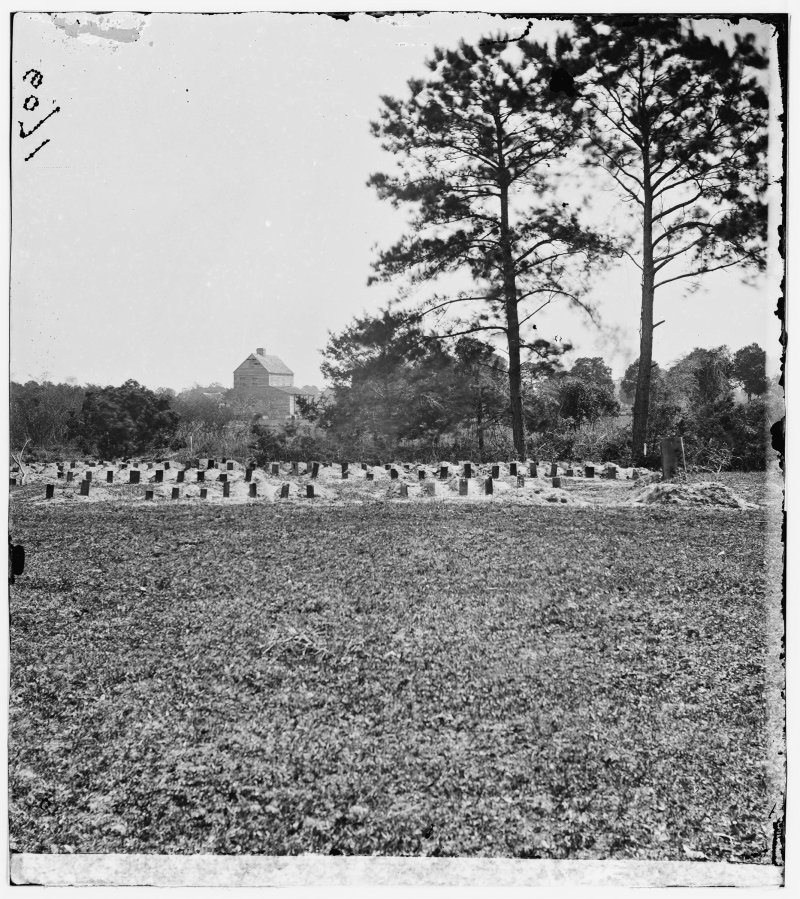
    On May 1, 1865, following the construction of the newly built cemetery, the largest commemoration took place with a parade of nearly 10,000 people, led by a group of 3,000 Black school children. The processional led to the cemetery where everyone came together, both Black and white, and listened to the melancholy voices of the children’s choir and scripture readings. Library of Congress, Prints and Photographs Division.

    Or did the following occur to establish the first “memorial” to our war dead?

    From: https://www.va.gov/opa/speceven/memday/history.asp

    “Local Observances Claim To Be First Local springtime tributes to the Civil War dead already had been held in various places. One of the first occurred in Columbus, Miss., April 25, 1866, when a group of women visited a cemetery to decorate the graves of Confederate soldiers who had fallen in battle at Shiloh. Nearby were the graves of Union soldiers, neglected because they were the enemy. Disturbed at the sight of the bare graves, the women placed some of their flowers on those graves, as well.”

    Question #1 for genealogists: Who started the tradition of decorating graves with flowers and when?


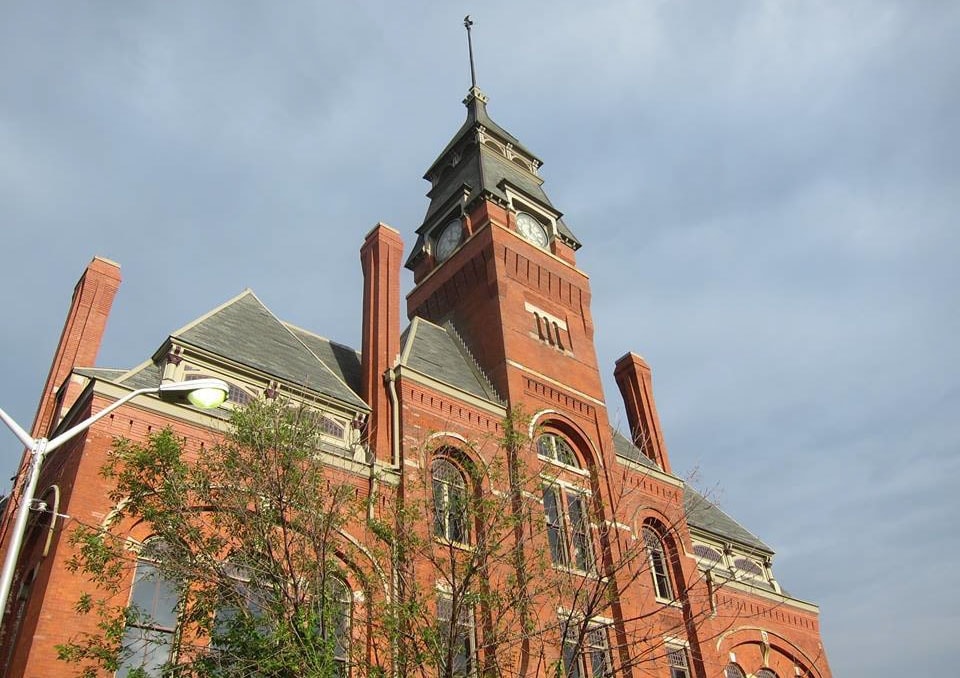
    Clubhouse at the race course where Union soldiers were held prisoner. Civil war photographs, 1861-1865, Library of Congress, Prints and Photographs Division. Special thanks to Time.


    Here’s what is generally known about what has become Memorial Day:

    Here’s what happened at the Confederate prison camp in Charleston, S.C.: https://www.loc.gov/item/today-in-history/may-30/. Three years after the first marking of Decoration Day, the U.S. General changed the narrative to mark it as a national holiday with traditions taken from the earlier years.

    Question #2 for genealogists: Check out the facts and determine which year is the origination?


    In 1865, 28 black workmen re-buried all (Black and Caucasian) Unioin soliders in individual graves. Prints and Photographs Collection, Library of Congress.

    Or is this the first Decoration Day? https://www.loc.gov/item/today-in-history/may-30/

    Question #3 for our genealogists: Check out the facts and figure out how the narratives are blended so that all is true.

    From Wikipedia:

    “On May 1, 1865, in Charleston, South Carolina, recently freed African-Americans held a parade of 10,000 people to honor 257 dead Union soldiers, whose remains they had reburied from a mass grave in a Confederate prison camp.”

    How your family ancestry aids in merged narrative

    • Check and re-check the historical research that is present on our ancestry sites. After review, correct, adjust and all with integrity.
    • Write the established websites that I have included in this blog and others. For instance, the U.S. Government has existing information that is in direct conflict with the real Decoration Day-turned Memorial Day.
    • U.S. citizens are asked to pause at 3 p.m., Monday, May 31, 2021, for three minutes to commenorate all those who died in miitary conflict. There were many were died at some level of domestic battles that were not provoked by them.
    • Please also remember these folk, our ancestors from all creeds and ethnic backgrounds. Lest we forget Tulsa, Oklahoma; Omaha, Nebraska, ElaineU.S. citizens are asked to pause at 3 p.m., Monday, May 31, 2021, for three minutes to commenorate all those who died in miitary conflict.
    • Enjoy Memorial Day for its true value in this great nation.

  • “We can see love and joy as we celebrate our ancestors and our history through the eyes of our children.”

    Each morning, my goal is to meditate and pray with more integrity and purpose than the day before.

    This morning, I reflected upon an opening statement from Hillside International Truth Center’s February 2021’s Daily Thoughts from the Hill. The statement that is highlighted in the headline of this post is a great centering point.

    In the name of our ancestors, peace to all.

       Namaskar!(The Spirit in me greets the Spirit in you!)       The spiritual faculty for the month of February is LOVE, and the physical center is the heart. The disciple is John. The color for the month is pink.        Love is the idea of Universal Oneness in Divine Mind. Love is the harmonizing power that brings the world together. Because of the attribute of love to bind, attract, cement, and equalize, we see the Divinity in every person and in all situations. In the face of unrest, discord, and division, it is important that we focus on Love, the great Unifier.
           In the words of Rev. Don Nedd, “The basis for right thinking is love- love of GOD and all that is good in ourselves and others.”The inner voice of love wills us to experience happiness, joy, peace, and forgiveness as a means of finding another way to believe in and see the world. The consciousness of GOD loves everything and everyone equally; we are all loved and forgiven by our Creator. Jesus said, “A new commandment I give you, that you love one another; just as I have loved you, that you also love one another” (St. John 13:34).
           Love is a great filler. It fills our senses throughout life. We can find it in the taste of good food that we share with family and friends, our elders, and those that are homebound, indigent, or homeless. We can hear it in great music and the inspiring words of Dr. Maya Angelou, John Lewis, Dr. Martin Luther King, Jr., and Bishop Dr. Barbara King. We can feel love in caring for others and seeing the enthusiastic look on their faces.
           We can see love and joy as we celebrate our ancestors and our history through the eyes of our children. We can smell love through the aromas of nature, as we breathe in fresh air, the cleansing water of rain, and the fragrance of flowers and trees. Love is the beautiful manifestation of the presence of GOD in all things.        As we celebrate the power of love, let us listen to the inner voice of love for lasting happiness and peace of mind. This month focus your attention on devoted service, kindness, unselfishness, tender compassion, and goodwill towards all. In so doing, we embody the attribute of Love– as we are one with GOD, one with all life, and one with all humanity.
           “And now abide faith, hope, love, these three; but the greatest of these is love” (1 Corinthians 13:13).AFFIRM: I am a love magnet that attracts health, wealth, and happiness.    
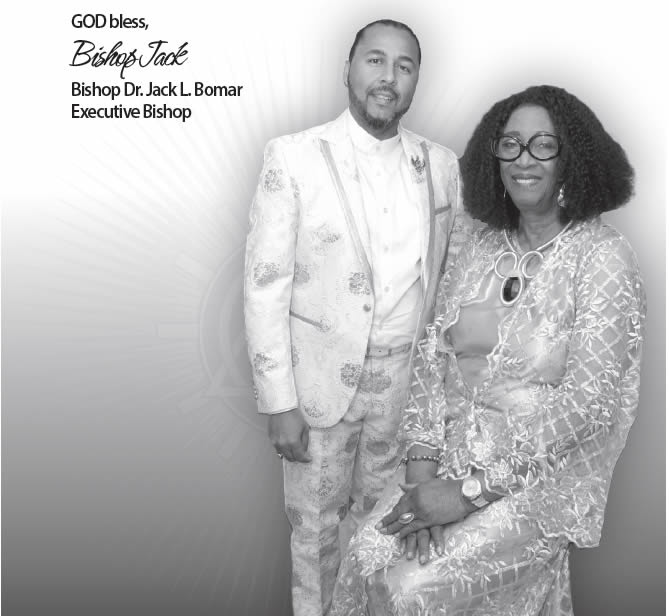
    Current senior pastor, Bishop Dr. Jack Bomar with the now transititoned and Founding Bishop Dr. Barbara King

  • #13 How to learn off-court genealogy lessons from on-the-court play

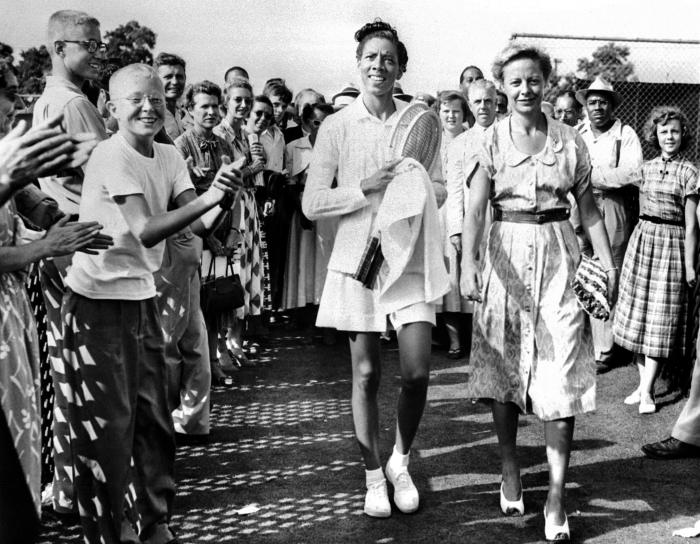
    Check out my other blog that I just posted http://weadwriteawaygoodgenes.com/2021/05/23/the-net-result-of-104-years-of-black-women-in-tennis-slowe-serve-to-turnbough/. It provides the linkage between historical and current actitivites on the tennis courts. involving black athletes.


    Here’s how to transfer play into pay. In this example, the “play” is tennis. The “pay” is the pay off in historical, sometimes ancestral connections between former days and now.

    Pay to Play tips:

    • Learn and study the present-day recreational and hobby activities of family members;
    • Participate in their favorite activities or show interest and become a great spectactor;
    • Become an equally great noteaker, visual recorder of your family member’s activities;
    • At the same time, begin the historical research about the same or similar activities;
    • Begin to connect the dots with the historical linkages to the present activities of your family and friends; and
    • Write your story, record your story or share your results to individuals who otherwise may not know the history as they witness the future.

    Enjoy your research and publishing as much as I did when I researched the history of Black tennis in the U.S.

    Photographs by Ann Lineve Wead Kimbrough, May 22, 2021