Tag: African American history

  • #38 Story of Muhammad Ali’s first attorney “lost” in the river … her contribution rolls on

    The worthy search for ancestors, friends and other loved ones remains important. As newbie or veteran genealogists, the precious lives of ancestors are not always scripted with a pleasant ending. Yet, we are comforted by the achievements of so many pioneers who paved the way for us.

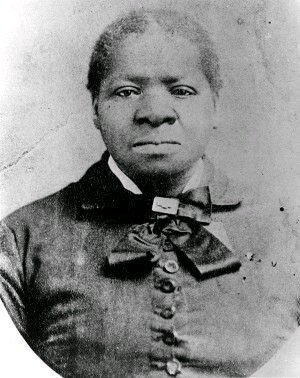
    Such is the case of the little-known civil rights pioneer whose work as a Louisville, Kentucky prosecutor earned her a special place in history. Jones was the first attorney for the rising star boxing great Cassius Clay (Muhammad Ali) by writing his first contract in 1960, she participated in several civil rights marches, including the famed March on Washington in August 1963. She was appointed Louisville City Attorney in 1964 — the first woman of any race and ethnic background to hold that position.

    My triumphant Sorority Sister and one of the longtime unsolved mysteries about her death that was caused when she was tossed off the Louisville Sherman Minton Bridge into the Ohio River on August 5, 1965. She was 35 years old.


    Sometimes, we receive our “flowers” long after we have departed this earth. That is the case for Jones, who was the first African American female to pass the bar in Kentucky.

    There are so many more factoids you should learn about this lady. Take three minutes and read all about her! Look up some of your loved ones who may be fraternity, sorority, church, temple, school, work and other socially related ancestors. You can start your research by building your family trees and searching U.S. Census records for neighbors. It is worth it.

  • #37 Ancestor Appreciation Day … surprises!

    My ancestors come in all shapes, sizes, colors and names. I appreciate that as our history is intertwined with one another. There is no escaping our past. That is why we study genealogy and that is to honor our ancestors for “going through” to allow us to live on this earth today and in future days.

    Happy Ancestor Appreciation Day!

    Like many of you, I am constantly searching and unearthing — when fortunate — new findings that shed light on my ancestors. It helps to instill confidence, grace, forgiveness, charm, intellect, strategies, empathy, joy, peace, reconciliation and more in our hearts and souls as we find out more about our ancestors.

    Learning of our Native American ancestry and more, is also healing.

    Here are a few of my new findings about our ancestors:

    1. I am named for my (Ann’s) paternal Great-Grandmother Ann Crum Shanks Green. Her father is Alfred Crum. Alfred Crum was born in January 1869 in Alabama. He married Mary A Middleton and they had nine children together. He then married Mary Crum and they had two children together. He died on June 26, 1923, in his hometown at the age of 54.
    2. I (Ann) have 793 DNA matches through my testing a decade ago through ancestry.com. As we work through the names, relationships and more of the potential 4th cousins and closer ones, here’s an ancestry.com message that I sent to one of my “for sure” newly discovered relatives on our maternal side:

    “Glad to know that my maternal great-great grandparents, Robert Brant Wilks and Melissa Catherine Gray (always use the woman’s maiden name in genealogy) are your same relatives. My great -grandmother Edna Wilks is the oldest female in the family and Lorene was her younger sister.”

    3. Also, on our maternal side, John Favor, a private from Alabama, fought for the Confederacy during the Civil War.

    4. Below the family tree, is a U.S. Census Schedule that shows John Favor, Jr. is a “free white” man. John Faver, Jr. received a signed land deed on June 8, 1820 or 1830 (the deed is hard to read) from the U.S. government. The prominent signature on the deed for the family land in Limestone, Tenn., was U.S. President Andrew Jackson. Jackson’s lingering legacy is the tragic Trail of Tears aka Indian Removal Act.

    Remember when I recommended forgiveness as part of our ancestral research. I have evoked forgiveness in the transfer of land in Tennessee during the time of the deadly trek of the nations of Native Americans.


  • #35 How to set up your family chart template

    There are many free tools to help the budding family ancestry trackers to experienced genealogists set up charts and trees to affirm our heritage.

    Start somewhere, even if you have one complete name of an ancestor. Our heritage aids in our current-day families’ spiritual, mental and physical health.

  • Today’s quote  encourages heritage research

    Today’s quote encourages heritage research

    My past has served as the perfect fertilizer that has grown and expanded my consciousness. 

    Daily Thoughts from the Hill, Thursday, Sept. 16, 2021 “I AM LIVING A NEW FUTURE“
  • #34 How to research the “Grand” legacies

    In honor of Grandparents Day, consider digging a little deeper to gain those important nuggets from the family tree.

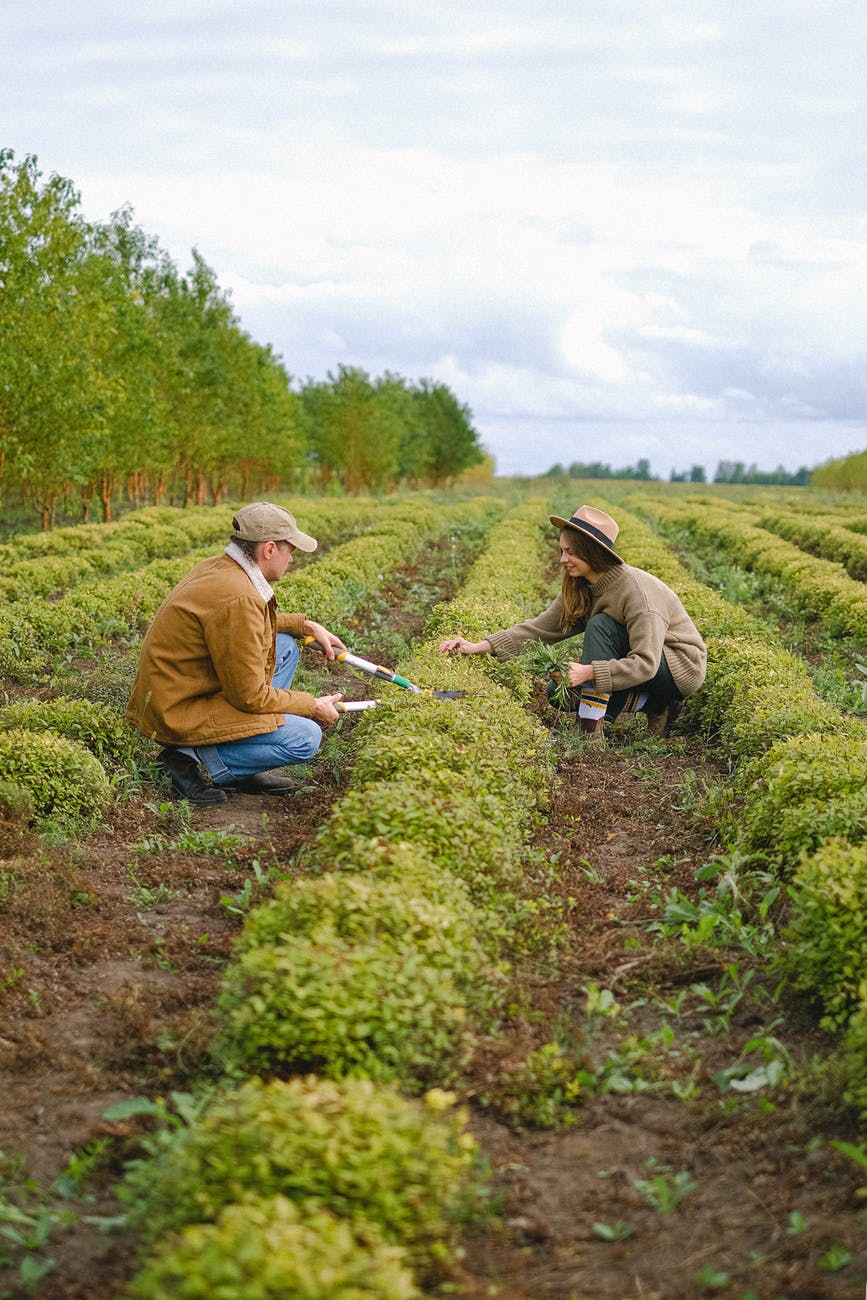
    Honor your ancestral grandparents by researching your family’s histories. Begin with the most sacred and lasting technique in African American, Afro Caribbean, Native American and other cultures’ and that is storytelling.

    Here are a few tips:

    1. Communicate with a grandparent — whether yours or another family’s relative.
    2. Ask questions about their childhood and things that they remember.
    3. With their permission, record their words and great stories.
    4. Share their stories. Embed it in your psyche. Honor the grandparents for what they accomplished.
    5. Appreciate their lives.
    Photo by Harshi Rateria on Pexels.com
    SATURDAY          SEPTEMBER 11, 2021 THANK GOD FOR GRANDPARENTS 
    A Daily Thought from the Hill (Hillside International Truth Center, Atlanta, GA)
    Grandparents are exactly that- grand. They are known by many names. Grandmothers are called nana, grammy, big mama, or abuela, while grandfathers are called grandpa, pop-pop, granddaddy, or abeulo, to name a few. Whatever name we call our grandparents and whether we had or have a relationship with them or not, they are part of the unbroken spiral of life. Their soul is imprinted on our soul. We are one with them.       I honor, acknowledge, and celebrate my grandparents. I recognize their role in my being here to express my inner splendor. I pray for and bless all grandparents wherever they are, in spirit or in the flesh. Thank you for your ability to impart wisdom to navigate life’s lessons. For the grandparents who are challenged to show up, we shine the light of love on you. Thank you, Order, in me, through me, as me, around me, through the Christ within. And so it is.     

    Children’s children are the crowns of old men; and the glory of children is their fathers.  Proverbs 17:6    
     Daily Thoughts from the HillCopyright: Hillside International Truth Center, Inc.Bishop Dr. Jack L. Bomar – Executive BishopBishop Dr. Barbara L. King – Founder
  • #23 Who do you think you are?

    Ultimately, who are we? Based on our twisted and tangled family histories, African Americans and Afro Caribbeans are the ones whose ancestors were sold and traded to satisfy enslavers’ mortgages and other sales.

    We want to get answers to this question about ‘who are we?’ as we remove bricks and tree forests to answer our questions. If you have not already considered submitting to a genealogy DNA test, it will become increasingly necessary to fully engage in the scientific credible or best estimates of family trees.

    “Everyone’s DNA cocktail is not the same,” said noted genealogist Nicka Sewell-Smith during a recent webinarThe Annual Forgotten Patriots and Daughters of Color Luncheon, where she provided compelling evidence of the benefit of mixing DNA results into the difficult research stages to secure her family’s missing links.

    The Good Genes Genealogy Services team is 100 percent DNA tested. Based on the results from both founders, it will provide a better reading of the Owen-Weed-Wead-Owens family tree that is colorful mixture of European, African and U.S. ancestors. There is so much to learn about DNA research and results and I invite readers of this blog to consider reading another favorite blog to learn just a little bit more aobut the possibilities of nailing better estimates on your families’ histories.


    Stay tuned to this blog to learn about the Aug. 1, 2021 e-book by Good Genes Genealogy. It will go more indepth about four subjects each month.

  • My Memorial Day memories: Former slaves honoring the dead

    My Memorial Day memories: Former slaves honoring the dead

    I was among the few chosen ones.

    I don’t recall ‘sleeping in’ on Memorial Day as a child growing up in Omaha, Nebraska. I do not know how it happened that I was awakened early each Memorial Day Monday to accompany my maternal great-grandmother, Edna Robinson, and at least two other family members to the cemeteries. We arrived early to greet the morning dew upon the grassy knolls. Our task was to place fresh plants near the grave markers of our loved ones.

    I vividly recall Grandma Robinson’s words to me and others as she used her tender hands to dig out spaces to place each new plant in the ground. Even though my mother or cousin would bring along tools to help Grandma Robinson with her mini excavations, (the worms would always greet us and seek to find new, cool hiding spaces)she would turn them down.

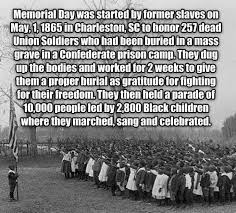
    Grandma Robinson believed in honoring our ancestors by using her hands or a nearby stick, if available, to tend to the soil. While busy in her planting, Grandma Robinson often recalled how former slaves started the tradition of Memorial Day as a way to pay tribute to the black soldiers returning home from the war.

    “They forgot about the colored soldiers,” Grandma Robinson always said without specifying the “who” in her recollections.

    But I figured out who she was speaking of as I read more and more about Memorial Day, yet did not see the historical references that I first heard from my grandmother.

    Grandma Robinson told me a lot more about the importance of remembering those who many forget upon their deaths. Through her example, Grandma Robinson taught me how to kneel upon the earth and dig into its richness. While in a kneeling position, we ALWAYS prayed in a quiet manner. She said prayers should be spoken in soft tones as we walk and work throughout the day. That was my first hint at how Grandma Robinson withstood the likely poor treatment while caring for other folks’ houses and children.

    Each year as we returned to the graves of our loved ones, I would look for the plants we plotted in the previous years. Some were completely wiped out by the winter’s snow or other seasonal heat. Some plants were either trampled on or somehow pushed into the dirt where only a tiny flower bud peeped from the ground. Once Grandma Robinson saw a glimmer of life in one of our previously planted vines, she would carefully dig around it and gird it up to continue its growth.

    We also did not leave a gravesite area without helping to pull back the grass overgrowth on graves with numbers engraved in cement to mark burial locations. That taught me to look out for my neighbors and honor them with the blessings that we had. Often, if we had a plant or two left over, Grandma Robinson would lead us to a burial site where someone she knew was placed beneath the earth. We always left the cemeteries with empty containers that once carried in the plants.

    Learning is loving and respecting and doing. I got it all in my annual visit to the Omaha cemeteries to honor our dead and the legacy of the holiday.

    Although I will not be in our maternal family’s home cemetery site in Springfield, Missouri to place a plant in the ground in honor of Grandma Robinson, I know that my family members will do so and thereby honor my grandmother and our ancestors.

    Photo: Dr. Rex-wordpress.com

    For more information about Memorial Day’s founding and its alternative observances by Confederate-loyal folk, see http://content.time.com/time/nation/article/0,8599,1900454,00.html
    And
    https://www.alternet.org/civil-liberties/untold-story-memorial-day-former-slaves-honoring-and-mourning-dead
    And more. Check out remembrances from your eldest family members.

    Ann L. Wead Kimbrough is an accomplished educator, award-winning financial journalist, author, special events leader, mentor and prolific contributor to select global and domestic non-profit causes. Her blog topics include travel, history, humor, education, career, family, journalism and ‘thought you should know’ subjects. https://www.linkedin.com/in/annlineve/