Prizes will be awarded to those who guess how many times the word “ancestor(s)” was spoken during the recent Ubuntu conference.
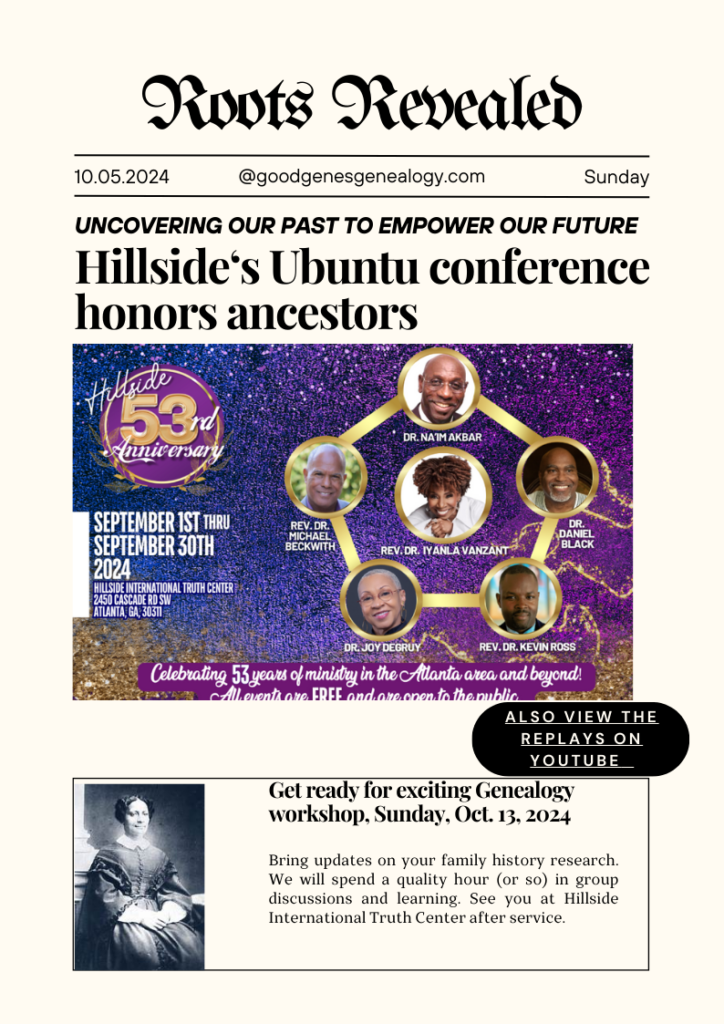
Another free offering from Good Genes Genealogy Services via Dr. Ann Wead Kimbrough
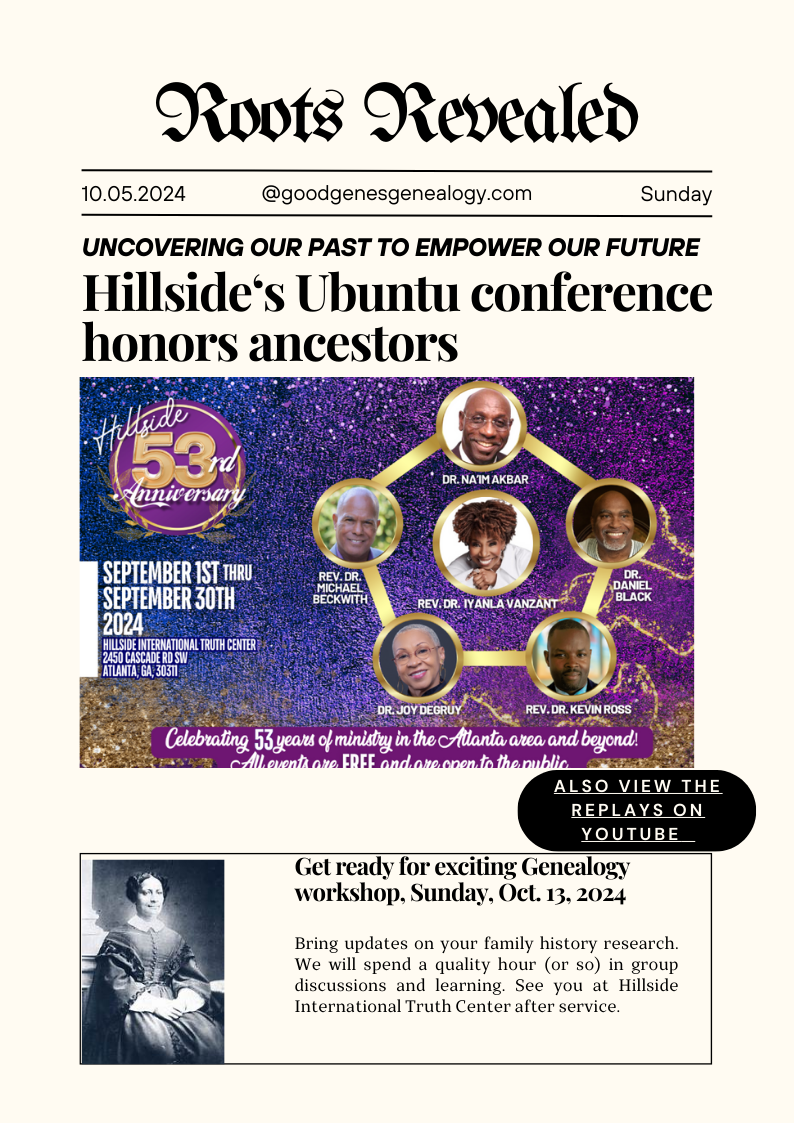
Prizes will be awarded to those who guess how many times the word “ancestor(s)” was spoken during the recent Ubuntu conference.
Another free offering from Good Genes Genealogy Services via Dr. Ann Wead Kimbrough

Welcome all genealogy enthusiasts in search of African American family histories.
Whether you are a newbie to the African Diaspora trail searching or a veteran who can quickly guide through genealogy online searches.
Let’s get started:
For those who know, it’s your county library system.
Since I am based in the Atlanta area, I regularly utilize the Fulton County Library System that serves Atlanta and 12 other cities. It includes the historic Auburn Avenue Research Library on African American Culture and History. The collection was a trailblazer among library systems in the United States when became the first public library in the Southeast to provide archival and reference materials that focused on the historical aspects of African American culture. In 2016, it re-opened after a $20 million renovation.
I am also a member of the DeKalb County Library System, which is located in the metro Atlanta area. My unique setting is that I have an Atlanta address while being situated in DeKalb County. Why are libraries my all-time favorite genealogy sources? It’s simple. Libraries are as close as down the street from your home and are long-time collectors and organizers of information that are useful to the general community. Holding residence in a community allows most persons to receive a “free” library card and that leads to access to other free online sites such as Ancestry.com, HeritageHub, Census.gov and thousands of more.
Libraries offer free and fee-based genealogy researchers, lectures, linkages with genealogical societies, affinity groups that include ancestry researchers and myriads of other free and special offerings. Other notable library sources for African American ancestry researchers include:
Allen County Public Library, Fort Wayne, Indiana. Its Fred J. Reynolds Historical Genealogy Department is a centerpiece of the library with special collections of African American and Native American genealogies. Wikipedia describes this historic collection of genealogy materials best. The Allen County Public Library houses “the largest public genealogy department in North America, home to more than 350,000 printed volumes and 513,000 items of microfilm and microfiche.[4][5] Only the Family History Library in Salt Lake City, a private institution, is larger.[6] Allen County Public Library is also a partner of WeRelate, a collaborative online genealogy database currently providing access to over one million records and two million person pages.”
One of my favorite quasi private/public libraries to visit is the National Museum of African American History & Culture Library. Spoiler alert: It takes 2 – 3 days to fully tour and experience the museum and library. It is focused on African Diaspora and African American culture, history, and lots of displays. I especially appreciate its collaboration with an ancestry research service and the U.S. Census to offer genealogy and family history assistance.
The National Archives Black History collections are my epic winners for original, unusual, and special research in areas that include photographs, military, culture, and state, regional mega libraries and archives. Its online resources offer federal and non-federal associations, groups, agencies.
The U.S. Library of Congress, Washington, DC. This free public library is a collection of libraries within libraries. Its African American History Online resources are phenomenal in that many of the documents are originals, or primary, as it is notated in the library collections. Its extensive pictorial, other artifacts, books, audio and video recordings, and so many more rare resources are widely available through the LOC.
Denver Public Library, Denver, CO’s Blair-Caldwell African American Research Library is the creation of the city’s first African American Mayor, Wellington Webb and his wife, Wilma Webb. They wanted to highlight the history of African Americans in the American West. From the couple’s 1999 conception of it, the library collection opened in 2003 and serves as a research library. It states as its mission, to “collect and preserve the history and culture of African Americans in Colorado and throughout the Rocky Mountain West.”
The Schomberg Center for Research in Black Culture is the New York Public Library’s research library. Named for Afro-Puerto Rican Scholar, Arturo Alfonso Schomburg, the library is situated in the Harlem neighborhood of Manhattan, New York City. The massive library and archive collections has five separate divisions that provide superior data, visuals, and other resources for African Diaspora descendants who are interested in global historical facts. The library is also known for hostings celebrity and local creative artists, art exhibitions, theatrical events, and notable discussions.
The point of this blog is to heighten your interest in utilizing research libraries to gain free resources. Please search for great research opportunities in special collections in both public and private libraries.
The National Genealogical Society offers a free membership for senior citizens 65 years and older. The membership value is up to $100. Check out how to take advantage of this offering:

Happy researching!

Today’s freebie is straightforward: Keep researching your ancestry in all regions of the world.
Around the globe, the remnants of African Diasporan appear in most cultures. In this quick installment, see the results of the African American slaves finding safety in Mexico.

Keep digging and learn of the great Gaspar Yanga. A huge statue in Vera Cruz, Mexico, is dedicated to the “Primer Libertador de America or “first liberator of the Americas,” (1545 – 1618) who led one of the first successful slave revolts in colonial Mexico. For years he negotiated with Spain on eleven points, including the ability to establish one of the Americas earliest free black settlements. The town, San Lorenzo de Los Negros was “officially recognized by Spanish authorities as a free black settlement,” according to BlackPast.org. Later, the Mexican town became known as Yanga in honor of its liberator and founder.



For many, the question of where to begin the hunt for their ancestors, is huge.
Here are a few of the questions and comments the Good Genes Genealogy Services (GGGS) team receives from our prospective and new clients:
I am adopted and I don’t know anything about my birth family.
I don’t know my mother’s maiden name.
I don’t know my Dad or his family.
Since the U.S. Census doesn’t have any official records about Black people until 1870 and even that is incomplete, how am I supposed to trace my family back to their arrival in the United States?
I started my family research but then I hit that “brick wall” and cannot move forward. I am ready to give up.
I don’t know anything about my family past my maternal grandmother and my great grandfather on my father’s side.
I heard that my entire family is buried in cemeteries in South Carolina and that’s where I’m from but I don’t know my family’s history.
For African Diasporan-connected family members, the quest to begin the ancestry search may appear to be even more daunting than our counterparts. Yet, we all had to begin somewhere. That’s our first tip:
Those are just a few tips offered to help anyone get started or re-energized to keep up the research for one’s family heritage.
Everyone’s journey is different. Yet, there are similarities in our collective ancestry research efforts based on our listening skills, questioning of relatives, learning new techniques, and jumping in the swim of family research.
This wonderful event is from the Wilson Griot Legacy site:
The Wilson Griot Legacy is a modern enterprise to create new sacred storytelling to unravel information inherent in our genealogical past.
Posted byWILSON GRIOT LEGACYSeptember 9, 2023Posted inUncategorized
I will be joining with the Kinseekers Genealogical Society of Lake County, Florida in conjunction with the Leesburg Public Library in a special event on Saturday, September 23, 2023.
Both in-person and virtual event:

Saturday, 23 September 2023
9:45am – 3:30pm EST
Informal meet ‘n greet at 9:30am EST.
Event is free & open to all!!
Advertisement
Presented by Kinseekers Genealogical Society and the Leesburg Public Library.
To attend virtually, register here.
To attend in-person, contact the Leesburg Public Library at 352.728.9790
MORNING SESSION (9:45am – 12:15pm EST)
–Welcome & Announcements
– Researching Black Family History, 1900-1950: Essential Foundations: presented by Taneya Koonce
–Context Matters: Researching World War Two Black Ancestors:presented by KB Barcomb
LUNCH BREAK (12:15pm – 1:00pm EST)
AFTERNOON SESSION (1:00pm – 3:00pm)
– Colleges, Clubs, & Cotton Fields: Researching Black Women, 1900-1950:presented by Adrienne G. Whaley
– Open Round Table Discussion
Middle Peninsula genealogy group to host virtual talk ‘Tracing Our Ancestors’ | Richmond Free Press
m.richmondfreepress.com
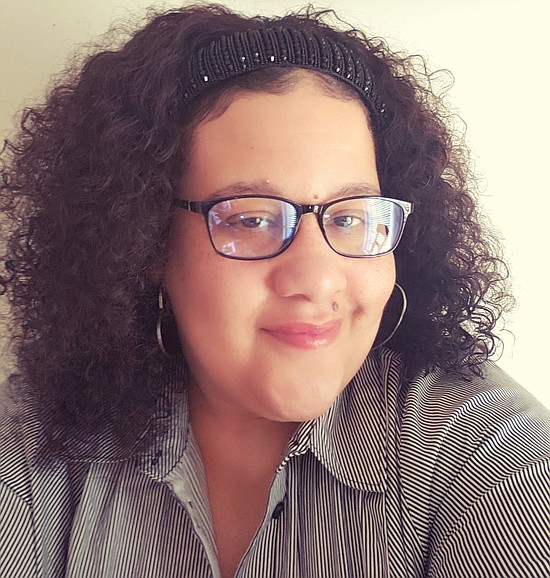
Historian and genealogist Karice Luck-Brimmer will discuss “Tracing Our Ancestors’ Footprints” and how Black people can reclaim their heritage during a virtual meeting of the Middle Peninsula African-American Genealogical and Historical Society on Saturday at 11 a.m.
Ms. Luck-Brimmer also will discuss her role in tracing the ancestry of Air Force veteran Fred Miller.
In 2020, Mr. Miller purchased an 1850s-era Gothic Revival-style house near his childhood home in Pittsylvania County. He wanted a large space to host gatherings for his extended family. In doing so, Mr. Miller found hidden information about his family’s past. The house, called Sharswood, was a former plantation where his ancestors once were enslaved. Ms. Luck-Brimmer helped uncover the family’s connection to Sharswood and the story behind the discovery made national news on media outlets such as CBS’ “60 Minutes” and the Washington Post.
As an education and community initiatives program associate, Ms. Luck-Brimmer works primarily in the Dan River/Danville region where she collaborates with local community members and cultural organizations committed to positive change.
A public historian and genealogist, she has conducted extensive genealogical research in the Pittsylvania County area and is the founding president of the Danville/Pittsylvania County chapter of the Afro-American Historical & Genealogical Society.
While the Middle Peninsula African-American society focuses on the history and genealogy of Virginia’s Middle Peninsula and Northern Neck, its programs are accessible to anyone throughout the United States.
For more information, email mpaaghs.va@gmail.com or call 804-651-8753.
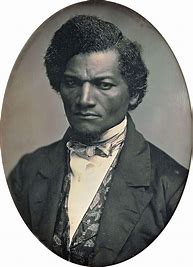

Every tone {of the songs of the enslaved} was a testimony against slavery, and a prayer to God for deliverance from chains.”
Frederick Douglas, abolitionist, activist, and author, from “Narrative of the Life of Frederick Douglass (1845).
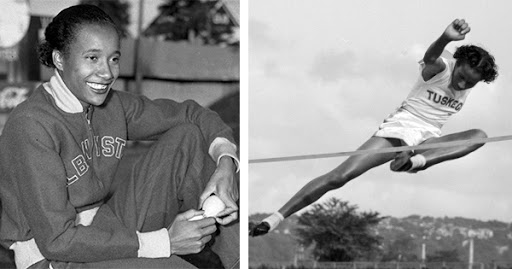

Often, reviewing the hatred and violence suffered by African American ancestors, are tough matters to endure and often neglected in history books. Yet, the examples of persevering despite the sad circumstances, can spur on genealogy and ancestry researchers to compare and contrast the past with today’s societal practices.
Good Genes Genealogy Tip: Interview your family members about their sports histories. Some may share the good and also the unhappy times that they or their parents may have endured. Learn how they survived the taunts and personal risks to their families and themselves.
He broke the color barrier in United States’ Major League Baseball. Jackie Robinson did it all, including suffering physical and verbal wounds from his colleagues:
Robinson nonetheless became the target of rough physical play by opponents (particularly the Cardinals). At one time, he received a seven-inch gash in his leg from Enos Slaughter.[135] On April 22, 1947, during a game between the Dodgers and the Philadelphia Phillies, Phillies players and manager Ben Chapman called Robinson a “nigger” from their dugout and yelled that he should “go back to the cotton fields”.[136] Rickey later recalled that Chapman “did more than anybody to unite the Dodgers. When he poured out that string of unconscionable abuse, he solidified and united thirty men.”[137]
https://en.wikipedia.org/wiki/Jackie_Robinson

On her first attempt in the high jump during the International Olympics Games in 1948, Albany, Georgia native Alice Coachman won the gold medal. She became the first African American of any country to win a gold medal. Despite her instant fame and large celebrations back home in the United States, her hometown leaders treated her differently:
Yet these latter celebrations occurred in the segregated South. In the Albany auditorium, where she was honored, whites and African Americans had to sit separately. The white mayor of Albany sat on the stage with Coachman but refused to shake her hand. She had to leave her own celebration by a side door.
https://www.womenshistory.org/education-resources/biographies/alice-coachman
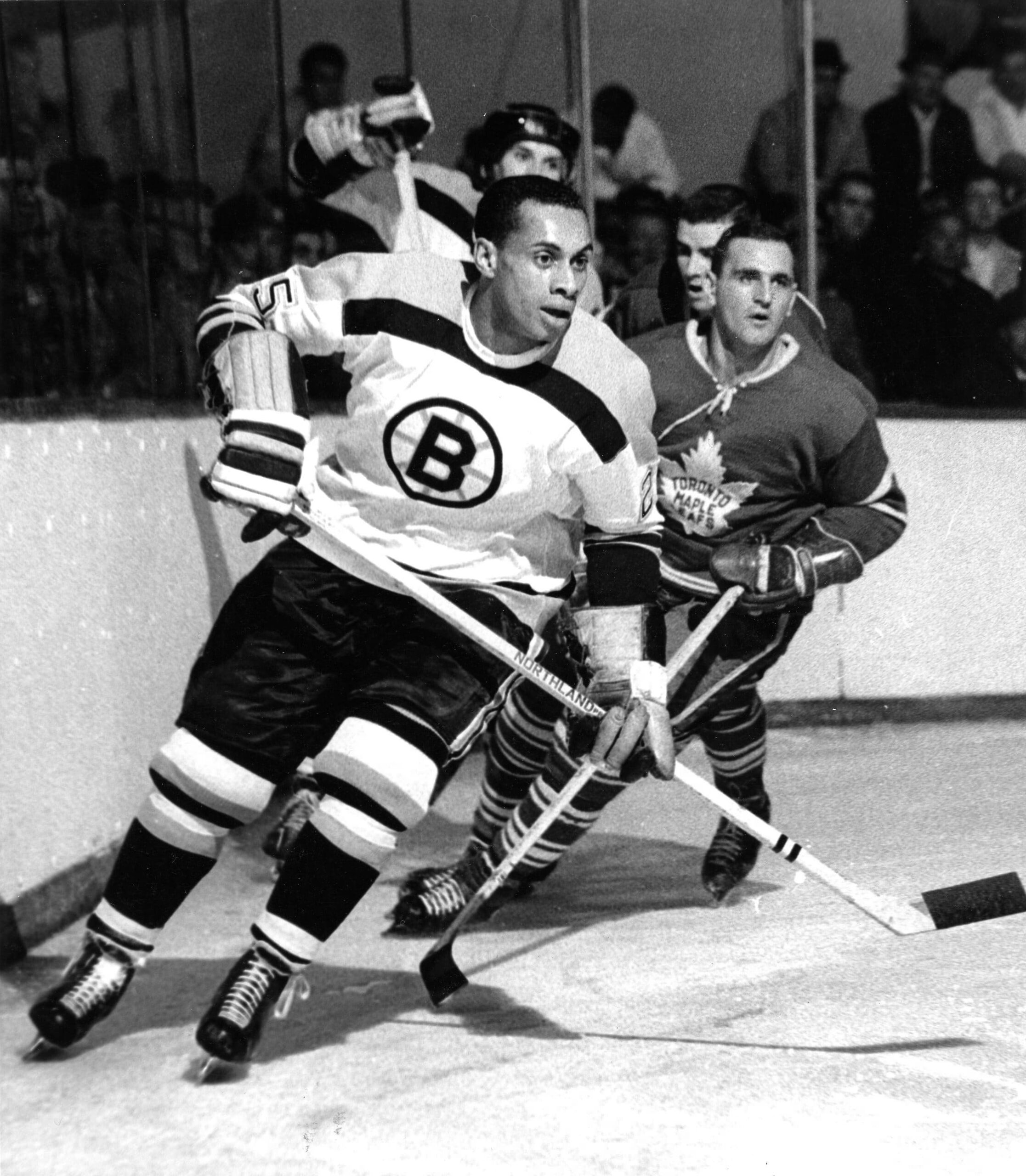
Willie Eldon O’Ree was a youth when he met Jackie Robinson. It helped to inspire O’Ree to pursue his sports passion and became the first African American to join the National Hockey League in 1958. He continues to speak positively about his experiences as a hockey player. Yet, O’Ree suffered many indignities by his fellow league members and fans before retiring in the late 1970s:
O’Ree faced racial taunts throughout his hockey career, including in the NHL, especially in the United States. [11] He noted that racist remarks were much worse in the U.S. cities than in Toronto and Montreal, the two Canadian cities hosting NHL teams at the time, and that “Fans would yell, ‘Go back to the South‘ and ‘How come you’re not picking cotton?’ Things like that. It didn’t bother me. I just wanted to be a hockey player, and if they couldn’t accept that fact, that was their problem, not mine.”[12]
https://en.wikipedia.org/wiki/Willie_O%27Ree
By now, many of us who are searching for answers to the mysteries of our African Diasporan ancestors have found that the routes to getting research are often nontraditional. Consider another avenue to hopefully find your ancestors.
Tap into your imagination, natural instincts and recall the stories you’ve heard to search for clues about your ancestors’ journeys. Hopefully, you will find a new detail to help break through those brick walls.
If your ancestors worked at the Ford Motor Co. in the 1960s in Queens, New York, they may have known or been on the team with McKinley Thompson, Jr. an African American who designed cars during his 28-year career with the automaker. He was part of the concept team for the first-generation Mustang and GT40.

Thompson came up with the open-air, 4 x 4 turbine boxy car that changed the automotive industry. It was a sports utility vehicle known as the Ford Bronco. Look at Thompson’s life and the places he lived, worked, was educated and served. You may find your ancestors in his art classes, in the military unit he served in, other jobs that he held or even in his retirement community.

It is well-known in ancestry and genealogy research African American slavery matter prohibits current-day research efforts about family histories. The blockages that create the brick walls often referred to in African American ancestry research is due largely to enslavers not listing the full names, ages and other identifies for African Americans on the official documents, and the U.S. Census Bureau not including the names, addresses and full demographic information about African Americans until the 1870 records. There were sporadic accounts of slaves’ names and other information by the owners, and the government documents published some information that was linked to African Americans in bondage.
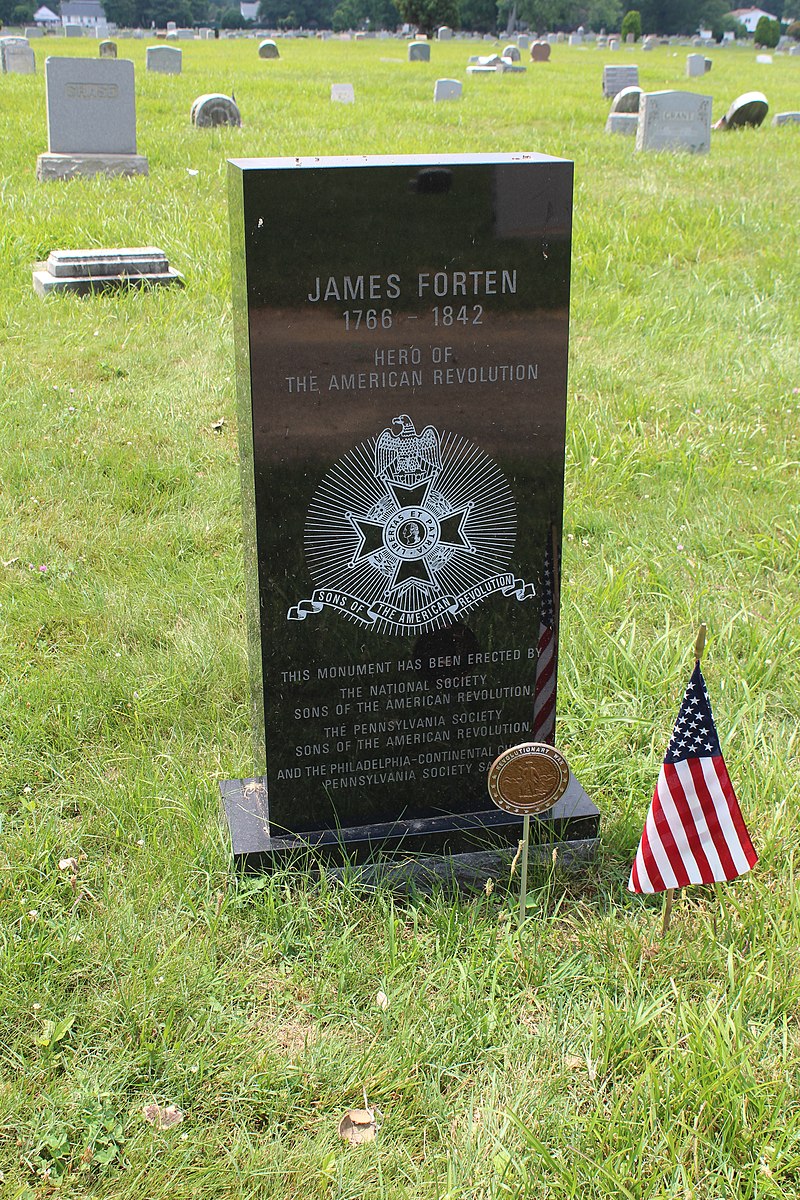
Occasionally, there are uncovered lives of African Americans such as James Forten, considered one of the Founding Fathers of the United States. He was born a free American in Philadelphia, PA in 1766. At age 14, he joined the Continental Army and was a “power boy.” A powder boy carried gun powder from the ship’s magazine to the ship’s cannon. Following in the footsteps of his father, he became a sailmaker. He became his family chief sailmaker in 1798 after the death of his father.
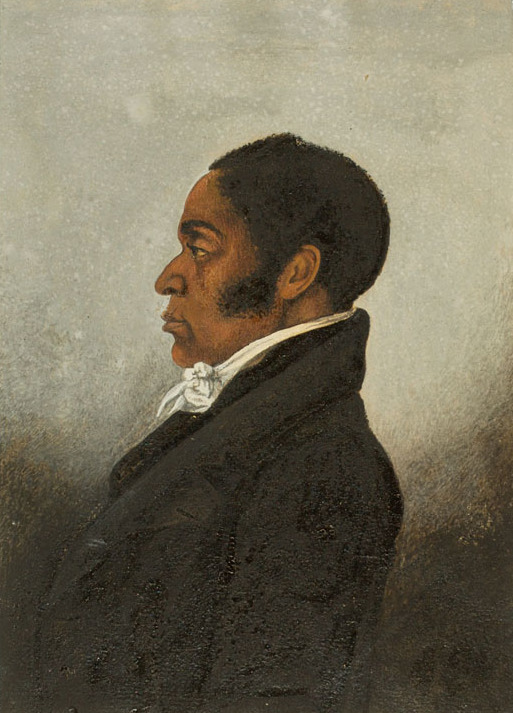
To return to the original concept of this blog, look for any opportunities of your ancestors to be located in the areas that Forten lived and visited. It is likely that your ancestors may have been in the similar line of work or even worked with Forten, or volunteered with his wife and daughters in their abolitionist activism.
As an abolitionist who walked his talk, Forten chose to not work with any slave trade-connected companies and individuals. Forten was brave to adopt this business practice. However, as a man who was aboard a ship that was once captured by the British and he risked being sold into slavery, Forten withstood adversities and became a wealthy man who was also an active abolitionist. He designed and sold innovative sails that allowed ships to gain higher speeds, among other attributes. He was considered the prime sailmaker in Philadelphia and he employed African Americans and whites. He funded popular abolitionist publications and also endorsed his daughters developing the first interracial women’s abolitionist organization, Philadelphia Female Anti-Slavery Society.
So popular was Forten in the abolition movement and as a top employer that upon his death at age 75, his funeral was attended by thousands. Were your ancestors among the mourners?

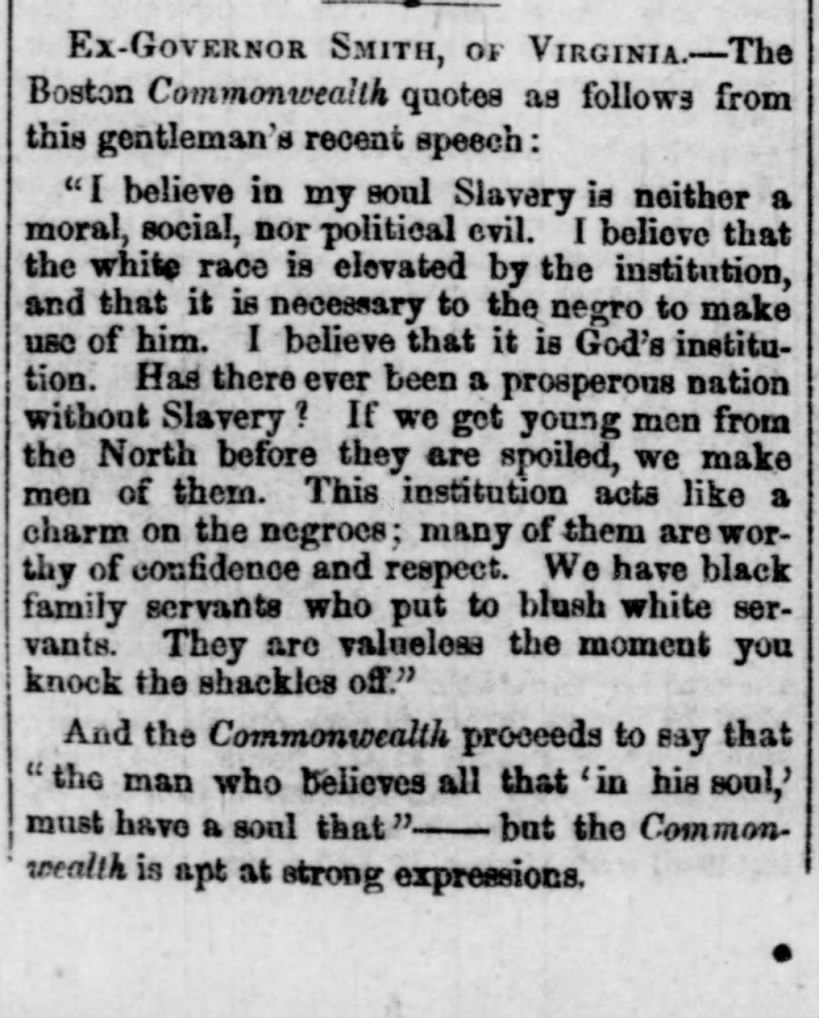
There is an active U.S. discussion about whether African Americans benefited from the horrific ills of bondage and slavery. A Florida governor who is a candidate for the Republican Party’s 2024 nomination for U.S. president is proudly touting such in his state education’s rewriting of history. His appointees are doubling down on the claim that there were productive, career benefits from the skills utilized by African Americans who were enslaved.
This newspaper clipping from a century+ ago is among the documents that mirror today’s comments from proponents of the rewritten history that slavery benefited African Americans.
To all ancestry researchers, search the newspapers for articles in the states where your ancestors resided. It is great insight in what policies and practices they endured while being subjected to the cruelties of forced, unpaid servitude.
