One of the benefits of researching our ancestors is the “find.” In this case, find is pure gold through the super talented siblings who set the human “beat box” standards. They are the Mills Brothers.
While combing through the online ancestry files of the Good Genes Genealogy Services’ grandfather, Eugene Owen, Jr., this remembrance was round. Our grandfather left Omaha, Nebraska for Los Angeles, Calif. to pursue his dream of becoming a Mills Brother-like entertainer. It was the 1940s and he left a family behind in Omaha, including little girls who would grow up and become our mothers of Good Genes Genealogy Services team members.
Our grandfather’s goal was to form a singing group become as popular as the Mills Brothers, a musical team of siblings whose 40+ years of success began in the 1930s. Our grandfather never achieved the same fame. He likely broke the hearts of our grandmother, “Mama” Helen Wilkes Owen Douthy, and her children and other family members. There are joys and pains in researching our families’ histories and this is an example of wading through all of the materials to get to the truth.
Yet, each time we hear the Mills Brothers’ recordings and watch the more than 20 movies that they appeared in during their stellar career, we think of Grandpa Owen.
Look up the next time you walk up to Southern homes, especially those along the Atlantic Coast in South Carolina and Georgia. On the exterior undersides and interiors, you will likely find the unique color of “Haint Blue” on those structures.
Haunt-blue painted ceiling of the Owens-Thomas House’s carriage-house. Photo courtesy of David McSpadden.
According to Gullah folk traditions, blue ceilings and blue doors can keep unwanted specters, phantoms, spooks, and apparitions from strolling in through the front door. It fools them into thinking that the door is part of the sky, that the porch is surrounded by water, that the house is protected by something sublime, more powerful and permanent than a coat of paint. It’s trickery though design, and trickery is something the Gullah people knew well.
At this Gullah Geechee home on Daufuskie Island, South Carolina, painted doors and shutters keep out evil spirits called “haints.” DAWNA MOORE / ALAMYPhoto by Alina Autumn on Pexels.com
Through their residency in these PWA housing complexes, African Americans were able to save money and plan for their future. “PWA (Public Works Administration) housing project for Negroes.” Omaha, Nebraska, November 1938. Photograph by John Vachon, 1914–1975. Library of Congress, Prints and Photographs Division, Washington, DC, 20540.
Wading through the thousands of files in the Library of Congress, this one stood out because it is the housing projects where my father, Dr. Rodney S. Wead, lived while boy growing up in Omaha, Nebraska.
We don’t know the man and young people in the picture. It was taken three years after Wead was born; his family had not moved into the housing development. In fact, Wead said that they were delighted when they moved into the Logan Fontanelle Housing facility because it was a “big step up” from their impoverished housing a few blocks away in a crowded rooming house.
Found my father’s housing unit
Keep searching archives. I did. Once my father viewed the photo (see below), he identified the now famous individuals whose families lived in Logal Fontenelle.
Often, we are hit with brick walls in our ancestral searches. There are thousands of photographs that were taken across the country of its citizens — especially Black Americans — as part of President Franklin D. Roosevelt’s New Deal or Works Progress Administration program that included Omaha during the 1930s.
Dr. Rodney S. Wead identified several housing “apartments” and youth who were residents of the Logan Fontenelle development.
Celebrity Activist shocked with her “Mayflower” ancestors while Canadian celebrates his Black ancestors
We are all connected. Ongoing findings among the skilled genealogy and DNA researchers and amateurs, confirm such.
The following two examples offer great hope to those who are steadfast in searching for the accurate stories of our ancestors.
Finding her Mayflower roots
Our favorite PBS show, “Finding Your Roots with Henry Louis Gates, Jr.” regularly features many genealogical surprises among its celebrity guests. A recent episode features well-known human rights activist, professor and author, Angela Davis. Among the startling findings for Davis is that her ancestral roots are traced to the original families who sailed to the early United States on the Mayflower vessel in the 1600s. The Mayflower travelers are attributed to slavery.
Paul Barber, also a photography hobbyist, from Ontario, Canada, was featured in a local newspaper article to discuss his maternal family, the Hendersons. He traced his family’s travel from Virginia to Canada. He referred to his brick walls as being “stuck in the mud” with his “three times great grandparents. That is, until he dug a little deeper. And deeper.
Barber took the DNA analysis, and it yielded more results. That’s where he learned of his roots in Benin and Togo. It is the time and place where the African Slave Trade was recorded. He said that is how he began to take apart the brick wall, albeit he knew of his Scottish ancestors. It was at that point that Barber said he landed upon a scenario that “he was not fond of.”
Since the first workshop on Saturday, Feb. 11, 2023, several participants have telephoned, texted, emailed and visited their relatives to gather information needed for their individual family searches. It is healing and helpful for your family and friends to discover their histories.
The forms in this workbook are helpful for recording family histories.
Join us at 10 a.m., Saturday, Feb. 11, 2023, for a valuable workshop via Zoom designed to prompt participants to find their “lost” loved ones and gain joy, satisfaction, identity and spiritual uplift on the journey. The workshop focuses on Black Genealogy and Ancestry family research and more.
Part two and final 2023 Sankofa Genealogy workshop will be held at the same time, Saturday, Feb. 18, 2023. Details will be provided next week.
Partners sponsoring this workshop.
Ann Wead Kimbrough and Mark Owen, first cousins and genealogists of GGGS, will facilitate the workshops for the third year. Workshop partner leadership: Presiding Bishop Jack L. Bomar, Rev. Sharon Hodnett (Zoom ologist) and Dr. Marian Gamble (Assisting Zoom ologist)
Genealogy and ancestry “hunters” come in all ages.
‘Back in the day,’ our ancestors’ version of social media was human contact. Stories were shared by village griots about our roots. Physical signs such as smoke were used to communicate. Entries were manually entered into family Bibles. Long visits with food-in-hands were made to families whose loved ones transitioned. Telephone calls were made on rotary dial devices. Telephone company operators connected calls between lines.
Storytelling among family via original stories and those read from informative books, are valuable to pass along family history.
Today, there are hundreds, perhaps thousands of daily opportunities for the novice to serious genealogy and ancestry “hunters” to find details about their loved ones. One of the obvious, natural sources of data gathering is apparent in our daily doses of media. Whether current TV newscasts or historical clippings from newspapers, there are photos and stories waiting for us to find and connect them to our ancestors.
“… forms of electronic communication (such as websites for social networking and microblogging) through which users create online communities to share information, ideas, personal messages, and other content (such as videos)…”
Meriam-Webster Dictionary
There are so many sites that apply to this definition and that is where the Good Genes Genealogy Team invites you to begin or resume your ancestry research. According to Datareportal, nearly 5 billion social media users are regular users on thousands of different sites. On average, 7.2 sites are visited each month by users. The top reason why we utilize social media is to remain in contact with living and deceased friends and families. Often, we receive news about the passing of a loved one from social media sources.
To help jog your brain, here are a few of the platforms that are part of our social media community:
Church websites
Sorority and fraternal websites
Community blogs and vlogs
Every app on cellular phones
Government resources
Newspapers
TV and Radio
Event, show bookings
Tradeshows
Quiz sites
Dissertation sites
Publications, ranging from scholarly to trade
Lots more sites are revealed on Datareportal:
Here’s an important tip on locating historical points on the QuizDaily website. It opened clues to one of our client’s family members.
“In 1832, the Georgia Infirmary became the first hospital for African Americans when it opened on Christmas Eve. Established by the Georgia General Assembly and a $10,000 grant from the estate of a merchant and minister named Thomas F. Williams, the Georgia Infirmary was built 10 miles south of Savannah, Georgia. In 1974, the infirmary was renamed the Adult Day Center; it is still an operating facility.”
Hillside’s leadership generously is offering our workshops for free. Cousins Ann Wead Kimbrough and Mark S. Owen, genealogists, are the facilitators for their church’s genealogy workshops. The workshops are open to our worldwide audience.
Kimbrough and Owen specialize in “breaking down brick walls” to find the “hard-to-find” Black ancestors whose histories are usually intertwined with others from contrasting backgounds, such as former slave owners. Kimbrough and Owen have several success stories in helping genealogy workshop participants and other clients to locate their “lost” loved ones. Hillside’s Presiding Bishop Jack L. Bomar, is among those who learned a “great blessing” of family history through the Good Genes Genealogy Services’ research about his family.
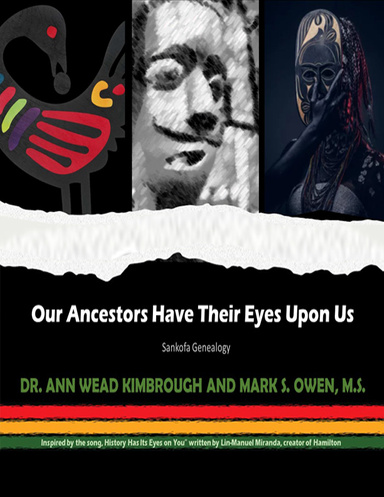
Sankofa Genealogy workshop attendees are asked to purchase the companion workbook. Go to our website and select “Genealogy Store.” You will be able to download your copy after selecting the book cover image (see below) to pay for your book. All proceeds offset our free and low-cost, year-round genealogy consulting services. Kimbrough and Owen are the co-authors and Veverly Byrd-Davis is the book designer and illustrator of the cover.
As a preview to the first workshop, we will explore the “natural” and online ways to find your ancestors whose heritage is from the African diaspora. Participants will also learn helpful tips and receive encouragement from the valued benefit of locating and celebrating our individual and collective Black family ancestries.


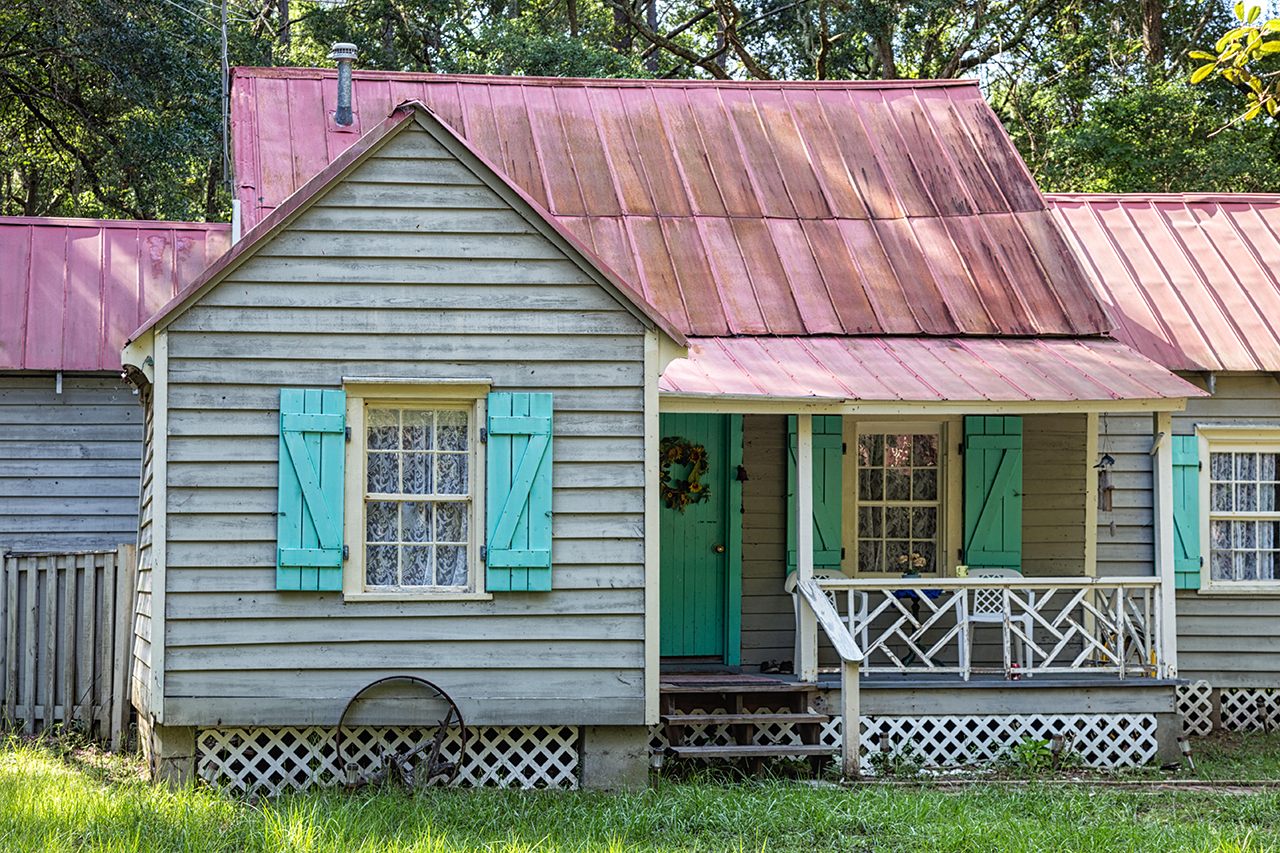 At this Gullah Geechee home on Daufuskie Island, South Carolina, painted doors and shutters keep out evil spirits called “haints.” DAWNA MOORE / ALAMY