Author: goodgenes

  • In honor of our ancestral Mother’s Days

    In honor of our ancestral Mother’s Days


    In the words of our family’s maternal matriarch, the late Lou Edna Wilks Robinson, “every day is Mother’s Day.”

    Born in 1892 as the oldest daughter born in Springfield, Greene County, Missouri, to Melissa Catherine Gray and Robert Wilkes, our “Grandma Robinson” was the glue that kept our family together.
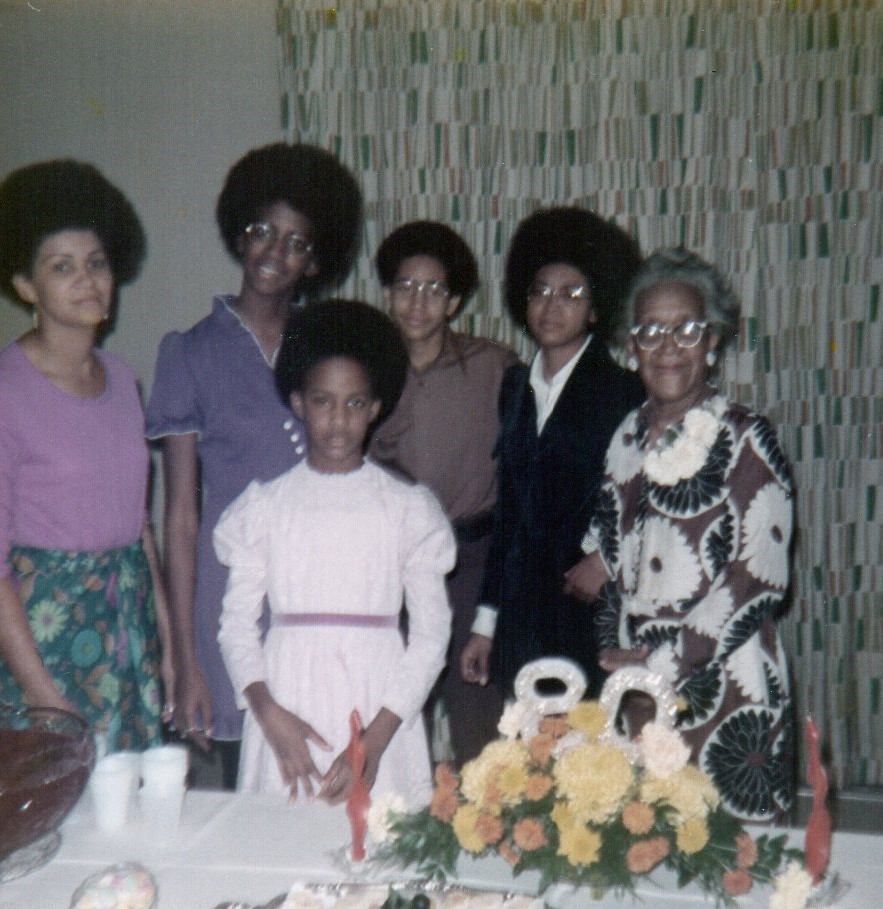
    We’ve often wondered how our ancestral mothers were able to accomplish so much in their lives. Except for Grandma Robinson’s birth to two children, including our maternal grandmother, Mary Helen Wilks Owen Douthy, most mothers ‘in her day’ bore several children. Midwives brought babies, especially those of African American heritage, into this world. Indoor plumbing was nonexistent for our ancestral mothers. They grew food, drew well from waters, cooked, cleaned and managed the households. They raised other people’s children, they were our teachers, loyal church members and builders of great legacies admist the harsh societal conditions that often pushed our ancestral mothers to the least known positions.

    Yet, our ancestral mothers rarely complained about their fates. Instead, they often rejoiced about the present and future that always included the achievements — known and unknown — of their children and lineage.

    We honor you, ancestral mothers.

    Official start of Mother’s Day in the USA

    In 1914, a few years before the birth of our maternal Grandmother Mary Helen, the nation received an official declaration from U.S. President Woodrow Wilson, to honor mothers on the second Sunday in May. The recognition began simple enough: To honor mothers in celebration of peace.

    The origins of Mother’s Day as celebrated in the United States date back to the 19th century. In the years before the Civil War, Ann Reeves Jarvis of West Virginia helped start “Mothers’ Day Work Clubs” to teach local women how to properly care for their children.

    These clubs later became a unifying force in a region of the country still divided over the Civil War. In 1868 Jarvis organized “Mothers’ Friendship Day,” at which mothers gathered with former Union and Confederate soldiers to promote reconciliation.

    Another precursor to Mother’s Day came from the abolitionist and suffragette Julia Ward Howe. In 1870 Howe wrote the “Mother’s Day Proclamation,” a call to action that asked mothers to unite in promoting world peace. In 1873 Howe campaigned for a “Mother’s Peace Day” to be celebrated every June 2.

    Other early Mother’s Day pioneers include Juliet Calhoun Blakely, a temperance activist who inspired a local Mother’s Day in Albion, Michigan, in the 1870s. The duo of Mary Towles Sasseen and Frank Hering, meanwhile, both worked to organize a Mothers’ Day in the late 19th and early 20th centuries. Some have even called Hering “the father of Mothers’ Day.”

    https://www.history.com/topics/holidays/mothers-day

    A few current-day Mother’s Day facts

    • The honoring of mothers has reached a feverish commercial pitch with an estimated $36 billion being allocated in U.S. receipts in 2023.
    • There are approximately 43.5 million women who are considered mothers in the United States.
    • More than 100 global countries celebrate their mothers on various days on the calendar.
    • The white carnation is the official flower of Mother’s Day.
    • Mother’s Day is the busiest day for restaurants in the U.S.

    Happy Mother’s Day.


  • It’s global DNA Day! April 25, 2023

    Free workshops, webinars and other sources of information are offered. We’ve listed several activities.


    It’s official name is Deoxyribonucleic acid and that is why it is shortened to DNA to describe “a self-replicating material that is present in nearly all living organisms as the main constituent of chromosomes. It is the carrier of genetic information.”

    Genealogists often refer to DNA as putting the “gene” back in genealogy. The Good Genes Genealogy team (Maternal first cousins Mark Owen and Ann Wead Kimbrough) is DNA tested. We are not scientists who can provide you with the details on how the genetic makeup is key to breaking through brick walls and other delays in tracking our family histories. Yet, we’ve utilized DNA in our processes that have helped to build about family members.

    Today and this week, we invite you to learn about DNA and its applications to genealogy searches. There are countless free workshops and other sources of information. As you get inside of the virtual and in-person sessions, remember a few key things about the DNA journey:

  • The U.S. slave population in 1860

    This is an official United States government record.

  • Changing the world through the unsung missions of Black midwives

    About 80 miles southeast of Atlanta, Georgia, lies Greene County. In Greene County, Georgia as it was in Greene County, Missouri, and across the nation, Black women midwives were and still are highly regarded.

    It was widely proved that midwives saved lives — babies and their mothers. They birthed presidents, preachers, teachers and several family members who will attest to their value in caring for mothers in many communities where healthcare facilities were miles away or nonexistent.

    The worth of midwives is especially highlighted in recent data that was shored up with the release of 2021 data by the Centers for Disease Control and Prevention (CDC) that showed a sharp increase in infant mortality, especially among African American women. A century ago, the infant mortality rates were much more severe, yet midwives were credited in successfully bringing babies into the world and saving their mothers. Even slave owners knew this truth.

    A study published by the National Library of Medicine found:

    We estimated that, relative to current coverage, a substantial increase in coverage of midwife-delivered interventions could avert 41% of maternal deaths, 39% of neonatal deaths, and 26% of stillbirths, equating to 2·2 million deaths averted per year by 2035. Even a modest increase in coverage of midwife-delivered interventions could avert 22% of maternal deaths, 23% of neonatal deaths, and 14% of stillbirths, equating to 1·3 million deaths averted per year by 2035.


    Nove A, Friberg IK, de Bernis L, McConville F, Moran AC, Najjemba M, Ten Hoope-Bender P, Tracy S, Homer CSE. Potential impact of midwives in preventing and reducing maternal and neonatal mortality and stillbirths: a Lives Saved Tool modelling study. Lancet Glob Health. 2021 Jan;9(1):e24-e32. doi: 10.1016/S2214-109X(20)30397-1. Epub 2020 Dec 1. PMID: 33275948; PMCID: PMC7758876.

    Midwives Matter

    Early African American midwives were important members of their community, even among enslaved individuals. Slave owners used these medical practitioners to ensure the health of their reproducing enslaved women and their newborn infants to expand their labor force. It was also common for midwives to attend to the slave master’s wives during birth as well.

    https://nmaahc.si.edu/explore/stories/historical-significance-doulas-and-midwives#:~:text=Early%20African%20American%20midwives%20were,to%20expand%20their%20labor%20force.

    This midwife account describes the importance of recognizing Black midwives for their contributions to societal good: “… the story of a poor white boy delivered by a black midwife slave that grew up to be the president that freed 3.5 million black slaves in the United States, and was killed for doing so.” — From The Midwife Slave


    What ancestral researchers should consider

    There are documentaries, articles, scholarly works and stories within families about the importance and legacy of midwives.

    1. All births — whether at home or in hospitals — are recorded in each municipality’s Vital Records Division. The attending midwife, parents and/or physician are allowed to sign the paperwork.
    2. Time frames are usually required to register births. If the time frames are not adhered to, or should errors appear on birth certificates based on sources authorized to make the changes, the municipalities are allowed to issue delayed birth certificates.
    3. Because midwives have more than records to report, their stories are important to learning more about families’ ancestors. Some midwives kept journals, shared birth stories with family members and were the keepers of intimate secrets, the midwives are great sources for breaking down brick walls.

    Historically, Black midwives are archived among famous global citizens. Check out this site for more information.

    Read more: Changing the world through the unsung missions of Black midwives
  • Genealogy Find: Original Beat Box(es)

    Check out the oriiginal human beat box group. Their vocal moves are amazing.

    One of the benefits of researching our ancestors is the “find.” In this case, find is pure gold through the super talented siblings who set the human “beat box” standards. They are the Mills Brothers.

    While combing through the online ancestry files of the Good Genes Genealogy Services’ grandfather, Eugene Owen, Jr., this remembrance was round. Our grandfather left Omaha, Nebraska for Los Angeles, Calif. to pursue his dream of becoming a Mills Brother-like entertainer. It was the 1940s and he left a family behind in Omaha, including little girls who would grow up and become our mothers of Good Genes Genealogy Services team members.

    Our grandfather’s goal was to form a singing group become as popular as the Mills Brothers, a musical team of siblings whose 40+ years of success began in the 1930s. Our grandfather never achieved the same fame. He likely broke the hearts of our grandmother, “Mama” Helen Wilkes Owen Douthy, and her children and other family members. There are joys and pains in researching our families’ histories and this is an example of wading through all of the materials to get to the truth.

    Yet, each time we hear the Mills Brothers’ recordings and watch the more than 20 movies that they appeared in during their stellar career, we think of Grandpa Owen.

  • Enslaved Africans warded off evil spirits with “Haint Blue” house color

    The tradition continued with Gullah Geechees

    https://www.darlingdownsouth.com/haint-blue-ceiling/

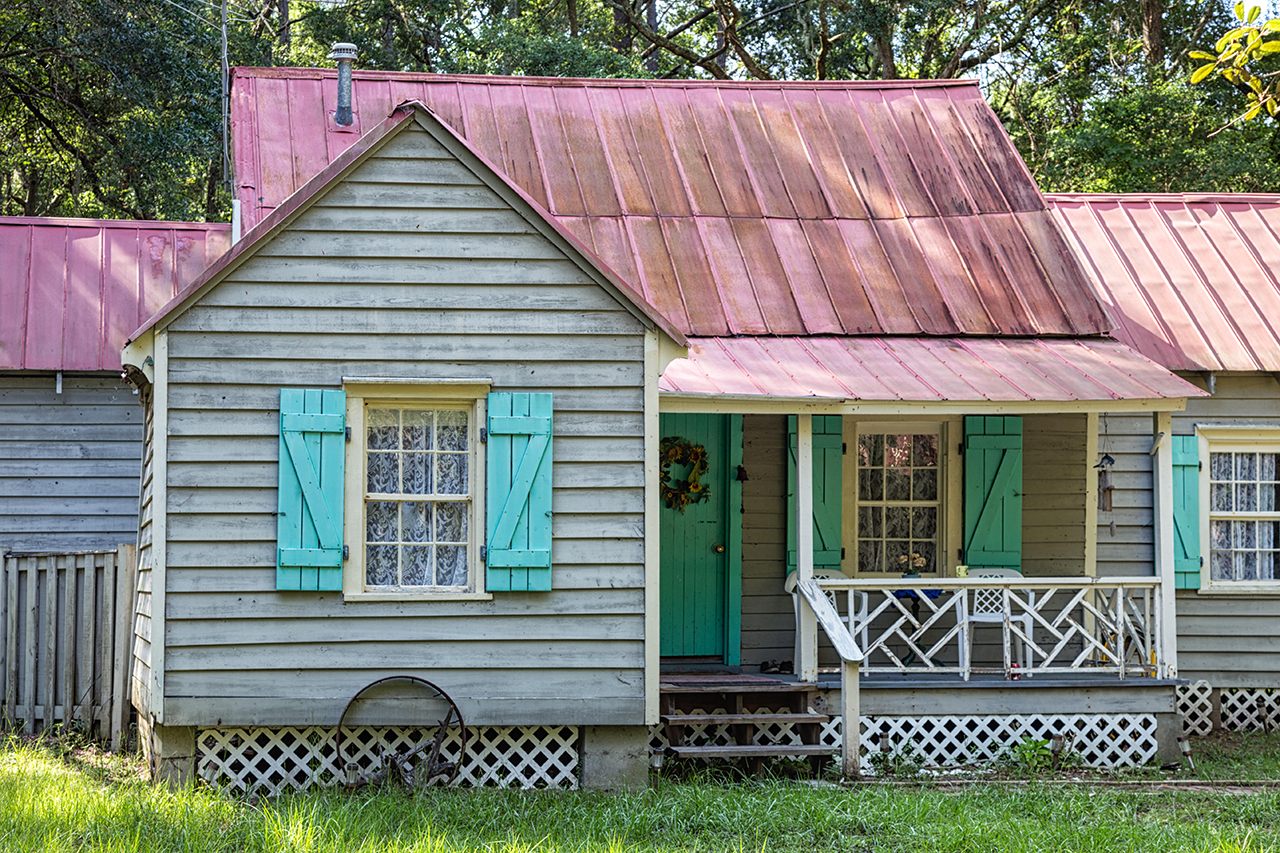
    Look up the next time you walk up to Southern homes, especially those along the Atlantic Coast in South Carolina and Georgia. On the exterior undersides and interiors, you will likely find the unique color of “Haint Blue” on those structures.


    The long-forgotten history of haint — another word for evil spirits — began 300+ years ago. That is when Atlantic coastline Gullah Geechees who represented free or runaway African American slaves, painted their porch ceilings with the faint blue-green dye. It was intended to stave off evil spirits, ghosts and any potential hauntings. It was believed that if the spirits saw the haint blue painting on the underside of porches, they would not dare cross the thresholds that resembled the ocean waters.

    According to Gullah folk traditions, blue ceilings and blue doors can keep unwanted specters, phantoms, spooks, and apparitions from strolling in through the front door. It fools them into thinking that the door is part of the sky, that the porch is surrounded by water, that the house is protected by something sublime, more powerful and permanent than a coat of paint. It’s trickery though design, and trickery is something the Gullah people knew well.

    https://www.theawl.com/2018/01/haint-blue-the-ghost-tricking-color-of-southern-homes-and-gullah-folktales/

    Besides the interior ceilings of porches, the haint blue paint shows up mostly on Southern homes’ front doors, shutters and other key locations.

    At this Gullah Geechee home on Daufuskie Island, South Carolina, painted doors and shutters keep out evil spirits called "haints." At this Gullah Geechee home on Daufuskie Island, South Carolina, painted doors and shutters keep out evil spirits called “haints.” DAWNA MOORE / ALAMY
    Photo by Alina Autumn on Pexels.com

  • Finding genealogy linkages through Depression-era photographs

    Wading through the thousands of files in the Library of Congress, this one stood out because it is the housing projects where my father, Dr. Rodney S. Wead, lived while boy growing up in Omaha, Nebraska.

    We don’t know the man and young people in the picture. It was taken three years after Wead was born; his family had not moved into the housing development. In fact, Wead said that they were delighted when they moved into the Logan Fontanelle Housing facility because it was a “big step up” from their impoverished housing a few blocks away in a crowded rooming house.

    Found my father’s housing unit

    Keep searching archives. I did. Once my father viewed the photo (see below), he identified the now famous individuals whose families lived in Logal Fontenelle.

    Often, we are hit with brick walls in our ancestral searches. There are thousands of photographs that were taken across the country of its citizens — especially Black Americans — as part of President Franklin D. Roosevelt’s New Deal or Works Progress Administration program that included Omaha during the 1930s.