Category: Genealogy Group forms at Hillside International Truth Center
Hillside International Truth Center kicks off its Ancestral and Genealogical Research ministry. It is hosted by Good Genes Genealogy Services’ co-founder, Dr. Ann Lineve Wead Kimbrough
Black Genealogy research requires attention to obits, homegoings and surviving family members
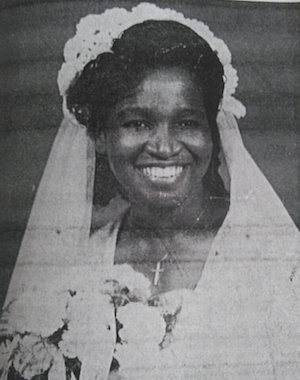
Camden, Tenn. – About 340 miles northwest of Atlanta, lies a small community with a big heart that was originally named “Tranquility.” The community counted as one of its more than 3,000 residents a special lady, Delia Mae Tharpe, mother of Dr. Jack L. Bomar, Executive Bishop/Senior Pastor of Atlanta’s Hillside International Truth Center.
Ms. Delia, as many called her, was funeralized on the third Saturday of January admist a mountainous cool afternoon. It would have been an ordinary “homegoing” service, except Ms. Delia was anything but ordinary. Her extraordinary life on earth for 81 years is one for the history books. I barely knew Ms. Delia, meeting her perhaps once. Yet, nearly 55 persons, including my mother, Angeline Wead and me, traveled five hours each way to share with hundreds of others to celebrate the life of this lady.
What caused us to travel early on Saturday morning and return late that evening, is what I will share later in this blog.
Delia Mae Tharpe, September 28, 1941 – January 14, 2023
Just one day earlier, was the funeral for my maternal cousin, M. Madeline Wilks Matthews, who I’ve known all of my life. Her service took place in St. Louis, Missouri. My mother was the eldest cousin to Madeline. I was asked to write her obituary, which was delivered to her church secretary with all the love and care that I could deliver. Madeline was a bright light who was on this earth 93 years.
Margaret Madeline Wilks Matthews, Aug. 30, 1929 – January 7, 2023
The lives of Madeline and Ms. Delia were different and yet there were a few similarities. Both ladies lived full lives, sang in their church choirs, held many positions in church leadership, and each worked more than four decades in their respective fields. Madeline did not have children; while Ms. Delia bore nine children and had many grandchildren. Madeline was active in politics and in her retirement years, she gained additional education and served as a substitute teacher and paraprofessional in special education.
In short, I am proud of Madeline’s accomplishments that began in her college prep Omaha Central High School years where she excelled in academics, music, other creative endeavors, and as student government leader. As a young high school graduate, she was denied employment in her hometown because she was Black. That’s why she ventured south of Nebraska to Missouri where she lived the next nearly 80 years and endured the sadly typical ups and downs of trailblazing, independent thinking and working women.
Madeline in her Omaha Central High School Yearbook, 1941
Ms. Delia’s life couldn’t have been easy by usual, societal measures. She was a “dedicated and hard worker for more than forty-three years at Henry I. Siegel, ‘the H.I.S. factory’ in Bruceton, TN as a press operator,” according to her obituary. She bore nine children and raised them in humble conditions with such love, leadership and purpose as shared with laughter, sympathy tears and memorable message.
Her life was inspiring as experienced by hundreds in the near standing room-only chapel where the roomful of upright flower displays served as fragrant reminders of the depth of her influence in this hamlet of about 3,000 residents within 5.7 square miles of the Tennessee hills.
So impactful was Ms. Delia’s life that a young lady who was seated behind me said that she attended the service even though she lived in the area, yet did not know Ms. Delia “that well.” Eula Eikerenkoetter, widow of the late, popular minister, “Rev. Ike,” was there. So were several messages of condolences in the form of proclamations and recognitions that included many Atlanta City Councilmembers.
A guide for genealogy researchers
Family genealogists can learn many lessons from our new ancestors while honoring their time on this earth and their vibrant spirits. The obituaries, the services are the beginning of sharing the legacies of the families. Usually, many blanks are filled in that often break through the typical brick walls found in Black ancestry pursuits.
Tips:
Ensure the obituaries are well-researched and well written. Many eyes are on the obituaries. Besides family and friends, other entities utilize the information for legal, government, insurance, retirement, military (if applicable), social and community purposes.
The best way to achieve the best written obituaries is through preparation that is based on accurate written and oral information.
When written and oral background is provided for the deceased loved one, engage at least one friend or family member to edit and fact-check. This is not the time to worry about whether anyone has hurt feelings about fact-checking another’s input. This is about getting things right for the legacy of the individual and accuracy for larger purposes.
The way the services are rendered are usually the best examples of how persons lived. Take notes.
During the service, the songs that are sung, the scriptures that are read and the officiants are all indications of the best parts of the deceased lives.
Meet the persons who spoke at the services. At minimal, offer condolences to them as well as the family members. As a maximum benefit for the family researcher, politely seek more information from the individuals either after the service or another time.
The burial or final resting places provide additional insight into family histories. My cousin, Mark S. Owen, partner in Good Genes Genealogy Services, often teases me that I am fixed on cemeteries and death certificates. It is for good reason. There are details such as health information and other bits of information that can benefit the living from the official documents. At cemeteries, I walk the grounds, especially if the recent ancestors are placed in family plots. There are often other clues about our extended families and friends based on surnames and first names found on the cemetery markers.
After receiving new and/or best information, please record and update family records. Family members deserve vibrant and verified information. Studies show the positive mental and spiritual health benefits from individuals learning more about loved ones.
Step back a few times during this process and reflect on how you feel during the process. Often Mark and I take time to release and “breathe” to ensure that our emotional health is intact. Researching, updating and engaging in this process is sometimes taxing for individuals.
Celebrate the lives of our ancestors. They deserve our respect, understanding and accurate depictions of their lives.
One of the best, free worksheets to conquer brick walls in Black genealogy searches is found in the easy-to-access and free databases of the National Archives.
This worksheet is different from the family tree form that was recommended on this site via our post on Thursday, Jan. 12, 2023. Both forms — the family tree and individual family worksheets — provide a great start to the New Year.
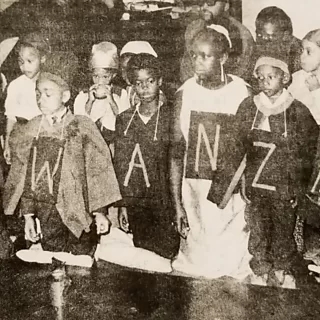
First Kwanzaa December 26, 1966,Photo donated to BBC by Terri Bandele, pictured on right.
“What do the Africans do?” That is the question asked by a then-young girl, 11-year-old Terri Bandele, who was among the first families celebrating the first Kwanzaa celebration from Dec. 26, 1966 – Jan. 1, 1967. Her question and the organized determination of Dr. Maulana Karenga, Bandele’s parents and others, led to the creation of Kwanzaa, the pan-African and African American holiday that honors the “matunda ya kwanza” that means “first fruits” in Swahili.
Kwanzaa arrives December 26th — the day after the traditional Christmas Day — and culminates January 1st. It does not compete or replace any holiday, according to Dr. Karenga and many organizers. Nor does it compete with a longstanding January 1st celebration for U.S. Blacks and that is Jubilee Day.
Central to Kwanzaa’s purpose is its celebration among family, friends and communities. Today, millions celebrate Kwanzaa and its seven strong principles:
Unity:Umoja (oo–MO–jah)To strive for and maintain unity in the family, community, nation, and race.
Self-determination: Kujichagulia (koo–gee–cha–goo–LEE–yah)To define ourselves, name ourselves, create for ourselves, and speak for ourselves.
Collective Work and Responsibility: Ujima (oo–GEE–mah)To build and maintain our community together and make our brother’s and sister’s problems our problems and to solve them together.
Cooperative Economics: Ujamaa (oo–JAH–mah)To build and maintain our own stores, shops, and other businesses and to profit from them together.
Purpose: Nia (nee–YAH)To make our collective vocation the building and developing of our community in order to restore our people to their traditional greatness.
Creativity: Kuumba (koo–OOM–bah)To do always as much as we can, in the way we can, in order to leave our community more beautiful and beneficial than we inherited it.
Faith: Imani (ee–MAH–nee)To believe with all our heart in our people, our parents, our teachers, our leaders, and the righteousness and victory of our struggle.
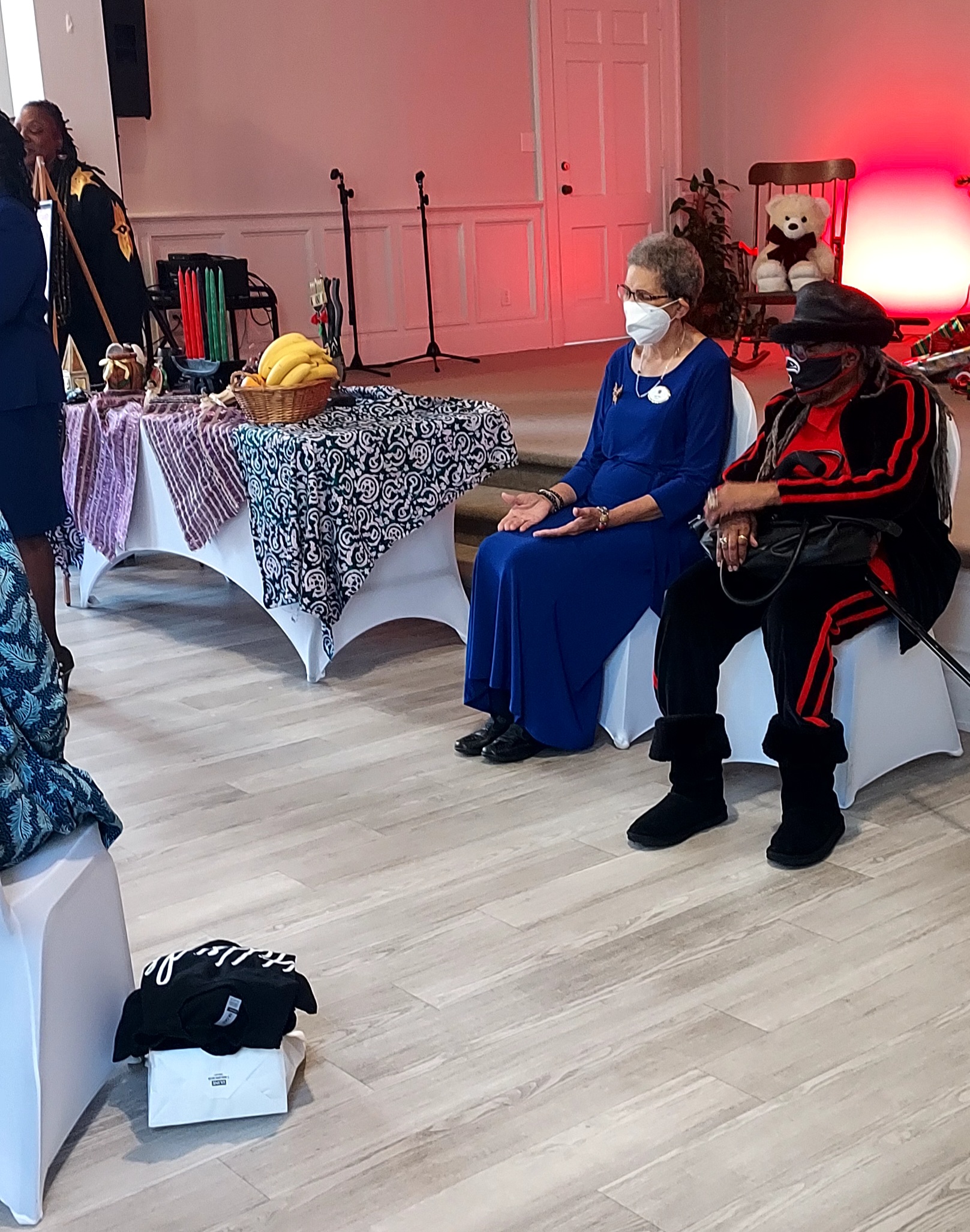
At Atlanta’s Hillside International Truth Center, Executive Bishop/Senior Pastor, Dr. Jack Bomar, led the church celebration on Jan. 1, 2023, in honor of Kwanzaa’s final day. “We are gathered to celebrate our heritage and honor the spirit our ancestors,” said Bomar while pointing out the symbolic “first fruits” placed on the tables in the church’s smaller chapel. The King Chapel as it is known in honor of the church’s founder, Dr. Barbara Lewis King, was filled to capacity.
Hillside International Truth Center’s Kwanzaa celebration with first fruits, elders in prayer.
Jubilee Day. It began as a tradition of celebration on New Year’s Day 1863.
Reading of the Emancipation Proclamation. Courtesy of the U.S. National Archives and Records Administration.
The U.S. Government produced a booklet in December 1862 and it was ordered to be distributed by Union Soldiers to Blacks. It speaks of slavery as the “cornerstone” of tragedy.
Nearly two centuries ago, the historical depiction showcases the “jubilee” former slaves felt after their freedom was granted through the presidential act.
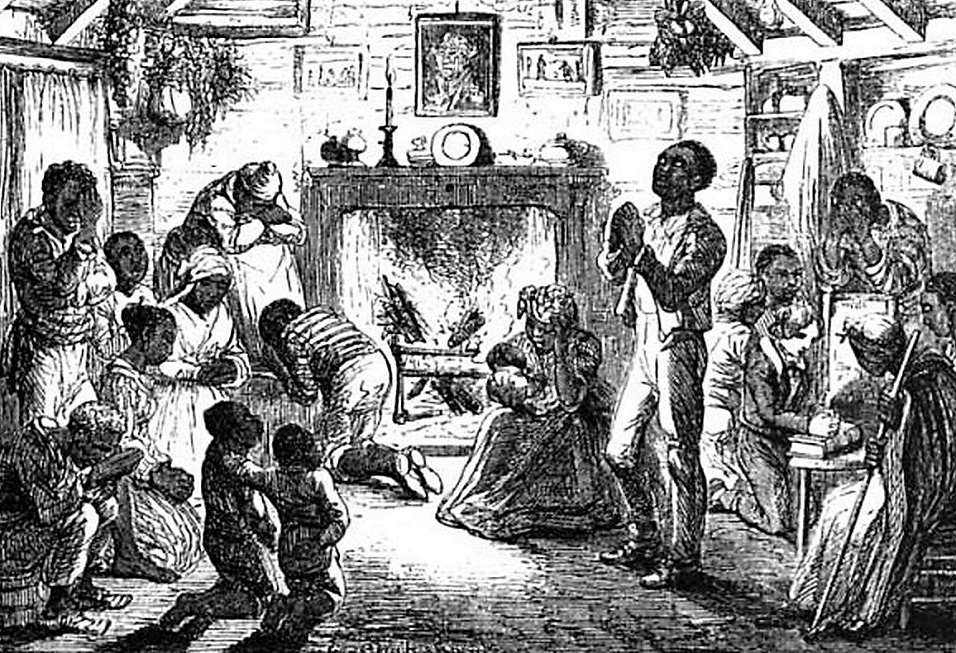
However, a s U.S. slavery endured, there have been many accounts and visual depictions of our enslaved Black ancestors celebrating the Christmas season. However, deeper research reveals that the enslaved ancestors were actually more concerned about being separated from their families on plantations, than experiencing the joy of the Christian celebration of Jesus’ birth.
The great and brave ancestor, Harriet Tubman, chose Christmas 1854 to lead the way for her brothers, Ben, Henry and Robert, to escape their enslaved conditions. Later, she brought her parents out of the similar situations.
Abolitionist and social activist Tubman was born in slavery. She escaped and made 13 successful missions to rescue nearly 100 Black slaves.
This is a page from the autobiography of Henry Bibb, a former slave who successfully escaped on Christmas Day in 1837. MPI/Getty Images
He was born to a Black enslaved woman and a white U.S. state senator. He wrote “Narrative of the Life and Adventures of Henry Bibb, an American Slave, Written by Himself.”
Henry Bibb was born a slave in Kentucky in 1815. He recounts his sufferings, escapes, recaptures, and unsuccessful attempts to free his family. Bibb lectured for the Liberty party in Ohio and Michigan during the 1840s and fled to Canada after the Fugitive Slave Act of 1850, as did thousands of other fugitives living in the North. His narrative includes many illustrations, including the depiction of the celebration of the Sabbath among the slaves and a slave sale.In the text Bibb mentions that “slaves were not allowed books, pen, ink, nor paper, to improve their minds.” He stated that such circumstances gave him a “longing desire . . . a fire of liberty within my breast which has never yet been quenched.” Bibb believed that he too had “a right to liberty and the pursuit of happiness.”
We are movie buffs. We love to watch holiday movies, especially the ones we used to watch with our families. We are also avid readers and there are historical holiday stories that we recall listening to and reading with our families.
Listed below are a few hard-to-find or ‘never knew’ existed entries to your holiday media consumption about and for African Americans. While these entries focus on Christmas, upcoming blogs from Good Genes Genealogy Services.
A Dream Set for Christmas. It debuted on Christmas Eve, 1973. Here’s the synopsis from YouTube: Created by Earl Hamner, “A Dream for Christmas” is set in the 1950s. African-American minister Will Douglas (Hari Rhodes) moves his family from Arkansas to the Watts section of Los Angeles to take charge of an impoverished church. The attendance, at least at first, is as poor as the congregation. Worse still, the church is slated to be demolished. But it’s close to Christmas, a time when miracles have been known to happen. “A Dream for Christmas” originally aired on December 24, 1973. It was originally designed as the pilot for a never-sold TV series titled The Douglas Family. The hope here was for writer Earl Hamner to repeat his success with “The Waltons.”
“The First Christmas.” Written by a young, pioneering Black journalist Ora Mae Lewis Martin. She knew four languages. Her short story, “The First Christmas,” was published in the New Orleans Times-Picayune in 1927, the city’s largest newspaper.
The Wiz. In 1978, a film debuted that has been a favorite around the holidays. From Bizaar magazine’s freelance writer Deanna Janes on Oct. 10, 2022: “The Wiz is an offshoot of The Wizard of Oz and stars an all-Black cast. And though its technical designation is “fantasy film,” the charm and allure of Sidney Lumet’s 1978 classic has solidified it as a celebrated holiday event for families across the country. A cast including the legendary Diana Ross, Lena Horne, and Mabel King will do that.”
Please add your historical Christmas stories, books, audio recordings and videos and allow all of us to get into the holiday spirit.
This December 1963 photo unlocked a few mysteries about our maternal grandmother
Often the Good Genes Genealogy Services team will encourage our fellow ancestry history seekers to review your family documents, spaces such as attics and garages, and other artifacts for clues to our family history.
We used our advice.
Searching through our grandmother’s boxes, we found cool materials that revealed brand new information about her job title at the United States’ only military air command headquarters.
Give yourself a present from the past. Happy searching!
Seated left, “Mama” Helen Wilks Owen Douthy — maternal grandmother of the Good Genes Genealogy Services team — was 45 years old when this photo was taken. She was a cast member and costume staff member of the Omaha, Nebr.-based The Repertory Players. She is pictured here as they celebrated the wrap of their play, “Antigone.” Antigone is a classic Greek tragedy story about “man’s relationship to man, to the state, and to the gods.” It is worth reading and viewing the drama that tells of the cruel fate inflicted upon the deceased King Oedipus.
This article opened brick wall
The above find was hidden in one of many scrapbooks of our Mama Helen. For the first time, we learned that her title at the Strategic Air Command’s Offutt Air Force Base was as a weapon systems division secretary. The article was published in the SAC newsletter. Recently, we confirmed that Mama Helen was indeed a “Hidden Figure,” much like the ladies depicted in the award-winning non-fiction work.
This paper ticket shares much about Mama Helen’s resolve to be true to her passion of serving in the theatre. She was still serving as a secretary for a major SAC official and her work location was about 32 miles from Mama Helen’s home. The show began at 8:30 p.m. on five Sundays through December 1963. Mama Helen arrived home late and had to rise early to report to work by 8 a.m. She never had a driver’s license and did not drive. She depended on shared transportation. During the winter months, the likely icy and snowy roads were a bit dangerous, yet our “Hidden Figure” always accomplished her mission to work on the government’s secret work assignments.
This is a blast from the past: telegrams! It was a chic thing to send to anyone in 1963 as it meant that they paid $$s to deliver a message to intended receivers in record time. The telegram preceded today’s email system.
Bravo! Mama Helen was a cast member and helped to design and create the costumes. As children, we would often encounter various costumes for plays that were prepped in Mama Helen’s basement sewing cave.
“When I was a child, I remember my grandmother giving each of her grandchildren a large candy cane and $5 in an envelope. It didn’t matter how young or old we were, we all waited for and loved getting this gift at Christmas,” said Veverly Byrd-Davis of her grandmother who is now one of our ancestors.
Christmas traditions. The Good Genes Genealogy team recalls each Christmas receiving an orange or clementine, an apple, candy cane and bits of other candy in a small brown paper bag from our great-grandmother, Edna Robinson. Our dear ancestor made sure that each grandchild and children participating in the annual Christmas Eve pageant received the humble gift bags. It was a tradition born from the blend of African, European and indigenous Americans’ traditions.
First fruits
In Rwanda, African, a Christmas tree ornament honors the “first fruits” tradition of offering the food to symbolize the annual rich harvest. We hang the ornament — a handmade, miniature basket — on our Christmas tree to symbolize the African tradition.
Deeply rooted Christmas traditions
Slaves, the St. Nicholas traditions, the Great Depression and the Black churches all have a common bond related to the presenting of so-called Christmas fruit bags.
Share your Christmas memories
The Good Genes Genealogy team asks that you share your memories of holiday gifts. You may place them in this post and/or make them a part of your holiday discussions with family and friends.
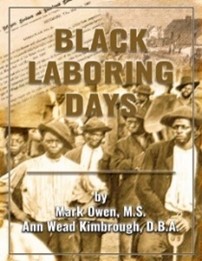
The Good Genes Genealogy team is honored to offer free or very low cost services to our clients. To keep our costs free for great consultations and other research, check out our Cyber Monday e-books. Check us out on Amazon, Barnes & Noble, Lulu Publishing.
Thank you. We are grateful for our blog readers, social media fam and all clients.
Alabama voters head to the polls next week for the midterm elections. One ballot item would abolish slavery in the state. The vote takes place one hundred and fifty seven years after the thirteenth amendment ended the practice nationally. Historians say many of the estimated four hundred thousand enslaved people, who were freed in 1865, chose to live out their lives in Alabama. APR spoke to some of their descendants who say they’re still dealing with the impact of the slave trade. The Alabama Public Radio newsroom spent nine months investigating one aspect of that. Namely, the effort to preserve slave cemeteries in the state. APR’s documentary is titled “No Stone Unturned.”
“I got all my equipment in the back of the Honda CRV. How’s that for efficiency and good engineering?” asked Len Strozier during a quiet morning in a wooded area on the Black Warrior River, north of Tuscaloosa. He’s getting ready to go to work.
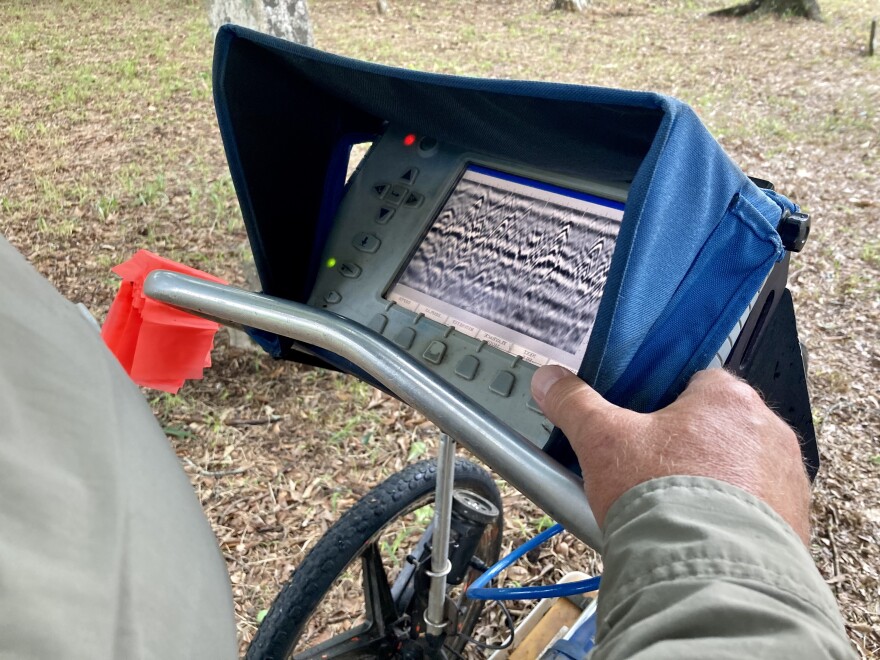
The ground penetrating radar equipment from Omega Mapping Services, at the Old Prewitt Slave Cemetery in Northport
“It all scissors out like that,” he said. The scissoring refers to a collapsible rig about the size of a grocery store shopping cart. It has big black wheels, a box on top with buttons and a small view screen. There’s another box down below.
“Alright, this is ground penetrating radar machine. This is two GPS machines,” said Strozier.
A radar antenna that looks for airplanes typically points up. Strozier’s antenna looks down. What interests him lies underground…
It’s just a matter of putting it together,” quips Strozier. He uses his equipment to scan for things like buried water pipes that are leaking. That’s about thirty percent of what he does. Today is how he spends most of his time.
He’s looking for bodies.
“Just walking around, and there’s one right there. That’s a casketed burial,” said Strozier after working less than a minute. “Right now, I see an air pocket where a body was buried in the ground. As the body is placed in the ground. If it’s not embalmed, or protected with a vault, it all breaks down, It degrades…decomposes—including the wooden casket,” he observed.
Strozier runs Omega Mapping Services in Fortson, Georgia. APR news invited him to scan this two acre spot near Tuscaloosa. We’re at the Old Prewitt Slave Cemetery. It was set up in the 1820’s by John Welch Prewitt, a local plantation owner. The one unmarked grave Strozier found was just for starter. A more complete total came later.
“In less than thirty minutes, forty. Just walking around. I’ve seen forty burials out here,” said Strozier.
Patricia Kemp
There’s a handful of tombstones and plain burial markers at Old Prewitt. Nowhere close to the number of graves Strozier found. This isn’t just an issue involving the dead. There are the living as well.
“My father drove us there,” said Patricia Kemp. “I was probably…maybe I want to say six or seven. Then, he’d drive to a place and he’d tell us what it is, or who they were. So, that’s what I remember.”
As an adult, Kemp did some research and she thinks some of her ancestors are buried at the Old Prewitt Slave Cemetery. By that time, the burial yard was disappearing as trees and scrub brush took over. At one point, Alabama listed Old Prewitt as one of the state’s most endangered places.
“Knowing that that cemetery is there, and it is just dwindling away, it’s just being washed away. It’s just thrown away,” said Kemp. “It’s like taking my grandfather, my great grandfather, or father or my mother and knowing that they’re buried there, and just trashing them.”
Old Prewitt isn’t the only slave cemetery in Alabama.
Researchers from the University of Alabama in Huntsville say up to two hundred slaves rest here, at the Mount Paran Cemetery just south of the Tennessee border. That doesn’t count the estimated ten thousand enslaved people believed to be buried nearby in Huntsville.
“I was able to find my great great grandfather listed,” said Ollie Ballard. She thinks that ancestor was one of them. He was enslaved in Huntsville in 1842.
Olley Ballard
“He was on the Longwood Plantation,” she said. “And, we found his name, and then his son’s name…Caswell, and Caswell, junior. And, we were able to follow him to his death.”
But, that doesn’t mean Ballard can visit her great, great grandfather’s grave site. She’s not sure where that is. There are oral histories told by family members and the few records Ballard could find– but that’s all. And if you’ve never heard a story like that before, we met someone who has.
“All the time, all the time. That is…that is…one of the most outrageous,” said Ethel Alexander. She’s with the Birmingham African American Genealogy Group, the largest of its kind in the state. She says even if family members find the cemetery where their enslaved ancestors are buried, questions often remain
“They may not see anything but a rock,” Alexander observed. “They may not see nothing but tree. You know, you’re not going to be to say ‘oh, there’s my grandfather…great, great, great slave.’”
Back at the Old Prewitt Slave Cemetery in Northport, Alabama– Len Strozier has been doing some thinking. His preliminary scan with ground penetrating radar showed forty unmarked graves. So, now he’s ready to make an educated guess about what he calls unmarks.
“I would say there would be at least two hundred unmarks, in this acre and a half, at least that, without a doubt,” said Strozier.
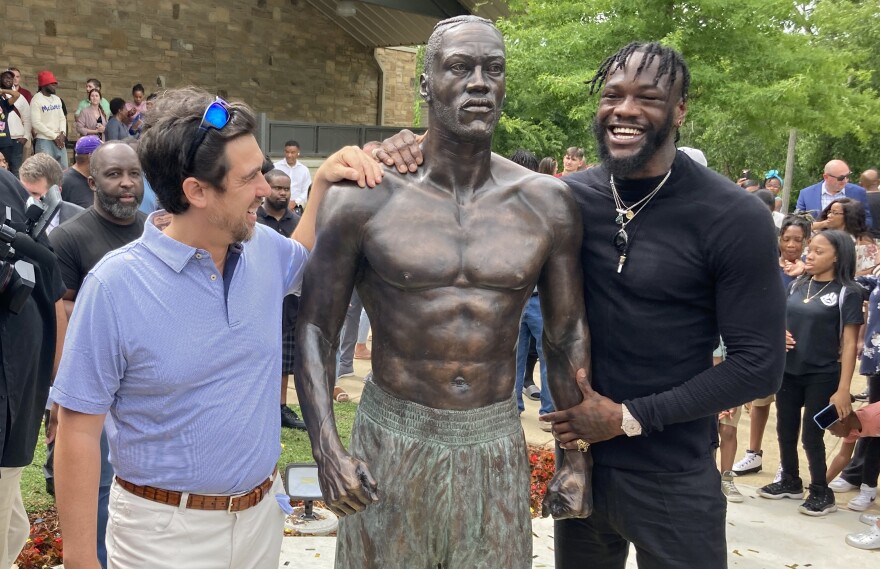
Each of these unknown burial sites can represent a mystery to a family somewhere. But, you don’t have to have an ancestor buried at Old Prewitt to be involved. For example…Tuscaloosa native and former world heavyweight boxing championship Deontay Wilder.
The parking lot at the Tuscaloosa Tourism and Sports Commission is especially busy today. Onlookers form a ring around a life sized bronze statue, still covered with a black tarp. The chatter seems divided between the art work and the man who posed for it.
Deontay Wilder, during a parade in Tuscaloosa, celebrating his victory as WBC World Heavyweight Boxing Champion in 2015
Former world heavyweight boxing champion Deontay Wilder is from Tuscaloosa. He still lives here. Wilder made the rounds in the VIP room just before the statue in his honor was to be unveiled. Some fans talked about his five years as champ. Others focused on his ninety three percent knockout rate. APR news was there for something else.
“To go down there, you can like feel the energy and the power of it,” said Wilder.
During a quiet moment, Wilder talked about visiting the Old Prewitt Slave Cemetery. It wasn’t a long trip. Wilder lives almost next door to the burial site. He says he didn’t know about it when he moved in his new home in Northport. But, he soon did.
“You know how when you move into an area, and the neighbors come and greet you with pies and cakes,” said Wilder.
Instead of dessert, Wilder’s neighbors brought something else
“For me, I got greeted with important information. I got greeted with historic information and stuff like that,” recalled Wilder.
Dr. Joshua Rothman
That included stories about Civil War plantation owner John Welch Prewitt and the slave cemetery he set up in Northport in the 1820’s.
“It’s amazing to know that I have an untended graveyard, I literally mean on the side of me. It doesn’t spook me out or nothing like that,” he said.
“I don’t know that a whole lot else stands out about him as except as a slave holder and a plantation owner,” said Doctor Joshua Rothman, of John Welch Prewitt. “Other than that, he’s a very wealthy man and kind of the late antebellum period.”
Rothman is head of the history department at the University of Alabama. His area of expertise is slavery. And, he’s heard his share of stories about Prewitt, including the whoppers.
“So the two that I’ve heard the most are that he enslaved 1000 people, and was the biggest slave holder in Tuscaloosa County. And there’s another story about there being like bars of gold buried on his property,” recalled Rothman.
Rothman says he’s not sure one way or the other about the gold, but the slave count was more like one hundred and fifty, not a thousand.
“What’s weird is that it’s a story people told them they like, but you can look at the census. And you can see it’s not true,” he said.
And if that’s not enough…
“There’s also the tale of a ghost walking on the site of the former home of Mr. and Mrs. John W. Prewitt,” read Allison Hetzel, of the University of Alabama’s Theatre Department. This story comes from the Alabama state archives. It’s from a folder marked “negro folklore.”
The typewritten manuscript of a ghost story about the second wife of plantation owner John Welch Prewitt, from the Alabama State Archives
“Mrs. Prewitt, affectionately known as “Miss Betsy,” by the negroes, would visit the cabins with simple remedies when any of the slaves were ailing. It is claimed that Miss Betsy still walks on rainy nights, basket on arm. That story being shared by many of the better educated white farmers,” read Hetzell.
“If you tell yourself that story, and you genuinely believe it, then what is there to feel guilty about?” suggested Joshua Rothman.
“It’s not a secret, for example, that there are a lot of stories that are have been told by white Southerners, over the course of many generations, trying to make slavery seem far less bad. And that’s a very different kind of story than descendants of enslaved people are likely to tell,” he said.
And telling that story can be difficult. That’s because whites also kept the records. For the families and volunteers trying to preserve slave cemeteries or find the graves of lost relatives, that’s often where the trail goes cold.
Deontay Wilder with artist Caleb O’Connor at the unveiling of Wilder’s bronze statue in Tuscaloosa.
Back at the Tuscaloosa Tourism and Sports commission, everybody crowds around for the unveiling of Deontay Wilder’s statue…
“It was a treat,” said the champ. Wilder wasn’t referring to letting the crowd see his statue. But, rather the powerful experience of visiting the Old Prewitt Slave Cemetery.
“To understand and know where you are, and what you’re setting your feet on, and what occurred in certain times of the years, that you don’t nothing about,” Wilder said.
Wilder says he’s also ready to help out when it comes preserving Old Prewitt. Not everyone can call on a celebrity to do that. Most of the work to rescue slave burial sites is done by African American families or volunteers. And, their effort apparently faces obstacles not shared by their white neighbors.
It’s check-in time at the Methodist Church in New Market’ Alabama, near the Tennessee border. The paperwork is being done at table one. Volunteers at table two are handing out sausage biscuits. There was also a side order of personal stories…
The check-in table at the 20th annual workshop of the Alabama Cemetery Preservation Alliance
“I was able to find my great great grandfather,” said Olley Ballard from Huntsville. “He was on the Longwood Plantation. And, we found his name, and then his son’s name…Caswell, and Caswell, junior. And, we were able to follow him to his death.”
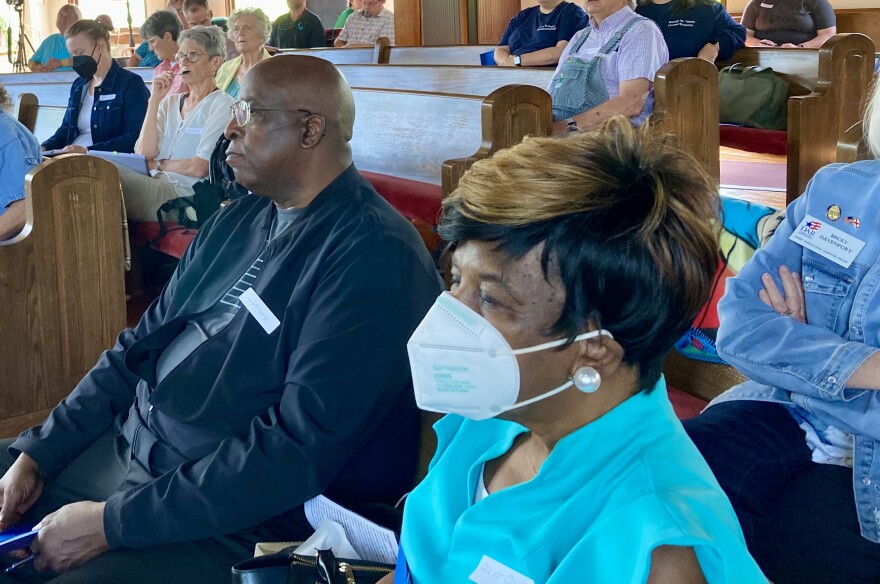
Ballard is hoping to find answers here today. She’s among one hundred people attending the twentieth annual workshop of the Alabama Cemetery Preservation Alliance.
Ballard says her great great grandfather was enslaved in Huntsville in 1842. The issue that brought her here today isn’t who he is, but rather where he is now.
“I’m so glad you asked that question,” she said. “Because he was on the Longwood Plantation. And so, I’m thinking, and based on what my forefathers said to me. That more than likely that my great great grandfather was on that plantation.”
And that’s possibly where he’s buried.
Today’s workshop featured speakers on cleaning tombstones and repairing cemetery gates. Ballard is one of only two African Americans in the audience. It’s not grave markers or gates that she came to talk about. Ballard is still working to find her great great grandfather’s burial site. We met someone who’s heard a lot of stories like that…
Ethel Alexander, of the Birmingham African American Genealogy Group
“All the time, all the time. That is…that is…it was one of the most outrageous,” said Ethel Alexander. She didn’t attend the cemetery workshop. We sat down with her at her home near Birmingham where she went through notebooks on her own family tree.
Alexander is past President of the Birmingham African American Genealogy Group. It’s the largest organization of its kind in the state.
‘ We weren’t really human beings. We were chattle…c.h.a.t.t.l.e,” she observed.
Alexander is referring to the lack of records on kidnapped Africans. The U.S. Archives says the first census that counted former slaves as people was in 1870. Alexander says, before that, most records were bills of sale…
“Say for instance, a planter, he dies, and they have to sell everything,” said Alexander. “The first thing they sell are their slaves, and they were sold before the animals. So we didn’t really have first names except the first names they would give you.”
You heard about Olley Ballard and her effort to find her great great grandfather’s burial site in Huntsville. Ethel Alexander says even if Ballard finds the slave cemetery she’s looking for, she may face another problem…
“They may not see anything but a rock. They may not see nothing but tree. You know, you’re not going to be to say ‘oh, there’s my grandfather…great, great, great slave,” said Alexander.
Photos of Ethel Alexander’s family at her home near Birmingham.
Back at the workshop of the Alabama Cemetery Preservation Alliance, Rusty Brenner is at work. He sells a spray called D-2. It’s used to clean tombstones. Olley Ballard’s great great grandfather may not have a burial marker of his own, but she says his life is still worth remembering
“They were landowners,” said Ballard. “Even though he was enslaved person in 1842, but 1903 he and wife owned one hundred and sixty acres of land. So, I’m proud and I want to pass it along generation to generation.”
And Ballard has a plan to do that, whether she finds his grave site or not.
“At presently, I’m working with the city of Huntsville and a group to erect a memorial that honors the enslaved people in Huntsville,” she said. “We have approximately fifteen thousand slaves and slaveholders, but we don’t have a grant.”
Money is an issue that comes up a lot on preserving slave burial sites. Some cemeteries only need upkeep. Slave burial grounds often need something like archeology to identity who’s there. Ballard says she hasn’t had much luck finding money for that.
“Many of the grants want you to preserve something,” Ballard noted. “Well, you now we’re looking to preserve words and where they used to be. They’re looking for buildings.”
That situation may be changing, slowly….
Rep. Terri Sewell speaks at the unity breakfast Sunday, March 1, 2020, in Selma , Ala. (AP Photo/Butch Dill)
Members of Congress are considering what’s known as the African American Burial Grounds Preservation Act.
“There are so many sites in Alabama that are known and unknown,” said Alabama Democrat Terri Sewell. She’s a co-sponsor of the U.S. House version of that bill. The measure would enable the U.S. Park Service to create a burial site network. Sewell says it would also provide grants.
“Hopefully, we can speed up the clean-up, but also really direct people on how about doing the historical investigation on the amazing people who are buried there,” said Sewell.
Having a good idea is one thing. But, the burial site legislation has been in committee for three years. It was just was re-introduced back in February. Sewell says there’s nothing wrong with the bill itself.
“No, it was just technical issues about the partnership between the National Park Service and the network, and some very important provisions I wanted to flesh out when it comes to the grants,” Sewell contended.
But, until a final vote is made in Congress, the descendants of slaves and newly freed blacks can only wait. Back at the Alabama Cemetery Preservation Alliance workshop, it’s time for the door prizes. Winners with the lucky numbers pick from items including a tombstone cleaning kit.
Even if Congress passes the African American Burial Grounds Preservation Act, Olley Ballard may not get the one thing she’s looking for—the exact location of her great great grandfather’s gravesite in Huntsville.
“I know like to know that, definitely that this is location of Longwood Plantation. I would like to walk the grounds, touch the soil, and feel the presence of my ancestors. I would love to do that,” said Ballard.
And feelings like that are shared by others. Not just in Alabama, and not just in the south.
That wasn’t the only story Ballard told that day. Huntsville had a cemetery for slaves and newly freed people. That land was sold to the city. Ballard says it got lost in the fine print.
“And so, they had a stipulation in the deed that the colored cemetery must be protected, but it was not protected,” she said. Huntsville built a parking deck on that spot. APR heard a similar story with a different ending..
“So what happened was they were trying to widen this road Foothill Road in Bridgewater,” said Lorayn Allen.
“And the contractor looked up, and he says, Oh, my God, he said, there’s a cemetery up here,” she recalled. “He says, ‘I think it’s a slave cemetery.’ I don’t know how he knew it, he just knew it.”
Allen’s slave cemetery isn’t in Alabama. It’s not even in the south. In fact, to talk with her about it, I had to fly coach. Bridgewater, New Jersey is about a half hour southwest of Newark Liberty International Airport. It’s here that we found the Prince Rodgers Slave cemetery. It’s wedged between two suburban homes on Foothill Road.
“Prince Rodgers was an amazing human being who was born here in 1815,” said Lorayn Allen. “His parents were literally kidnapped by the Dutch and brought here for free labor.”
Allen formed a foundation to preserve the Bridgewater burial site. Raising money to preserve this slave cemetery is only part of that battle. The other is convincing her own grandchildren that slavery existed in New Jersey.
“They call me Mimi,” said Allen. They say ‘Mimi, for God’s sake, we live in Somerfield, New Jersey.’ I say, do you realize they still have Ku Klux Klan ramblings in certain areas over here? Everything that happened in the South happened here in the North. Make no mistake about it.”
Historians say eleven thousand enslaved Africans were in New Jersey at the time of the Declaration of Independence in 1776. The number grew from there.
“Um, but we’re looking about 12 and a half thousand in the year 1800, and about 80% of, um, Africans and African Americans in New Jersey at that point are in slavery,” said Doctor Jesse Bayker. He teaches at Rutgers University. Specifically, Bayker is with the Scarlet and Black Research Center. It focuses on racism against African Americans. New Jersey residents are often surprised when they hear about slavery in the Garden State. Bayker says one group in particular.
Dr. Jesse Bayker
“When I talk to African Americans in New Jersey who are not fully aware of the depth of the history of slavery in this state, they are often upset that they haven’t learned it earlier, um, that they have been told, uh, their whole lives, that this was a Southern problem, but that New Jersey wasn’t like that, um, it shifts their perspective of their own home state,” stated Bayker. He says slavery in northern states has been talked about in academic circles for almost a century. But, it’s only been studied seriously since the 1990’s.
“Now it’s the question of, um, making sure that that trickle goes down to things like high school textbooks, um, and to, to students at an earlier age before they get to college,” said Bayker.
Back in the town of Bridgewater, it doesn’t take long to find someone who’s surprised about slavery in New Jersey.
Christopher Montefusco lives on Foothill Road.
“Yeah, it’s crazy, to think New Jersey this far away. I was totally shocked, totally blown away,” he said.
Montefusco wasn’t surprised I was here to talk about the Prince Rodgers Slave Cemetery. It’s in his side yard. The tombstones are within view of the goalie net Montefusco’s son uses for soccer practice.
“You couldn’t see any of the headstones, you couldn’t see anything. So, I thought it was the neighbor’s property,” he said.
Loryan Allen show us Prince Rodger’s tombstone. It’s is the largest in the cemetery. The names and dates are worn away and harder to read. Both that marker and the other smaller ones have parts broken off. Allen thinks it was local teenagers…
“I guess they were drinking,” Allen speculated. “So, they decided they were going to take the stones, and they literally lifted them up out of the ground and threw them all over the cemetery. They broke them in half.”
The upper left hand corner of Prince Rodgers’ grave marker is chipped off. Allen says it wasn’t for a lack of trying.
“They weren’t able to get it out of the ground, but they were able to break it. They had to make an effort to break that stone,” she said.
Prince Rodgers’ slavery ended in 1839. A New Jersey law freed captive women at the age of twenty one and black men at twenty five. The cemetery that bears Rodger’s name was officially dedicated last year. But Allen says, by that time, the name of the former slave was all over town.
“There’s a ten acre complex right around the corner on Prince Rodgers Avenue that’s named in his honor, and there’s a shopping center, Prince Rodgers Shopping Center, and Prince Rodgers Avenue goes all the way to Bridgewater Commons,” said Allen.
But, Allen wants Rodger’s stories to live on as well. He supposedly fought in the U.S. Civil War as a free man, and his descendants live in Bridgewater to this day. All of the families we’ve met in this series have cemeteries and memories they’re working to preserve. But that chance may be slipping away due to the passage of time. There’s also the issue of people, both white and black, who don’t want to talk about racial issues including slavery.
A gentle rain was falling during our visit to the Old Prewitt Slave Cemetery in Northport, near Tuscaloosa. We began our series on preserving slave burial sites here. This two acre cemetery was set aside by plantation owner John Welch Prewitt in the 1820’s.
Len Strozier, of Omega Mapping Services
“Obviously, there are very distinct rows,” said Len Strozier. He runs Omega Mapping Services in Fortson, Georgia. APR news invited him to use ground penetrating radar to do an underground scan of Old Prewitt. Strozier found forty unmarked burials within a half hour. He says he also noticed how they were buried.
“Someone was managing this cemetery,” he observed. “And bodies weren’t thrown out there like grass seed. They were meticulously, and the depths are pretty similar, too.”
“The only reason any of us are here today, is because somebody came before us, and they really came before us,” said Patricia Kemp, who we met earlier in our program. She believes some of her ancestors are laid to rest at Old Prewitt.
“I want to where I came from. I want to know about slavery. I want to what they went through, because they went through a lot for me to be here,” said Kemp.
Patricia Kemp
And answers like those may take more than ground penetrating radar.
“There’s not going to be any body left in here. The body’s decomposed,” said Strozier. The hair, teeth, bone, is pretty much gone,” said Len Strozier. He says his equipment can confirm that someone is buried at Old Prewitt. But, it won’t reveal who that person is. Strozier says that would take clues uncovered by something closer to archeology.
“It could be the sole of a shoe, it could be the handle off the side of a casket, it could be a button off a shirt,” he speculated.
And that kind of work will likely take time and money. Congress has been working for three years to pass the African American Burial Ground Conservation Act. If the measure becomes law, it’s supposed to provide grants for preservation. But there may be things that dollars can’t buy. Getting people to talk about slavery, for one.
“You know, our students often come into the classroom in college, uh, having not been exposed to the history of slavery in the north and especially the history of slavery in New Jersey,” said Doctor Jesse Bayker at Rutgers University. We spoke with him as APR visited the Prince Rodgers Slave cemetery in Bridgewater, New Jersey. Bayker says many of his students hear for the first time how eleven thousand slaves were held in the Garden State around the year 1800.
“It’s a surprise to many of them that slavery was, uh, an important part of new Jersey’s early development of new Jersey’s economy,” Bayker stated.
Not only did New Jersey enslave Africans, but it was the last northern state to free them following the Emancipation Proclamation in 1863. The subject of slavery became more than a topic of classroom discussion at Rutgers back in 2016.
A report released for Rutgers’ two hundred and fiftieth anniversary focused on the school’s own ties to slavery. An enslaved worker helped build the campus. Rutgers’ first President owned slaves. His family once held famed abolitionist Sojourner Truth. Jesse Bayker says the university is confronting its role in slavery, but not everyone in New Jersey is
“The people who are uncomfortable with looking at that history or acknowledging it. I think they have their own journey, and their own road that they need go on to deal with the fact that we’re going to keep on talking about this,” said Bayker. “We’re going to keep acknowledging this history. No, we’re not to sweep it away under the rug.”
And the hesitancy to talk about slavery may be complicating efforts to preserve slave burial sites both in New Jersey and here in Alabama. You might recall our visit to the Alabama Cemetery Preservation Alliance and its twentieth anniversary workshop north of Huntsville.
Partial bill of sale for an enslaved woman and her children
“You can find the first name of enslaved people, the slaveholders,” said Ollye Ballard. We met her earlier in our series. The retired magnet school principal is working to find the burial site of her great great grandfather in Huntsville. She says records that identify slaves only with numbers or first names make it tough.
“If it was you, it would just ‘Pat’ and maybe age thirty seven. But, that’s all the information you will have on them,” Ballard stated.
Her great great grandfather was enslaved in 1842. She says one thing she’s tried is to talk with the families of former plantation owners for clues to his final burial site. But, getting the descendants of slaveholders to open up to families of the enslaved hasn’t been easy.
“Many times when we make a presentation, we hear things like ‘I had nothing to do with that, that was long before,” Ballard recalled.
“They’re not gonna say nothing, they just go, that’s where we buried him,” added Ethel Alexander. We met her earlier in our program as well. Alexander is the past President of the Birmingham African American Genealogy Group. It’s the largest organization in the state that helps black Alabamians trace their roots. Alexander is researching her own family tree, so she says she knows the roadblocks and the frustrations.
“You know, we there’s a lot of things we take that we don’t like to take, but we take it anyway,” she said. “Because we just don’t have the strength to fight it. You know, but yeah, it’s frustrating. And it’s sad, and it’s hurtful.”
But, Alexander says that frustration involves more than just white people who don’t want to open up. She uses her own family as an example.
“Yes, we talk among ourselves,” Alexander confided. “We do. And the way I’m talking to you may be a little different than the way I might talk with my dad, you know. And, he did not talk a lot. And,I was thinking about that. I think about that often because they never talked about growing up too much, and what was going on and all of that. That was always kind of not talked about.”
It’s other people who may not to talk that has Alexander concerned. She says her family tree has a possible branch in Florida. Alexander doesn’t know what kind of reception she’ll get when she goes looking for access to those burial sites…
“What can I do? You know what I’m saying? Very rich people own it. It owned by this big company. What are they going to say? Would they going to help me get to it? Because I know it’s there. I scared they’re going to say…sorry.”
Voters in Alabama head to the polls next week for the November midterms. One issue on the ballot is whether to remove slavery from the State Constitution, 157 years after Congress banned the practice nationally with the 13th amendment. And all that uncertainty may be just one issue as Alexander, and others, work to make sure there’s No Stone Unturned.
There are many ways to learn of our ancestor’s good taste in fine things. The Good Genes Genealogy team — First Cousins Ann Wead Kimbrough and Mark Owen — are fortunate that our grandmother, “Mama” Helen Wilkes Owen Douthy, was a collector of fine items, including china settings.
Mama Helen always found discreet ways to ‘break the mold.’ She was mother of six children and the twice-divorced mother made sure that her children were raised in a close-knit community as she worked as an administrative specialist — a “Hidden Figure” — employed at Offutt Air Force Base near Omaha, Nebraska. She found ways to travel the world as an ambassador from her church. It was on those travels that we also gained valued treasures that are great conversation pieces today.
The exquisite porcelain, blue flowered paisley and white patterns on her china, were indicators of the time period in which Mama Helen owned her set. The clues are good for genealogy sleuths who are interested in how our ancestors acquired and valued their fine things that provided for our great foundation.
This pattern provided great hints for the time frame of its acquisition.
Here are some tips on finding out when Mama Helen acquired this beautifully maintained china place setting.
Turn over the back of the dishes to study the numbering and markings.
Look at the back markings that including numbering and its logo
Locate websites that have graphic images for you to compare your findings with the others. We were fortunate in that this was a relatively quick search. Here are our results.
This marking was from the company’s 1960s collections.
The upside of the china set also reveals its estimated manufacturing period. In our case, the beautiful, gold-trimmings confirmed the purchase time frame.
The antique chair and table cloth are also from ancestors.
It is also interesting to learn of the heritage of the china that my grandmother selected. “History of the Chodziez faience factory starts in 1852 or 1854 when Hermann Müller and Ludwik Schnorr bought a burnt building of the Grudzinski castle from count Koenigsmarck. The castle building is still in possession of the company.”
As we reflect upon the meals that were eaten on this tableware, it is an opportunity to recall our fond family gatherings. At the time, I am sure that we did not know just how precious the dinnerware would mean to us. This is another way for your family genealogy to help bring back good times to our hearts and minds. Try it.
(First cousins Ann and Mark’s mothers are the daughters of Mama Helen).