Blog

  • Decoration Day, May 1, 1865:               Nation’s first Memorial Day

    Decoration Day, May 1, 1865: Nation’s first Memorial Day

    Happy Decoration Day!

    The Good Genes Genealogy team remembers when our Maternal Great Grandmother Edna Robinson would rise early in Omaha, Nebraska with family members so that they would be the first at the cemetery to clean and decorate the humble grave markers. On both sides of my family, we visited the relatives who were buried primarily in Omaha’s Forest Lawn Cemetery. It was a solemn time, yet a memorable time for me as a child. 

    Many family members who transitioned before Aunt Beverly had humble grave markers that were reminiscent of the enslaved grave markers of rocks or humble engravings on stone.

    ________________________________________________________________________________________________________

    Little did I know that the humble celebration of the lives of our deceased relatives was born in the kind and respectful practices of Black formerly enslaved women and children. I was unaware because the stories that were passed along through the last century, focused on the well-earned service of U.S. military men and women. However, the origins of Memorial Day are historic, especially for African Americans whose ancestors lived in South Carolina. 

    “Make sure you are telling the right story,” said Bishop Jack L. Bomar, presiding minister of Atlanta’s Hillside International Truth Center. On the eve of Memorial Day, Bomar reminded the in person and online, worldwide congregation, “Before it was called Memorial Day, it was originally known as Decoration Day.”


    The Civil War was closing in April 1865 after the Union troops entered the city of Charleston, S.C. Historical accounts reveal that most of the white residents fled the city years earlier. The Black residents of Charleston remained to celebrate and welcome the troops, including the Twenty-First Colored Infantry. It was May 1, 1865 and the first-named Decoration Day later became known as Memorial Day. Even current-day accounts neglect to give credit where credit is due. However, noted historians are reviving the original founding of Memorial Day with great detail.

    Historian David Blight retold the story:

    During the final year of the war, the Confederates had converted the planters’ horse track, the Washington Race Course and Jockey Club, into an outdoor prison. Union soldiers were kept in horrible conditions in the interior of the track; at least 257 died of exposure and disease and were hastily buried in a mass grave behind the grandstand. Some 28 black workmen went to the site, re-buried the Union dead properly, and built a high fence around the cemetery. The

    y whitewashed the fence and built an archway over an entrance on which they inscribed the words, “Martyrs of the Race Course.”

    Then, black Charlestonians in cooperation with white missionaries and teachers, staged an unforgettable parade of 10,000 people on the slaveholders’ race course. The symbolic power of the low-country planter aristocracy’s horse track (where they had displayed their wealth, leisure, and influence) was not lost on the freed people. A New York Tribune correspondent witnessed the event, describing “a procession of friends and mourners as South Carolina and the United States never saw before.”

    At 9 a.m. on May 1, the procession stepped off led by 3,000 black schoolchildren carrying armloads of roses and singing “John Brown’s Body.” The children were followed by several hundred black women with baskets of flowers, wreaths and crosses.

    Then came black men marching in cadence, followed by contingents of Union infantry and other black and white citizens. As many as possible gathered in the cemetery enclosure; a childrens’ choir sang “We’ll Rally around the Flag,” the “Star-Spangled Banner,” and several spirituals be

    fore several black ministers read from scripture. (“The First Decoration Day,” Newark Star Ledger).

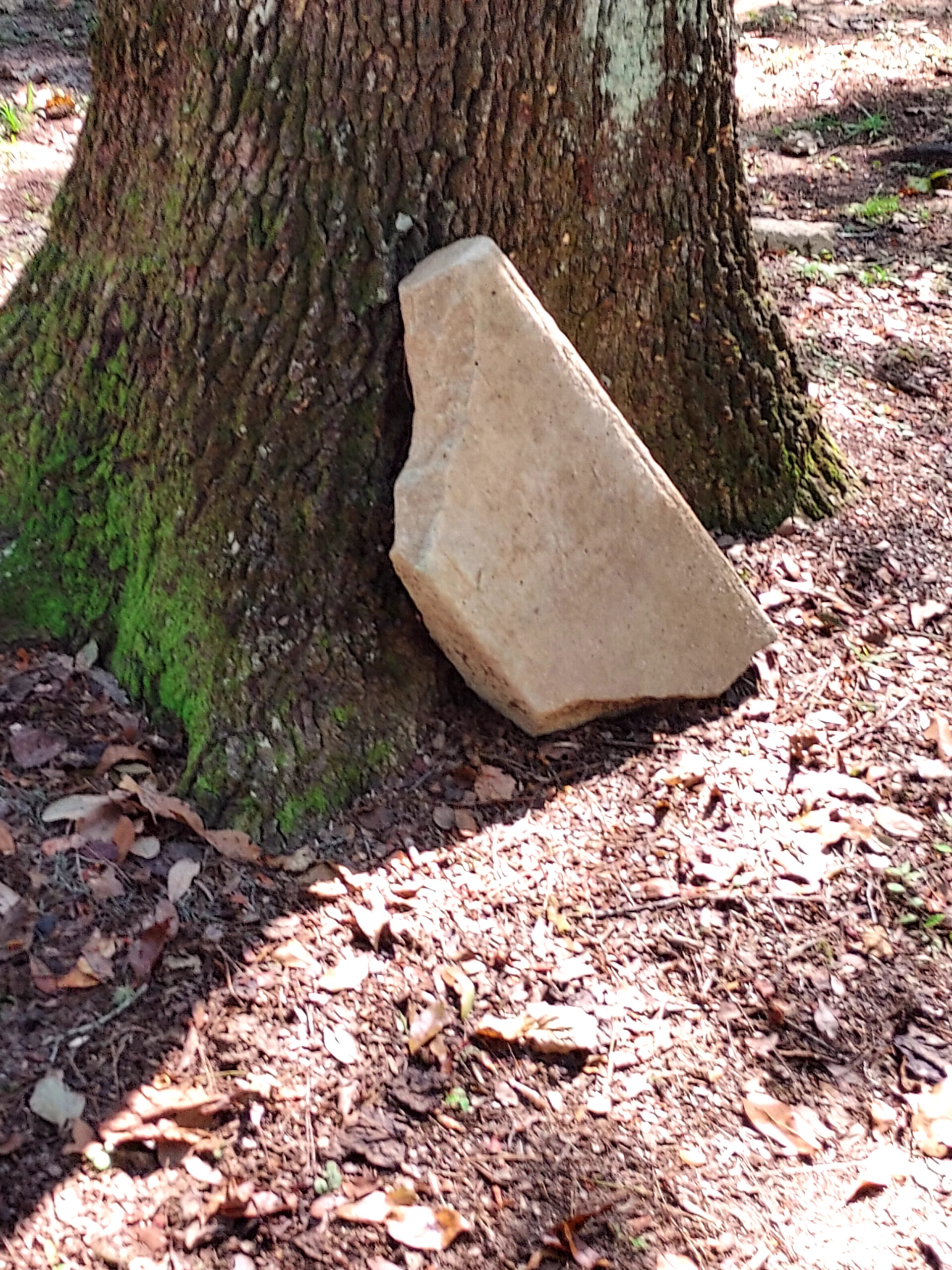
    This grave marker is of an unknown slave. It was placed on this tree after likely being tossed in a Florida storm.


    54th Massachusetts Infantry

    The Colored 21st Infantry and the Colored 54th Infantry are both credited for its direct and indirect involvement in the celebration of the first Decoration Day. From the archives of the University of Southern California:

    Assigned to command the assault on a South Carolina Confederate fort during the battle at Battery Wagner in July 1863, the 54th Massachusetts Infantry of the Civil War was composed primarily of freed black slaves from northern Union states.

    Though the siege was unsuccessful, the heroism of a number of members of the infantry drew the attention of the nation. In particular, Sgt. William Carney risked his life to lead the troops forward, erecting the Union flag. He suffered two bullet wounds but survived, going on to become the first African American to receive the Congressional Medal of Honor for his unprecedented courage.

  • Unlock Your Family History: Free ⁢Genealogy and Ancestry Finds

    Discover ‍Your Roots: Exploring the Benefits ‍of Free Genealogy and Ancestry⁢ Resources

    Hurry: May 13, 2024 is the deadline

    Ancestry research yielded big results for the late Alex Haley


    Researching your family history can be a fascinating journey filled with surprises and connections‌ to the past. With the wealth of ​free genealogy and ancestry resources‍ available online, uncovering your ‍heritage has never been ⁤easier.

    Today, on Good Genes Genealogy Services’ Freebie Fridays, here is the offer from The Society of Georgia Archivists is accepting applications for its Brenda S. Banks Scholarship. The scholarship recipient will attend its upcoming SGA Educational workshop on “Writing for Impact: Introductory Grant Writing Workshop” and $100 credit to apply to a Society of America Archivists (SAA) class or purchase in the SAA bookstore.

    See attached for more details. click the link — https://soga.org/scholarships/banks.

  • Uncovering Family History: Tracing⁤ Ancestors via U.S. Government Photos

    Uncovering Family History: Tracing⁤ Ancestors via U.S. Government Photos

    This photo in a Kentucky food line during the Great Depression was taken by skilled, award-winning photographer, Gordon Parks. He worked for the federal government as part of a massive pictorial project. Gordon specialized in showing Black life in ways never before displayed.

    Delving into⁤ the Past: Uncovering Family History through U.S. Government ‌Photos


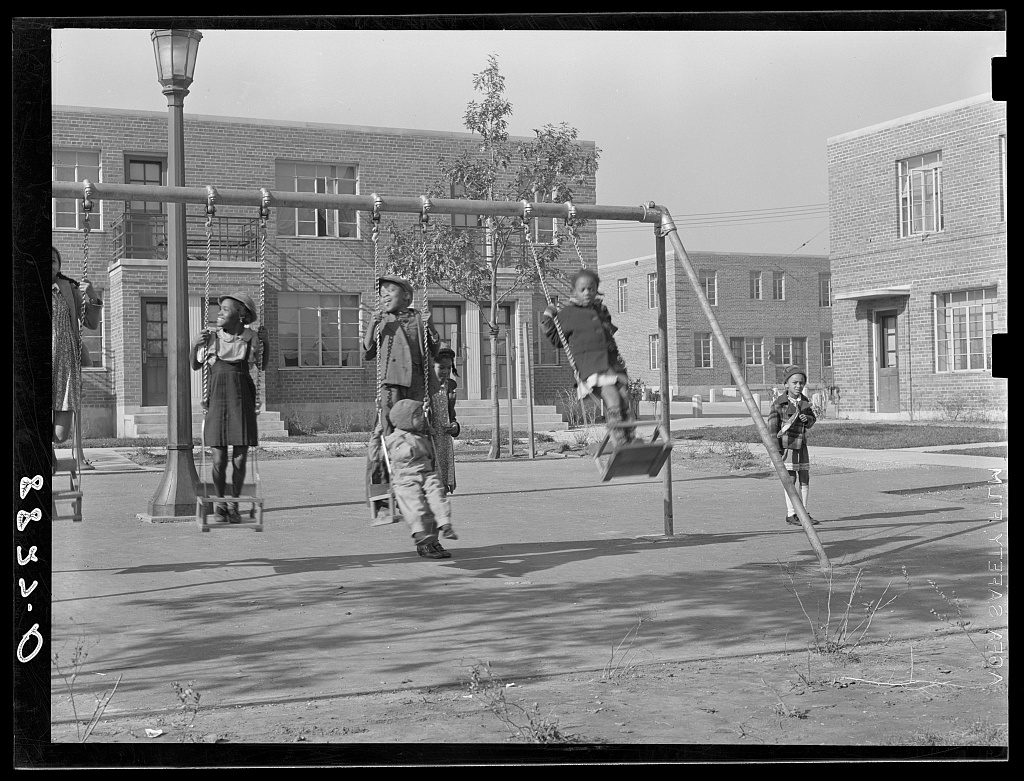
    Picture this: You can locate your hard-to-find or perhaps unknown ancestors or important family landmarks through the free pictorial archives of the United States government. I found my father’s childhood home, Logan Fontenelle Homes in Omaha, Nebraska. Once my Dad saw it, he recalled where his neighbors lived and some of the children in the picture found below:

    Children at play in 1938 at the newly opened Logan Fontenelle Homes in Omaha, Nebraska
    Logan Fontenelle Homes, Omaha, Nebraska, as captured in 1938 by the U.S. Farm Security Administration/Office of War Information


    Not only did this photograph prompt my Dad to zero in on the housing development his family (Mom, brother, sister, and grandmother) moved into a few years after this photo was taken, it provided a guide to additional legacy conversations.  Thanks to the ambitious nationwide pictorial project by the U.S. Government in the 1930s and 1940s, finding relatives — especially African American ancestors — can prove rewarding.

    The backstory that explains the photographs

    This blog will give you tips on how to narrow your searches to sites that likely hold images of your ancestors. I located my relatives in the photographs taken in the 1930s and 1940s by photographers employed by the Farm Security Administration and Office of War Information. It was an ambitious project that had multiple goals. One was to employ individuals during a time of desperate unemployment woes of the Great Depression and post-World War II.

    When it comes to tracing your family history,⁣ there are a multitude of resources available to you. One often-overlooked source of ‍valuable ⁤information is U.S. government photos. From census records to military photos, these images can provide⁢ a unique glimpse into the lives of ‌your ancestors. By⁢ delving into the past through these official images, you can uncover hidden ⁤stories and connections that may have been⁣ lost to time.

    The FSA and the OWI collectively produced approximately 175,000 black-and-white film negatives and 1,600 color photographs during the 1930s and 1940s. The separate agencies’ work was designed to display life during the Depression, Dust Bowl and in the post War World II era.


    Tips on how to locate ancestors through pictures

    • Suggestions on search leads are street names in towns, schools, famous persons, employment, transportation, summer fun and many more topics that may have passed through generations such as relatives catching fish with their bare hands in Eatonton, Ga. Guess what? I found photos proving this was true.

    The caption reads: “Negroes catching small catfish with their hands. Bait to be used in shoals of Little River near Eatonton, Georgia”


    • Closely study the photographs for bonus features such as names (often photographer Gordon Parks identified his subjects by names), locations, and occupations or themes.

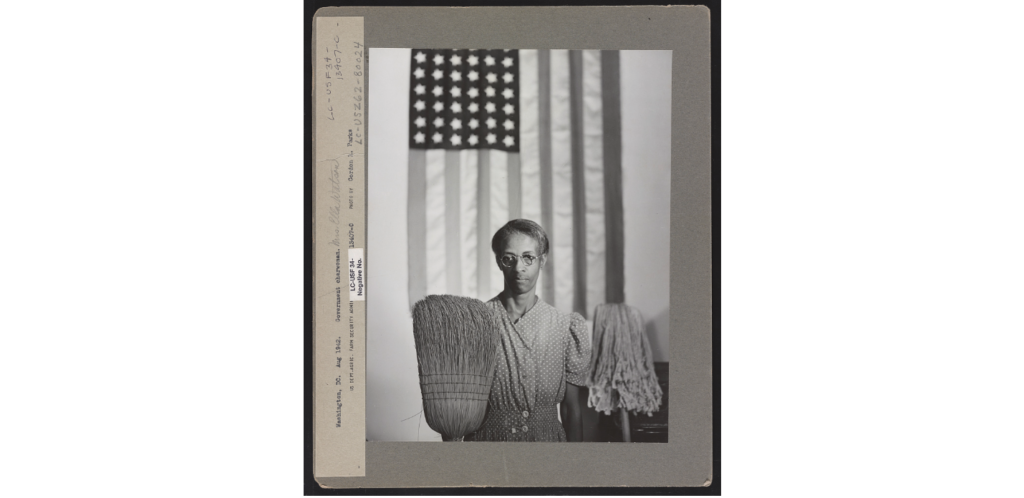
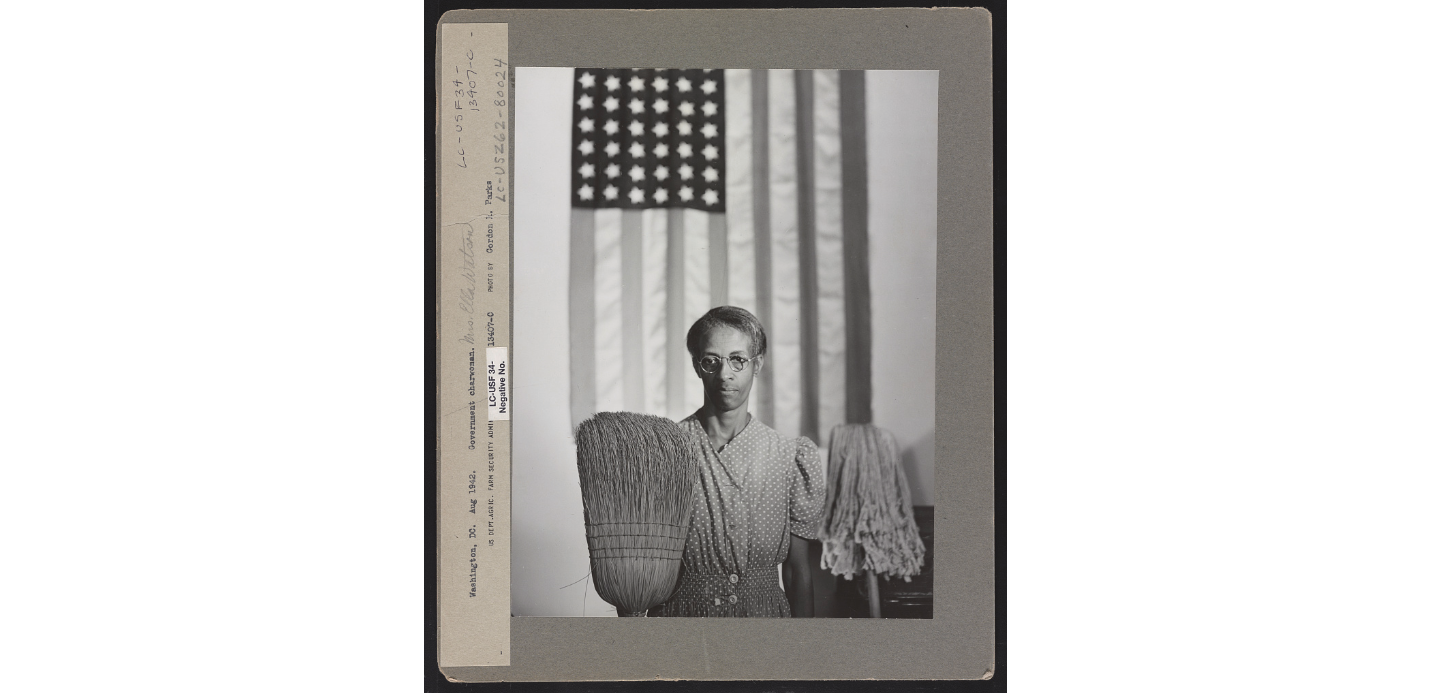
    Chairwoman, a photograph by Gordon Parks, 1942, Washington, D.C.
    This iconic photograph aka “American Gothic” was taken by Gordon Parks as part of the Farm Security Administration and the Office of War Information

    What’s important about this photograph is the name of the subject, Ella Watson, and her occupation, charwoman. A charwoman cleans houses and offices for her wages.


    Additional Research Tips from the Library of Congress

    Unprinted negatives: You can search for “Untitled” to see images that did not come with a caption card bearing a title and are presumed not to have been printed. Most unprinted negatives simply have “Untitled” as their caption. Some have titles based on similar images that appear to have related content.

    To view images that have a hole punched in them (an early method the agency used to indicate the negative should not be printed), you can search “hole punch.”

    For insight on FSA selection of images to be printed, see: Fleischhauer, Carl. “Selecting Photographs for the FSA/OWI Print File: a Photo-Assignment Case Study: John Vachon’s Documentation of the Roanoke Farms Resettlement Project, Halifax County, North Carolina, April 1938” (25 June 2020). [pdf, 7.8 mb], http://www.loc.gov/rr/print/coll/Vachon_FSA-1938-RoanokeFarms.pdf.

    Browse by Topic: Select from the Subject Index categories: Alphabetical listing or Classfication Number listing

    FSA/OWI Written Records: View a description of the written records and a digitized selection of the documents

    For a video overview of the collection, see “Documenting America, 1935-1943: The Farm Security Administration/Office of War Information Photo Collection.”

    Here’s how a typical search appears

    When you locate a photograph on the joint websites, beside the image, there is a lot of great information that can aid in locating ard-to-find relatives:

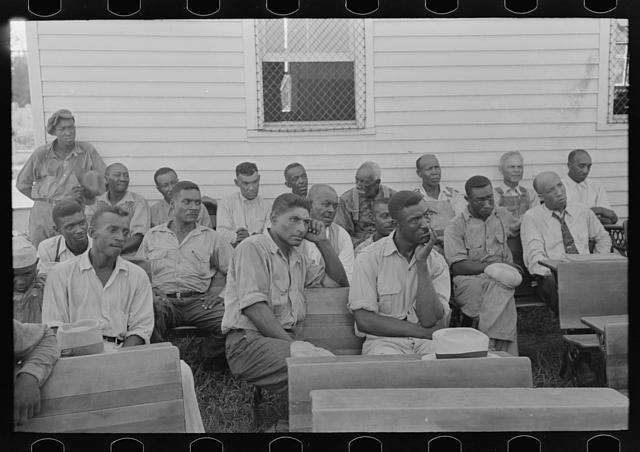
    Negro clients listening to visiting public health official, Southeast Missouri Farms. La Forge, Missouri

    Unearthing All Hidden Connections

    As you delve into locating family members through the U.S. government photos, use the free offerings as a launch or compliment to the images and artifacts in the basements, attics, garages, and other storage areas of your senior relatives. Ask about photographs and piece together fascinating stories.

    A creative use is to link the government photographs with the other timelines in your family. Collect and arrange photographs in chronological order and begin with a lively narrative to bring your ancestors to life. Also, look for family resemblances in the government-supplied photographs.

    Finally, note that this is another resource to match up information found in military records, the U.S. Census, passports, audio and video captures, and more.

  • Uncovering ⁤the History of Dallas’ ‌Freedmen’s Cemetery

    Uncovering ⁤the History of Dallas’ ‌Freedmen’s Cemetery

    Texas Red granite archway marks the entrance to the Freedmen’s Cemetery Memorial. Two niches, located on either side of the arch, are adorned with life-size bronze figures (one in each niche). The free-standing figure on the left of the entrance, the so-called “Sentinel” or “Warrior,” is dressed in clothes inspired by the Benin culture of West Africa. Text source: Freedman’s Cemetery Memorial (Dallas, TX) · Contemporary Monuments to the Slave Past (slaverymonuments.org). Source of all images in GGGS blog: thelesters.co)


    Uncovering the History of Dallas’ Freedmen’s Cemetery

    You can hear and feel the heartbeat of Dallas, Texas, as feet and vehicle traffic is nearby the renovated burial grounds that house the remains of between 5,000 and 7,000 slaves, former slaves, freed Blacks, and their descendants. Here lies the historic territory known ​as the Freedmen’s Cemetery. ‍

    It is a sacred site with history that dates to the 186os when the first Black slaves were buried on what was then known as “Freedman’s” town, a place founded by Blacks in the 1850s. The giant arch that is at today’s entry gate to Freedmen’s Cemetery, was the original site that welcomed its residents to the “Freedman’s” community.

    Cemeteries, especially those containing the histories of Blacks whose pasts are often forgotten, buried in the historical documents and long forgotten in the storytelling about ancestors.  The Freedmen’s Cemetery is a place where stories of struggle, triumph whisper through the winds to tell its special history of its enduring spirit of a community.

    Exploring the Origins​⁢ of Dallas’ ⁤Freedmen’s ​Cemetery

    During and after the U.S. Civil War, Black slaves and freed ones settled in many areas away from their enslavers and Texas was once the most plentiful state for such “free towns” or “free colonies.” The Freedmen’s‌ Cemetery in Dallas was created to provide a dignified burial⁤ place.  It was an active burial site between 1869 through 1907, remaining completed supported by Freeman’s town. The area was approximately a mile long in the community of Deep Ellum, Dallas.

    The cemetery somehow became forg

    otten. In the mid-1940s, the city of Dallas and the federal highway system, built the North Central Expressway and it cut right through the cemetery. The local authorities removed the gravestones and covered the remainder of the center with what became a city park. Some 50 years later in the summer of 1990, the Freedmen’s Cemetery burial ground was “found” after a park renovation. Shortly after, more than 800 marked graves were found. Some 1,200 unmarked graves were found and relocated.

    It was also in 1990 that the Freedman’s Cemetery Memorial was created to honor those that were buried. The remembrances brought about community healing.  Today, the

    cemetery memorial connects a cemetery tour in Uptown, Dallas, and sits near the Emanu-El Cemetery, the Calvary Cemetery, and the Greenwood Cemetery.  Since 1992, Freedmen’s Cemetery is a Dallas Landmark .  It has been a part of the State Historic Marker program in Texas since 1993.


    Preserving ​the Legacy and bringing Healing ⁤

    According to the North Dallas Cultural Center’s “Freedmen’s Memorial: A Place for Healing”:

    “Freedman’s Cemetery was one of the largest Freedman Cemeteries in the Country. It was established as a burial ground for Dallas’ early African American population in 1861. The site represents the remnants of the once-thriving North Dallas community which from the Civil War to the 1970s was the largest segregated African American enclave in Dallas and one of the largest in the United States.”


  • Unlocking Your Family’s Past: A Beginner’s Guide to Ancestry Research

    Begin your online ancestry research with joy
    The ancestry research journey often begins online

    Congratulations!

    You are joining millions of individuals around the globe who are beginning their exciting discoveries of families’ histories.

    You are in good company whether you are just getting started or dabbled a bit in genealogy. Ancestry research is a popular and engaging hobby for many genealogy seekers, gaining even more momentum over the last decade as accessible online resources.  Today, one of the largest ancestry research sites reports some 3 million subscribers searching for 15 million ancestors. Another genealogical network claims another 27 million ancestors in its organization.

    Ancestry tracing of your family’s lineage will satisfy more than your curiosity. It is proven to offer comfort, relief, joy, pride, and many positive attributes in the uncovering of the histories of family members often never known. The discoveries also offer many somber and sober moments as our loved ones often had colorful lives. You will see mirrors of yourself and other family members. The rewards of researching family histories bring great rewards.

    Let’s get started. This post will show you the way.

    First: Set a goal of the essential research you wish to achieve. When I got started with my family’s research, my goal was to learn more about the maternal grandfather that I did not grow up with. I was born in Omaha, Nebraska and my grandfather, Eugene Owen, Sr., lived approximately 1,533 miles away in Los Angeles, California.   I also wanted to learn everything about my paternal grandfather who fled Helena, Arkansas after the race killings in 1919. After many years — prior to the ample offerings of online ancestry research — I achieved my initial goals. Keep in mind that your research should be essential to your intended results. You may be interested in building a family tree, learning about your ethnic heritage, or perhaps delving into a specific ancestor’s life story?

    Next: Invest in research time both online and offline. This website, goodgenesgenealogyservices.com, and many others offer you access to records. Your county library system, historical societies, archives, family, friends, city tours, and so many resources are available to help fill in the blanks for your ancestry research. Your online records search should yield information to confirm birth, marriage and death certificates. Consult the U.S. Census data for your initial search.

    Next: On this site, you can build your family tree. Start with the basics that include your name, date of birth, and other any other relatives’ basic information. Your tree will begin to build itself. Your next steps will be to check in your tree to learn of any updates.

    Finally: The exciting part begins with the family puzzle pieces coming together.  On your family tree, remember to be flexible and open to unexpected discoveries.

    It’s a long and winding journey, yet the results are how you will honor and preserve your family’s legacy.


  • Genealogy Group Think: It works

    Genealogy Group Think: It works

    Initiating a genealogy group is an awesome endeavor. On Sunday, March 10, 2024, it happened at my home church, Hillside International Truth Center.
    I expected about 25 persons; we more than doubled that number. We had a common interest: To explore and gain ground in learning our collective and individual family histories. The majority of Atlanta’s Hillside International Truth Center’s congregants are African American. That’s why the forming of our monthly in-person gatherings to share and learn more about how to effectively locate our ancestral loved ones, is vitally important since African Diaspora family history researchers experience the greatest hurdles in obtaining our honest histories.
    Here’s what we accomplished in our first meeting:

    1. We gathered for the divine purpose of briefly sharing our stories, new information, exchanging research tips for newbies to seasoned researchers.
    2. We learned more about the genealogy journey from one of our members, Valerie Tolliver, whose story was told in an informative video segment, as part of a recently released documentary, “Roots Revealed.”
    3. We were blessed and encouraged by our Presiding Bishop and Pastor Dr. Jack L. Bomar, who also experienced breakthroughs in his family history.

      Bishop Jack Bomar shares his family's history and spreads the love
      Bishop Jack (white suit) greets fellow family ancestry and genealogy researchers

      ______________________________________________________________________________________

    4. We established that our hourlong+ meetings will be held every second Sunday (except for Mother’s Day and Father’s Day) from noon – 1 p.m. Our meeting location is the King Chapel, named in honored of the church’s founding minister, leader, and historic ancestor, Dr. Barbara Lewis King.
    5. We will set our future agenda, share online resources, encourage knowledge sharing, provide deep support for our newest researchers, collaborate with each other on our established projects, and  celebrate successes, especially when “brick walls” are broken through.
    6. We will learn more about joining relevant genealogical societies and related groups, visit historical sites, and invite our local library genealogy leaders to assist us.

    In all, we will share more insight on how to access online learning, and also provide a supportive and exhuberant genealogy group that will aid us in sharing our family histories.
    Stay tuned: The best is yet to come.
    Thank you.

  • Keep digging: Finding African Diaspora genealogy stories in Mexico

    Keep digging: Finding African Diaspora genealogy stories in Mexico

    Today’s freebie is straightforward: Keep researching your ancestry in all regions of the world.

    Around the globe, the remnants of African Diasporan appear in most cultures. In this quick installment, see the results of the African American slaves finding safety in Mexico.

    When slave owners demanded that Mexico send back African Americans, the official response from Mexican government officials responded that there are no slaves in its country, only citizens.

    Keep digging and learn of the great Gaspar Yanga. A huge statue in Vera Cruz, Mexico, is dedicated to the “Primer Libertador de America or “first liberator of the Americas,” (1545 – 1618) who led one of the first successful slave revolts in colonial Mexico. For years he negotiated with Spain on eleven points, including the ability to establish one of the Americas earliest free black settlements. The town, San Lorenzo de Los Negros was “officially recognized by Spanish authorities as a free black settlement,” according to BlackPast.org. Later, the Mexican town became known as Yanga in honor of its liberator and founder.

    Gaspar Yanga statue in Mexico
    https://susanives.com/2020/07/27/mondays-monument-gaspar-yanga-statue-yanga-mexico/
  • How to begin your ancestry/family history research

    How to begin your ancestry/family history research

    My* mother, Angeline Cecil Owen, approximately one-year-old, with her parents, Helen Wilks Owen and Eugene Owen, Jr., in Springfield, Missouri (*Ann Wead Kimbrough)

    For many, the question of where to begin the hunt for their ancestors, is huge.

    Here are a few of the questions and comments the Good Genes Genealogy Services (GGGS) team receives from our prospective and new clients:

    I am adopted and I don’t know anything about my birth family.

    I don’t know my mother’s maiden name.

    I don’t know my Dad or his family.

    Since the U.S. Census doesn’t have any official records about Black people until 1870 and even that is incomplete, how am I supposed to trace my family back to their arrival in the United States?

    I started my family research but then I hit that “brick wall” and cannot move forward. I am ready to give up.

    I don’t know anything about my family past my maternal grandmother and my great grandfather on my father’s side.

    I heard that my entire family is buried in cemeteries in South Carolina and that’s where I’m from but I don’t know my family’s history.

    Photo by Bruno Scramgnon on Pexels.com

    For African Diasporan-connected family members, the quest to begin the ancestry search may appear to be even more daunting than our counterparts. Yet, we all had to begin somewhere. That’s our first tip:

    1. Begin where you are (see our March 20, 2023 post). Some begin with a picture like the one above. Just one photograph, in this case taken in 1938, is the start of the family tree building.
    2. Interview living relatives. Someone knows a nugget of a story that can lead to greater discovery. For instance, asking a family elder what s/he remembers about their childhood home, will likely lead to extended dialogue based on responses such as “uncle Jim used to bring home melons every Saturday after he cashed his check from working as a “soda jerk” in a hotel kitchen in Omaha.”
    3. Follow any lead and visit a federal government website for expansion of your findings. Using the hint provided in #2, you may be able to gain the once “lost” uncle’s name — even if it’s just the first name — and begin there. Use his first name and the family name in the online research tree search. If it doesn’t work, it is likely an online hint will arrive to give you more clarity. Also, knowing that the uncle worked as a “soda jerk” during your elder’s childhood, can lead you to the U.S. Department of Labor’s website. From there, you can research the number of soda jerks working in the 1940s, for instance. Also, you may be able to locate the exact hotel in Omaha with a lead from the federal site to the local, Omaha newspapers and historical societies.
    4. Sign up on social media sites, websites, and engage with other virtual or in-person groups to learn more about how others are conquering their ancestry research.
    5. Remember to write and record your results. This is the start of building your family tree and hopefully, other family members are doing the same. Be sure to link with those family members to make your family tree even more robust.
    Photo by cottonbro studio on Pexels.com

    Those are just a few tips offered to help anyone get started or re-energized to keep up the research for one’s family heritage.

    Everyone’s journey is different. Yet, there are similarities in our collective ancestry research efforts based on our listening skills, questioning of relatives, learning new techniques, and jumping in the swim of family research.

  • Floridians and nearby genealogy researchers: Meet up in Lake County

    This wonderful event is from the Wilson Griot Legacy site:

    WILSON GRIOT LEGACY

    The Wilson Griot Legacy is a modern enterprise to create new sacred storytelling to unravel information inherent in our genealogical past.

    RESEARCHING BLACK FAMILY HISTORY

    Posted byWILSON GRIOT LEGACYSeptember 9, 2023Posted inUncategorized

    I will be joining with the Kinseekers Genealogical Society of Lake County, Florida in conjunction with the Leesburg Public Library in a special event on Saturday, September 23, 2023.

    Both in-person and virtual event:

    Saturday, 23 September 2023

    9:45am – 3:30pm EST

    Informal meet ‘n greet at 9:30am EST.

    Event is free & open to all!!

    Advertisement

    Presented by Kinseekers Genealogical Society and the Leesburg Public Library.

    To attend virtually, register here. 

    To attend in-person, contact the Leesburg Public Library at 352.728.9790

    MORNING SESSION (9:45am – 12:15pm EST)

    –Welcome & Announcements

    – Researching Black Family History, 1900-1950: Essential Foundations: presented by Taneya Koonce

    –Context Matters: Researching World War Two Black Ancestors:presented by KB Barcomb

    LUNCH BREAK (12:15pm – 1:00pm EST)

    AFTERNOON SESSION (1:00pm – 3:00pm) 

    –  Colleges, Clubs, & Cotton Fields: Researching Black Women, 1900-1950:presented by Adrienne G. Whaley

    –  Open Round Table Discussion