Category: Genealogy Group forms at Hillside International Truth Center

Hillside International Truth Center kicks off its Ancestral and Genealogical Research ministry. It is hosted by Good Genes Genealogy Services’ co-founder, Dr. Ann Lineve Wead Kimbrough

  • Genealogy Group Think: It works

    Genealogy Group Think: It works

    Initiating a genealogy group is an awesome endeavor. On Sunday, March 10, 2024, it happened at my home church, Hillside International Truth Center.
    I expected about 25 persons; we more than doubled that number. We had a common interest: To explore and gain ground in learning our collective and individual family histories. The majority of Atlanta’s Hillside International Truth Center’s congregants are African American. That’s why the forming of our monthly in-person gatherings to share and learn more about how to effectively locate our ancestral loved ones, is vitally important since African Diaspora family history researchers experience the greatest hurdles in obtaining our honest histories.
    Here’s what we accomplished in our first meeting:

    1. We gathered for the divine purpose of briefly sharing our stories, new information, exchanging research tips for newbies to seasoned researchers.
    2. We learned more about the genealogy journey from one of our members, Valerie Tolliver, whose story was told in an informative video segment, as part of a recently released documentary, “Roots Revealed.”
    3. We were blessed and encouraged by our Presiding Bishop and Pastor Dr. Jack L. Bomar, who also experienced breakthroughs in his family history.
      Bishop Jack Bomar shares his family's history and spreads the love
      Bishop Jack (white suit) greets fellow family ancestry and genealogy researchers

      ______________________________________________________________________________________

    4. We established that our hourlong+ meetings will be held every second Sunday (except for Mother’s Day and Father’s Day) from noon – 1 p.m. Our meeting location is the King Chapel, named in honored of the church’s founding minister, leader, and historic ancestor, Dr. Barbara Lewis King.
    5. We will set our future agenda, share online resources, encourage knowledge sharing, provide deep support for our newest researchers, collaborate with each other on our established projects, and  celebrate successes, especially when “brick walls” are broken through.
    6. We will learn more about joining relevant genealogical societies and related groups, visit historical sites, and invite our local library genealogy leaders to assist us.

    In all, we will share more insight on how to access online learning, and also provide a supportive and exhuberant genealogy group that will aid us in sharing our family histories.
    Stay tuned: The best is yet to come.
    Thank you.

  • Keep digging: Finding African Diaspora genealogy stories in Mexico

    Keep digging: Finding African Diaspora genealogy stories in Mexico

    Today’s freebie is straightforward: Keep researching your ancestry in all regions of the world.

    Around the globe, the remnants of African Diasporan appear in most cultures. In this quick installment, see the results of the African American slaves finding safety in Mexico.

    When slave owners demanded that Mexico send back African Americans, the official response from Mexican government officials responded that there are no slaves in its country, only citizens.

    Keep digging and learn of the great Gaspar Yanga. A huge statue in Vera Cruz, Mexico, is dedicated to the “Primer Libertador de America or “first liberator of the Americas,” (1545 – 1618) who led one of the first successful slave revolts in colonial Mexico. For years he negotiated with Spain on eleven points, including the ability to establish one of the Americas earliest free black settlements. The town, San Lorenzo de Los Negros was “officially recognized by Spanish authorities as a free black settlement,” according to BlackPast.org. Later, the Mexican town became known as Yanga in honor of its liberator and founder.

    Gaspar Yanga statue in Mexico
    https://susanives.com/2020/07/27/mondays-monument-gaspar-yanga-statue-yanga-mexico/
  • How to begin your ancestry/family history research

    How to begin your ancestry/family history research

    My* mother, Angeline Cecil Owen, approximately one-year-old, with her parents, Helen Wilks Owen and Eugene Owen, Jr., in Springfield, Missouri (*Ann Wead Kimbrough)

    For many, the question of where to begin the hunt for their ancestors, is huge.

    Here are a few of the questions and comments the Good Genes Genealogy Services (GGGS) team receives from our prospective and new clients:

    I am adopted and I don’t know anything about my birth family.

    I don’t know my mother’s maiden name.

    I don’t know my Dad or his family.

    Since the U.S. Census doesn’t have any official records about Black people until 1870 and even that is incomplete, how am I supposed to trace my family back to their arrival in the United States?

    I started my family research but then I hit that “brick wall” and cannot move forward. I am ready to give up.

    I don’t know anything about my family past my maternal grandmother and my great grandfather on my father’s side.

    I heard that my entire family is buried in cemeteries in South Carolina and that’s where I’m from but I don’t know my family’s history.

    Photo by Bruno Scramgnon on Pexels.com

    For African Diasporan-connected family members, the quest to begin the ancestry search may appear to be even more daunting than our counterparts. Yet, we all had to begin somewhere. That’s our first tip:

    1. Begin where you are (see our March 20, 2023 post). Some begin with a picture like the one above. Just one photograph, in this case taken in 1938, is the start of the family tree building.
    2. Interview living relatives. Someone knows a nugget of a story that can lead to greater discovery. For instance, asking a family elder what s/he remembers about their childhood home, will likely lead to extended dialogue based on responses such as “uncle Jim used to bring home melons every Saturday after he cashed his check from working as a “soda jerk” in a hotel kitchen in Omaha.”
    3. Follow any lead and visit a federal government website for expansion of your findings. Using the hint provided in #2, you may be able to gain the once “lost” uncle’s name — even if it’s just the first name — and begin there. Use his first name and the family name in the online research tree search. If it doesn’t work, it is likely an online hint will arrive to give you more clarity. Also, knowing that the uncle worked as a “soda jerk” during your elder’s childhood, can lead you to the U.S. Department of Labor’s website. From there, you can research the number of soda jerks working in the 1940s, for instance. Also, you may be able to locate the exact hotel in Omaha with a lead from the federal site to the local, Omaha newspapers and historical societies.
    4. Sign up on social media sites, websites, and engage with other virtual or in-person groups to learn more about how others are conquering their ancestry research.
    5. Remember to write and record your results. This is the start of building your family tree and hopefully, other family members are doing the same. Be sure to link with those family members to make your family tree even more robust.
    Photo by cottonbro studio on Pexels.com

    Those are just a few tips offered to help anyone get started or re-energized to keep up the research for one’s family heritage.

    Everyone’s journey is different. Yet, there are similarities in our collective ancestry research efforts based on our listening skills, questioning of relatives, learning new techniques, and jumping in the swim of family research.

  • Floridians and nearby genealogy researchers: Meet up in Lake County

    This wonderful event is from the Wilson Griot Legacy site:

    WILSON GRIOT LEGACY

    The Wilson Griot Legacy is a modern enterprise to create new sacred storytelling to unravel information inherent in our genealogical past.

    RESEARCHING BLACK FAMILY HISTORY

    Posted byWILSON GRIOT LEGACYSeptember 9, 2023Posted inUncategorized

    I will be joining with the Kinseekers Genealogical Society of Lake County, Florida in conjunction with the Leesburg Public Library in a special event on Saturday, September 23, 2023.

    Both in-person and virtual event:

    Saturday, 23 September 2023

    9:45am – 3:30pm EST

    Informal meet ‘n greet at 9:30am EST.

    Event is free & open to all!!

    Advertisement

    Presented by Kinseekers Genealogical Society and the Leesburg Public Library.

    To attend virtually, register here. 

    To attend in-person, contact the Leesburg Public Library at 352.728.9790

    MORNING SESSION (9:45am – 12:15pm EST)

    –Welcome & Announcements

    – Researching Black Family History, 1900-1950: Essential Foundations: presented by Taneya Koonce

    –Context Matters: Researching World War Two Black Ancestors:presented by KB Barcomb

    LUNCH BREAK (12:15pm – 1:00pm EST)

    AFTERNOON SESSION (1:00pm – 3:00pm) 

    –  Colleges, Clubs, & Cotton Fields: Researching Black Women, 1900-1950:presented by Adrienne G. Whaley

    –  Open Round Table Discussion

  • Babysitting for a song

    Babysitting for a song

    Working in the Right Place, Right time

    From her top hit, Loco-Motion: https://open.spotify.com/album/7eFaSwgKnu9uBoUQ5A58jv

    Eva Narcissus Boyd was a teenager who was a babysitter to the young child of the Brill Building songwriters Carole King and Gerry Goffin. They heard her sing and also loved her dancing. “Little Eva” was asked by the team to sing a demo of their anticipated song for Dee Dee Sharp.

    Eva was so good that King and Goffin decided to release her first song, “The Loco-Motion,” and it became a #1 pop hit and sold a million copies in 1962. She ended her nanny career and became a singer. Sadly, her entertainment career suffered many setbacks after the popular song.

    Good Genes Genealogy tip: Ask your relatives whether they know of any ancestors who traded one job or career for another one. Find out why and how they chose to work in certain jobs

  • “Testimony against slavery”

    “Testimony against slavery”

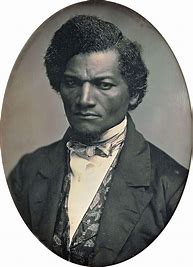
    Every tone {of the songs of the enslaved} was a testimony against slavery, and a prayer to God for deliverance from chains.”

    Frederick Douglas, abolitionist, activist, and author, from “Narrative of the Life of Frederick Douglass (1845).

  • Remembering sports ancestors who broke color barriers and overcame hate

    Remembering sports ancestors who broke color barriers and overcame hate

    The
    The ‘American Pastime” brought brutal results to Jackie Robinson and other African American professional baseball players
    Photo by Steshka Willems on Pexels.com

    Often, reviewing the hatred and violence suffered by African American ancestors, are tough matters to endure and often neglected in history books. Yet, the examples of persevering despite the sad circumstances, can spur on genealogy and ancestry researchers to compare and contrast the past with today’s societal practices.

    Good Genes Genealogy Tip: Interview your family members about their sports histories. Some may share the good and also the unhappy times that they or their parents may have endured. Learn how they survived the taunts and personal risks to their families and themselves.

    Overcomer Robinson

    He broke the color barrier in United States’ Major League Baseball. Jackie Robinson did it all, including suffering physical and verbal wounds from his colleagues:

    Robinson nonetheless became the target of rough physical play by opponents (particularly the Cardinals). At one time, he received a seven-inch gash in his leg from Enos Slaughter.[135] On April 22, 1947, during a game between the Dodgers and the Philadelphia Phillies, Phillies players and manager Ben Chapman called Robinson a “nigger” from their dugout and yelled that he should “go back to the cotton fields”.[136] Rickey later recalled that Chapman “did more than anybody to unite the Dodgers. When he poured out that string of unconscionable abuse, he solidified and united thirty men.”[137]

    https://en.wikipedia.org/wiki/Jackie_Robinson

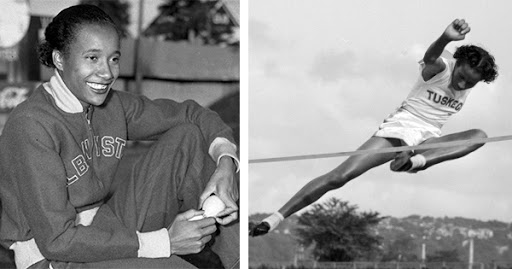
    Overcomer Coachman

    https://www.blackhistory.com/2021/03/alice-coachman-first-black-woman-win-olympic-gold-medal.html

    On her first attempt in the high jump during the International Olympics Games in 1948, Albany, Georgia native Alice Coachman won the gold medal. She became the first African American of any country to win a gold medal. Despite her instant fame and large celebrations back home in the United States, her hometown leaders treated her differently:

    Yet these latter celebrations occurred in the segregated South. In the Albany auditorium, where she was honored, whites and African Americans had to sit separately. The white mayor of Albany sat on the stage with Coachman but refused to shake her hand. She had to leave her own celebration by a side door.

    https://www.womenshistory.org/education-resources/biographies/alice-coachman

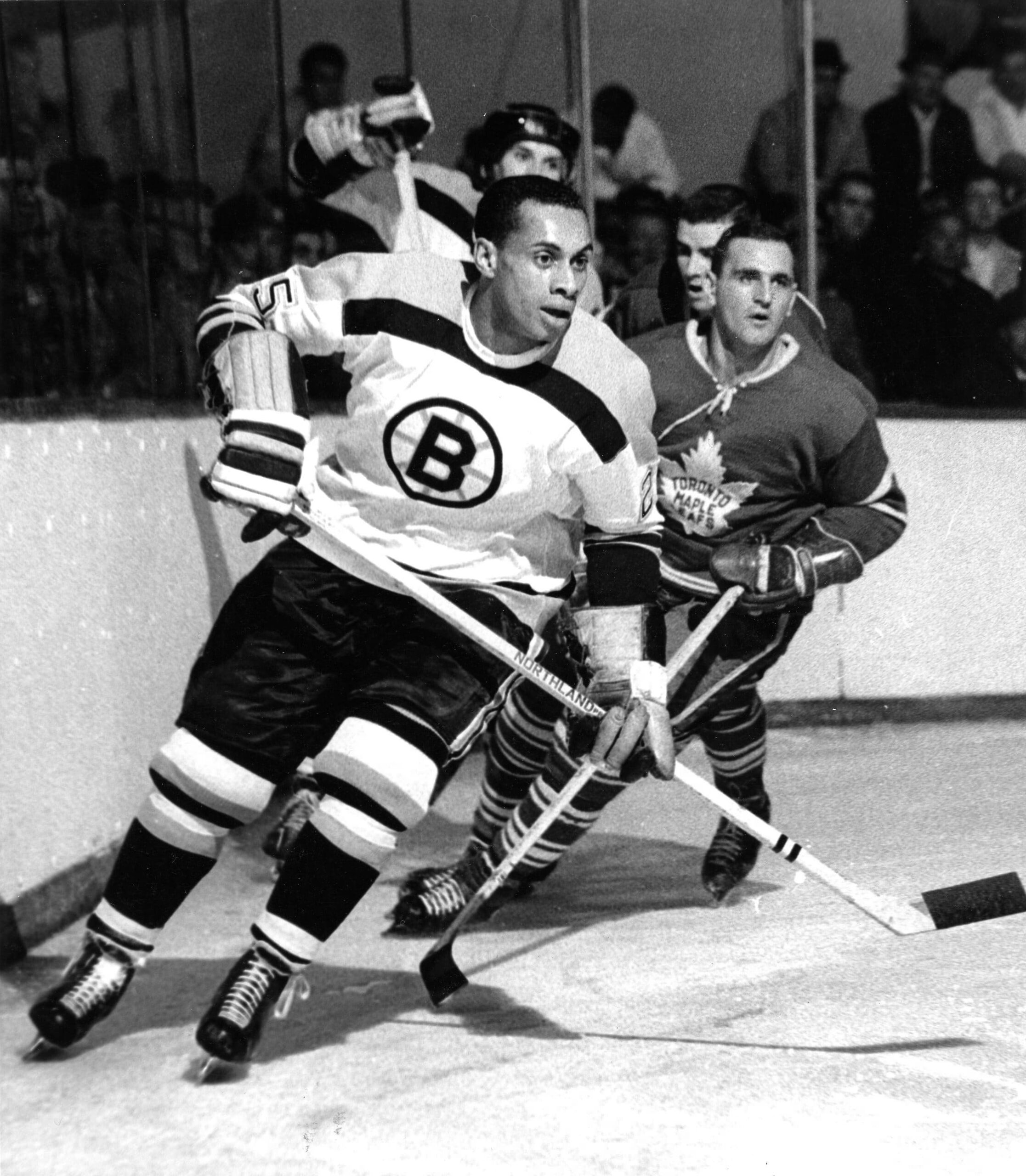
    Overcomer O’Ree

    https://theathletic.com/630279/2018/11/09/willie-oree-comes-to-the-hockey-hall-of-fame/

    Willie Eldon O’Ree was a youth when he met Jackie Robinson. It helped to inspire O’Ree to pursue his sports passion and became the first African American to join the National Hockey League in 1958. He continues to speak positively about his experiences as a hockey player. Yet, O’Ree suffered many indignities by his fellow league members and fans before retiring in the late 1970s:

    O’Ree faced racial taunts throughout his hockey career, including in the NHL, especially in the United States. [11] He noted that racist remarks were much worse in the U.S. cities than in Toronto and Montreal, the two Canadian cities hosting NHL teams at the time, and that “Fans would yell, ‘Go back to the South‘ and ‘How come you’re not picking cotton?’ Things like that. It didn’t bother me. I just wanted to be a hockey player, and if they couldn’t accept that fact, that was their problem, not mine.”[12]

    https://en.wikipedia.org/wiki/Willie_O%27Ree


  • Mental health remedies found in researching ancestors

    Maternal Grandfather Eugene Owen, Jr.

    For many years, the Good Genes Genealogy team — Mark and Ann Lineve — did not know much about the man pictured above, our maternal Grandfather Eugene Gibson Owen, Jr. The short story is that Grandpa Owen moved away from the Midwest city and state, Omaha, Nebraska, when our mothers — Lyla and Angeline — were small children in the 1940s. The stories that were whispered around the family was that Grandpa Owen followed his desire to be discovered by Hollywood executives and become a music and movie star.

    In 1982, Ann traveled to Los Angeles, California to locate her Grandpa Owen. She did. He was living in a nursing home as a double amputee. For three days, Ann and her husband learned all about the once mystery man in the Owen and Wead families. A few years after that visit, Grandpa Owen died. The deep wounds from his absence in the lives of our relatives were still there. Yet, it was made a bit easier to forgive because our ancestor’s explanations for following his passion, was remembered. Therein, lies the glimpses of healing.

    There are mental health benefits in learning more about one’s family. The ancestry and genealogy researchers who are our clients and participated in our workshops, have had similar feelings of joy when learning more about their long-lost ancestors.

    Here are a few examples from individuals’ recent finds in their family trees:

    • The Good Genes Genealogy team’s aunt-by-marriage located a family Bible that traces her tree through several generations to its African family members. The names and their geographical origins are included in this precious Bible.
    • A deceased father’s family was located and his maternal tree was greatly expanded to include three generations. His maternal great grandfather once owned hundred of acres in western Tennessee, was a decorated military veteran and highly respected in his community.
    • The enslaver and enslaved ancestral families were joined through a truthful communication exchange that was initiated by a novice genealogy researcher. It led to other discoveries that included finding the graves of great grandparents in an abandoned cemetery in Kentucky.
    • The dots were connected for another relative on her deceased husband’s missing high school years. It was discovered that he lived with other relatives as a high schooler before moving to Virginia where he met his wife.

    In an ancestry and genealogy workshop conducted in 2022 and this year by the Good Genes Genealogy team, we reminded participants to find mental health benefits from their discoveries. We advise that the deep dives into family heritage is:

    • •A faith walk
    • •A spiritual relationship
    • •A healing experience
    • •Sacred work
  • Linking today’s events with those of our ancestors

    Linking today’s events with those of our ancestors

    Tips on how you can break down brick walls

    By now, many of us who are searching for answers to the mysteries of our African Diasporan ancestors have found that the routes to getting research are often nontraditional. Consider another avenue to hopefully find your ancestors.

    Tap into your imagination, natural instincts and recall the stories you’ve heard to search for clues about your ancestors’ journeys. Hopefully, you will find a new detail to help break through those brick walls.

    Look for ancestors in someone else’s life

    If your ancestors worked at the Ford Motor Co. in the 1960s in Queens, New York, they may have known or been on the team with McKinley Thompson, Jr. an African American who designed cars during his 28-year career with the automaker. He was part of the concept team for the first-generation Mustang and GT40.

    Thompson came up with the open-air, 4 x 4 turbine boxy car that changed the automotive industry. It was a sports utility vehicle known as the Ford Bronco. Look at Thompson’s life and the places he lived, worked, was educated and served. You may find your ancestors in his art classes, in the military unit he served in, other jobs that he held or even in his retirement community.


    Fortunate Forten

    It is well-known in ancestry and genealogy research African American slavery matter prohibits current-day research efforts about family histories. The blockages that create the brick walls often referred to in African American ancestry research is due largely to enslavers not listing the full names, ages and other identifies for African Americans on the official documents, and the U.S. Census Bureau not including the names, addresses and full demographic information about African Americans until the 1870 records. There were sporadic accounts of slaves’ names and other information by the owners, and the government documents published some information that was linked to African Americans in bondage.

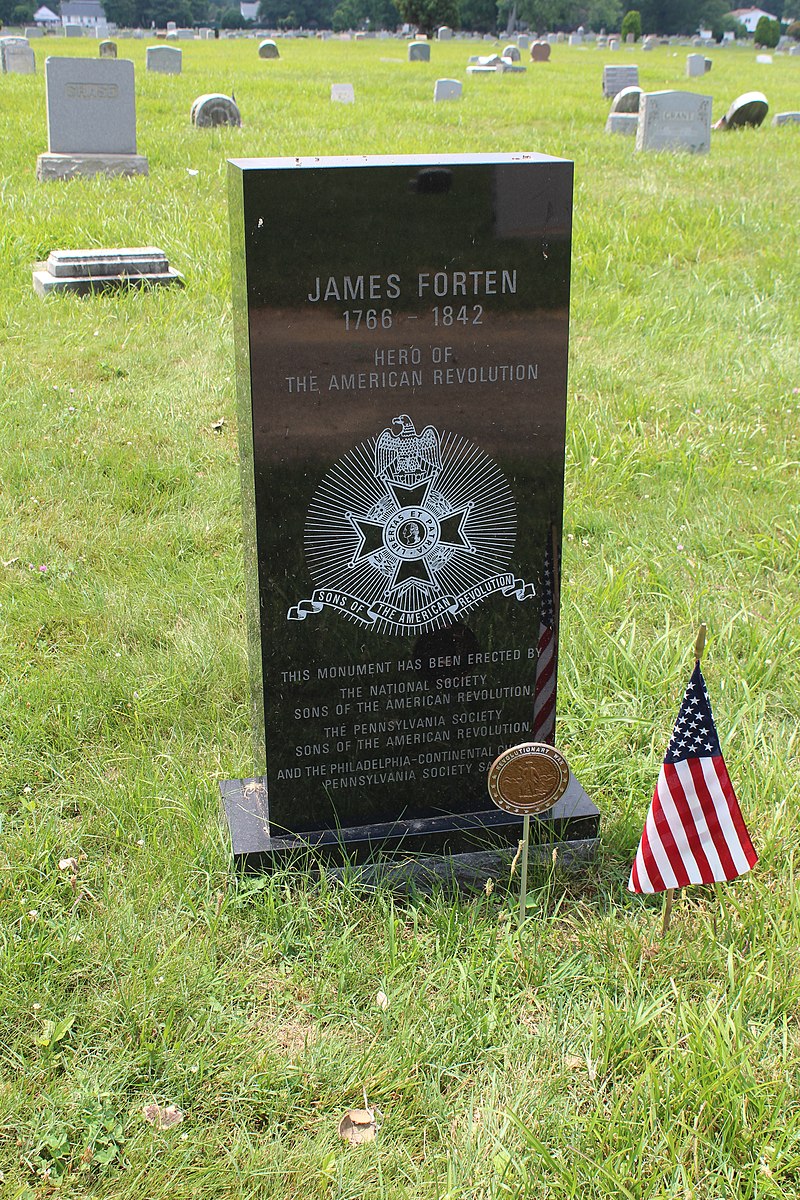
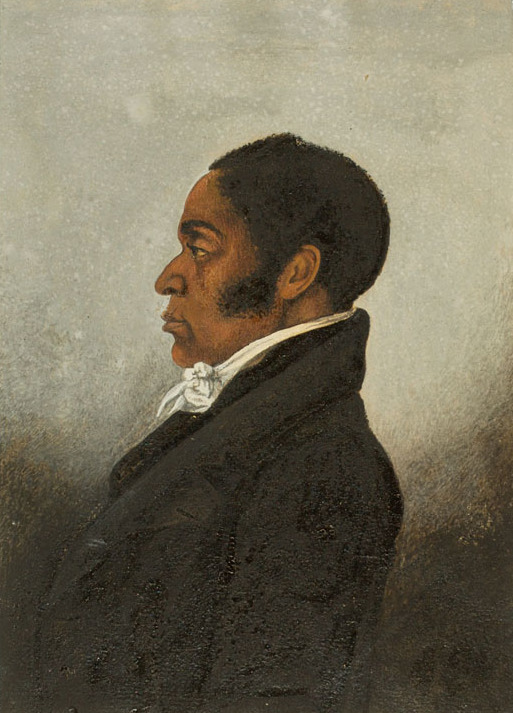
    Occasionally, there are uncovered lives of African Americans such as James Forten, considered one of the Founding Fathers of the United States. He was born a free American in Philadelphia, PA in 1766. At age 14, he joined the Continental Army and was a “power boy.” A powder boy carried gun powder from the ship’s magazine to the ship’s cannon. Following in the footsteps of his father, he became a sailmaker. He became his family chief sailmaker in 1798 after the death of his father.

    To return to the original concept of this blog, look for any opportunities of your ancestors to be located in the areas that Forten lived and visited. It is likely that your ancestors may have been in the similar line of work or even worked with Forten, or volunteered with his wife and daughters in their abolitionist activism.

    As an abolitionist who walked his talk, Forten chose to not work with any slave trade-connected companies and individuals. Forten was brave to adopt this business practice. However, as a man who was aboard a ship that was once captured by the British and he risked being sold into slavery, Forten withstood adversities and became a wealthy man who was also an active abolitionist. He designed and sold innovative sails that allowed ships to gain higher speeds, among other attributes. He was considered the prime sailmaker in Philadelphia and he employed African Americans and whites. He funded popular abolitionist publications and also endorsed his daughters developing the first interracial women’s abolitionist organization, Philadelphia Female Anti-Slavery Society.

    So popular was Forten in the abolition movement and as a top employer that upon his death at age 75, his funeral was attended by thousands. Were your ancestors among the mourners?