Category: Genealogy Group forms at Hillside International Truth Center
Hillside International Truth Center kicks off its Ancestral and Genealogical Research ministry. It is hosted by Good Genes Genealogy Services’ co-founder, Dr. Ann Lineve Wead Kimbrough
The last place many African Diaspora ancestors want to research is through the study of slave sales. The writing and imagery are sadly powerful in the historical accounts of financial transactions and public spectacles involving slaves.
Yet, the mostly oddly written newspaper advertisements and posters, often offer great clues to African American, Caribbean American, Native American and European Blacks’ genealogy and ancestry links.
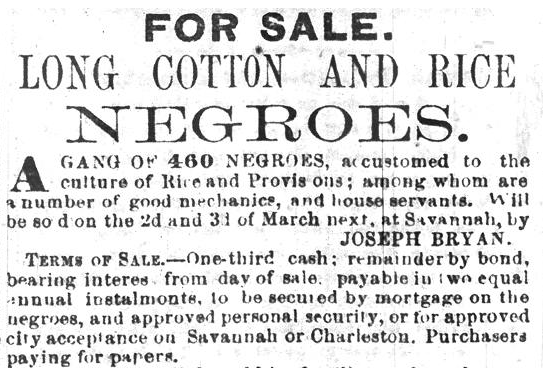
The best clues to tear down the “brick wall” research are found in the names on the ads by the slave owners. Their imprints are often with first and surnames and identities of their family members who would benefit from the sale. The ad below that was posted in the Savannah, Georgia newspaper in 1859, brought more than $300,000 in revenue for Joseph Bryan, whose name appears in the ad. That’s equal to more than $9 million in today’s dollars.
Also, the location of the sale helps to confirm the researchers are on the right track in identifying African Diaspora family members.
An advertisement published in The Savannah Republican on Feb. 8, 1859, by the slave dealer Joseph Bryan for a two-day auction that became the largest in history. Four hundred thirty-six men, women and children were sold for $303,850, equivalent to about $9.4 million today.(https://www.nytimes.com/interactive/2020/02/12/magazine/1619-project-slave-auction-sites.html)
The advertisements also include information that is helpful when comparing tax and estate records of enslavers and their sales agents. The ad below also includes a signature that is also important when ensuring the slave owners’ records including African Americans in bondage are accurately connected to genealogy documents.
The ad was published in 1851. In today’s economic terms, the $1,200 to $1,250 is equivalent to approximately $50,000 in today’s monetary terms.
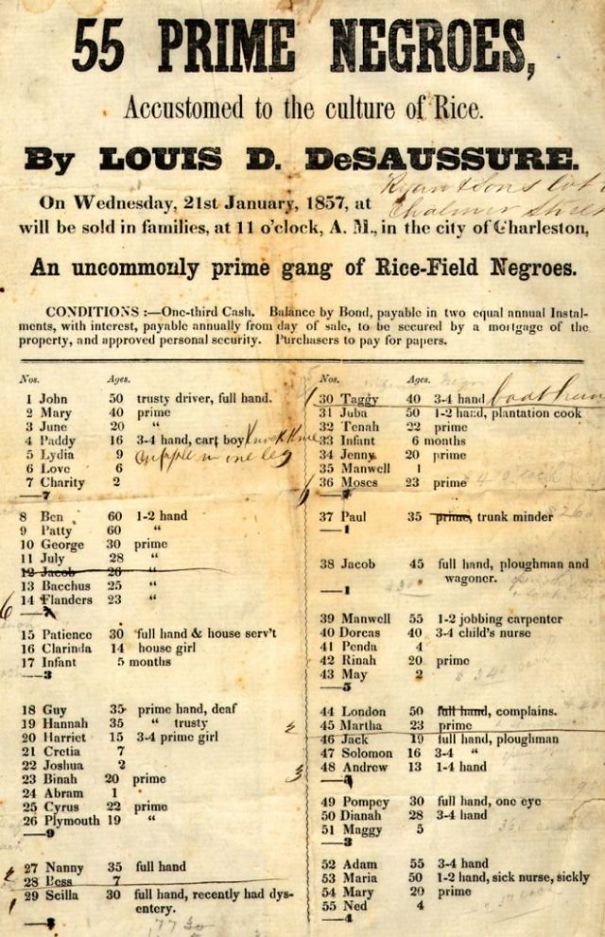
In some instances — albeit rare — slave owners listed the first names and primary trade or unpaid work purposes of the African Americans they owned. This helps African American genealogy, history and ancestral researchers identify legacy relatives. In our genealogy research, typically the slaves’ surnames were those of their owners.
This sale also indicates that the slaves would be sold in families. Sadly and happily, this was considered a huge benefit to the African American enslaved population.
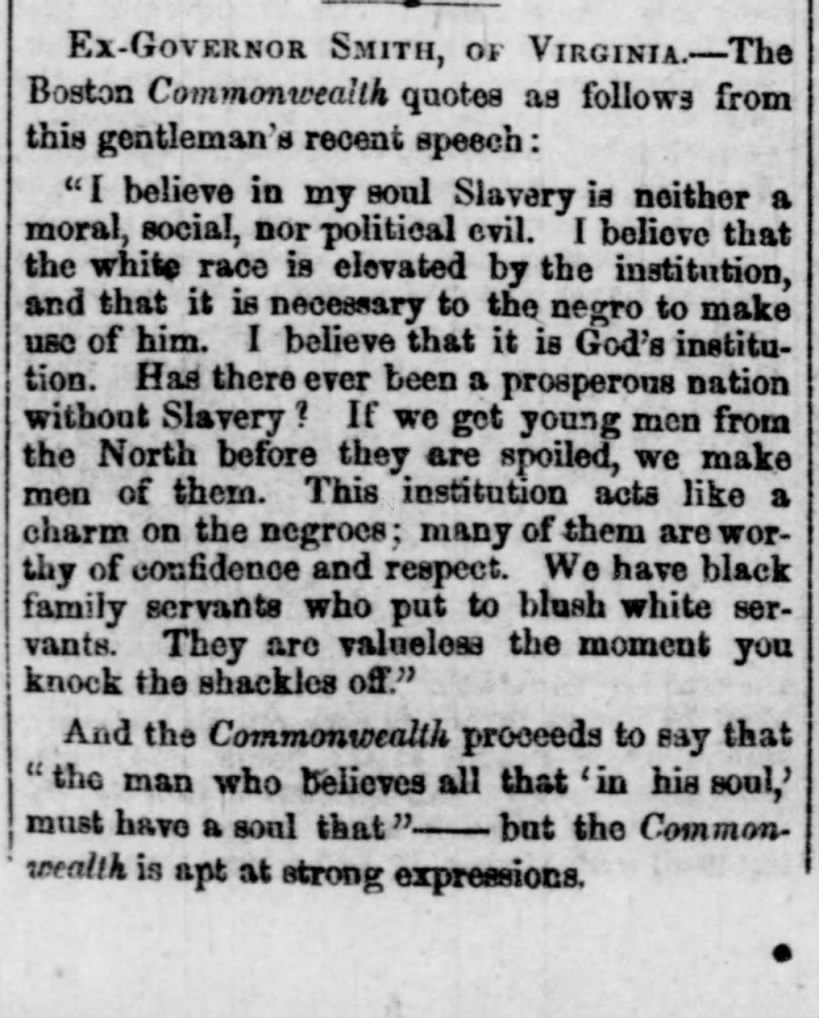
This newspaper clipping from a century+ ago is among the documents that mirror today’s comments from proponents of the rewritten history that slavery benefited African Americans.
To all ancestry researchers, search the newspapers for articles in the states where your ancestors resided. It is great insight in what policies and practices they endured while being subjected to the cruelties of forced, unpaid servitude.
Breaking through brick walls to learn more about your African American ancestors
Sampson Luster Wead, center facing to the right, at the Reed’s Ice Cream Shop boycott
The tall dude to the right of the protest sign is Sampson Luster Wead, the paternal grandfather of Ann Lineve Wead Kimbrough of Good Genes Genealogy Service. It is from Ann Lineve’s perspective that this blog is written about a man born on July 2, 1904 in Helena, Arkansas.
This picture appeared in the Omaha World-Herald newspaper on July 31, 1953. It included other photos including the one below that accompanied an article about the successful boycotting of a popular ice cream shop due to its blatant discriminatory hiring practices. I found the picture (above) of my grandfather a few years ago. What I learned today is that there were several articles and likely broadcast reports about this important protest and boycott.
Breaking through brick walls
In researching African Diaspora ancestry and genealogy, it is widely known that there are likely several brick walls that will be encountered. It is notable that in researching the facts around the Reed’s Ice Cream Shop protest, I learned three new and compelling things about my grandfather’s character and beliefs:
He held a great job at a local meat packing plant, yet was willing to risk it all to protest the lack of jobs available to Black persons at another employer. After all, his picture was in the newspaper and widely circulated.
Although he closely guarded his past that included his teenage years in Helena and Elaine, Arkansas, where costly racial killings occurred, my grandfather demonstrated that he was not afraid to stand up for civil rights.
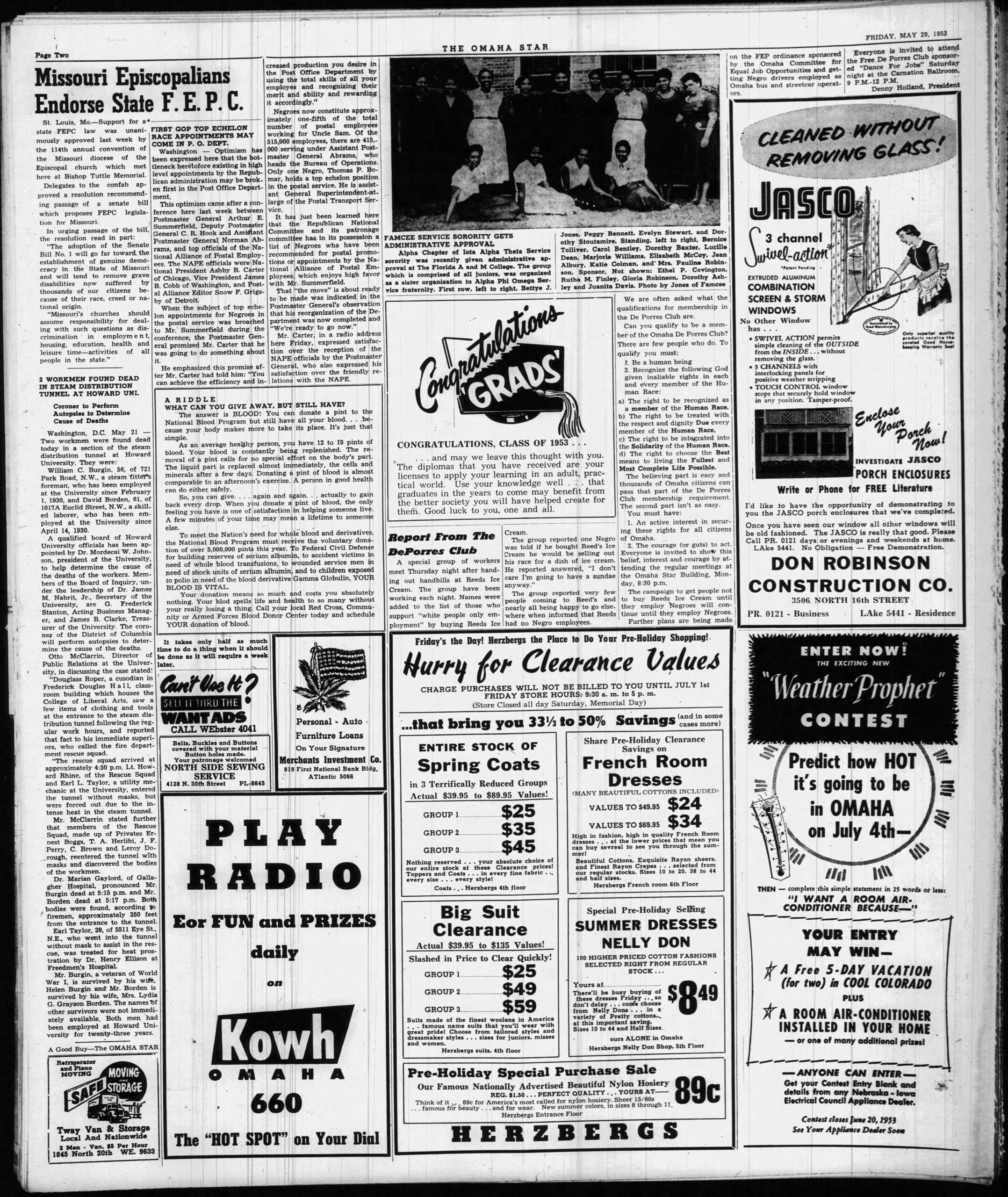
My grandfather was a member of the DePorres Club, an Omaha-based organization comprised of all races and heritages. Its purpose was to protest and bring about change in employment and civic practices that discriminated against persons because of the color of their skin and ethnic origin.
I learned about the DePorres Club’s purpose from the article found below from the Omaha Star newspaper. Just below the “congratulations grads” ad, is the article about the civil rights organization of the 1940s – today.
Encouragement for the ancestry and genealogy researchers
Keep researching your ancestors, even if you are covering the so-called same ground.
From the information that you unearth, ask the same and new questions of anyone in your family or institutions that may have more insight about the ancestors’ activities.
Cross check your new findings with local and national media reports found in historical clippings and broadcasts. You are piecing together the story about your ancestor that will greatly aid in your genealogy reports to family and importantly, to yourself.
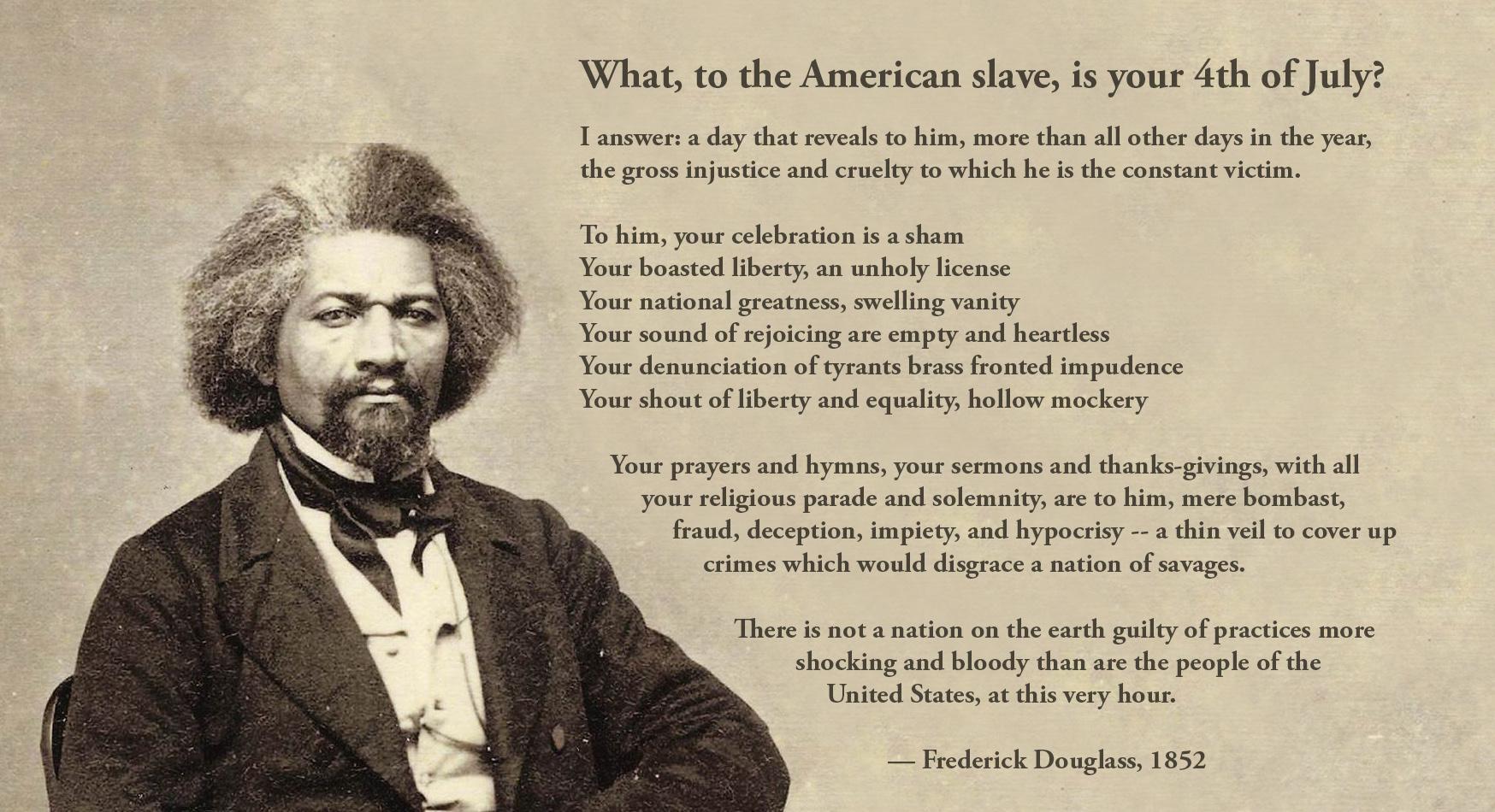
Abolitionist Frederick Douglass’s priceless speech on July 5, 1852 as depicted by James Earl Jones
He was photographed more than Mark Twain and President Abraham Lincoln. He was born a slave and gained freedom, the skills of reading and writing, became a journalist, photographer, orator, author, abolitionist, father, husband and so much more.
With his earned standing in the United States and worldwide abolitionist movement, Frederick Douglass’s words are heeded then and today.
This is a rush transcript. Copy may not be in its final form.
AMY GOODMAN: Today, in this special broadcast, we begin with the words of Frederick Douglass. Born into slavery around 1818, Douglass became a key leader of the abolitionist movement. On July 5th, 1852, in Rochester, New York, Frederick Douglass gave one of his most famous speeches, “What to the Slave Is Your Fourth of July?” He was addressing the Rochester Ladies’ Anti-Slavery Society.
This is James Earl Jones reading the historic address during a performance of Voices of a People’s History of the United States. It was co-edited by Howard Zinn. The late great historian introduced the address.
HOWARD ZINN: Frederick Douglass, once a slave, became a brilliant and powerful leader of the anti-slavery movement. In 1852, he was asked to speak in celebration of the Fourth of July.
FREDERICK DOUGLASS: [read by James Earl Jones] Fellow-citizens, pardon me, allow me to ask, why am I called upon to speak here to-day? What have I, or those I represent, to do with your national independence? Are the great principles of political freedom and of natural justice, embodied in that Declaration of Independence, extended to us? And am I, therefore, called upon to bring our humble offering to the national altar, and to confess the benefits and express devout gratitude for the blessings resulting from your independence to us?
I am not included within the pale of this glorious anniversary! Your high independence only reveals the immeasurable distance between us. The blessings in which you this day rejoice are not enjoyed in common. The rich inheritance of justice, liberty, prosperity, and independence bequeathed by your fathers is shared by you, not by me. The sunlight that brought life and healing to you has brought stripes and death to me. This Fourth of July is yours, not mine. You may rejoice, I must mourn. To drag a man in fetters into the grand illuminated temple of liberty, and call upon him to join you in joyous anthems, were inhuman mockery and sacrilegious irony. Do you mean, citizens, to mock me, by asking me to speak today?
What, to the American slave, is your Fourth of July? I answer: a day that reveals to him, more than all other days of the year, the gross injustice and cruelty to which he is a constant victim. To him, your celebration is a sham; your boasted liberty, an unholy license; your national greatness, swelling vanity; your sounds of rejoicing are empty and heartless; your denunciation of tyrants, brass fronted impudence; your shouts of liberty and equality, hollow mockery; your prayers and hymns, your sermons and thanksgivings, with all your religious parade and solemnity, are, to Him, mere bombast, fraud, deception, impiety, and hypocrisy — a thin veil to cover up crimes that would disgrace a nation of savages. There is not a nation of the earth guilty of practices more shocking and bloody than are the people of these United States at this very hour.
At a time like this, scorching irony, not convincing argument, is needed. O! had I the ability, and could reach the nation’s ear, I would, to-day, pour forth a stream, a fiery stream of biting ridicule, blasting reproach, withering sarcasm, and stern rebuke. For it is not light that is needed, but fire; it is not the gentle shower, but thunder. We need the storm, the whirlwind, the earthquake. The feeling of the nation must be quickened; the conscience of the nation must be roused; the propriety of the nation must be startled; the hypocrisy of the nation must be exposed; and the crimes against God and man must be proclaimed and denounced.
AMY GOODMAN: James Earl Jones, reading the words of Frederick Douglass.
‘Reconstructing the Black Archive’ Aims to Create a More Complete Picture of History in South Carolina
29 Jun 2023 9:22 AMAnonymous
Twenty-four scholars from across the country will spend three weeks in South Carolina, learning how to teach and tell a more complete picture of American history, thanks to a grant from the National Endowment for the Humanities.
“Reconstructing the Black Archive,” a summer institute run by Furman University and Clemson University, will send the scholars, most of whom teach undergraduate students, into churches, historical associations, museums and other sources to learn to recover missing, often intentionally buried, histories.
“These are vibrant sources that tell a history lost to many earlier generations. It’s exciting and thrilling to behold,” said Gregg Hecimovich, Furman professor English, who directs the institute with Furman’s Kaniqua Robinson, assistant professor of anthropology, and Clemson’s Susanna Ashton and Rhondda Robinson Thomas, both professors in the Department of English.
The scholars’ itinerary takes them to sources at Clemson University and the city itself, Columbia and Charleston where they’ll learn from a cast of expertsincluding archivists, literary critics, prize-winning authors, poets and historians, people who have forged the tools for reassembling the scattered shards of information that give a fuller picture of the past.
You can read more in an article by Tina Underwood published in the Furman web site at: https://tinyurl.com/hbxpt2ey.
We love freebies, especially when it helps our genealogy and ancestry pursuits. Here are a few great free workshops, seminars and other events:
Indexing for Beginners. It begins today, Friday, June 30, 2023 at 3 p.m. EST. Presented by St. George FamilySearch Center. To join a zoom class, do the following:
• Navigate to this webpage on the date and time of the class you would like to join (we recommend joining classes 5-10 minutes before they start to resolve any connection issues).
• Click on the red link: “JOIN CURRENT CLASS”
• From the screen that pops up select “Open Zoom Meeting”
>> DO NOT SELECT “Launch Meeting”
• Select “join with video” and “join with audio” when and if prompted to do so.
NOTE: Sometimes our schedules or instructors change so please check this site regularly for updates as well as for information & the link on how to join classes.
Introduction to Genealogy: Vital Records (Birth, Marriage, and Death) – CGS Free First Saturdays Program on Saturday, July 1, 2023. Presented by California Genealogical Society. It begins @ 1:00 PM EST. “Not sure how to get started with your family research? Interested in refreshing your skills? Our four-part series is ideal for getting started with genealogy or for advanced researchers to revisit principles of good research. Join us for a FREE Introduction to Genealogy class the FIRST SATURDAY of every month from 10 am – 12 pm. This is a four-session “Intro to Genealogy” class series. The first class offers an overview of genealogy research. Each of the next three sessions offers a more in-depth focus on the following topics: Census, Vital Records, and Organization. The classes may be taken in any order, and participation in one class is not required to attend others in the series. See below for dates and topics:
Jan 7, May 6, Sep 2 Genealogy Basics Overview
Feb 4, Jun 3, Oct 7 Using the Census
Mar 4, Jul 1, Nov 4 Vital Records (Birth, Marriage, and Death)
Apr 1, Aug 5, Dec 2 Organizing Your Family History Work
(July and September may be rescheduled due to the holiday weekends)
Note: Separate registration required for each session.
Always consult your government sources for free genealogy and ancestry help. After all, if you pay taxes, you’ve paid for these great services. Here’s one of my favorite, basic sites. The details are great refreshers for many of us. For the newbies to the vast research involved in tracing our ancestors, this U.S. National Archives site is terrific, albeit it appears to be complicated. Happy hunting!
That “old” family Bible with authentic inscriptions about births, deaths and other life events such as weddings and baptisms, will serve you well if you are seeking to get a passport yet do not have a birth certificate.
This Freebie Friday tip and more is available on the Good Genes Genealogy social media and our website by the same name. Go to our “Dig a Little Deeper” broadcast site.
Editor’s note: The first part of this blog was published on the Good Genes Genealogy sites two days ago. Here is the rest of the preview of our upcoming Juneteenth audiobook.
The Galveston Tri-Weekly News, which printed General Order No. 3 on June 20, 1865, the day after it was issued. Texas Newspaper Collection, Briscoe Center for American History, UT Austinhttps://www.battlefields.org/learn/articles/juneteenth
General Granger was assigned a difficult task that became worse for him after delivering the freedom message in Texas. According to historians, General Granger “became extremely unpopular among many whites in the state of Texas. He was blackballed and ostracized by many Whites, so much so, that after only six months in command of the Department of Texas, Granger was relieved of his command on August 6, 1865. On October 31, 1865, he was placed in command of the District of New Mexico.”
Texas came a long way from being the last state to recognize the Emancipation Proclamation to becoming the first state in 1980 to declare Juneteenth as an official holiday. With the determined, multi-year lobbying effort by famous Texan Opal Lee, in 2021, U.S. President Joe Biden signed into law the nation’s official holiday of Juneteenth.
Several miles north of Galveston near the Navasota River in Groesbeck, Limestone County, Texas, General Granger’s Order No. 3 reached the homestead. The Pleasant Retreat Plantation was owned by Logan Stroud, a slave owner who inherited the property upon the death of his father, Ethan. The father and son had acquired plantations that resulted in 5,000 acres used for raising cotton, corn, oats, wheat, hogs, sheep and it served as a ranch. At the time of Civil War, the younger Stroud was the largest slave holder in Limestone County, owning more than 100 slaves. It was recorded that he had 150 slaves on the day now known as Juneteenth.
On Saturday, June 19, 1865, in Limestone County, Texas, plantation owner Logan Stroud stood on the front porch of this house to tell more than 150 of his enslaved workers that they were free. | Photo: Historic American Building Survey. Library of Congress Prints and Photographs
Newly freed Blacks in Texas set the tone for celebrating the early days of June 19th with recognitions of their former lives and the memories of their loved ones who endured enslavement. However, there were some Blacks who thought the Juneteenth and Emancipation Day celebrations should put the awful days of slavery behind and instead, look forward with celebrations of hope and aspirations. During the years of Jim Crow, Juneteenth celebrations were confined to the Black communities from coast to coast in the United States.
The photos (see below) are from Mrs. Grace Murray Stephenson, a lady who recorded her June 19, 1900 day of celebration. She sold her diary to the San Francisco Chronicle, which printed her memories.
While awaiting the arrival of the Good Genes Genealogy’s Juneteenth audiobook, learn more about the June 19th holiday and the other “Black” holiday, August 1st. Check out our e-book that is available on all book buy sites.
The word came through an in-person delivered order from the United States Government on June 19, 1865
Years before the state of Texas received official notification that its enslaved people were free due to the U.S. Emancipation Proclamation, all other rebellious Confederate states complied with the presidential order.
U.S. Brigadier General Gordon Granger, Galveston, Texas, June 19, 1865
A month earlier, Confederate General Edmund Kirby Smith, commander of the Trans-Mississippi division, surrendered on May 26, 1865. Days later, on June 2, 1865, General Smith officially laid down his arms at Galveston. He immediately fled the country for Mexico and Cuba as General Smith was deemed treasonous for not following earlier orders to surrender.
While General Smith was slow to surrender his command in Texas, he was accompanied by his valet, a mixed-race slave who was owned by General Smith’s father and believed to be the military leader’s half-brother. Once free, former slave Alexander Hanson Dames, attended two historically black institutions of higher education and earned a degree as a medical doctor. Dames became a well-respected physician whose accomplishments earned him the first statue in Jacksonville, Florida that honored a black man. The statue is situated next to General Smith.
It was a long time coming for Blacks enslaved in Texas who were forced to endure two-and-a-half years more of plantation rules than their counterparts. The General document was welcomed by slaves, yet its last two sentences is deemed controversial by some historians:
“The freedmen are advised to remain quietly at their present homes and work for wages. They are informed that they will not be allowed to collect at military posts and that they will not be supported in idleness either there or elsewhere.”
Next, they marched to the 1861 Custom House and courthouse. The last reading of General Order No. 3 was at what was referred to as “the Negro Church on Broadway” that is known today as Reedy Chapel-AME Church4.