Blog

  • “Colored” farmer finds gold worth $604,000+ today

    Colored farmer find $16,000 buried in land in 1897 

    Today, its valued at $604,429.88. 


    Always keep searching for your ancestors and their stories. Here’s one about someone’s “colored” ancestor, D.H. Johnson, who was farming in February 1897. He hit hard ground while plowing a field near Hogansville, GA. He kept removing the layers of stone until he located what was estimated to be $16,000 in coins, including some from foreign soil.

    Today, that would amount to approximately $600,000 according to government calculations. (See above for new estimate). According to this newspaper clipping, Johnson placed the money in the bank. “…the theory is that whoever owned the money hid it out until some secure time, when they would look for it again” the article reported

    Updated takeaways for African American genealogy and ancestry researchers

    1. Don’t ignore your instincts, family talk over the years, and other signs that may lead you to a patch of land on the family farm. You may find ‘gold in dem hills.’
    2. Check out other governmental and non-governmental sites to search and hopefully find links to your ancestors’ financial assets. Check the Freedmen’s Bank, wills, probates, land records, employment records (look for pension information), taxes and church records. 
    3. Go for it. See #1 in this listing and trust your gut on where to begin your search for financial tracks to your ancestors. If that doesn’t work, contact us at @goodgenesgenealogyservices.com to get you going in the right direction. 


  • Reactions to discovering our roots

    Celebrity Activist shocked with her “Mayflower” ancestors while Canadian celebrates his Black ancestors

    We are all connected. Ongoing findings among the skilled genealogy and DNA researchers and amateurs, confirm such.

    The following two examples offer great hope to those who are steadfast in searching for the accurate stories of our ancestors.

    Finding her Mayflower roots

    Our favorite PBS show, “Finding Your Roots with Henry Louis Gates, Jr.” regularly features many genealogical surprises among its celebrity guests. A recent episode features well-known human rights activist, professor and author, Angela Davis. Among the startling findings for Davis is that her ancestral roots are traced to the original families who sailed to the early United States on the Mayflower vessel in the 1600s. The Mayflower travelers are attributed to slavery.

    Davis’ reaction to Gates’ revelation that was based on sound genealogy and DNA research by his team, went viral with more than four million views in the first 24 hours of the social media posts.


    African Roots found in Scottish Canadian

    From the Orillamatters.com service

    Paul Barber, also a photography hobbyist, from Ontario, Canada, was featured in a local newspaper article to discuss his maternal family, the Hendersons. He traced his family’s travel from Virginia to Canada. He referred to his brick walls as being “stuck in the mud” with his “three times great grandparents. That is, until he dug a little deeper. And deeper.

    Barber took the DNA analysis, and it yielded more results. That’s where he learned of his roots in Benin and Togo. It is the time and place where the African Slave Trade was recorded. He said that is how he began to take apart the brick wall, albeit he knew of his Scottish ancestors. It was at that point that Barber said he landed upon a scenario that “he was not fond of.”

    What he learned and how he used slower methods of research — regular mail — and current technology to locate his full story, is worth the time one will spend in his recent, hour-long talk. He speaks of the highs and lows of locating ancestors and learning how his family came to include Black people. “I have to know,” he said.

    Help for the amateur genealogy researcher

    The two examples provided in this blog are examples of the possibilities for amateur-to-professional ancestry researchers. Our pro tips:

    1. Develop a straight-forward, uncomplicated plan to conduct research.
    2. Follow Barber’s tenacity to stick with a plan to fully research your family.
    3. Wade through the valleys and hills.
    4. Celebrate all progress.
    5. Share, publish your results.

  • Honoring Lesser Known Women Ancestors

    In every family, there are countless examples of women who courageously and quietly endured emotional, physical, societal, financial and other pressures. Yet, their lives crafted our family legacies. We are grateful.

    To honor them during Women’s History Month, dig a little deeper in your family archives and in the public domain to share their stories of inspiration, even if it seems that they led so-called ordinary lives. To help you get started in honoring our female ancestors, here are a few extraordinary Black women’s stories.


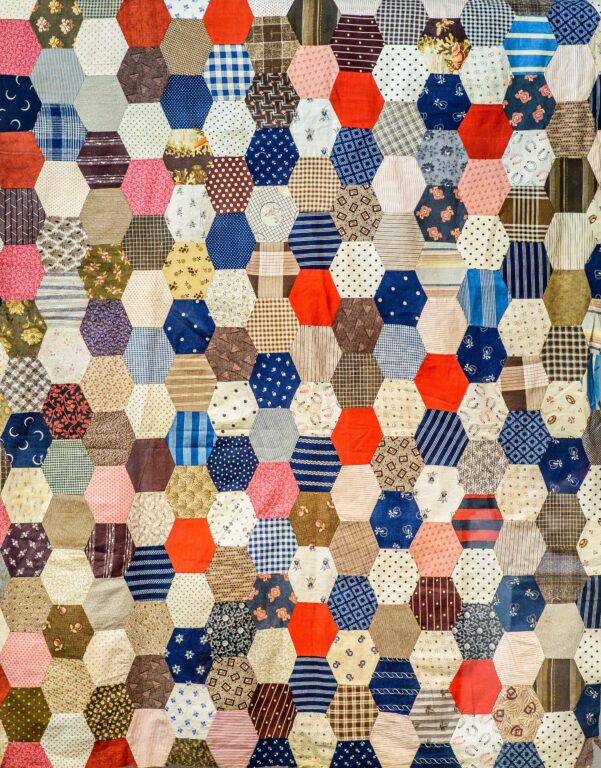
    Hanging in Chicago’s DuSable Museum is this quilt handcrafted by a former slave, Melvina Young.

    Hand-stitched quilt cover, late 19th century Ms. Young’s “work likely created this quilt cover as free person, having been emancipated after the Civil War ended.  Many enslaved people worked in the homes of the plantation owners.  A common domestic role was that of seamstress, and Ms. Young probably learned to sew and quilt while working in her owner’s Tennessee home.”

    Gift of Daisy Lewis in Memory of Melvina Young
    DuSable Black History Museum and Education Center


    Black women were vocal about atrocities of the post-Civil War and openly advocated for better health, educational, societal, family and living arrangements. Some of their compelling stories are found here.


    Stagecoach Mary is legendary in many historical circles.


    Violette Anderson: In 1926, she became the first Black Women who earned the right to argue before the U.S. Supreme Court

    Shown below in The Broad Ax newspaper (July 29, 1922). Courtesy Zeta Phi Beta Sorority, Inc.


  • $$$$s for your Genealogy Research

    $$$$s for your Genealogy Research

    Scholarships are regularly awarded to beginning to experienced genealogists. Here are a couple of great opportunities:

    Frazine K. Taylor African American Research Scholarship 

    The Frazine K. Taylor African American Research Scholarship (application due by 1 March each year) is open to anyone committed to expanding their knowledge of African American genealogical research.  See attachment for more information.
    BCG Paul Edward Sluby Sr. Scholarship for African American Students
    application deadline 15 March 2023
    .


    This new scholarship, provided by the Board for Certification of Genealogists (BCG), will be awarded to up to three African Americans “to participate in national genealogical institutes.” The award will “cover up to $1,700 of the tuition, travel, and lodging expenses.” The application requires an essay and a sample of genealogical research. Awards will be made in May 2023 and will be usable for 2024 institutes. To discover more about the scholarship and fill out the application, check out its website.

    The scholarship information is courtesy of Afro-American Historical and Genealogical Society, Inc. Metro- Atlanta Chapter www.aahgsatl.org

  • The DNA and Mental Health Benefits in Genealogy and Ancestry research

    Join us for the free, final weekend workshop

    The Good Genes Genealogy Services duo and Atlanta’s Hillside International Truth Center team up for the last weekend of the free genealogy workshops. The hour-long session is designed to inspire the beginners to seasoned genealogy researchers, and provide everyone with the tools to dig deeper into their families’ colorful histories.

    Join us, Saturday, Feb. 18, 2023!

  • How to interview your family members

    It’s tough to ask tough questions


    Have you ever wanted to ask questions of your relatives and backed away because it was not “a good time?” We have.

    It’s time to get busy. Grab a notepad, make sure your audio and video recorders are sufficiently stocked with new batteries, put on your listening ears and initiate your family research.

    It may be uncomfortable for some relatives to open us. That’s natural. Learning what to ask and who to ask questions of, are key to your success. Before you get knee deep in researching family history, make a list of your prospective interview subjects by simply asking, “do you mind if I interview you (or discuss with you) about our family history?”

    Once you get to “yes,” you are on your way to discovering the gems and rough spots in your family.

    How to handle interviews

    You should seek information from everyone in your family, friends, neighbors, clergy, co-workers of your loved one. Whoever is willing to open up and share, are great informants.

    1. Often the oldest person you can speak to in your family, is the best source for robust information about your loved ones.
    2. Daughters and sons of elderly parents are often great sources of information to aid in your genealogy research.
    3. Neighbors, cousins and other relatives of all ages are great sources of information. Our maternal great grandfather’s delayed birth certificates lists a relative and neighbor as informants for Eugene Gibson Owen, Sr. to obtain his official documentation some 56 years after his birth. See below:
    Great Grandfather Eugene G. Owen, Sr.’s delayed birth certificate from the state of Tennessee. He was 56 years old when received.

    Who should your interview?

    1. Ask your interviewees if they are comfortable being recorded by video and audio devices, or other means. Negotiate for your best mutual benefits.
    2. This is not the time to pretend you are Oprah Winfrey or another celebrated interviewer who may garner as much attention as the interview subject.
    3. Remember that some matters are touchy subjects. Be sensitive to the questions that may not immediately or ever yield you answers from the person(s) you interview.
    4. Be humble. Humility goes a long way in family discussions.
    5. Listen. Listen. Hear them. Listen. Don’t overtalk your interview subject.
    6. Do not judge their comments. Their comments may not agree with today’s understanding of similar situations. For instance, some of our relatives stressed the importance of being silent against stiff situations involving racist behaviors towards them. Some interviewers may prefer to speak up, or vice versa in such situations.
    7. Organization matters. Establish your goals in interviewing your loved ones through a series of inquiries you have developed out of natural curiosity and “things” you may have heard or been told through family grapevines.
    8. Be flexible. Your established goals to glean certain information may not be forthcoming. In some cases, you may have to adapt your interview collection methods to meet your relatives where they are. For instance, I provided one of my loved ones with the opportunity to record their story. He mailed the cassette recordings to me. I had to locate a cassette player to download the important family data.

    Schedule time to meet

    The more your relatives age, the more questions arise about what the loved ones know that can add value to your family’s history.

    1. Schedule a mutually convenient time to hold a virtual or in person meeting.
    2. The interviewer should make the request and establish the approximate length of the meeting. In person meetings tend to be longer than online meetings. Allow for the extra time.
    3. Plan for multiple meetings to gain a wide berth of information about your family.

    Location matters

    1. Where you meet is key to the success of the information you obtain.
    2. In person meetings should also be guided by where the interviewee wishes to dish out the desired family information.
    3. In some cases, the interviewer may wish to recommend the location for the discussion. For instance, I asked my father to take the most comfortable chair in my home to begin our series of discussions. My maternal grandmother preferred a lunch date. My maternal grandfather was confined to a skilled nursing facility. That’s where I retrieved, we spent three days discussing our family.

    What you should ask

    There are myriad of questions to ask your loved ones in anticipation of great information about your family. One half of the Good Genes Genealogy team — Ann Wead Kimbrough — is a career journalist who’s interviewed perhaps thousands of individuals.

    1. Start with the basics in questions and allow it to build from there. The basic questions are “who, what, when, where, why and how?” Samples of what to objtain from your planned family discussions are found on the information sheets that Good Genes Genealogy Services has provided via its Genealogy Store.
    2. The questions provided in our e-workbook that was designed for the two workshops held on Feb. 11 and Feb. 18, 2023 in partnership with Atlanta’s Hillside International Truth Center, are designed to get at the core of the results needed to effectively conduct genealogy and ancestry research.

    Interpreting results

    It’s time to edit.

    1. Download your interviews onto another device as soon after your interviews as possible. In journalism circles, we were encouraged to review our reporting and begin writing while the information “was still hot.”
    2. Add notations in the margins of your written notes, or highlight your online reporting, or mark the time codes on your broadcast recording equipment when key points are made.
    3. Check out the information that you obtained. It is easy to get addresses or street names incorrect by your informants. There are plenty of historical maps, street directories, church records, ancestry, governmental and other data available to check the facts.
    4. In some cases, check back with the informants after interviews to help clarify the matters discussed.
    5. Produce your results in formats that are comfortable with you and family members. There are several genealogy books, other guides and even family Bibles that are great sources of recording the information from your well-earned interviews.

    Happy researching!

  • Do not NAP on DNA results

    Ann Wead Kimbrough just received her updated DNA results. She is prone to take daytime naps. Or is she?

    Here’s what Ancestry.com found:

    Taking naps

    Ann Lineve Wead Kimbrough’s results

    Ann Lineve Wead Kimbrough, your DNA suggests you’re equally likely to be a napper or non-napper.


    Based on your genetics, you’re right in the middle—neither more nor less likely than average to take naps.

    Nature and nurture

    Your DNA affects whether or not you take naps, but your environment makes a bigger impact.


    Making the most of your naps

    If you’re a napper, keep it short—10 to 20 minutes is likely all you need. Longer naps can leave you groggy. To avoid nighttime wakefulness, end your naps before 3:00 in the afternoon.

    Napping can curb your appetite

    Missing out on sleep can make you feel hungrier. So taking naps can help you avoid overeating (especially if you nap through dessert).BACK TO SURVEY

    Discover more

    Tell us about yourself and your family through some simple survey questions. They’re fun and easy to answer.

    Your responses help to improve our products, such as your ethnicity estimate and Traits, and to develop new features, which we hope will bring you a deeper understanding of yourself and your family connections.

    We may also share aggregated responses, to give you insights into how your answers compare to others. You can always change or delete the responses on this page. Learn more.

    Your answers may also be used for scientific research if you agreed to our Informed consent.OK, got it.

    Discover more traits

    • NEWMorning or night person
    • Remembering dreams
    • Risk taking
    • Omega-3
    • Vitamin B12

    Compare traits

    See which traits are unique to you and which ones you share with your DNA matches.

    Find out

    Genetics & other factors

    What affects whether you’re a napper?

    Genetics

    Ancestry scientists found a lot of DNA markers (over 46,000) connected to taking naps. Some other markers may play a role too.

    Environmental factors

    People whose schedules require them to rise early tend to take more naps–as do folks whose nighttime sleep is interrupted. And of course, having a daytime schedule that allows for naps makes napping possible in the first place.

    What is my result based on?

    Your result is based only on your DNA. We compared your DNA to the DNA of more than 650,000 people who answered the question, “Do you take naps?” The large number of responses makes the data reliable. This test has no medical purpose. Nothing in this report is a diagnosis of a health condition or medical disorder. This report is not a substitute for medical advice. Before making any lifestyle or dietary changes, or if you have any questions about how your genetic profile might relate to your health or wellness, please contact your healthcare provider.

  • From the Philly Voice: “Contributions of Black, Indigenous soldiers detailed in new collection at Museum of the American Revolution”

    (Thank you, maggie@phillyvoice.com for this great article)

    Nearly 200 historic documents are being digitally archived for public use. Several are on display as part of the Black founders exhibit, including a discharge paper signed by George Washington

    PROVIDED IMAGE/MUSEUM OF THE AMERICAN REVOLUTION
    The Museum of the American Revolution is partnering with Ancestry to digitize its Patriots of Color archive, which features nearly 200 rare documents bearing the names and stories of Black and Native American soldiers who served in the Continental Army during the Revolutionary War.

    Excerpts

    The Patriots of Color archive will be fully digitized and made available online at no cost to the public thanks to a partnership with the genealogy website Ancestry, museum officials said Friday. The Old City museum acquired the documents in 2022 from a private collection, following contributions from several donors.


    “At least 5,000 men of color fought in the Continental Army, but their stories aren’t as known as they should be,” said R. Scott Stephenson, president and CEO of the museum. “This archive allows us to explore the extraordinary lives of men who helped to secure independence, yet who have not received the recognition they deserve as American Founders. We are thrilled to have the opportunity to partner with Ancestry to share these rich human stories with the world.” 


    The documents include Continental Army records related to Jeffrey Brace, who chronicled his life from enslavement to freedom in the 1810 memoir “The Blind African Slave.” 

    Brace, born in Africa, was not seized by enslavers until he was about 16 years old. He was shipped to Barbados, where he was treated brutally by an English seaman. He fought in the Seven Years War and was purchased by “widow Stiles” in Woodbury, Connecticut in 1768.

    The widow taught Brace to read, and he served in the Continental Army. After being discharged in 1783, he was freed by Stiles’ son. His nickname — Pomp London — appears on several documents in the archive. Several years ago, Rhonda Brace, one of Brace’s descendants, visited the home in Woodbury and the descendants of the family that once enslaved her grandfather, six times removed. 

    “They actually brought us down, my dad and I went — my mother wouldn’t go — we went down to what they believe were the slave quarters in the house,” Brace said. “That was very, yeah … But it was something just to be on the property.” 

  • Key to breaking “brick walls”: Ancestry and genealogy information collectors

    Some genealogy and ancestry guides and books used by GGGS’ Ann Wead Kimbrough for her research.

    Get forms for family research

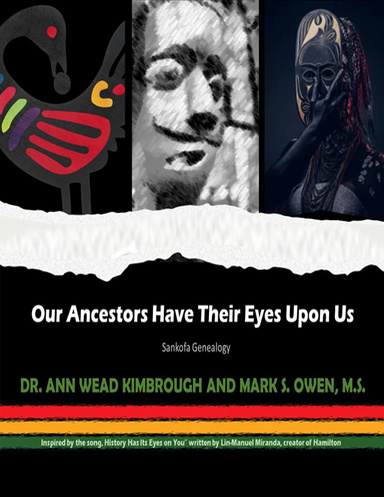
    Go to the Good Genes Genealogy Services website and utilize the forms that we made available especially for participants in our two-part Sankofa Genealogy workshop in partnership with Hillside International Truth Center.

    Since the first workshop on Saturday, Feb. 11, 2023, several participants have telephoned, texted, emailed and visited their relatives to gather information needed for their individual family searches. It is healing and helpful for your family and friends to discover their histories.

    Way to get the book?

    1. Go to Good Genes Genealogy Services‘ website.
    2. Then go to the Genealogy Store link.
    3. Select e-book.
    4. Customer information will be available to be populated for completion of the $5 workbook.

    Thank you!

    Please join our Hillside family in this month’s Sankofa activities and fellowship.