Blog

  • How the passing of ancestors brings us life

    Black Genealogy research requires attention to obits, homegoings and surviving family members

    Camden, Tenn. – About 340 miles northwest of Atlanta, lies a small community with a big heart that was originally named “Tranquility.”  The community counted as one of its more than 3,000 residents a special lady, Delia Mae Tharpe, mother of Dr. Jack L. Bomar, Executive Bishop/Senior Pastor of Atlanta’s Hillside International Truth Center.

    Ms. Delia, as many called her, was funeralized on the third Saturday of January admist a mountainous cool afternoon. It would have been an ordinary “homegoing” service, except Ms. Delia was anything but ordinary. Her extraordinary life on earth for 81 years is one for the history books.  I barely knew Ms. Delia, meeting her perhaps once. Yet, nearly 55 persons, including my mother, Angeline Wead and me, traveled five hours each way to share with hundreds of others to celebrate the life of this lady.

    What caused us to travel early on Saturday morning and return late that evening, is what I will share later in this blog.

    Delia Mae Tharpe, September 28, 1941 – January 14, 2023


    Just one day earlier, was the funeral for my maternal cousin, M. Madeline Wilks Matthews, who I’ve known all of my life. Her service took place in St. Louis, Missouri. My mother was the eldest cousin to Madeline. I was asked to write her obituary, which was delivered to her church secretary with all the love and care that I could deliver. Madeline was a bright light who was on this earth 93 years.

    Margaret Madeline Wilks Matthews, Aug. 30, 1929 – January 7, 2023


    The lives of Madeline and Ms. Delia were different and yet there were a few similarities. Both ladies lived full lives, sang in their church choirs, held many positions in church leadership, and each worked more than four decades in their respective fields. Madeline did not have children; while Ms. Delia bore nine children and had many grandchildren. Madeline was active in politics and in her retirement years, she gained additional education and served as a substitute teacher and paraprofessional in special education.

    In short, I am proud of Madeline’s accomplishments that began in her college prep Omaha Central High School years where she excelled in academics, music, other creative endeavors, and as student government leader. As a young high school graduate, she was denied employment in her hometown because she was Black. That’s why she ventured south of Nebraska to Missouri where she lived the next nearly 80 years and endured the sadly typical ups and downs of trailblazing, independent thinking and working women.

    Ms. Delia’s life couldn’t have been easy by usual, societal measures. She was a “dedicated and hard worker for more than forty-three years at Henry I. Siegel, ‘the H.I.S. factory’ in Bruceton, TN as a press operator,” according to her obituary.  She bore nine children and raised them in humble conditions with such love, leadership and purpose as shared with laughter, sympathy tears and memorable message.

    Her life was inspiring as experienced by hundreds in the near standing room-only chapel where the roomful of upright flower displays served as fragrant reminders of the depth of her influence in this hamlet of about 3,000 residents within 5.7 square miles of the Tennessee hills.

    So impactful was Ms. Delia’s life that a young lady who was seated behind me said that she attended the service even though she lived in the area, yet did not know Ms. Delia “that well.” Eula Eikerenkoetter, widow of the late, popular minister, “Rev. Ike,” was there. So were several messages of condolences in the form of proclamations and recognitions that included many Atlanta City Councilmembers.

    A guide for genealogy researchers

    Family genealogists can learn many lessons from our new ancestors while honoring their time on this earth and their vibrant spirits. The obituaries, the services are the beginning of sharing the legacies of the families. Usually, many blanks are filled in that often break through the typical brick walls found in Black ancestry pursuits.

    Tips:

    1. Ensure the obituaries are well-researched and well written. Many eyes are on the obituaries. Besides family and friends, other entities utilize the information for legal, government, insurance, retirement, military (if applicable), social and community purposes.
    2. The best way to achieve the best written obituaries is through preparation that is based on accurate written and oral information.
    3. When written and oral background is provided for the deceased loved one, engage at least one friend or family member to edit and fact-check. This is not the time to worry about whether anyone has hurt feelings about fact-checking another’s input. This is about getting things right for the legacy of the individual and accuracy for larger purposes.
    4. The way the services are rendered are usually the best examples of how persons lived. Take notes.
    5. During the service, the songs that are sung, the scriptures that are read and the officiants are all indications of the best parts of the deceased lives.
    6. Meet the persons who spoke at the services. At minimal, offer condolences to them as well as the family members. As a maximum benefit for the family researcher, politely seek more information from the individuals either after the service or another time.
    7. The burial or final resting places provide additional insight into family histories. My cousin, Mark S. Owen, partner in Good Genes Genealogy Services, often teases me that I am fixed on cemeteries and death certificates. It is for good reason. There are details such as health information and other bits of information that can benefit the living from the official documents. At cemeteries, I walk the grounds, especially if the recent ancestors are placed in family plots. There are often other clues about our extended families and friends based on surnames and first names found on the cemetery markers.
    8. After receiving new and/or best information, please record and update family records. Family members deserve vibrant and verified information. Studies show the positive mental and spiritual health benefits from individuals learning more about loved ones.
    9. Step back a few times during this process and reflect on how you feel during the process. Often Mark and I take time to release and “breathe” to ensure that our emotional health is intact. Researching, updating and engaging in this process is sometimes taxing for individuals.
    10. Celebrate the lives of our ancestors. They deserve our respect, understanding and accurate depictions of their lives.  
  • Free worksheet to uncover the hard-to-find, brick wall family information

    One of the best, free worksheets to conquer brick walls in Black genealogy searches is found in the easy-to-access and free databases of the National Archives.
    This worksheet is different from the family tree form that was recommended on this site via our post on Thursday, Jan. 12, 2023. Both forms — the family tree and individual family worksheets — provide a great start to the New Year.

    Photo by Thirdman on Pexels.com

    The worksheet is a big help.

  • Family genealogy check up and checklist

    Family genealogy check up and checklist

    The beginning of 2023 is a great time to utilize the free genealogy resources from the National Archives. It is the family group sheet and ancestral chart.

    Photo by August de Richelieu on Pexels.com
  • The forgotten stories of “Black Magnolias” from Oakland Cemetery

    First in a series

    Jihan Hurse, guide, Atlanta, GA.’s Oakland Cemetery’s “Black Magnolias” tour


    Atlanta, GA — On a chilly Saturday winter morning, Oakland Cemetery’s “Black Magnolias” Tour Guide and Author Jihan Hurse, excitedly gives highlights of the Black women who lie among its 70,000 “residents” in the city’s historic cemetery.

    The hour allotted for the tour was not enough time for all of the stories about accomplished Black women who are buried in Oakland Cemetery. Yet, the Black Magnolias tour was a refreshing collection of insight into the lives of Black women who were quiet and major influencers in the Atlanta region, Georgia and nationwide. Along the multiple paths laden mostly with bricks from days gone by, there were periodic stops at the chosen grave sites of many women who were doctors, lawyers, entrepreneurs, mothers, wives, educators and skilled technicians.

    The Black Magnolias story at Oakland Center is grounded in the fortitude of laundry or washerwomen whose citywide protest resulted in violence, arrests, intimidation and ultimately, a major victory for the Black women who refused to return to work unless their financial and work life demands were met. Their well-organized strike involved some 3,000 Black laundresses and it nearly imperiled the 1881 World’s Fair in Atlanta.

    Former slaves strike for better pay and work conditions in 1881.


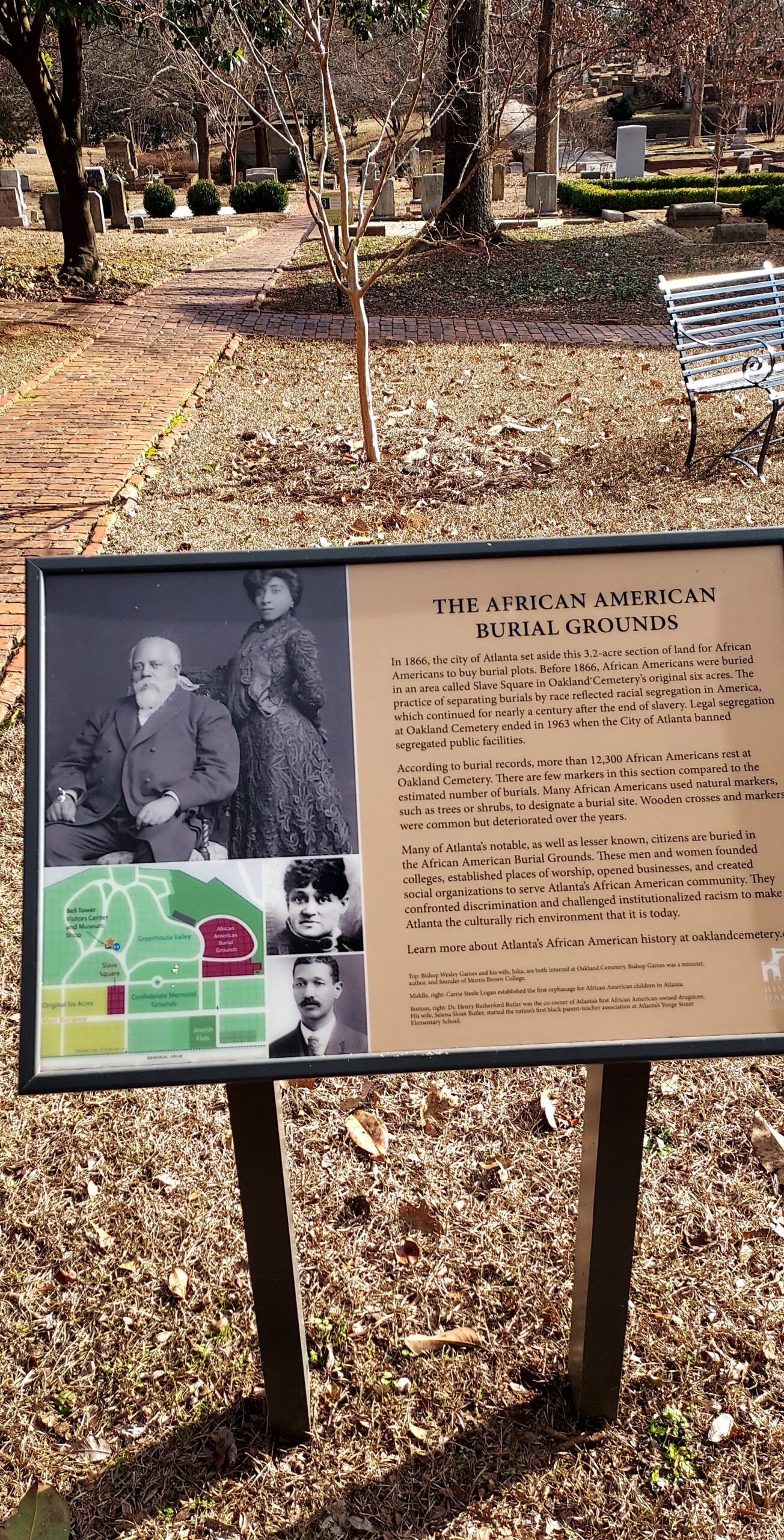
    While praising the domestic workers’ brave and labor market altering stance, Hurse strategically showcased other Black women whose legacies are integral to the success of the Atlanta area, Georgia and the nation. Despite the achievements that stretch beyond racial and geographical boundaries, most of the 12,000 African Americans — including approximately 1,800 slaves — are buried at Oakland in segregated sections known as the African American, Slave and Potters sections.

    There are also exceptions to the burial rules of segregating whites, Blacks and Jewish deceased persons from one another. When whites sought permissions to move the burial area initially designated for Black slaves, the graves were moved to the back of the cemetery. Some natural markers such as stones and sticks were not preserved. When that relocation was completed, some families such as the Boylstons asked for an additional set of permissions and that was to bury their “domestic worker,” Catherine Holmes, alongside their family members, according to Hurse. Elise Boylston had a special fondness for “Caty” and the young Boylston lady authored work that included her slave. By the 1960s, Blacks were not segregated to one area or two areas of the cemetery

    The grave marker for “Caty” Holmes, a “domestic worker” in the Boylston household, is left. This is a partial view of the extensive Boylston plot in the former Slave section of Oakland Cemetery.


    A dozen other Black Magnolias were pointed out by Hurse as significant based on a range of qualities such as the first Black lady buried in Oakland Cemetery, to the sisters who established the first hospital with 15 beds that was available to Black patients.

    Below is the grave site of Estella Henderson was an attorney, an author of books on race relations and was recognized by U.S. President William Howard Taft. Her sister, Dr. Blanche Beatrice Bowman Thompson, was a doctor whose practice pioneered specialty work for Black medical professionals in Georgia.


    Future blogs will highlight the historical women of Oakland Cemetery. For those interested in the many stories of the Black men and women buried in Oakland Cemetery, the virtual tour is found through this service:

    Good Genes Genealogy Services encourages readers of this blog to investigate similar historical stories in cemeteries that bear great stories such as those found at the Oakland Cemetery in Atlanta.


    The 48-acre cemetery that is also considered a city park. The Oakland Cemetery Foundation conducts several tours each year, including a handful devoted to honoring Black history and women’s history.


  • Check out this wonderful Black genealogy program

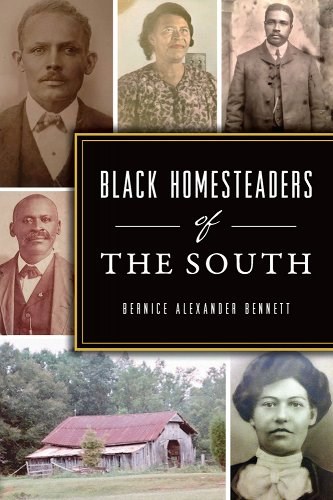
    Black Homesteaders of the South with Bernice A. Bennett

    On Saturday, February 4, 2023, 12 – 1:30 PM, the African American History and Culture Museum will host its African American History and Culture Event.

    It will be held on the Concourse, Oprah Winfrey Theater + streaming

    It’s free. It’s also recommended that you get tickets or register at www.etix.com.

    Join genealogist Bernice A. Bennett who will uncover the stories of African American families who became landowners through the Homestead Act of 1862 from her latest book Black Homesteaders of the South. Bennett’s work is a modern story of black genealogists who networked through a Facebook page to trace the footsteps of their ancestors in Alabama, Arkansas, Florida, Louisiana & Mississippi. Find out how these families navigated the application process through the federal government, and what this legacy means for their descendants today.
    Bernice Alexander Bennett is an award-winning author, genealogist and host of Research at the National Archives & Beyond BlogTalkRadio program. Her genealogical interests focus on Southeast Louisiana and Edgefield and Greenwood Counties, South Carolina. Bennett is an author and contributor to 2 award winning genealogy books including Our Ancestors, Our Stories and Tracing Their Steps: A Memoir. A New Orleans native, Bennett is a volunteer with the Homestead National Historical Park Service identifying descendants of Black homesteaders to share their stories.
    Black Homesteaders of the South with Bernice A. Bennett
  • Celebrating January First … African American style

    Celebrating January First … African American style

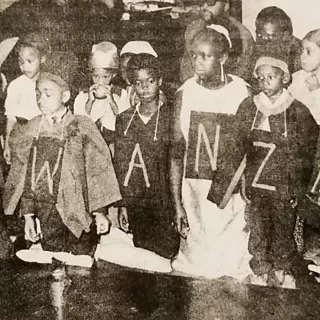
    First Kwanzaa December 26, 1966,Photo donated to BBC by Terri Bandele, pictured on right.

    “What do the Africans do?” That is the question asked by a then-young girl, 11-year-old Terri Bandele, who was among the first families celebrating the first Kwanzaa celebration from Dec. 26, 1966 – Jan. 1, 1967. Her question and the organized determination of Dr. Maulana Karenga, Bandele’s parents and others, led to the creation of Kwanzaa, the pan-African and African American holiday that honors the “matunda ya kwanza” that means “first fruits” in Swahili.

    Kwanzaa arrives December 26th — the day after the traditional Christmas Day — and culminates January 1st. It does not compete or replace any holiday, according to Dr. Karenga and many organizers. Nor does it compete with a longstanding January 1st celebration for U.S. Blacks and that is Jubilee Day.


    Central to Kwanzaa’s purpose is its celebration among family, friends and communities. Today, millions celebrate Kwanzaa and its seven strong principles:

    • The seven principles, or Nguzo Saba are a set of ideals created by Dr. Maulana Karenga. Each day of Kwanzaa emphasizes a different principle.
    • Unity:Umoja (oo–MO–jah)To strive for and maintain unity in the family, community, nation, and race.
    • Self-determination: Kujichagulia (koo–gee–cha–goo–LEE–yah)To define ourselves, name ourselves, create for ourselves, and speak for ourselves.
    • Collective Work and Responsibility: Ujima (oo–GEE–mah)To build and maintain our community together and make our brother’s and sister’s problems our problems and to solve them together.
    • Cooperative Economics: Ujamaa (oo–JAH–mah)To build and maintain our own stores, shops, and other businesses and to profit from them together.
    • Purpose: Nia (nee–YAH)To make our collective vocation the building and developing of our community in order to restore our people to their traditional greatness.
    • Creativity: Kuumba (koo–OOM–bah)To do always as much as we can, in the way we can, in order to leave our community more beautiful and beneficial than we inherited it.
    • Faith: Imani (ee–MAH–nee)To believe with all our heart in our people, our parents, our teachers, our leaders, and the righteousness and victory of our struggle.

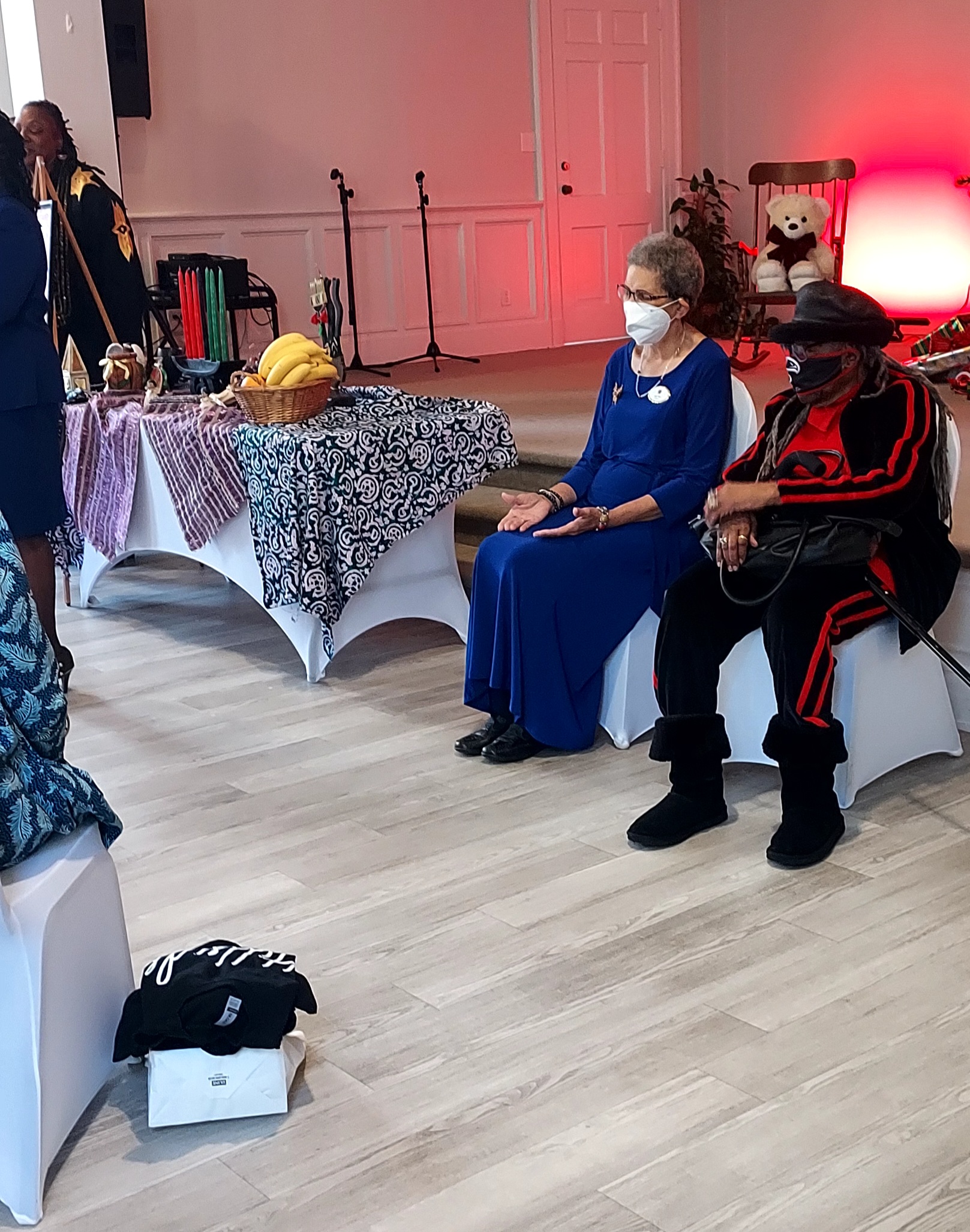
    At Atlanta’s Hillside International Truth Center, Executive Bishop/Senior Pastor, Dr. Jack Bomar, led the church celebration on Jan. 1, 2023, in honor of Kwanzaa’s final day. “We are gathered to celebrate our heritage and honor the spirit our ancestors,” said Bomar while pointing out the symbolic “first fruits” placed on the tables in the church’s smaller chapel. The King Chapel as it is known in honor of the church’s founder, Dr. Barbara Lewis King, was filled to capacity.


    Hillside International Truth Center’s Kwanzaa celebration with first fruits, elders in prayer.

    Jubilee Day. It began as a tradition of celebration on New Year’s Day 1863.

    Reading of the Emancipation Proclamation. Courtesy of the U.S. National Archives and Records Administration.

    The U.S. Government produced a booklet in December 1862 and it was ordered to be distributed by Union Soldiers to Blacks. It speaks of slavery as the “cornerstone” of tragedy.


    Nearly two centuries ago, the historical depiction showcases the “jubilee” former slaves felt after their freedom was granted through the presidential act.


    Today, church ceremonies such as the NAACP and Roaoke, Virginia community hold a commemorative service in honor of Jubilee Day.

  • Grandmas’ hands creatively cooked cuisine in Nebraska kitchens

    Grandmas’ hands creatively cooked cuisine in Nebraska kitchens

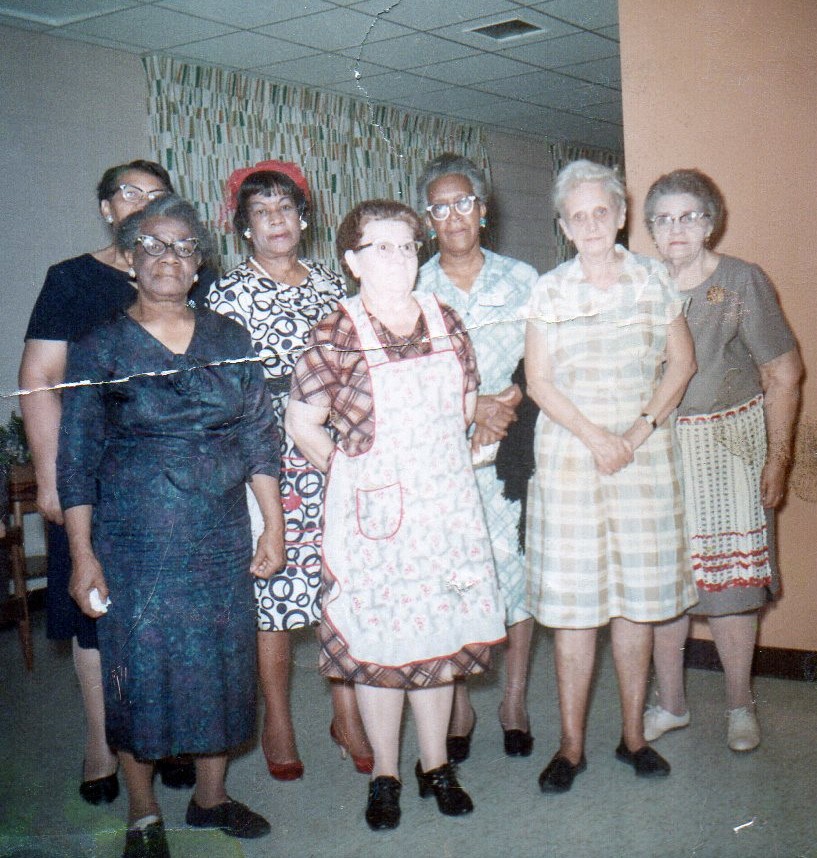
    The Good Genes Genealogy team share maternal grandmothers. We benefited from tasty treats and meals from our Great-Grandmother Edna Wilkes Robinson, and equally great dinners and gatherings at the home of her daughter, our Grandmother Helen Wilkes Owen Douthy.

    Grandma Edna Robinson, third from left, and her best buddies in the church and Evans Tower kitchens.

    Grandmother Robinson, third from right

    In honor of the New Year, our thoughts and gratitude are in honor of both grandmothers’ traditional dishes of “hot water” corn bread, black-eyed peas, mixed greens, ham, goose or another poultry item, and the best desserts.

    In addition, our respective paternal grandmothers cooked up their best foods for us to celebrate January first as Jubilee Day. Jubilee Day or Emancipation Day celebrations for Black Americans used to be singularly celebrated on the first day of each year. However, the years since our childhood have yielded the progressive movements for Juneteenth — June 19th — to become a national holiday and as such, also share in the honors of being known as Jubilee Day.


    Yet, it was Grandmother Robinson’s chosen profession as a cook in some of Omaha Nebraska’s nicer hotels and in the white households that brings forth an added reference during this time of year. She rarely spoke of her work outside of her home or what we could witness each week at our home church, Clair United Methodist Church. There, Grandmother Robinson “owned” the massive kitchen that was equipped with multiple ovens with large enough spaces to cook meals for the entire church families and members of our near northside Omaha community.

    Grandma Robinson had great command of everything from recipes to the table setting etiquette. Often, she would bring in the perfectly ironed and folded table cloths for coverings on the main table for our pastor, his family and special guests, as well as the families whose children would often leave red stains from spilled sweet punch that often was laden with thin pineapple chunks and ice cream.

    From Grandma Robinson, I learned the term “soul food” that was derived from the slave households where leftovers — food often discarded — made it to the tables where pig feet, ears, cow brains, hogshead cheese, chitterlings and other scraps were the main dishes. Grandma Robinson never spoke of slavery or Africa while cooking her delicious and abundant dishes. However, her references to foods such as sweet potatoes, corn meal and other grains that were beaten into powdered substances and mashed into its finery, were clear references to the cooking styles of African families and Black slave heritages.


    To the lady who taught us how to fold napkins and where to place them on the table, how to use a ladle to dip the right amount of punch into the crystal etched cups, how to serve others at the kitchen window or at the covered folding tables, thank you. To the lady who taught us how to anticipate when the hot rolls were done in ovens where the temperature and alarm gauges did not always work, how to best wash the dishes and dry them and replace them in the proper way, thank you. To the charming little lady who often wore her cooking apron, thank you for teaching me how to make coffee, tea and how to shine those beautiful silver pots.

    Thank you, Great Grandmother Edna Wilkes Robinson’s hands, from our family.

    We are sure that you have similar stories. Share them.

    Happy 2023!

  • Christmas is the reason for the season of escape for the enslaved

    Christmas is the reason for the season of escape for the enslaved

    No matter how scarce the food, clothing and other resources, our enslaved Black ancestors found ways to celebrate Christmas.

    Reverend John Wright was a Presbyterian minister active in Cumberland County, Virginia, during the 1760s. On the Feast of the Epiphany, 1761, he wrote to several benefactors in England describing the following Christmas scene: “My landlord tells me, when he waited on the Colonel [Cary] at his country-seat two or three days [ago], they heard the Slaves at worship in their lodge, singing Psalms and Hymns in the evening, and again in the morning, long before break of day. They are excellent singers, and long to get some of Dr. Wattss Psalms and Hymns, which I encourage them to hope for.”


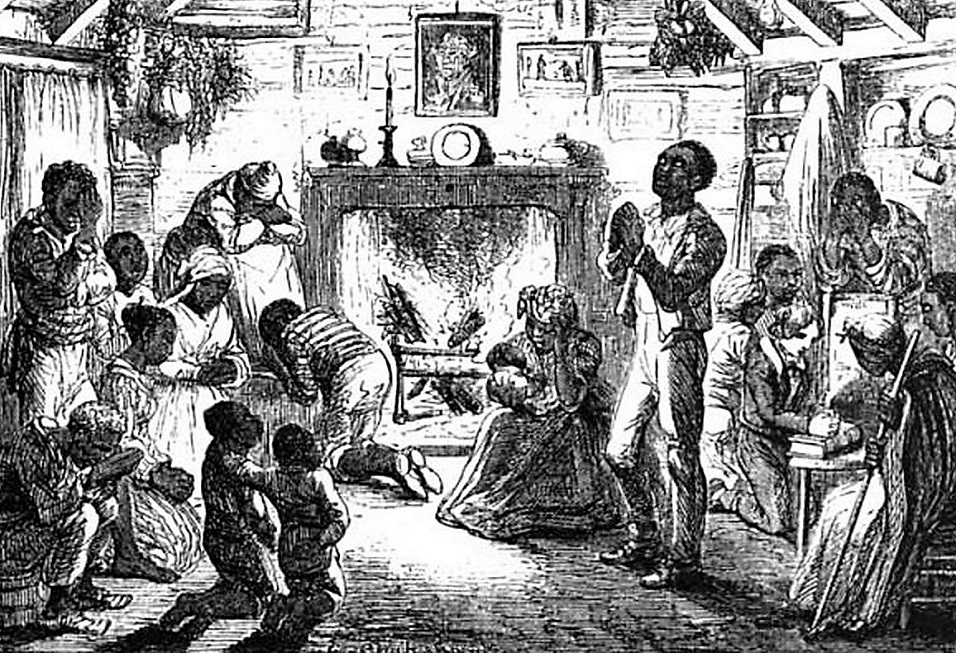
    However, a s U.S. slavery endured, there have been many accounts and visual depictions of our enslaved Black ancestors celebrating the Christmas season. However, deeper research reveals that the enslaved ancestors were actually more concerned about being separated from their families on plantations, than experiencing the joy of the Christian celebration of Jesus’ birth.

     The great and brave ancestor, Harriet Tubman, chose Christmas 1854 to lead the way for her brothers, Ben, Henry and Robert, to escape their enslaved conditions. Later, she brought her parents out of the similar situations.

    Abolitionist and social activist Tubman was born in slavery. She escaped and made 13 successful missions to rescue nearly 100 Black slaves.


    This is a page from the autobiography of Henry Bibb, a former slave who successfully escaped on Christmas Day in 1837. MPI/Getty Images

    He was born to a Black enslaved woman and a white U.S. state senator. He wrote “Narrative of the Life and Adventures of Henry Bibb, an American Slave, Written by Himself.”

    Another Fugitive’s Account
    Henry Bibb.
    Narrative of the Life and Adventures of Henry Bibb, an American Slave.
    New York: The Author, 1849.
    Rare Book and Special Collections Division. (2-13)
    Henry Bibb was born a slave in Kentucky in 1815. He recounts his sufferings, escapes, recaptures, and unsuccessful attempts to free his family. Bibb lectured for the Liberty party in Ohio and Michigan during the 1840s and fled to Canada after the Fugitive Slave Act of 1850, as did thousands of other fugitives living in the North. His narrative includes many illustrations, including the depiction of the celebration of the Sabbath among the slaves and a slave sale.In the text Bibb mentions that “slaves were not allowed books, pen, ink, nor paper, to improve their minds.” He stated that such circumstances gave him a “longing desire . . . a fire of liberty within my breast which has never yet been quenched.” Bibb believed that he too had “a right to liberty and the pursuit of happiness.”
  • Tune in … read on for Black Christmas holiday traditions

    Tune in … read on for Black Christmas holiday traditions

    We are movie buffs. We love to watch holiday movies, especially the ones we used to watch with our families. We are also avid readers and there are historical holiday stories that we recall listening to and reading with our families.

    Listed below are a few hard-to-find or ‘never knew’ existed entries to your holiday media consumption about and for African Americans. While these entries focus on Christmas, upcoming blogs from Good Genes Genealogy Services.

    • A Dream Set for Christmas. It debuted on Christmas Eve, 1973. Here’s the synopsis from YouTube: Created by Earl Hamner, “A Dream for Christmas” is set in the 1950s. African-American minister Will Douglas (Hari Rhodes) moves his family from Arkansas to the Watts section of Los Angeles to take charge of an impoverished church. The attendance, at least at first, is as poor as the congregation. Worse still, the church is slated to be demolished. But it’s close to Christmas, a time when miracles have been known to happen. “A Dream for Christmas” originally aired on December 24, 1973. It was originally designed as the pilot for a never-sold TV series titled The Douglas Family. The hope here was for writer Earl Hamner to repeat his success with “The Waltons.”
    • “The First Christmas.” Written by a young, pioneering Black journalist Ora Mae Lewis Martin. She knew four languages. Her short story, “The First Christmas,” was published in the New Orleans Times-Picayune in 1927, the city’s largest newspaper.
    • The Wiz. In 1978, a film debuted that has been a favorite around the holidays. From Bizaar magazine’s freelance writer Deanna Janes on Oct. 10, 2022: “The Wiz is an offshoot of The Wizard of Oz and stars an all-Black cast. And though its technical designation is “fantasy film,” the charm and allure of Sidney Lumet’s 1978 classic has solidified it as a celebrated holiday event for families across the country. A cast including the legendary Diana Ross, Lena Horne, and Mabel King will do that.”

    Please add your historical Christmas stories, books, audio recordings and videos and allow all of us to get into the holiday spirit.

  • Book the best ancestry gift-giving

    The best gifts we can give to our family members are the ones that record our histories.

    From the Ann Wead Kimbrough collection


    Recently, a church member told me that her father’s wife has placed all of his legacy possessions in storage. Since his death, this church member said she has not had access to her father’s belongings, especially the family Bible.

    “Did it have the births of your ancestors in it,” I asked her.

    She answered in the affirmative. I knew that she needed to gain possession of that family Bible to gain the answers she has long sought in her quest to uncover the mysteries of the family she deemed fragmented due to her father’s multiple children born from different mothers. This church member has established great relationships with her siblings and has been seeking their cooperation in recording the family history.

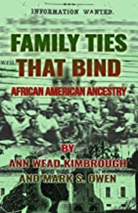
    In place of the family Bible, I recommended electronic searches of the family members and also hard cover solutions in the form of books such the ones displayed in this blog.

    Start somewhere. It will help to make the season brighter to record remembrances of our cherished ancestors.