NEGRO SPIRITUALS AND WORK SONGS During slavery and afterwards, workers were allowed to sing songs during their working time. This was the case when they had to coordinate their efforts for hauling a fallen tree or any heavy load. For example, prisoners used to sing “chain gang” songs, when they worked on the road or some construction. But some “drivers” also allowed slaves to sing “quiet” songs, if they were not apparently against slaveholders. Such songs could be sung either by only one or by several slaves. They were used for expressing personal feeling, and for cheering one another.
NEGRO SPIRITUALS AND THE UNDERGROUND RAILROAD The Underground Railroad (UGRR) helped slaves to run to free a country. A fugitive could use several ways. First, they had to walk at night, using hand lights and moonlight. When needed, they walked (“waded”) in water, so that dogs could not smell their tracks. Second, they jumped into chariot, where they could hide and ride away. These chariots stopped at some “stations”, but this word could mean any place where slaves had to go for being taken in charge.So, negro spirituals like “Wade in the Water”, “The Gospel Train” and “Swing Low, Sweet Chariot” directly refer to the UGRR.
It’s October and that means baseball is in full swing. Do you know how many of your ancestors were a part of Black Baseball stardom? Since 1858, the game of baseball has featured sluggers, great pitchers, fielders and speedsters who have defied the odds and have mostly gone unnoticed.
Let’s dust off the ancestral home plates and locate your family members who were the stars on playing fields long forgotten or never researched. Start with the year 1858.
“The aim of this report, like that on Free Negro Owners of Slaves in the United States in 1830, is to promote the further study of a neglected aspect of our history. As stated elsewhere, most of these free Negroes “have been forgotten, for persons supposedly well-informed in history are surprised to learn today that about a half million, almost one-seventh of the Negroes of this country, were free prior to the emancipation in 1865. It is hardly believed that a considerable number of Negroes were owners of slaves themselves, and in some cases controlled large plantations.”
As the second Black man to receive a degree from Harvard University, he also became a dean in the school. He was a journalist and well published author, including the historic, standalone read, The Mis-education of the Negro.
I (Ann) moved back to the Atlanta area in the first months of 2020. You know the rest: The COVID-19 restrictions started and it limited my reconnections and great adventures to my favorite places with the best folk.
It’s time.
Although the health and safety precautions must be adhered to, my first local museum visit will be APEX.
In the few museums listed above, strong advocates brought them into existence. My friend, Dan Moore, is the champion of the APEX Museum. Bertha Callaway is the proactive instigator of the Great Plains Museum.
To help you get to your local destination, this wikisite is helpful. If you need to add content site, please provide information so that others may benefit:
Newest ancestor General Colin Powell/Photo by Getty Images for Capital Concerts
The hundreds and perhaps thousands of special salutes to our favorite and newest ancestor, former U.S. Secretary of State and General Colin Powell, is a collective valuable lesson for all who write about our ancestors’ lives.
3 P’s for producing great obituaries
On many occasions, I (Ann) have been designated to write obituaries about my family, friends and even former work colleagues. Obituary writing is a skill and talent. It is not the time for careless regards of facts. There are professional obituary writers whose purpose is to provide professionalism to the sometimes rough passages we often read in programs and on websites during times of bereavement.
My “P’s”( for obituary writing:
Plan the obituaries before the relative’s or friend’s transition(s). This seems morbid, yet it is a practice that learned and demonstrated in my first journalism course taught by Nellie Dixon at Clark College (now Clark Atlanta University). I followed the same practice when I became a journalism instructor. Professional media outlets assign reporters to write obituaries about famous persons before the deaths of those individuals. It may seem sad to some to realize this occurs, yet it does.
Prepare your loved ones’ obituaries. As part of the planning and preparation, if possible, record, photograph and speak about your relative, friend during their active lives. I know of a professional videographer who recorded his favorite aunt. That recording on his mobile device is part of the obituary and legacy moments for the family.
Produce the content. Organize all materials according to themes that emerge from their lives. Write your first draft.
Seek help from those who know
When the inevitable occurs, you are ready with the necessary information. It is best to listen to family and friends who send virtual messages or whose personal visits include conversations about the deceased person(s). You may hear something that adds a new name or important life event about the loved one(s).
You may also wish to enlist the assistance of a professional such as my friend, Dr. Tony Burks.
Supes Academy Nov. 15-16 in Chicago, Ill. (Photo by Taylor Glascock)
Dr. Tony Lamair Burks II first learned the art and craft of storytelling from his four grandparents in lower Alabama. He is an award-winning education expert who coaches and trains leaders for excellence as chief learning officer of LEADright. His stories about school and life have appeared in newspapers, blogs and books around the world. He has written six books and contributed to four. He is passionate about helping others tell their stories. For over a quarter of a century, he has written, co-written and ghost-written obituaries and funeral orations. He has served as the interim director of a publishing house, and he currently leads a series of interactive workshops — Unleashing Your Untold Healing Story and Writing Your Story — to help others unearth and release stories that have been held deep within.
Writing tips from other pros
How to Write a Great Obituary
Announce the death. Start off the obituary by announcing the death of the loved one. ..
Provide general biographical information. Include some biographical information such as birth date, upbringing, education, marriage information, accomplishments, and work history.
Make it personal. To write a great obituary, it’s important to capture the spirit of the loved one who has passed.
Listing the family members. While you don’t have to mention every nephew and cousin by name, it’s important to write a general overview of the family members who passed away.
Funeral information. Provide the date, time, and location of the funeral. Also include information regarding donations, flowers, or condolences.
Review for mistakes. Check, check, and check again. Once you are satisfied with the finished product, pass it off to a friend or a dispassionate third party for review.
Our ancestors understood the concept and outcomes of cooperative economics. They worked together to store up the crops and canning of goods to have for those “rainy days” or harsh winters.
The message is to take care of the collective community while caring for oneself. The usual analogy is the airlines’ safety directive to first ensure that oxygen is flowing to the lead or responsible person before helping another.
It is in this vein that we offer the opportunity for our wonderful readers and supporters to shop our affordable Good Genes Genealogy e-books and help us to help you by keeping our sites free to global community.
We plan to offer e-books that will compliment upcoming webinars, podcasts and more.
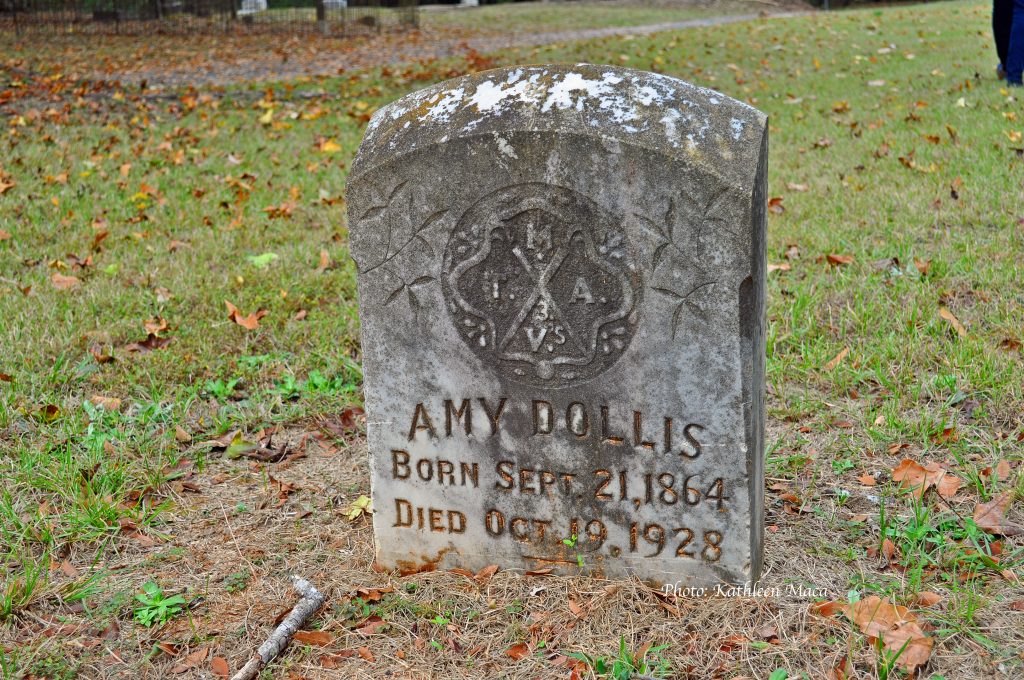
Those special insignas headstones offer huge clues to the organizations your ancestors were affiliated with such as those associated with the Good Genes Genealogy heritage. While we are offering a glimpse into the fraternal insurance-based burials in other states.
Our Arkansas ancestors
On our maternal side – Gray, Wilks, Wilkes — were in northwest Arkansas before moving across the state line into Missouri. Ann’s paternal side — Lee, Weed, Wead — were in the southeast, Arkansas Delta area. The maternal Owen family resided in Hope, Arkansas, before they and other African Americans were put on trains and buses and pushed out to northern cities. Our mothers — born with the surname Owen — are direct descendants of that migration from Hope. The father of Angeline Cecil Owen (Ann) and Lyla Janet Owen (Mark) was a young man when his father and sister landed in Kansas City, Missouri, shortly after the death of Grandfather Eugene Owen, Jr. ‘s mother, Armentha in 1925.
Not only was Great Grandmother Armentha Powers Owen buried in the “black” cemetery in Hope, Arkansas, other ancestors’ graves are in the state. To learn a little more about our relatives and other researchers of Arkansas family histories, consult the guide to cemeteries based on insurance companies and fraternal markers on graves.
heck out daily posts @goodgenesgenealogy on wordpress, fb, twitter and via goodgenesgen@gmail.com. Also check out @weadwriteandgenealogy on wordpress
He was a young man from Old Callabar, a place in Nigeria, Africa.
Calabar, formerly Old Calabar, town and port, capital of Cross River state, southeastern Nigeria. It lies along the Calabar River, 5 miles (8 km) upstream from that river’s entrance into the Cross River estuary. Source: www.britannica.com
The author likely came from a proud status in his country. Yet, his unasked-for slave status in the United States produced a different result that he ever imagined.
King Duke of Calabar, 1895.
Someone may be able to link their heritage to John Jea. By listing his parents and describing where he was enslaved and travels in the United States, the opportunities increase for African American family researchers to link with him.
In the same edition of the <a href=”http://<a href=”https://www.newspapers.com/clip/86791782/paper-edition-announcing-the-marriage-of/” style=”text-decoration: none;display:block;” target=”_parent”><img src=”https://img.newspapers.com/img/img?clippingId=86791782&width=700&height=669&ts=1607535806″ alt=”Paper edition announcing the marriage of James A. Hoover and Emma Schwartzy, 5th great grandparents” style=”max-width:100%;”><span style=”display:block;font: 13px helvetica, sans-serif; color: #747474;padding: 4px 0;max-width: 700px;”><strong>Paper edition announcing the marriage of James A. Hoover and Emma Schwartzy, 5th great grandparents</strong> 29 Mar 1895, Fri <em>Westmoreland Recorder and the Westmoreland Signal (Westmoreland, Kansas)</em> Newspapers.com</span>Westmoreland, Kansas newspaper that announced the marriage of our fifth Great Grandparents, James A. Hoover and Emma Swarty (we believe it is Swartz), read the unique collection notice:
Check out daily posts @goodgenesgenealogy on wordpress, fb, twitter and via goodgenesgen@gmail.com. Also check out @weadwriteandgenealogy on wordpress
Our broadcast genealogy leader is Harvard Professor, Author and forever research Dr. Henry Louis Gates, Jr.
I am marking my physical and virtual calendars to January 2022 when Dr. Gates next season of <a href=”http://<iframe width=”560″ height=”315″ src=”https://www.youtube.com/embed/erpwv1pQxbs” title=”YouTube video player” frameborder=”0″ allow=”accelerometer; autoplay; clipboard-write; encrypted-media; gyroscope; picture-in-picture” allowfullscreen>”Finding Your Roots” debuts. Here’s the teaser. Let’s chat during the season about his special finds.
Check out daily posts @goodgenesgenealogy on wordpress, fb, twitter and via goodgenesgen@gmail.com. Also check out @weadwriteandgenealogy on wordpress




.jpg)

.jpg)


.jpg)


.jpg)


.jpg)


.jpg)


.jpg)


.jpg)


