My past has served as the perfect fertilizer that has grown and expanded my consciousness.
Daily Thoughts from the Hill, Thursday, Sept. 16, 2021 “I AM LIVING A NEW FUTURE“

Photo by Tom Fisk on Pexels.com
My past has served as the perfect fertilizer that has grown and expanded my consciousness.
Daily Thoughts from the Hill, Thursday, Sept. 16, 2021 “I AM LIVING A NEW FUTURE“
In honor of Grandparents Day, consider digging a little deeper to gain those important nuggets from the family tree.
Honor your ancestral grandparents by researching your family’s histories. Begin with the most sacred and lasting technique in African American, Afro Caribbean, Native American and other cultures’ and that is storytelling.
Here are a few tips:

| SATURDAY SEPTEMBER 11, 2021 THANK GOD FOR GRANDPARENTS |
| Grandparents are exactly that- grand. They are known by many names. Grandmothers are called nana, grammy, big mama, or abuela, while grandfathers are called grandpa, pop-pop, granddaddy, or abeulo, to name a few. Whatever name we call our grandparents and whether we had or have a relationship with them or not, they are part of the unbroken spiral of life. Their soul is imprinted on our soul. We are one with them. I honor, acknowledge, and celebrate my grandparents. I recognize their role in my being here to express my inner splendor. I pray for and bless all grandparents wherever they are, in spirit or in the flesh. Thank you for your ability to impart wisdom to navigate life’s lessons. For the grandparents who are challenged to show up, we shine the light of love on you. Thank you, Order, in me, through me, as me, around me, through the Christ within. And so it is. Children’s children are the crowns of old men; and the glory of children is their fathers. Proverbs 17:6 |
| Daily Thoughts from the HillCopyright: Hillside International Truth Center, Inc.Bishop Dr. Jack L. Bomar – Executive BishopBishop Dr. Barbara L. King – Founder |
(From our first how-to book on researching African American genealogy)
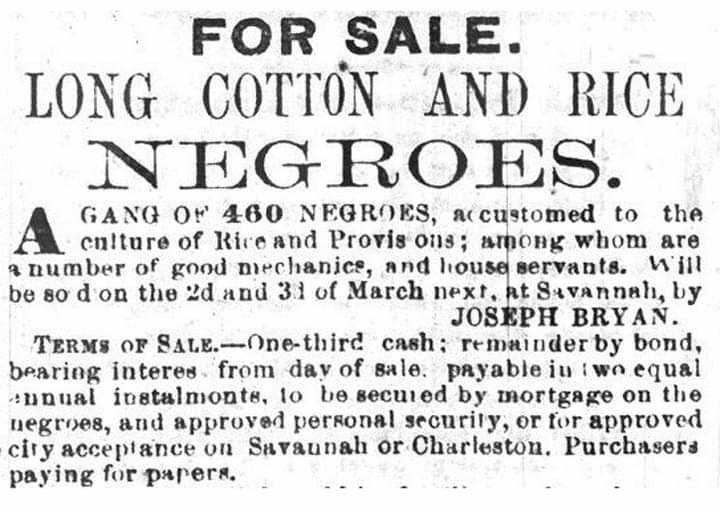
Slavery’s Impact Upon Black Genealogical Research
Slavery’s far-reaching effect upon the lives of African Americans is the single-most reason why it is challenging to easily research involving our Black ancestors. Records of names, places of origin, accurate ages and other important data were not kept for slaves or if kept, are likely long ago destroyed or lost. In rare instances, some of the basic passenger information was retained by the Atlantic Ocean ship’s captain or slave holders. In the records born from slave holders, it is likely that the surnames are the same as the persons who took possession of our ancestors.
The estimates vary on when the first slaves were shipped across the Atlantic to the North and South American soil. Some reports suggest that the first slaves arrived on U.S. shores somewhere between 1525 and 1619. It is well documented that in 1619, slaves were unloaded from ships at Port Comfort, VA., near Jamestown. Between 1619 and 1866, approximately 13 million Africans were packed into ships headed for the “New World.” Of that, an estimated two million slaves perished by disease, suicides and other means, making their graves the Atlantic Ocean. That left an approximate 10.7 million Africans who survived the brutal slave ships’ conditions across the Atlantic Ocean. It is estimated 388,000 black ancestors arrived along North American shores through 1866, according to the Trans-Atlantic Slave Trade Database (edited by Profs. David Eltis and David Richardson). The remainder of the precious “cargo” was delivered to South American and Caribbean countries.
Sometimes in the pursuit of African American ancestors, the inquiries or checklists do not take into consideration that not U.S. residents arrived on these shores with passenger lists to identify them. One case in point is found in a test that I took to a complete a genealogy course. I missed the correct answer on one question because I responded based on my African American family history. The question on the examination was: “Which immigration records are the best sources for determining if someone’s ancestor arrived in the United States from an international country. The instructor’s answer was “Passenger lists.” The answer choices did not include one for my ancestors. This is an example of the importance of remaining flexible and open to the workarounds and delays in retrieving records related to your family’s ancestors.
When searching for ancestors not all potential information is included in general inquiries. Many records unique to Black, Native Americans, Afro-Caribbean ancestors are not integrated into traditional family ancestry searches. For instance, “Slave Schedules” is not included in an ancestry site query for a relative. Therefore, it is important to review all categories of detailed listings such as the Sumter County, Alabama, U.S., Circuit Court Files, 1840-1950 and Americus times-recorder NEW. It is advisable to rely on more than one on-line genealogy site to expand the ancestral search and build family trees.
Pre- and Post-Civil War Searches
The important benchmarks that are integral to effectively and efficiently researching African American ancestry are divided in two major categories:
Prior to the Civil War, information and data about African American ancestors is sparse and vastly different than that of others. Slaves’ surnames were often the same as their owners and not of their African-given names. In addition, the U.S. Census Bureau developed separate listings known as “Slave Schedules” in 1850 and 1860. While not providing the names of slaves, the Slave Schedules provide the owners’ names. In many cases, the identifiers for slaves included the ages, sex and varying notations such as “deaf …dumb.”
However, after the war and beginning with the 1870 Census, the official recordkeeping involving Blacks was similar to that of U.S. Whites and immigrants. While some former slaves maintained the slave owners’ surnames given to them, others changed their last names. That is why the family Bible is so important as it was a historical recorder of the important events in the lives of freed slaves. The family Bible also served as an official legal document in the courthouse where African Americans sought official birth records. Usually, the births of our family members occurred with the help of midwives. The midwives were also principally responsible for reporting births to the respective county court houses.
Making the most of “Brick walls”
Between 1920 and 1930, my Great-Grandmother Carrie changed the spelling of our surname to “Wead” and my grandfather followed her lead when applied for his social security card in 1936. My father, Rodney Wead, never learned why the spelling change in our surname. The Census Bureau and other government sources frequently contain errors in ages, relationships to the heads of households, racial classification, employment, literacy, name spellings, real estate and other categories involving the documentation of African American families. This e-book will offer recommendations on how to confirm the demographic data and thereby move around the “brick wall” effects. “The wall” or “the brick wall” is a phrase often used in genealogy to describe what it feels like when after several hours or even years of sorting through delicate historical information, the researcher is not able to breakthrough with accurate information about their ancestor.
You do not have to get used to the wall’s reality. Approach your research by thinking new thoughts and seek opportunities in the historical challenges to keep walls in our ways. Combine the “old school” with new ways. See value in the centuries ago inscribed family Bibles while trusting the technology to locate grave markers and passports of your ancestors. Invest your time and resources into learning more about your ancestors for personal, professional, mental and physical health benefits. It will be worth it.
Mental, Psychological, Spiritual Walls
“Why can’t I know my birthday?” asked Frederick Douglass, born a slave around 1817. Think about that statement by the great statesman, Douglass. It was rare for slaves and any indentured black servants to know the details of their lives. Think about how difficult it may be for you to learn the same about your ancestors.
There are many more terms or single words that are triggers for deep-seeded and some surface matters that my cousin and I had not fully resolved. The same may be true for others who embark on the black genealogy path. For some of the topics and situations we encountered during our research, Mark and I had to take a break after discovering something that was a breakthrough while also being a burden to our souls. We exhaled whenever those temporary “moments” of anxiety and questions flooded our thoughts and words such as the time we dealt with the meaning of word “property” to slave holders and traders. For instance, the reality that slaves were considered “property” by their owners meant that being bought and sold in exchange for land, cash, or another material matter, remains disheartening. It meant that slave families were ripped apart and the scars and outward behaviors would likely be passed through the generations.
Each time, we hit those bumps in the road, Mark and I successfully emerged from our unplanned research breaks with fresh outlooks and words of encouragement about our brave and smart ancestors. After all, if our ancestors had not endured the pain, suffering and the glorious moments, none of us would be on this earth. We are sharing our tribulations to help others who are deeply connected to their pasts to advance their present and future journeys.
During your early discoveries of family ancestry, it is likely that you will find words, phrases, photographs and other documents that may trigger emotions and reactions that you may have long ago forgiven. For Mark and me, our triggers included the following words, phrases and digits:
During your early discoveries of family ancestry, it is likely that you will find words, phrases, photographs and other documents that may trigger emotions and reactions that you may have long ago forgiven. For Mark and me, our triggers included the following words, phrases and digits:
1525 Land deeds Slave owners
1619 Lynching Slave schedules
1919 Middle Passage Slavery
Branding Missing names of slaves Status of black women
‘Death over foreign servitude’ Mutilation Whippings
Fugitive Property
“Gator Babies” Probated wills
Imprisonment “Slave for life” about:blankImageUpload an image file, pick one from your media library, or add one with a URL.UploadSelect ImageInsert from URL
Illustration of slaves in chains. From Southern, N., American Antislavery Almanac (August 1838). Boston: Isaac Knapp, Publisher. https://archive.org/details/americanantislav1838chil/page/20/mode/2upabout:blankImageUpload an image file, pick one from your media library, or add one with a URL.UploadSelect ImageInsert from URL
Illustration of slaves under the overseer’s whip. From Southern, N., American Antislavery Almanac (August 1838). Boston: Isaac Knapp, Publisher. https://archive.org/details/americanantislav1838chil/page/20/mode/2up
With many more expressions and reminders of our ‘gloomy past,’ Mark and I continued our path as overcomers. We focus on the ‘the white gleam of our bright star is cast,’ as penned by James Weldon Johnson in the poem, “Lift Every Voice and Sing.” It was written during a time when Jim Crow replaced slavery. His brother, John Rosamond Johnson, composed the song that is sung today and affectionately known as the “National Negro Anthem.” The words to this anthem are a go-to song of comfort, faith and hope for the future.
James Weldon Johnson – 1871-1938
Lift every voice and sing,
Till earth and heaven ring,
Ring with the harmonies of Liberty;
Let our rejoicing rise
High as the list’ning skies,
Let it resound loud as the rolling sea.
Sing a song full of the faith that the dark past has taught us,
Sing a song full of the hope that the present has brought us;
Facing the rising sun of our new day begun,
Let us march on till victory is won.
Stony the road we trod,
Bitter the chast’ning rod,
Felt in the days when hope unborn had died;
Yet with a steady beat,
Have not our weary feet
Come to the place for which our fathers sighed?
We have come over a way that with tears has been watered.
We have come, treading our path through the blood of the slaughtered,
Out from the gloomy past,
Till now we stand at last
Where the white gleam of our bright star is cast.
God of our weary years,
God of our silent tears,
Thou who hast brought us thus far on the way;
Thou who hast by Thy might,
Led us into the light,
Keep us forever in the path, we pray.
Lest our feet stray from the places, our God, where we met Thee,
Lest our hearts, drunk with the wine of the world, we forget Thee;
Shadowed beneath Thy hand,
May we forever stand,
True to our God,
True to our native land.


Was my maternal great-great grandmother a white woman or an African American slave? Based on the 1850 and 1860 U.S. Census, she was both. In the 1880 Census, she was listed as Mulatto, aged 21 and working as a chamber maid.
Was I surprised by the variations on race in the census? No and neither should you as often, African Americans were either not counted or misidentified by enumerators.
Why? How?
An estimated 4,400 U.S. Marshals and Assistant Marshals used eyeball evidence to record the race, gender and other household factors based on their government and Congressional directives in 1850 and 1860.
Beginning with the 1870 Census, the household individuals were allowed to speak for themselves regarding all of the critical data needed to complete individual records.

Check out Good Genes Genealogy Services’ October 2021 e-book for easy-to-follow tips on how you can locate your once enslaved ancestors. Become a genealogy hunter to keep alive the tireless, selfless work of our ancestors.
It’s an exciting time of learn the great stories of your ancestors. Here’s how to get started:
My presentation will help you if you are a beginner researcher or a seasoned genealogist!
| IN A FEW WORDS |
 I wish the knowledge about the African Burial Ground was as vast as September 11th. The reason that September 11 is so important is because of the people who built this city. When I think of the World Trade Center and New York Stock Exchange, I think of how they got started.”Carter Clinton I wish the knowledge about the African Burial Ground was as vast as September 11th. The reason that September 11 is so important is because of the people who built this city. When I think of the World Trade Center and New York Stock Exchange, I think of how they got started.”Carter ClintonBiological anthropologist, geneticist, Nat Geo Explorer From: The archaeological treasures that survived 9/11 |
| SATURDAY SEPTEMBER 4, 2021 I AM AN ANCESTRAL BEING |

| Every cell in your body re-presents an Ancestor. These cells are encoded with the soul-print of your ancestors. You are the embodiment of those who came before you. They came before you, and they are with you now. All eternity is in the present now. No separation. Your existence is re-presenting the past in the present moment. You are creating and shaping the future as a future ancestor. Be bold and unapologetic about it. I am the future of my past. I am the very existence of all that was before me. I am here, right now, to carry forward the legacy, the collective soul intent of my ancestors. I rest in the now, knowing that I am right where I need to be. I am fully connected with All That Is. I belong. I am enough. I am now. Thank you, Order, in me, through me, as me, around me, through the Christ within. And so it is. So God created man in his own image, in the image of God he created him; male and female he created them. Genesis 1:27 |
| Daily Thoughts from the HillCopyright: Hillside International Truth Center, Inc.Bishop Dr. Jack L. Bomar – Executive BishopBishop Dr. Barbara L. King – Founder |

It is a tough lick when one cannot locate a relative whom we know existed, yet is not “findable.” In genealogy research, we refer to such situations as brick walls.
One tool to help chip away at those walls are found in places that we may driven past a hundred times. In my home state of Nebraska, and especially in Omaha, I turned to the Potter’s Field to locate the individuals who are missing from all final records https://www.noiseomaha.com/news-now/2020/10/28/potters-field-historical-marker-dedication-honors-those-laid-to-rest.

The reference in the Bible to the Potter’s House https://enduringword.com/bible-commentary/jeremiah-18/has many meanings. In relation to the Potter’s Field in Nebraska and in many locations around the globe, the person working pottery never abandoned a lump of clay just because of its imperfections. Instead, it worked it via a wheel or by hand to mold it into something good.
Looking for a relative who may have been forgotten? Check your local and state records as more individuals are being identified and in some cases, relocated to different burial sites.
There is an increasing amount of good content to assist genealogists in researching the most challenging segment in ancestral pursuits.
If you are like me and serious about uncovering the mysteries of my family’s great past with accuracy, check out a few new guides for African American research:

My bookshelf is stocked with a great variety of good reads. They are loosely categorized by subject areas that include “Health and Healing,” “African American History, ” “International and Domestic Finance/Business,” “Black Authors,” “Book Publishing,” and “Media and Journalism” and “Other.” I also have personal journals that date back a few decades.
Over the years, I have amassed hundreds of books from my days as a college professor and dean and from purchases and gifts from countless friends and family who know that I love reading and growing.
As I perused my shelves, my frayed books are those in the “African American History” and “Black Authors” categories. I love history and ancestral truths that have inspired me over the years. I have shelves, baskets for books, closets and tables full of varying books and magazines that suit my interests. The sample shelves from my stacks of books are what I wish to share in this blog.
I offer that reading transforms lives. Reading truths about our ancestral journeys — with appropriate citations such as the extensive ones offered by Dr. Lerone Bennett — uplift the downtrodden. By providing clarity in one’s life about what our ancestors overcame and how they invented so many food dishes, everyday products, expressed themselves with eloquence and grace, fought for and defended human rights, and worked tirelessly to build institutions that we take for granted … keeps me inspired.

What’s on your shelves? Please share and tell us about your favorite African American books.
Keep reading.