Blog
-
Repost #5 Peek in our e-book: “Out of Sight’ for beginning Black Genealogists
PART I: Out of Our Gloomy Past
Slavery’s Impact Upon Black Genealogical Research
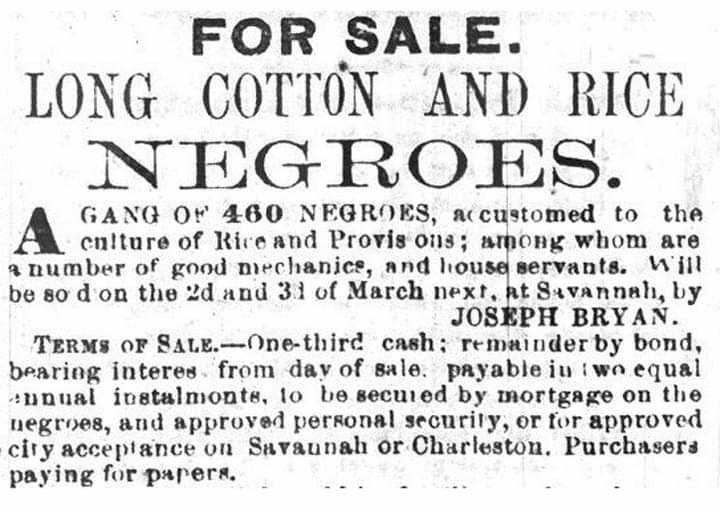
Slavery’s far-reaching effect upon the lives of African Americans is the single-most reason why it is challenging to easily research involving our Black ancestors. Records of names, places of origin, accurate ages and other important data were not kept for slaves or if kept, are likely long ago destroyed or lost. In rare instances, some of the basic passenger information was retained by the Atlantic Ocean ship’s captain or slave holders. In the records born from slave holders, it is likely that the surnames are the same as the persons who took possession of our ancestors.
The estimates vary on when the first slaves were shipped across the Atlantic to the North and South American soil. Some reports suggest that the first slaves arrived on U.S. shores somewhere between 1525 and 1619. It is well documented that in 1619, slaves were unloaded from ships at Port Comfort, VA., near Jamestown. Between 1619 and 1866, approximately 13 million Africans were packed into ships headed for the “New World.” Of that, an estimated two million slaves perished by disease, suicides and other means, making their graves the Atlantic Ocean. That left an approximate 10.7 million Africans who survived the brutal slave ships’ conditions across the Atlantic Ocean. It is estimated 388,000 black ancestors arrived along North American shores through 1866, according to the Trans-Atlantic Slave Trade Database (edited by Profs. David Eltis and David Richardson). The remainder of the precious “cargo” was delivered to South American and Caribbean countries.
Sometimes in the pursuit of African American ancestors, the inquiries or checklists do not take into consideration that not U.S. residents arrived on these shores with passenger lists to identify them. One case in point is found in a test that I took to a complete a genealogy course. I missed the correct answer on one question because I responded based on my African American family history. The question on the examination was: “Which immigration records are the best sources for determining if someone’s ancestor arrived in the United States from an international country. The instructor’s answer was “Passenger lists.” The answer choices did not include one for my ancestors. This is an example of the importance of remaining flexible and open to the workarounds and delays in retrieving records related to your family’s ancestors.
When searching for ancestors not all potential information is included in general inquiries. Many records unique to Black, Native Americans, Afro-Caribbean ancestors are not integrated into traditional family ancestry searches. For instance, “Slave Schedules” is not included in an ancestry site query for a relative. Therefore, it is important to review all categories of detailed listings such as the Sumter County, Alabama, U.S., Circuit Court Files, 1840-1950 and Americus times-recorder NEW. It is advisable to rely on more than one on-line genealogy site to expand the ancestral search and build family trees.
Pre- and Post-Civil War Searches
The important benchmarks that are integral to effectively and efficiently researching African American ancestry are divided in two major categories:
- Slave families before the Civil War.
- Black and African American families beginning with the 1870 Census.
Prior to the Civil War, information and data about African American ancestors is sparse and vastly different than that of others. Slaves’ surnames were often the same as their owners and not of their African-given names. In addition, the U.S. Census Bureau developed separate listings known as “Slave Schedules” in 1850 and 1860. While not providing the names of slaves, the Slave Schedules provide the owners’ names. In many cases, the identifiers for slaves included the ages, sex and varying notations such as “deaf …dumb.”
However, after the war and beginning with the 1870 Census, the official recordkeeping involving Blacks was similar to that of U.S. Whites and immigrants. While some former slaves maintained the slave owners’ surnames given to them, others changed their last names. That is why the family Bible is so important as it was a historical recorder of the important events in the lives of freed slaves. The family Bible also served as an official legal document in the courthouse where African Americans sought official birth records. Usually, the births of our family members occurred with the help of midwives. The midwives were also principally responsible for reporting births to the respective county court houses.
Making the most of “Brick walls”
Between 1920 and 1930, my Great-Grandmother Carrie changed the spelling of our surname to “Wead” and my grandfather followed her lead when applied for his social security card in 1936. My father, Rodney Wead, never learned why the spelling change in our surname. The Census Bureau and other government sources frequently contain errors in ages, relationships to the heads of households, racial classification, employment, literacy, name spellings, real estate and other categories involving the documentation of African American families. This e-book will offer recommendations on how to confirm the demographic data and thereby move around the “brick wall” effects. “The wall” or “the brick wall” is a phrase often used in genealogy to describe what it feels like when after several hours or even years of sorting through delicate historical information, the researcher is not able to breakthrough with accurate information about their ancestor.
You do not have to get used to the wall’s reality. Approach your research by thinking new thoughts and seek opportunities in the historical challenges to keep walls in our ways. Combine the “old school” with new ways. See value in the centuries ago inscribed family Bibles while trusting the technology to locate grave markers and passports of your ancestors. Invest your time and resources into learning more about your ancestors for personal, professional, mental and physical health benefits. It will be worth it.
Mental, Psychological, Spiritual Walls
“Why can’t I know my birthday?” asked Frederick Douglass, born a slave around 1817. Think about that statement by the great statesman, Douglass. It was rare for slaves and any indentured black servants to know the details of their lives. Think about how difficult it may be for you to learn the same about your ancestors.
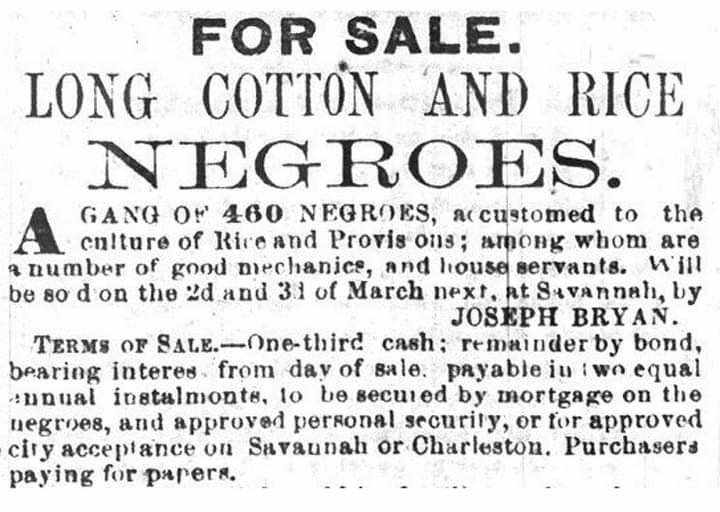
There are many more terms or single words that are triggers for deep-seeded and some surface matters that my cousin and I had not fully resolved. The same may be true for others who embark on the black genealogy path. For some of the topics and situations we encountered during our research, Mark and I had to take a break after discovering something that was a breakthrough while also being a burden to our souls. We exhaled whenever those temporary “moments” of anxiety and questions flooded our thoughts and words such as the time we dealt with the meaning of word “property” to slave holders and traders. For instance, the reality that slaves were considered “property” by their owners meant that being bought and sold in exchange for land, cash, or another material matter, remains disheartening. It meant that slave families were ripped apart and the scars and outward behaviors would likely be passed through the generations.
Each time, we hit those bumps in the road, Mark and I successfully emerged from our unplanned research breaks with fresh outlooks and words of encouragement about our brave and smart ancestors. After all, if our ancestors had not endured the pain, suffering and the glorious moments, none of us would be on this earth. We are sharing our tribulations to help others who are deeply connected to their pasts to advance their present and future journeys.
During your early discoveries of family ancestry, it is likely that you will find words, phrases, photographs and other documents that may trigger emotions and reactions that you may have long ago forgiven. For Mark and me, our triggers included the following words, phrases and digits:
During your early discoveries of family ancestry, it is likely that you will find words, phrases, photographs and other documents that may trigger emotions and reactions that you may have long ago forgiven. For Mark and me, our triggers included the following words, phrases and digits:
1525 Land deeds Slave owners
1619 Lynching Slave schedules
1919 Middle Passage Slavery
Branding Missing names of slaves Status of black women
‘Death over foreign servitude’ Mutilation Whippings
Fugitive Property
“Gator Babies” Probated wills
Imprisonment “Slave for life”
Illustration of slaves in chains. From Southern, N., American Antislavery Almanac (August 1838). Boston: Isaac Knapp, Publisher. https://archive.org/details/americanantislav1838chil/page/20/mode/2up
Illustration of slaves under the overseer’s whip. From Southern, N., American Antislavery Almanac (August 1838). Boston: Isaac Knapp, Publisher. https://archive.org/details/americanantislav1838chil/page/20/mode/2up
With many more expressions and reminders of our ‘gloomy past,’ Mark and I continued our path as overcomers. We focus on the ‘the white gleam of our bright star is cast,’ as penned by James Weldon Johnson in the poem, “Lift Every Voice and Sing.” It was written during a time when Jim Crow replaced slavery. His brother, John Rosamond Johnson, composed the song that is sung today and affectionately known as the “National Negro Anthem.” The words to this anthem are a go-to song of comfort, faith and hope for the future.
James Weldon Johnson – 1871-1938
Lift every voice and sing,
Till earth and heaven ring,
Ring with the harmonies of Liberty;
Let our rejoicing rise
High as the list’ning skies,
Let it resound loud as the rolling sea.
Sing a song full of the faith that the dark past has taught us,
Sing a song full of the hope that the present has brought us;
Facing the rising sun of our new day begun,
Let us march on till victory is won.Stony the road we trod,
Bitter the chast’ning rod,
Felt in the days when hope unborn had died;
Yet with a steady beat,
Have not our weary feet
Come to the place for which our fathers sighed?
We have come over a way that with tears has been watered.
We have come, treading our path through the blood of the slaughtered,
Out from the gloomy past,
Till now we stand at last
Where the white gleam of our bright star is cast.God of our weary years,
God of our silent tears,
Thou who hast brought us thus far on the way;
Thou who hast by Thy might,
Led us into the light,
Keep us forever in the path, we pray.
Lest our feet stray from the places, our God, where we met Thee,
Lest our hearts, drunk with the wine of the world, we forget Thee;
Shadowed beneath Thy hand,
May we forever stand,
True to our God,
True to our native land.From Saint Peter Relates an Incident by James Weldon Johnson. Copyright © 1917, 1921, 1935 James Weldon Johnson, renewed 1963 by Grace Nail Johnson.
Let’s get started.
-
#31 We are looking for you!
The African American families in the post-slavery, Reconstruction years
See informationwanted.org

“Eliza Jane Elam searching for Eliza Jane Owens,” Lost Friends Ad, Southwestern Christian Advocate (New Orleans, LA), January 25, 1883, Last Seen: Finding Family After Slavery, accessed August 23, 2021, http://informationwanted.org/items/show/1904.
The “Lost Friends Ad’ in a New Orleans newspaper in 1883 by a lady described with two names — Eliza Jane Elam and Eliza Owens — showed the dedication of former slaves who sought their loved ones some 20 years after the end of slavery.
It was also a dangerous, Reconstruction Period, as former enslavers were conversely placing ads in newspapers for their so-called “runaway slaves.” The end of slavery meant that the free labor and horrific labor period ended for persons who considered slaves their property.
Despite the danger of having former enslavers finding them or loved ones, nearly 1,000 ads were placed primarily in African American-owned newspapers across the United States in search of “lost” persons who were separated from them during and after slavery. Thanks to a free website sponsored by Villanova University, African American and Afro Caribbean families are still locating their “lost” ancestors because of the detail found in the ads that include the enslaver names, plantation locations and who slaves were sold to.
Also, a “must see” is the stage production that depicts the enactments of hundreds of “Lost Friends” ads that were generously posted in mostly African American newspapers for little to no costs to those seeking loved ones. There is also a social media presence on Instagram, Twitter and Facebook.
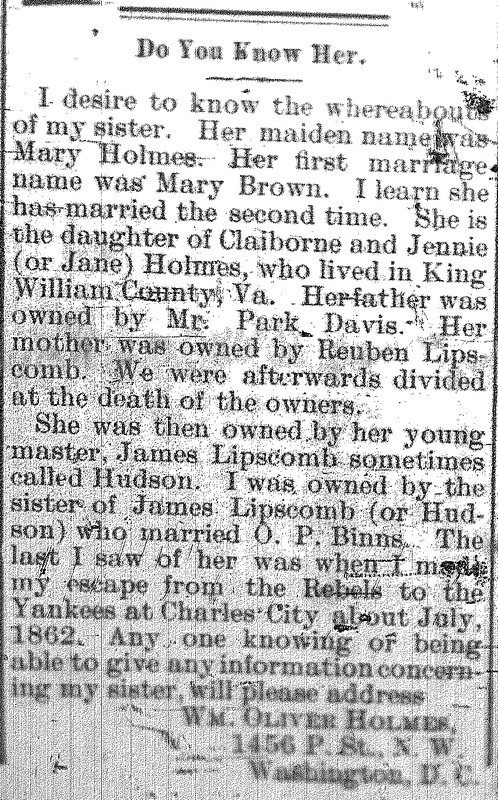
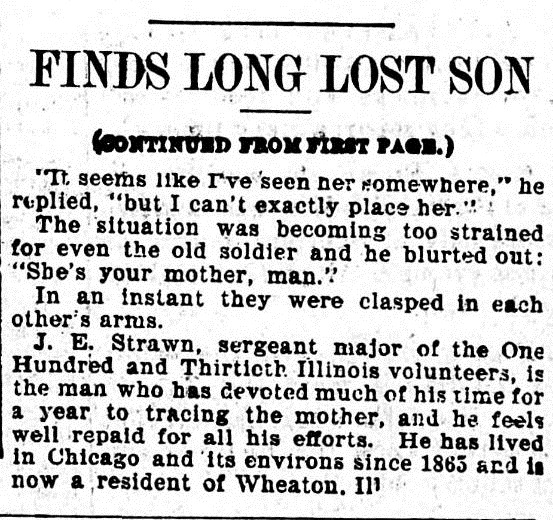
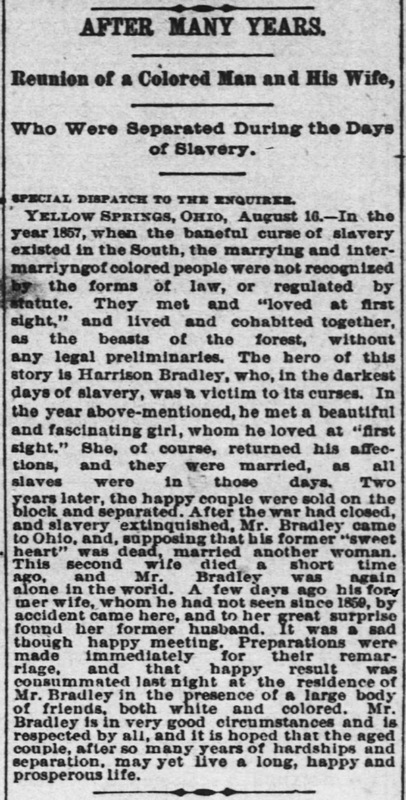
Former slaves also often listed their contact information and asked church ministers to make announcements on Sunday mornings. The desperate hunt for mothers, fathers, children and other relatives, also yielded positive results as explained in the second half of the newspaper article found below.
My favorite reunion story on the site is from the Cincinnati Enquirer:

Best love story of all the “lost” and “found” slave families on the website. Transcription
Mr. Editor — I wish to inquire
for my relatives — my mother, sis-
ters and brothers. My mother’s
name was Annie Straan; she be-
longed to Billie Straan. We were
first brought from Butt’s county,
Georgia, and from there to Ala-
bama; from there to Mississippi,
and from there to East Texas, Jas-
per County. Our owner, Billie
Straan, got in debt in Alabama,
and run away with us to Texas, be-
cause his property was to be levied
on. The sheriff came to Texas for
us, and took my mother and five
children back, but Martha and
Maria remained out here with our
old owner, Billie Straan. The
sheriff was Billie Straan’s brother,
Sam Straan. My brothers are
named Columbus and Richard;
sisters are Hannah, Betsy, Matilda,
Amanda and Martha Maria. Sis-
ter Hannah is the oldest and
Amanda next. Hannah was left
in Alabama. When last heard
from they were all still in Alabama.
Sister Martha Maria is dead. I
heard indirectly from them a few
years ago, but nothing definite
enough to give satisfaction. Sam
Straan, my owner’s brother, that
carried my mother and five chil-
dren back to Alabama, I heard,
got shipwrecked while on his way
back to Texas after Martha Maria
and myself. I am alone here in
Texas, with no relative except two
of my deceased sister’s children.
Aunt Mary is dead; also old Billie
Straan. My name was formerly
Amanda Straan, but is now Amanda
Whitfield. I wish to know if any
are yet living in Alabama, Louis-
iana or Georgia, for I am very
anxious to hear from some of my
people. This is the second letter I
have written, but have never had
an answer. Aunt Mary Straan’s
two daughters, Caroline and Har-
riett, are still living and anxious
to hear from any of our people. Aunt
Mary Straan is a fellow servant of
my mother, Annie Straan. Ad-
dress in care of the M. E. Church,
Amanda Whitfield, Columbus,
Texas.”
Your assignment: Go to the free website and search for loved ones based on their recommendations. Also, teachers are provided with lots of material on how to teach and research family histories among post-Civil War slaves.
Be sure to read more about this special genealogy resource in the upcoming, October 2021 e-book produced by Good Genes Genealogy Services.
-
I Learn from My Experiences
As genealogists on all levels — beginners who are researching family histories to the veterans/professionals — we have to learn from our ancestors’ experiences. In your reading of this wonderful meditation from the Hillside International Truth Center , replace the words “past experiences” and “past” and “experiences” with the word s “ancestral history … healing.”

Photo by Nandhu Kumar on Pexels.com
Reflect and rejoice! FRIDAY, AUGUST 20, 2021 Our past experiences provide opportunities for us to learn and grow. Yet, we often push them away to the farthest part of our minds. We focus so much energy on trying to forget the past, that we draw those experiences back into our life. In Truth, we know that what we focus on, we draw to us.
I stop denying my past experiences. I learn from these experiences. And with God’s guidance, I allow them to assist me in creating more harmonious experiences. My experiences do not have control over me. I have control over them.
I appreciate the lessons from my past. I do not allow them to hold me hostage. I use them to reconnect with Source energy. I learn the lesson. And I move on to other experiences that are aligned with my new spiritual awareness. Thank you, Will, in me, through me, as me, around me, through the Christ within. And so it is. For thou art my strength and my refuge;
therefore for thy name’s sake comfort me and guide me.
Psalm 31:3
Daily Thoughts from the HillCopyright: Hillside International Truth Center, Inc.Bishop Dr. Jack L. Bomar – Executive BishopBishop Dr. Barbara L. King – Founder -
What If Our History Was Written In Our Grammar?
News release, 19 August 2021
http://www.uzh.ch/en.html
Humans have been always on the move, creating a complex history of languages and cultural traditions dispersed over the globe. An international team under UZH’s lead has now traced families of related languages over more than 10,000 years by combining data from genetics, linguistics and musicology using novel digital methods. Their findings: grammar reflects best the common prehistory of a population and therefore mirrors genetics more than any other cultural feature.
 Culture is an important factor for tracing the population history. Utae Ehara playing the mukkuri. (© Utae Ehara)
Since the beginning of their existence, some populations have split up while others have come together, leaving a deep mark on local languages and cultural traditions. Reconstructing this complex history remains a gigantic challenge. Depending on the places of origin, with more than 7000 languages are currently spoken in the world.
This huge range is also found in genetic variation. According to Charles Darwin, genes and culture evolve in a similar way, transmitted from generation to generation with slight variations in each step. “When their evolution no longer corresponds, it is the sign of contact in the history of a population, be it friendly, such as trade, or unfriendly, such as conquests”, says Balthasar Bickel, professor at the Department of Comparative Language Science of the University of Zurich.
Northeast Asia as crossroads between Asia and Native America
An international team under UZH’s lead has now identified which data reveal the best correlation between genetic and cultural diversity by combining data from genetics, linguistics and musicology using novel digital methods. The team selected Northeast Asia as a particularly interesting region for this study. “Northeast Asia is the central crossroad in the prehistory of Asia and Native America. Indeed, while their populations are genetically contiguous, the region is culturally and linguistically highly diverse,” says Hiromi Matsumae, former postdoctoral researcher at UZH and now professor at Japan’s Tokai University. Her team at UZH analyzed data spanning 11 language families incuding such as Tungusic, Chukuto-Kamchatkan, Eskimo-Aleut, Yukagir, Ainu, Korean and Japanese. They furthermore obtained new genetic data from speakers of Nivkh, an isolated language spoken on Sakhalin Island in Siberia.
Analogies and differences in genes, language and culture
The researchers compared the genomes of these populations with digital data on their language (grammar rules, sounds, word lists) and their music (structure, style). “Our results suggest that grammar reflects population history more closely than any other cultural data. We found significant correlations between genetics and grammar,” explains co-lead author Peter Ranacher of UZH.
Word lists for example differ from each other in their own ways. And since word lists are the core data for reconstructing language families, such reconstructions remain elusive in the region. The researchers concluded that the correspondence between grammar and genetics reflects a complex maze of vertical descent and contact in prehistory.
Grammar as a mirror of cultural and genetic evolution
“It’s through a unique collaboration between genetics and geography with modern digital linguistics and musicology that we have been able to take one small step closer to understanding human cultural history,” adds last author Bickel. Further analysis will be needed to understand the complex web of cultural and genetic evolution. But discovering the importance of the grammatical factor is a first step in the right direction.
Literature:
Matsumae, H., Ranacher, P., Savage, P. E., Blasi, D., Currie, T. E., Sato, T., Koganebuchi, K., Nishida, N., Sato, T., Tanabe, H., Tajima, A., Brown, S., Stoneking, M., Shimizu, K. K., Oota, H., Bickel, B. (2021). Exploring correlations in genetic and cultural variation across language families in Northeast Asia. Science Advances. 18 August 2021. DOI: 10.1126/sciadv.abd9223
International Cooperation
This joint work was made possible by the University Research Priority Programs (URPPs) “Language & Space” and “Evolution in Action”, Switzerland’s National Centre of Competence in Research (NCCR) “Evolving Language”, and the Japan Society for the Promotion of Science (JSPS) Evolinguistics project.
Fusszeile
© University of Zurich 18 Aug 2021 About this site Data Protection Statement
-
#30 African American man is first to “Compromise” in the South
This is part two of the blogs about the Great Compromises in September 1850 and 1895 that impacted African Americans.
“To those of my race who depend on bettering their condition in a foreign land, or who underestimate the importance of cultivating friendly relations with the Southern white man, I would say: “Cast down your bucket where you are—cast it down in making friends in every manly way of the people of all races by whom we are surrounded.”
(Address of Booker T. Washington…opening of the Cotton States and International Exposition.” Atlanta, Ga., September 18, 1895. African American Perspectives: Materials Selected from the Rare Book Collection. Rare Book & Special Collections Division)
It was one of the hottest days under the Atlanta, Georgia sun when a tall, bony man introduced as “Professor Booker T. Washington” entered the front of the platform and looked out over a packed audience of whites and Blacks who were awaiting the opening of the market exchanges. It was September 18, 1895, in the segregated South. The long-anticipated Cotton States and International Exposition opened for the purpose to showcase Southern agricultural and mechanical products to global countries. Washington was introduced – a man born a slave on a Virginia plantation. He was poised to make history that day as the first African American to speak to an audience of different races in a Southern location. (Today in History – September 18 | Library of Congress (loc.gov)
Washington was described by a correspondent of the New York World as “straight as a Sioux chief, high forehead, heavy jaws … strong, determined … piercing eyes, and a commanding manner…” who captured the spotlight with his speech that is known as the “Atlanta Compromise.”

http://1895 Cotton States Exposition Poster (usg.edu) Transcribed Excerpts from Booker T. Washington’s Atlanta Exposition Speech, September 18, 1895:
“… A ship lost at sea for many days suddenly sighted a friendly vessel. From the mast of the unfortunate vessel was seen a signal: “Water, water; we die of thirst!” The answer from the friendly vessel at once came back: “Cast down your bucket where you are.” A second time the signal, “Water, water; send us water!” ran up from the distressed vessel and was answered: “Cast down your bucket where you are.” And a third and fourth signal for water was answered: “Cast down your bucket where you are.” The captain of the distressed vessel, at last heeding the injunction, cast down his bucket, and it came up full of fresh, sparkling water from the mouth of the Amazon River. To those of my race who depend on bettering their condition in a foreign land, or who underestimate the importance of cultivating friendly relations with the Southern white man, who is their next-door neighbor, I would say: “Cast down your bucket where you are” — cast it down in making friends in every manly way of the people of all races by whom we are surrounded. Cast it down in agriculture, mechanics, in commerce, in domestic service, and in the professions. And in this connection, it is well to bear in mind that whatever other sins the South may be called to bear, when it comes to business, pure and simple, it is in the South that the Negro is given a man’s chance in the commercial world, and in nothing is this Exposition more eloquent than in emphasizing this chance. Our greatest danger is, that in the great leap from slavery to freedom we may overlook the fact that the masses of us are to live by the productions of our hands, and fail to keep in mind that we shall prosper in proportion as we learn to dignify and glorify common labor and put brains and skill into the common occupations of life; shall prosper in proportion as we learn to draw the line between the superficial and the substantial, the ornamental gewgaws of life and the useful,” extorted the founding President of the Tuskegee Normal and Industrial Institute.
When Washington finished, it was reported that loud cheers and applause complimented his remarks.

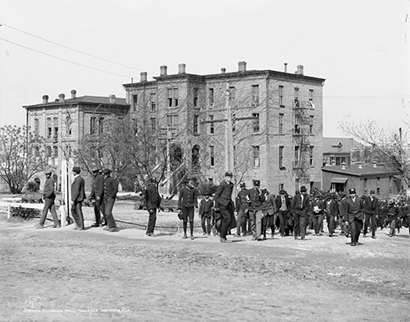
http://Alabama Hall, Tuskegee Institute, Ala. c1906. Detroit Publishing Company. Prints & Photographs Division Washington’s critics viewed the orator and educator’s remarks as controversial since his more than 10-minute speech advised African Americans to accept their unequal positions in society, disengage in political matters, and use their God-given talents and brawn to achieve economic freedom. He was vocal against protesting. He was known to have dined with U.S. President Theodore Roosevelt, who sought his advice on race issues along with President William Howard Taft.
Washington was considered the most important Negro of his time, and it was not limited to racial lines. Honorary degrees were bestowed upon him by Dartmouth College and Harvard University. Washington wrote 14 books, including the widely popular, Up From Slavery, and he remained an advocate of industrial education until his death at the age of 59 in 1915. He believed in “separate as the fingers, yet one as the hand in all things essential to mutual progress.”
Washington’s words spoken during the Cotton States Exposition were remembered mainly as a concession to the tensions at a fever pitch between Whites and Blacks in the Southern states.
The Uncompromised DuBois response
The man who was the first African American to receive a doctorate from Harvard University, W.E.B. DuBois, was the so-called black elite who vehemently opposed Washington’s views. He rejected the segregated Jim Crow-era beliefs such as African Americans’ focus on social and political rights would be achieved by being quiet and not causing any public protests.

http://Portrait of Dr. W. E. B. Du Bois. Carl Van Vechten, photographer, July 18, 1946. Van Vechten Collection. Prints & Photographs Division
DuBois passionately challenged Washington’s beliefs and words. DuBois espoused immediate political and intellectual empowerment. In 1905, DuBois organized an “anti-Bookerite” movement. Four years later, DuBois’ and his followers joined White liberals and formed the National Association for the Advancement of Colored People (NAACP). The NAACP battled racial injustice through the legal system. He says it lowers expectations for African Americans.
He did not believe that African Americans should be told by Washington that they are inferior. DuBois believed the opposite, and he put forth his “Talented Tenth” idea that was adopted by many organizations and universities, including Atlanta University.

http://The new south reformers day 3 show (slideshare.net) In the next Good Genes Genealogy Services’ September 2021 e-book, read the combined Parts One and Two about the great “Compromises” impacting African Americans. Both occurred in September.
Your assignment: How do you view today’s differences among leaders within the same political parties, ethnic groups, and other organizations? What are the pros and cons raised in the continuing great debate between DuBois and Washington?
-
Historical 1918 pandemic reports, advice, treatments and hope for our ancestors
This report from Chicago, Illinois by health officials in 1918 reads like a one that could have been written in 2021. The upshot is that we should learn from our ancestors.
Meanwhile, similar messages were urgently distributed that are similar to those of 2020-21.

An image of a Red Cross nurse published in Illustrated Current News. 1918.Credit…National Library of Medicine Another similar health heed
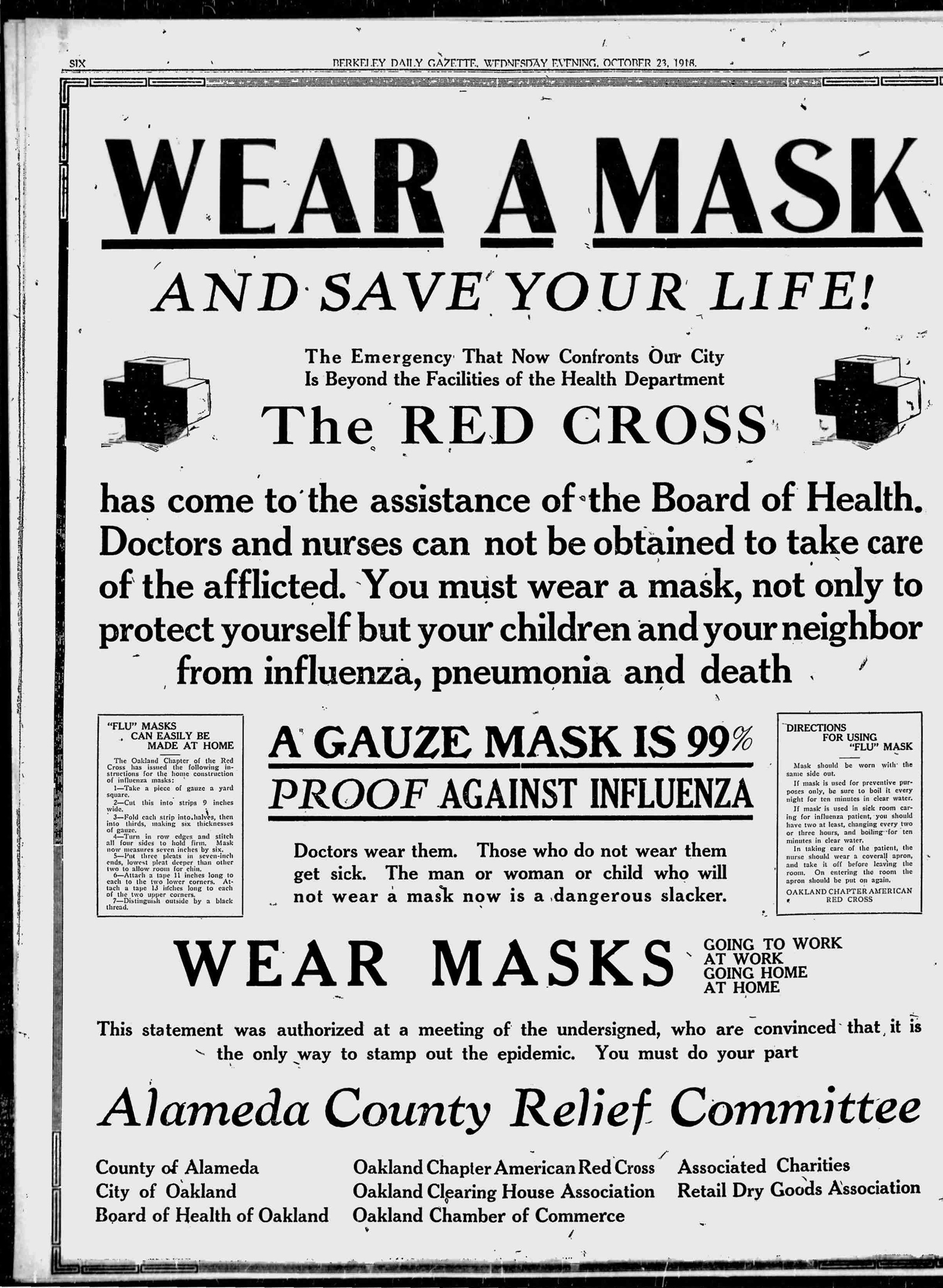
Consider the following in the current pandemics

Photo by Monstera on Pexels.com
Yet, in Kansas City, hope against hope was expressed. An article in the Kansas City Star newspaper in December 1918 expressed hopefulness about the “influenza serum” after Congress allocated $1 million to push it out to help save U.S. residents.
Hope in Missouri
Hope against hope years later …

http://Wilson Daily Times, 21 April 1924. Graded colored school — the Colored Graded School on Stantonsburg Street. Colored high school — Wilson Colored High School, later known as C.H. Darden High school. Wilson Training school — the private school formed after the 1918 school boycott, known formally as the Wilson Normal and Industrial Institute. Clipping courtesy of J. Robert Boykin III.
-
I Move in the Direction of My Soul’s Purpose
SATURDAY, AUGUST 7, 2021

Looking forward … Photo by Suliman Sallehi on Pexels.com
For this moment, consider the possibility that you chose to come forth into physical existence at this time. Now ask yourself what you are here to create, to do, to experience. Pause and ask yourself, “What does my soul want? What am I here to do and learn?” If we begin by directing our energy in the direction of questions that move us in the direction of our soul’s purpose, we begin to move in that direction.
I know that I came here to help, to create, and to expand my own consciousness. Knowing this provides me a sense of direction. Today, during my meditation I begin to ask questions of myself. I ask the questions that nudge me and remind me to move in the direction of my soul’s purpose. I am willing and excited to discover my soul’s purpose. Thank you, Will, in me, through me, as me, around me, through the Christ within. And so it is.
My brethren, I do not consider that I have reached the goal;
but this one thing I do know, forgetting those things which are behind,
I strive for those things which are before me.
Philippians 3:13
Daily Thoughts from the HillCopyright: Hillside International Truth Center, Inc.Bishop Dr. Jack L. Bomar – Executive BishopBishop Dr. Barbara L. King – Founder -
#29 The Great September U.S. Compromises (Part One)
On September 18 and 20, 1850, history recorded two distinct “compromises” that impacted African American lives. Part One, we will look at what life became in the area now known as Washington, D.C., once Congress came together and compromised on legislation.
The ‘give and take” of 1850
The 20th of September marked the signing of a bill that affected an area now known as the District of Columbia: It abolished the slave trade. It was part of the U.S. package known as the Compromise of 1850. It was fashioned by Sen. Henry Clay, a 70+ legislator dubbed the “Great Pacificator” by his colleagues. His aim was to get Congressional members to ‘give and take’ in five different compromises, with one resulting in the freeing of slaves in the nation’s capital. Meanwhile, the fugitive slave law was strengthened nationwide.
There were numerous congressional bills introduced in Congress in January 1850. By September, it was narrowed to five separate bills. Each bill was separately voted upon by Congress. Elimination of the slave trade in D.C. also included the welcoming of California as a free state in the U.S. and settling the border dispute between Mexico and Texas. It also gave the law enforcement authorities the right to capture slaves and suffer economic penalties if the slaves escaped while under the marshals and sheriffs’ jurisdictions. Eventually, this bill’s purpose would fall apart.
The United States Congress abolished the slave trade in the District of Columbia on September 20, 1850, as part of the legislative package called the Compromise of 1850. Since the founding of the District of Columbia in 1800, enslaved people had lived and worked in the nation’s capital. By the mid-nineteenth century, laws regulating slavery in the district were considerably more lenient than slave codes in the South. Still, slavery continued to exist in Washington until April 16, 1862. President Lincoln signed legislation freeing the 3,000 African Americans bound by the District’s slave code on that day. (The Slavery Code of the District of Columbia… Washington: L. Towers, 1862. Slaves and the Courts, 1740 to 1860. Law Library)
While Antebellum Washington was a thriving community for free Blacks, whereby 1860, they outnumbered the enslaved Blacks by four to one. The former slaves who could migrate to the District of Columbia did so. Meanwhile, former slaves who were granted their freedom by plantation owners were not given the flexibility to live their lives outside of the states approving the new status. It was home to a thriving community of free blacks.
Certificate of Freedom of Harriet Bolling, Petersburg, Virginia, 1851. Free Blacks in the Antebellum Period. The African American Odyssey: A Quest for Full Citizenship. Carter G. Woodson Collection. Manuscript Division
Harriet Bolling is an example of a Mulatto woman who was granted her freedom in Virginia by James Bolling. Yet, her freedom restricted her movements to the Commonwealth of Virginia, where she remained in Petersburg.
“Free Southern blacks continued to live under the shadow of slavery, unable to travel or assemble as freely as those in the North. It was also more difficult for them to organize and sustain churches, schools, or fraternal orders such as the Masons,” according to the Library of Congress.
Part Two: African American man is “first” to Compromise in the South
The following blog will review another September “Compromise about noted educator Booker T. Washington’s classic address at an Atlanta convention in September 1895.
In the next Good Genes Genealogy Services’ September 2021 e-book, read the combined Parts One and Two about the great “Compromises” impacting African Americans. Both occurred in September.
Your assignment: The global community has been required to adhere to certain restrictions during the COVID-19 pandemic. How did you react when your everyday travel was restricted and asked to wear masks in public? How do you imagine the African American slaves responded to their lifetime restrictions?
-
#28 Linking fruit trees to family trees
Growing up in Omaha, Nebraska and Chicago, Illinois, I am used to frequent ribbing about the Midwestern “foreign land.” It was while I was attending Clark College (now CAU, a HBCU) in Atlanta, Georgia, that I first became the subject of great humor about my Midwestern upbringing. It helped that my maiden surname is “Wead” (pronounced “Weed”) and for many of my Southern classmates, very little was known about the Black folk who lived in the Great Plains.
African Americans were integral to the forging of new territories in the great West. My family and hundreds of thousand of African American still live in every region west of the United States’ Mississippi River.
Branching out with new e-book series
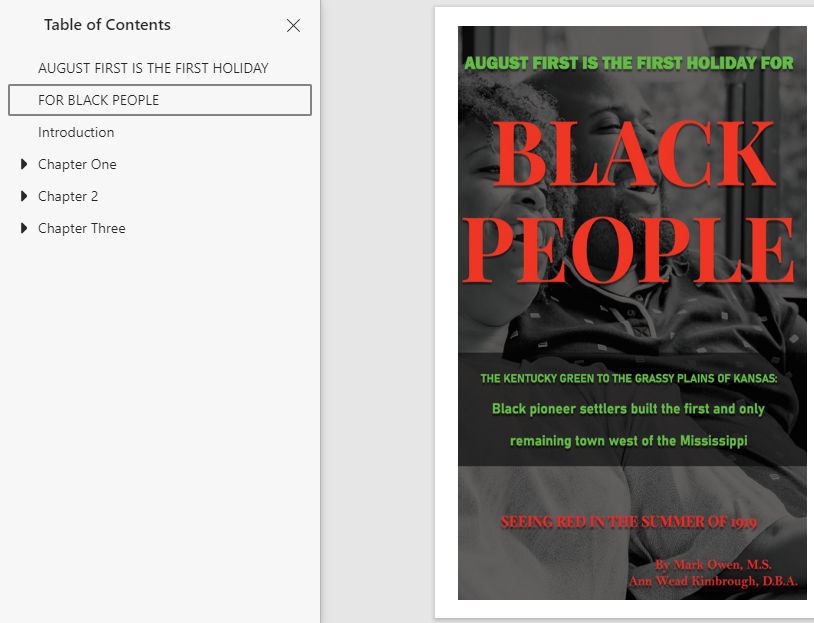
African American foragers used their nature instinctive skills to survive their tough homestead ventures during post-Civil War’s harsh Reconstruction period. Mark Owen and I, are Midwestern natives. As the authors of a new book series that highlights our our self-publishing book site, Lulu.com. https://www.lulu.com/en/us/shop/ann-wead-kimbrough-and-mark-owen/august-first-is-the-first-black-holiday-for-black-people/ebook/product-zv5pgd.html?page=1&pageSize=4.
One of the book chapters is about Nicodemus, Kansas, the first Black and only existing town west of the Mississippi that was settled by African American homesteaders who trekked from Kentucky during Reconstruction to establish a new life. It was tough and they were gritty. If it weren’t for the Native Americans sharing their food and other nearby townspeople doing the same, and the new homesteaders utilizing their foraging abilities to pull honey from trees and find berries in bushes, the first settlers would have starved. I also wrote about Nicodemus and other forgotten Black towns in the West in my other blog. See Blog #25.
I love this NYT piece because it provides excellent sources who speak on the often neglected topics of everything from slaves’ inherent knowledge of wilderness to today’s harrassing and ignorant facts regarding those of us who will stop along the side of a road if we see a special bush that may be a healthy product when properly picked and cooked. There were a couple of stories over the last year that showcased the little-known relationships African Americans have with nature. There are African American outdoors enthusiasts who are hoping to break down barriers that exist about hikng, for instance.
While hiking in Indiana and in New York’s Central Park, violent and harassing incidents captured global headlines based on ignorance from the inflictors.
I especially appreciated the NYT references to the enslaved ancestors locating honey from trees and harvesting all sorts of berries and other healthy products from trees, limbs, bushes and from the earth.
Camp Lessons for Life
I was an early African American forager. I grew up as the only one in my household who went to every available that featured the great outdoors camp that my parents could afford. I recall taking our daily showers in stalls that allowed for the minor snakes and other creatures to share in the rustic settings. The campfire stores, especially the ones with scary outcomes in the stars-lit skies, were my favorites. I remember the silly and yet lasting chants such as those for catching ones’ elbows on the large dining hall’s long wooden tables. Here’s the chant:
"Ann ... Ann ... strong and able ... get your elbows off the table. This is not a horse's stall, but a first-class dining hall! 'Round the tables you must go, you must go, you must go. 'Round the tables you must go, you were naughty."
It was all in good fun and I learned valuable lessonson how to live with kids from diverse backgroounds. We celebrated our differences by sharing in all sorts of activities. It was the early “rope courses” and other skils and trust-building experiences I had as an adult member of teams ranging from the Atlanta Olympic Organizing Committee to Harvard University’s Graduate Education certificate program
Black Girl in the Black Hills
I also recall riding the horses along the ridges of the South Dakota Black Hills, however, this wonderful path is no longer open to the public. It was probably not safe when I was riding on it in the late 1960s, yet it was worth it. It was beautiful to see all views of the Black Hills along the former horse trails.
Homework: Utilize the NYT article and my blog as motivation to research your family’s ancestries about the early foragers. Happy trails!